Furnishing a Home in Portugal on a Budget
Disclosure: This article contains affiliate links. If you buy through them, we may earn a commission at no extra cost to you. Read our full disclosure.
Your lease is signed, the keys are in your hand, and you open the door to an echoing apartment with bare light sockets, no fridge, and nowhere to sit. Furnishing a home in Portugal on a budget can feel like a second relocation. This guide covers where to buy, what to skip, how to get things home, and how to choose furniture for Portuguese winters.
Why Furnishing in Portugal Feels Harder Than It Should
When I moved into my first unfurnished T1 in Lisbon, I assumed I’d spend a weekend at IKEA and be done. Three weeks later I was still eating dinner off a cardboard box, waiting on a delivery slot, and arguing in broken Portuguese with a seller in Amadora about whether a wardrobe would fit in a Fiat. The frustration is real, and it helps to understand why before you spend any money.
What Unfurnished Really Means Here
In some countries, “unfurnished” means no sofa and no bed. In Portugal it can mean much less. Depending on the landlord and the building’s age, an unfurnished flat may have no oven, no fridge, no washing machine, no curtain rails, no wardrobes, and sometimes not even light fittings. You’ll often find a bare bulb hanging from a ceiling cable, or just two wires poking out of the plaster. Kitchens vary widely. Some come with built-in cabinets and a hob, while others have little more than a sink and plumbing connections.
So before you build a shopping list, walk through the flat with your phone and photograph every room, socket, and empty corner. Note what is actually there and what is missing. If you are still choosing a place, see Furnished vs Unfurnished Rentals in Portugal: What is Actually Included? for how listings describe these differences and what to clarify before signing.
A friend of mine, Sarah from Manchester, rented a beautiful flat in Porto’s Bonfim area. She discovered on move-in day that the “equipped kitchen” in the ad meant cabinets and a hob, with no fridge and no extractor fan. She spent her first month with a cool box and ice packs from Continente. Her budget had covered a sofa and a bed, not white goods. Ask the landlord in writing which appliances stay, and confirm it again before you hand over the deposit.
Old Buildings, Narrow Stairs, and Damp Walls
Portugal’s housing stock is full of character, and some of that character works against your furniture plans. Many buildings in Alfama, Graça, Mouraria, Ribeira, and the older parts of Coimbra and Braga have no lift. Their stairwells twist so tightly that a three-seat sofa simply cannot get round the bend. Delivery drivers will sometimes refuse to carry heavy items up several floors. Some second-hand sellers will only bring things to the street door.
Measure everything before you buy: the front door, the stairwell at its narrowest point, the turns on each landing, your flat’s door, and the doorway into each room. Write the numbers in your phone’s notes app and carry a tape measure, a fita métrica, when you go shopping. Flat-pack furniture solves a lot of these problems, which is one reason it dominates expat flats here.
Then there is damp. Many Portuguese homes, especially older ones and those near the coast, get condensation and mould in winter. That affects what you buy and where you put it. Solid wood and good-quality board cope better than cheap chipboard pushed against a cold exterior wall. A mattress laid straight on the floor can grow mould underneath within weeks. The climate section later covers this in detail.
Bridging the Gap While You Shop
One of the smartest budget moves is not to rush. Panic buying in your first week leads to overpaying for new items you could have found second-hand, or to bulky pieces that don’t suit the space. If your long-term flat isn’t ready, or you want time to hunt for bargains, a furnished mid-term rental gives you breathing room. Platforms like Spotahome list furnished rooms and apartments in Lisbon, Porto, and other cities for stays of a month or more. You can live somewhere comfortable while you measure, browse listings, and collect items gradually.
Some expats sign their unfurnished lease but stay on in a furnished place for a few overlapping weeks. That costs double rent for a short period, but you avoid buying an emergency mattress at full price because you have nowhere to sleep. Whether it’s worth it depends on your savings and your patience. Think it through rather than defaulting to buying everything at once.
If you do move straight in, prioritise one room. Get the bedroom fully working first, so you sleep well while the rest of the flat comes together. Being exhausted makes every administrative hurdle in Portugal feel worse, and that list is already long.
Building a Realistic Furniture Budget
A budget only works if it matches how you actually live. A digital nomad on a one-year lease needs a very different setup from a family with children who plans to stay for a decade. Before setting a figure, decide how long you expect to stay and whether you’ll sell or move the furniture when you leave.
Prioritising What You Need in Week One
I sort furnishing into three tiers. The first tier is what you can’t function without: a bed and mattress, bedding, a way to store and cook food, a towel or two, curtains or blinds for privacy, and a light in every room you use at night. Everything else can wait. You can eat at a kitchen counter or a folding table for a month, and you can hang clothes on a rail before you buy a wardrobe.
The second tier covers comfort and daily routines: a sofa, a dining table and chairs, a desk if you work from home, a washing machine if the flat has none, and storage. The third tier is the nice-to-have layer of rugs, artwork, plants, extra lamps, and decorative cushions. Most people overspend on that tier early, because those items are tempting and easy to grab in a big store.
Here’s a scenario I see constantly. Tom and Priya arrive in Setúbal with a set budget and a long list. On their first IKEA trip they come home with a bed, a sofa, and a car boot full of candles, frames, cushions, plants, and kitchen gadgets. Two weeks later they realise they still need a washing machine, a fridge, and curtains, and the money has run thin. If they had listed tier one first and bought only that, the essentials would have been covered before any decorative spending.
What IKEA Portugal Sofas Actually Cost
The sofa is usually the biggest single purchase, so it makes a good benchmark for testing your budget. When I checked IKEA Portugal’s two-seat sofa category on 19 October 2026, there was a clear spread from very basic to mid-range. These figures are as of October 2026, and IKEA changes prices and runs promotions regularly, so check the IKEA Portugal website before you plan around them.
| IKEA Portugal two-seat sofa | Price as of October 2026 | Where it fits in a budget plan |
|---|---|---|
| GLOSTAD | 139 euros | The tightest budget, short leases, or a spare-room sofa |
| SALTMYRAN | 199 euros | A modest step up for a first flat |
| KIVIK | 329 euros, reduced from 379 euros | A longer-term home where comfort matters more |
That spread illustrates a broader rule. The gap between a bare-bones setup and a comfortable one is often a few hundred euros per major item, not thousands. If you stay for several years, paying more for the sofa and mattress you use every day is often worth it, while the bedside table and shoe rack can come from the cheapest source available. If you only plan to stay for a year, the cheaper end makes more sense, especially since you may sell everything when you leave.
New vs Second-Hand: Where the Savings Are
Second-hand furniture is the single biggest money-saver in Portugal, and the market is very active. Expats leave constantly, students rotate every academic year, and Portuguese families clear out inherited furniture all the time. The trade-off is time: messaging sellers, arranging pickups, inspecting items, and sometimes being stood up. New furniture costs more but comes with delivery options, predictable quality, and legal consumer protection when you buy from a business.
| Source | Cost level | Effort and time | Delivery | Consumer protection | Best for |
|---|---|---|---|---|---|
| IKEA, Conforama, JYSK | Low to mid | Low, one or two trips | Paid delivery and assembly available | Legal guarantee on new goods | Beds, mattresses, storage, kitchenware |
| Leroy Merlin, Aki | Low to mid | Low | Paid delivery available | Legal guarantee on new goods | Curtain rails, light fittings, shelving, tools |
| OLX, Facebook Marketplace, Custo Justo | Very low | High, lots of messaging | Usually you collect | None from private sellers | Sofas, tables, chairs, wardrobes, appliances |
| Expat leaving sales | Very low | Medium | Usually you collect | None | Full bundles of kitchen and home items |
| Flea markets and charity shops | Very low | Medium to high | You carry it | None | Lamps, mirrors, crockery, character pieces |
| Online retailers | Low to mid | Low | Delivered to your door | Legal guarantee when buying from a business | Small items, bedding, organisers |
A sensible approach is to mix the two. Buy the mattress new for hygiene and comfort. Buy wardrobes and storage flat-pack, so they fit up narrow stairs. Look second-hand for the sofa, dining table, chairs, and appliances, where the savings are largest and the items are sturdy enough to survive a previous owner.
Mastering the Second-Hand Market
Second-hand shopping in Portugal is a skill, and once you have it you’ll furnish entire rooms for a fraction of the retail price. The hard part is getting used to the rhythm of it.
OLX, Facebook Marketplace, and Custo Justo
OLX is the dominant classifieds site in Portugal. It is the first place most Portuguese people list a sofa, a washing machine, or a set of chairs. Facebook Marketplace is heavily used by expats, especially in Lisbon, Cascais, Porto, and the Algarve, and you’ll find many listings written in English. Custo Justo is a smaller classifieds site worth checking for less competitive bargains, particularly outside the big cities. Vinted is mainly for clothes but has some homeware. For a deeper walkthrough, see Second-hand furniture in Portugal: Using OLX, Vinted, and Facebook Marketplace.
Search in Portuguese as well as English. Useful terms include sofá, cama, colchão (mattress), roupeiro (wardrobe), cómoda (chest of drawers), mesa de jantar (dining table), cadeiras (chairs), estante (bookshelf), frigorífico (fridge), máquina de lavar roupa (washing machine), and secretária (desk). Set your location filter carefully. A bargain in Sintra is no bargain if you live in Almada and have no car.
When you first land, you’ll be messaging sellers before you have a Portuguese SIM or a home internet connection. An eSIM from a provider like Airalo keeps you online from the moment you arrive. You can reply to listings quickly, and fast replies matter, because good items on OLX and Marketplace go within hours. Later you can switch to a local plan with MEO, NOS, or Vodafone.
Negotiating and Messaging in Portuguese
Haggling is normal on second-hand platforms, but there’s an etiquette to it. A polite opening message in Portuguese gets far better results than “is this available?” in English. Something like “Boa tarde, o sofá ainda está disponível? Teria interesse em ir buscar esta semana” says good afternoon, asks whether the sofa is still available, and says you’d like to collect it this week. Showing that you’re ready to collect quickly is often more persuasive than a low offer.
When you do negotiate, keep it reasonable and friendly. Pointing to a visible flaw, offering to collect the same day, or offering to take several items together all work well. Asking for a sizeable discount on a fairly priced item with no reason tends to get you ignored. Sellers who are leaving the country are often the most flexible, especially in their final week, because whatever doesn’t sell has to be thrown away.
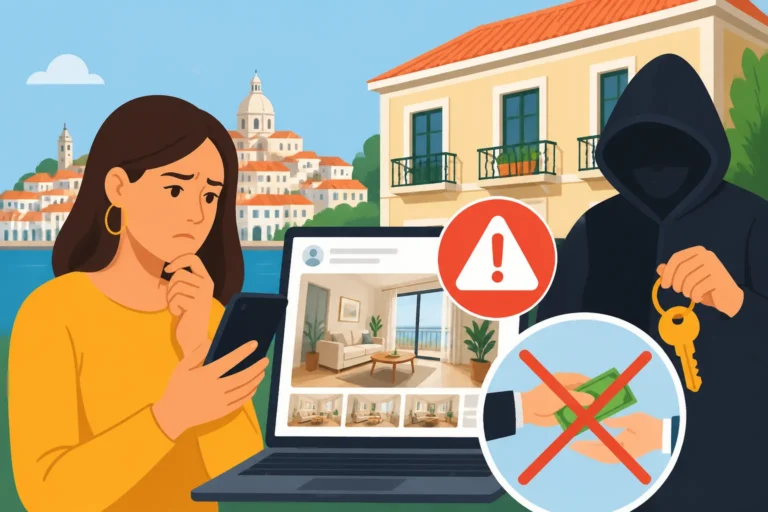
Always inspect before paying. Check sofas for stains, smells, and signs of pests, and look underneath cushions and along seams. Open and close every drawer and door. Ask to see appliances running if possible, or at least ask how old they are and why they’re being sold. Payment by MB Way or cash at collection is standard. Avoid paying a deposit in advance to a seller you haven’t met, which is a classic scam pattern.
Flea Markets, Charity Shops, and Expat Leaving Sales
Lisbon’s Feira da Ladra, held around Campo de Santa Clara near the National Pantheon, is a wonderful, chaotic place to hunt for lamps, mirrors, ceramics, picture frames, and occasionally a small piece of furniture. In Porto, the Feira da Vandoma is the equivalent. Prices are negotiable, and arriving early gets you the best selection. Check the current market days before you go, because schedules can change.
Charity and solidarity shops are another option. Organisations such as Remar run second-hand stores in several parts of the country selling furniture, homeware, and appliances. Some parishes and local associations also run lojas sociais, or social shops. Stock is unpredictable, but you can find solid wooden pieces that will outlast anything flat-pack.
Expat leaving sales are the hidden gold mine. Join local expat Facebook groups for your city or region and watch for “moving out, everything must go” posts. You can sometimes buy an entire kitchen setup, from pans and plates to the kettle, toaster, and cutlery, as one bundle for very little. I furnished most of my second kitchen this way from a Canadian couple leaving Lagos who just wanted it all gone in one afternoon.
Buying New Without Overspending
Some things are better bought new, and some people simply don’t have the time or patience for a month of OLX messages. There’s nothing wrong with that. The goal is to buy new cleverly.
IKEA, Conforama, JYSK, and Leroy Merlin
IKEA has large stores in Alfragide and Loures near Lisbon, Matosinhos near Porto, Braga, and Loulé in the Algarve, plus smaller formats and a full online shop. It is the default for mattresses, bed frames, wardrobes, storage, and kitchenware. Check the “As-is” area, known as the Circular Hub in many stores. Ex-display items, returns, and slightly damaged pieces are sold there at reduced prices, and arriving early improves your chances.
Conforama competes on sofas, beds, and appliances and often runs promotions. JYSK is good for bedding, mattresses, and simple storage. Leroy Merlin and Aki are where you’ll buy the unglamorous essentials that flats here often lack: curtain rails, ceiling light fittings, extension leads, shelving brackets, door stops, drills, and wall plugs. Moviflor, Maisons du Monde, and Zara Home cover the more decorative end, but watch your budget there.
For a fuller comparison of these chains and independent furniture shops, see How to buy furniture for your new flat: IKEA, Conforama, and local shops. My personal tip is to visit with your tier-one list, a tape measure, and a firm rule not to pick up anything that isn’t on the list. It is remarkably hard to leave IKEA Alfragide without a bag of tealights you didn’t need.
Online Ordering and Amazon Spain
Online shopping fills the gaps for smaller items: bedding, storage boxes, cable organisers, shower curtains, blackout blinds, and the odd specialist tool. Portugal has no dedicated Amazon storefront, so many residents order from Amazon Spain, which ships to mainland Portugal. Because both countries are in the EU, you don’t face the customs surprises you would with parcels from outside the EU. See How to receive Amazon packages in Portugal without paying customs fees for how to avoid them.
Compare carefully before ordering. Delivery charges and times vary by seller, and some items listed on Amazon Spain are shipped by third-party sellers rather than Amazon itself, which affects returns. For bulky furniture, a local retailer with in-store pickup is often more practical than a large parcel left with a neighbour or at a pickup point. For light, compact items, ordering online saves you a trip and lets you compare reviews.
Keep track of delivery addresses too. Older Portuguese buildings sometimes have unclear door numbers or shared entrances. Couriers may leave a notice rather than climb several floors. Add your floor and side, for example “3º Esq.” for third floor, left, and a phone number to every order.
Appliances, Warranties, and Receipts
White goods are where flats here most often catch people out, and they’re expensive to get wrong. Worten and Rádio Popular are the main electronics and appliance chains. Fnac covers smaller electronics. All three compete on promotions, especially around Black Friday and the January sales. See Buying electronics in Portugal: Fnac, Worten, and Rádio Popular warranties for how guarantees and extended warranties work when you buy from these chains.
If a fridge and washing machine arriving at the same time strain your budget, some retailers offer to spread the cost. Read the full credit terms before signing. Buying appliances on installment (Crédito) at Worten or Rádio Popular explains how these arrangements work in practice. Ask about delivery to upper floors, installation, and removal of an old appliance, since each may carry a separate charge.
Whenever you buy from a business, the cashier will ask “Contribuinte?” They mean your NIF, your tax number, which they print on the invoice. Say yes and give it. Invoices with your NIF are recorded in the e-Fatura system, which can matter for your tax return, and a proper invoice helps if you need to make a guarantee claim. See Getting your NIF printed on your supermarket receipt for IRS tax benefits for how this works. Keep paper receipts too, and photograph them, since thermal paper fades. New goods bought from a business carry a legal guarantee. Private second-hand sales don’t, which is another reason to buy major appliances carefully.
Getting It Home and Putting It Together
You’ve found the perfect second-hand sofa in Odivelas, and you live in Campo de Ourique with no car. Transport is where many budget plans fall apart, so plan it before you agree to buy.
Transport Options for People Without a Car
Small items travel fine on public transport or in an Uber or Bolt, though drivers can refuse bulky loads, so mention the item when you message them. For larger pieces you have a few choices. Car rental companies and some hardware stores rent vans, called carrinhas, by the hour or the day. If you’re comfortable driving a van through narrow streets, that works. Leroy Merlin and IKEA stores have offered van rental at various times, so ask at the store about current options.
The other route is a local “man with a van” service. Search Facebook groups, OLX services, or platforms such as Fixando for “transporte de móveis” or “pequenas mudanças”. Many independent drivers will collect from a seller and deliver to you, sometimes carrying items up the stairs for an extra charge. Agree the price, the number of floors, and whether carrying upstairs is included before the day.
Batching saves money. Instead of paying for three separate trips, line up collections from the same area on one day and book a single van. Tell each seller a time window and confirm the night before. Portuguese sellers are generally reliable once you’ve confirmed. Polite reminders in Portuguese help.
Assembly and Fitting
Flat-pack is your friend in narrow buildings, but assembly takes time. A wardrobe can easily take an afternoon, and two people make it far easier. IKEA and other retailers offer paid assembly, and freelance assemblers advertise on Fixando and in expat groups. Doing it yourself is the cheapest option, so buy a basic toolkit early with a screwdriver set, an Allen key set, a hammer, and a cordless drill.
Drilling into Portuguese walls is its own adventure. Older buildings often have thick stone or brick walls that need a masonry bit. Newer flats may have plasterboard partitions that need specific wall plugs. Ask your landlord before drilling. Some leases restrict it, and filling and repainting holes when you leave affects whether you get your deposit back. Tall wardrobes and bookshelves should be anchored to the wall, especially with children in the home, and Portugal is in a seismic zone, so heavy tall furniture benefits from proper fixings.
Light fittings deserve a note. If your flat has bare wires instead of fittings, installing a ceiling light is a job for someone who knows what they’re doing. Hire an electrician if you have any doubt. A cheap fitting from Leroy Merlin plus a qualified installer costs less than the consequences of getting it wrong.
Getting Rid of What You Do Not Need
Furnishing creates rubbish: mountains of cardboard, polystyrene, and plastic, plus old furniture the landlord left behind that you don’t want. Cardboard goes in the blue ecoponto recycling bin, flattened. Large amounts may need a trip to a recycling centre, called an ecocentro, run by your municipality.
For old mattresses, broken sofas, and bulky items, most câmaras municipais offer a free or low-cost pickup service for large items, known as “monstros”. You book a collection and leave the item on the street at the agreed time. Leaving furniture next to the bins without booking can get you fined. See Booking large trash pickup (Monstros) for old furniture via your local Camara for how to book through your municipality.
Before throwing anything out, try giving it away. Free listings on OLX or Facebook disappear in minutes, and someone will come and collect it for you. If the landlord’s old furniture is in the way, ask in writing before removing anything, because it may be listed in the inventory. Removing it without permission can cause problems at move-out. See Getting your rental deposit (Caução) back: Move-out cleaning tips for Portugal for how to protect your deposit.
Furnishing for the Portuguese Climate
Here’s the part almost nobody tells you before you arrive: Portuguese homes can be surprisingly cold and damp in winter, and your furniture choices either help or make it worse. A beautiful flat in July can be a mould battle in January.
Fighting Mold With Smart Furniture Choices
Condensation forms on cold exterior walls, behind wardrobes, and under mattresses where air doesn’t circulate. The simplest fix costs nothing: leave a small gap between large furniture and exterior walls so air can move behind it. A few centimetres makes a real difference. Choose bed frames with slatted bases instead of putting mattresses on the floor or on solid platforms, and lift the mattress occasionally in winter to let it air.
Fabric and material choices matter too. Washable sofa covers are practical in a damp climate, and solid wood, metal, and good-quality board hold up better than cheap chipboard, which swells when it gets wet. Store clothes and shoes with breathing room, and add moisture absorbers in wardrobes. Supermarkets and hardware stores sell refillable ones.
A dehumidifier may be the single most important appliance you buy after a fridge and a washing machine, especially in coastal cities, ground-floor flats, and older buildings. See Best dehumidifiers to buy in Portugal to prevent winter wall mold for what to look for. Budget for one from the start rather than waiting until black spots appear on the bedroom ceiling.
Winter Warmth on a Budget
Most Portuguese homes lack central heating, which surprises many arrivals from northern Europe and North America. See Why do Portuguese houses lack central heating? Practical winter solutions for the background and the main heating options. From a furnishing point of view, budget-friendly warmth comes from layers. Rugs on cold tiled floors, thick curtains, a heavier duvet, flannel sheets, and a throw on the sofa all make a noticeable difference for little money.
Curtains are worth getting right. Lined or thermal curtains over single-glazed windows reduce heat loss and give you privacy, and cheap tension rods or adhesive fixings can avoid drilling. Draught excluders for doors and windows are inexpensive and easy to fit. Position your sofa and desk away from the coldest walls and windows where you can.
For heating appliances, oil-filled radiators, heat convectors, and heated throws all have their fans, and running costs differ a lot. Check the energy ratings and consider your electricity tariff before buying. Second-hand oil radiators turn up constantly on OLX each spring, when people stop needing them. Buy out of season and you’ll pay far less than in December.
A Step-by-Step Plan for Your First Month
If you want a simple sequence to follow, this is the one I give friends:
- Photograph and measure every room, doorway, and stairwell before buying anything, and record the measurements in your phone.
- Confirm in writing with your landlord which appliances, fittings, and pieces of furniture stay, and whether you may drill.
- Set up mobile data immediately so you can reply to second-hand listings quickly.
- Buy a new mattress, bedding, towels, and curtains in your first few days, so you can sleep and have privacy.
- Sort out cooking and food storage next, with a fridge, basic pans, and kitchenware, ideally from an expat leaving sale.
- Search OLX, Facebook Marketplace, and Custo Justo daily for a sofa, table, chairs, and wardrobes, and save searches with alerts.
- Batch your collections by area and book one van for several pickups on the same day.
- Buy flat-pack storage for tight spaces and assemble it with a friend over a weekend.
- Add a dehumidifier and winter layers before the rainy season begins.
- Leave decorative items, artwork, and extras until the essentials are done, and buy them slowly as you discover your style.
- Keep every receipt with your NIF on it and photograph each one for guarantee claims and tax purposes.
- Book a monstros collection for packaging and unwanted furniture rather than leaving it by the bins.
Furnishing a home here takes patience. You’ll lose a few great listings to faster buyers, spend at least one evening fighting a wardrobe that refuses to line up, and probably buy one thing you regret. But by mixing second-hand finds with a few smart new purchases, measuring before you commit, and choosing furniture that suits the climate, you can build a warm, comfortable home without draining your savings.
Disclaimer
This article is for general informational purposes only and does not constitute professional advice. Laws, prices and regulations vary by location and change over time. Consult a qualified professional for guidance on your specific situation.