How to Use Your GHIC or EHIC Card in Portugal
Disclosure: This article contains affiliate links. If you buy through them, we may earn a commission at no extra cost to you. Read our full disclosure.
Waking up with a splitting headache or a fever in a foreign country is a special kind of panic. I remember my first month in Lisbon, staring at a green neon cross and wondering if I should walk in for a prescription or if I was about to commit a major social faux pas. This guide solves the confusion around using your EHIC or GHIC card to access the Portuguese public health system without losing your mind—or your savings.
Understanding the EHIC and GHIC in the Portuguese Context
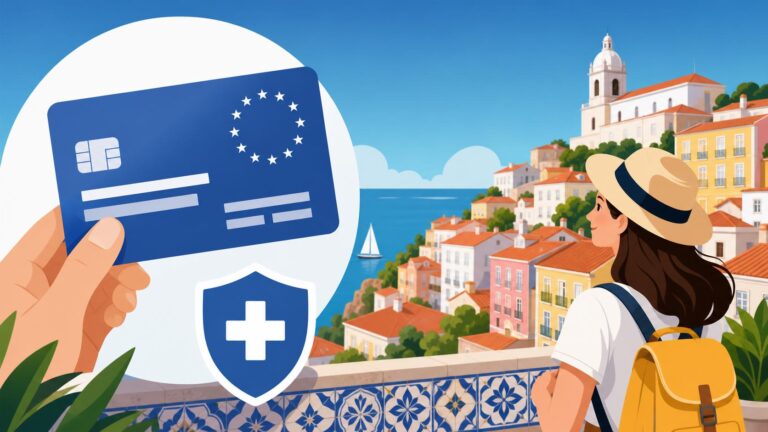
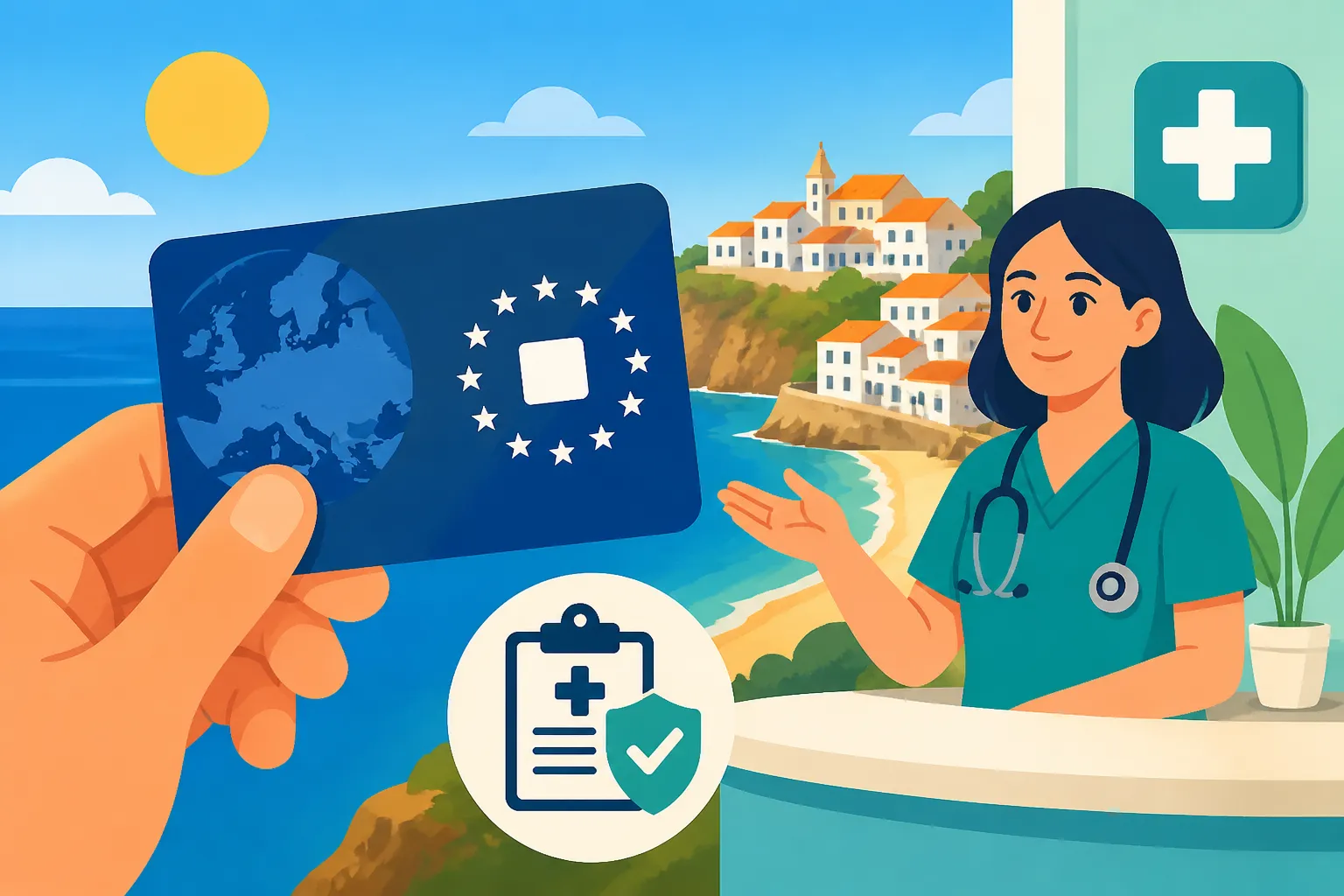
If you are a traveler or a temporary visitor from the EU, EEA, or Switzerland, you likely carry the European Health Insurance Card (EHIC). If you are coming from the UK, you have the Global Health Insurance Card (GHIC). Despite the different names, in the eyes of a Portuguese triage nurse, they are essentially the same thing. These cards are your "golden ticket" to being treated exactly like a Portuguese citizen within the state-run healthcare system.
It is a common misconception that these cards make healthcare entirely free. In reality, they provide access to "medically necessary" state-provided healthcare under the same conditions and at the same cost as people insured in Portugal. Many travelers get frustrated when they are asked to pay a small fee at the reception, but this is standard. To understand the broader picture, you should look into Portugal's National Health Service (SNS): How the Public System Works to see how the locals navigate it.
The cards cover treatment that cannot wait until you get home. This includes emergency room visits, treatment for chronic or pre-existing conditions, and even routine maternity care (though not if you traveled specifically to give birth). However, they do not work at private clinics. If you prefer the comfort of a private facility, you would be looking at Private Health Insurance in Portugal: Costs, Coverage, and Best Providers instead of relying on your EHIC.
Where Can You Use Your Card
In Portugal, the healthcare world is split into the public (SNS) and the private sector. Your EHIC or GHIC is only valid in the public sector. If you accidentally wander into a Hospital da Luz and CUF: Navigating Portugal's Biggest Private Hospitals, they will ask for your private insurance details or a credit card; your EHIC will be politely declined.
To use your card, you must look for a Centro de Saúde (Health Center) for non-emergency issues or a public hospital for emergencies. Public hospitals are usually large, bustling buildings with signs that say "SNS" or "Hospitais Civis." In an emergency, look for the "Urgências" sign.
If you are a digital nomad or a long-term visitor, you might be tempted to just use your EHIC indefinitely. While it works for short stays, once you become a resident, the rules change. You will eventually need to look into Registering with the Centro de Saúde: Getting Your SNS Número de Utente to fully integrate into the system. For those who want more comprehensive protection that covers more than just the basics, companies like SafetyWing are popular among the nomad crowd, while Cigna Global offers the kind of robust international coverage that fills the gaps left by the public system.
The Cost of Care: Taxas Moderadoras
Even with your EHIC or GHIC, you will likely encounter what we call Taxas Moderadoras. These are small co-payments designed to prevent the system from being overwhelmed. For a standard consultation at a health center, you might pay around €5, while an emergency room visit can cost around €15 to €20.
These fees are significantly lower than what you would pay as a private patient, but they are not zero. For a deeper dive into these costs, check out Taxas Moderadoras: Co-payments and Costs in the Public Health System. It is also worth noting that certain groups, such as children or people with specific chronic illnesses, are exempt from these fees, but as a tourist with an EHIC, you should always carry some cash or a debit card to settle these small amounts on the spot.
Step-by-Step: Using Your Card at a Centro de Saúde
If you have a minor ailment—think a persistent cough, a weird rash, or a minor infection—the Centro de Saúde is your destination. Do not go to the emergency room for these, as you will wait for hours.
- Find your local center: Every neighborhood has one. You can find them on Google Maps by searching for "Centro de Saúde."
- The "Senha" system: When you walk in, there is usually a machine that spits out numbered tickets (senhas). Look for one that says "Atendimento Geral" or "Informações."
- Present your documents: When your number is called, show your passport and your EHIC or GHIC. The receptionist will enter your details into the system.
- The Waiting Game: Even with an EHIC, you are at the mercy of the public wait times. Bring a book.
- The Consultation: You will see a doctor who will provide a diagnosis and, if necessary, a prescription.
If you find the wait times at the public center too daunting, many expats use Telehealth and Online Doctors: Using TravelDoctores and Doctorsa for minor issues, which can save you a whole morning of sitting in a waiting room.
Handling Emergencies and Triage
In a true emergency, you should head straight to the public hospital's Urgências. Portugal uses the Manchester Triage System, which is a color-coded way of deciding who gets seen first. When you arrive, you will show your EHIC/GHIC at the registration desk, and then you will be called by a nurse for a quick assessment.
- Red: Immediate (Life-threatening)
- Orange: Very Urgent (10-minute wait)
- Yellow: Urgent (60-minute wait)
- Green/Blue: Non-urgent (Prepare to wait for 4+ hours)
I have sat in a yellow-triage waiting room in Porto for six hours with a friend who had a broken arm. It wasn't fun, but the EHIC meant the final bill was only about €20. For more on what to expect in these high-stress situations, read Emergency Medical Care in Portugal: Calling 112 and Going to the Hospital. Understanding the Manchester Triage System colors in Portuguese emergency rooms is crucial so you don't feel ignored when someone who arrived after you is seen first.
Public vs. Private Care with EHIC
| Feature | Public SNS (With EHIC/GHIC) | Private Clinics (No EHIC Coverage) |
|---|---|---|
| Cost | Low (Co-payments only) | High (€40 – €120 per visit) |
| Wait Times | Can be very long (hours/days) | Usually very short (minutes/hours) |
| Facilities | Functional, can be dated | Modern, hotel-like |
| Language | Staff may only speak Portuguese | English-speaking staff is common |
| Prescriptions | Subsidized by the state | Full price unless you have insurance |
While the public system is excellent in terms of medical skill, the "customer service" aspect is very different from what you might find at a private hospital. If you find the public system too stressful, you might decide that Public vs Private Healthcare in Portugal: Which One Should Expats Choose? is a question worth answering before your next trip. Many people choose to supplement their EHIC with a plan from SafetyWing for travel-specific emergencies or Cigna Global for high-end specialist access.
Prescriptions and Pharmacies
Once you have your prescription from a public doctor, you need to head to a Farmácia. These are easy to spot by their bright green crosses. In Portugal, the government subsidizes medication if it is prescribed within the SNS system.
When you hand over your prescription (which is usually digital and linked to your ID), the pharmacist will see that you were treated via the public system and apply the appropriate discount. You will still have to pay a portion of the cost, but it is often significantly cheaper than the retail price. For more on how this works, see Pharmacies and Medication in Portugal: Prescriptions and OTC Drugs. Also, be aware of the Pharmacies (Farmácias) in Portugal: Green Crosses and After-Hours Service rules, especially if you need medicine in the middle of the night.
What the Card Does NOT Cover
It is vital to know the limits of the EHIC and GHIC so you aren't hit with a massive bill later.
- Private Healthcare: As mentioned, any private clinic or hospital visit is 100% out of pocket.
- Repatriation: If you are seriously ill and need a medical flight back to your home country, the EHIC will not pay for it. This is why many travelers still buy travel insurance like SafetyWing.
- Elective Procedures: You cannot use the card to get a dental checkup or a new pair of glasses. These are considered non-essential for a temporary stay. If you do need dental work, you’ll need to navigate Dental Care in Portugal: Costs, Clinics, and Private Insurance Add-ons on your own.
- Search and Rescue: If you get lost hiking in the Madeira mountains, the EHIC doesn't cover the helicopter.
For those planning to stay longer or who are in the process of applying for a visa, be aware that the authorities usually require more than just an EHIC. You should check the Health Insurance Requirements for the D7 and D8 Visa Application to ensure you are compliant.
Practical Tips for Success
- Carry a physical card: While digital versions are becoming more common, a physical EHIC or GHIC card is much easier for a busy hospital administrator to photocopy.
- Carry your Passport: In Portugal, your health card is useless without a valid photo ID to prove you are the owner.
- Language Barriers: In major cities like Lisbon and the Algarve, many doctors speak English. However, the administrative staff at the front desk might not. Learning a few phrases or having a translation app ready is a lifesaver. See Navigating the public health system if you only speak English (Translation tips) for help.
- Keep Your Receipts: If for some reason you are charged the full amount (perhaps because the system was down and they couldn't verify your card), keep every single piece of paper. You may be able to claim a refund from your home country's health authority when you return.
If you ever find yourself in a situation where you feel you haven't been treated fairly, every medical facility in Portugal is required to have a "Yellow Book." You can find more about this in Understanding the 'Livro Amarelo' (Yellow Book) for Medical Complaints.
Dealing with Chronic Illness
If you have a chronic condition like diabetes or hypertension, the EHIC is particularly useful. It allows you to access necessary monitoring or dialysis while on holiday. However, you should bring enough medication for your entire trip, as getting a Portuguese doctor to rewrite a foreign prescription can sometimes be a bureaucratic hurdle. If you do run out, you will need a consultation at a Centro de Saúde. For more specific advice, look into Managing Chronic Illnesses: Diabetes and Hypertension Care in Portugal.
In the end, the EHIC and GHIC are there to give you peace of mind. They ensure that a broken ankle or a sudden infection doesn't end in financial ruin. Portugal's healthcare workers are highly trained and deeply compassionate, even if the system they work in is sometimes slow and paper-heavy. As long as you know where to go and what to expect, you'll be in good hands.
Disclaimer
This guide is for informational purposes only and does not constitute professional medical or legal advice. Healthcare regulations, particularly regarding EHIC and GHIC usage post-Brexit and within the evolving Portuguese SNS framework, are subject to change. Always verify current requirements with official government sources or your insurance provider before traveling. If you are experiencing a medical emergency, dial 112 immediately.