Is public healthcare completely free for foreign retirees in Portugal?
Navigating the promise of "free" healthcare as a retiree in Portugal can feel like deciphering a complex map where the landmarks keep moving. I remember the first time I sat in my local health center, clutching my residency papers and wondering if my pension would be eaten up by unexpected medical bills. This guide solves the confusion by breaking down exactly what foreign retirees pay, who gets exemptions, and how the public system actually functions.
The Reality of the "Free" Healthcare Myth in Portugal
When you hear people talk about the Serviço Nacional de Saúde (SNS), the word "free" is thrown around quite loosely. For most residents, the system is "tendeencialmente gratuito," which translates to "tending towards free." It is a tax-funded system, meaning if you have contributed to the Portuguese Social Security system or if you are a legal resident from a country with a reciprocal agreement, you have the right to access it. However, "free" does not always mean a zero-euro balance on every receipt.
For a foreign retiree, the first hurdle is understanding that access is tied to your legal residency status. You cannot simply show up with a tourist visa and expect the state to cover a hip replacement. You must have your residency sorted and then go through the process of Registering with the Centro de Saúde: Getting Your SNS Número de Utente to even enter the system. Once you have that magic number, the doors to public hospitals and clinics open, but the financial aspect depends heavily on your age, your health condition, and your country of origin.
Many retirees find that while the big-ticket items like emergency surgeries or hospital stays are covered, the day-to-day management of health—like specialist visits or specific diagnostic tests—might involve small out-of-pocket payments. This is why many of us veterans still keep an account with iHerb for our regular vitamins and supplements; even with the public system, specialized wellness products are often cheaper and easier to source online than through local pharmacies.
Understanding Taxas Moderadoras: What You Actually Pay
The primary "cost" in the public system comes in the form of taxas moderadoras, or moderating fees. These are small co-payments designed to prevent the system from being overwhelmed by unnecessary visits. For years, these fees were a standard part of every interaction with a doctor. However, recent legislative shifts have abolished many of these fees for primary care consultations.
Today, if you go to your family doctor (Médico de Família) at the local health center for a routine check-up, you generally won't pay a fee. The same applies to many exams prescribed by that doctor. However, if you go to the emergency room without a referral from the SNS 24 helpline, or if you seek certain specialized treatments, you might still see a small bill. To get a granular look at these costs, you should read our guide on Taxas Moderadoras: Co-payments and Costs in the Public Health System.
For retirees specifically, there is good news. If you can prove that your household income is below a certain threshold (usually tied to the Social Support Index), you can apply for an exemption from these fees entirely. Additionally, if you suffer from a chronic illness like diabetes or hypertension, many of the costs associated with managing those specific conditions are waived. It’s a bit of a paperwork mountain to climb, but once the system recognizes your "Isenção" (exemption) status, the "free" part of the healthcare promise becomes much more of a reality.
The S1 Form: A Game Changer for EU and UK Retirees
If you are retiring from an EU country or the UK, the financial burden of public healthcare is significantly lessened by the S1 form. This document is essentially a certificate of entitlement to healthcare in your new country of residence, paid for by the country that pays your pension. By registering your S1 with the Portuguese Social Security office and your local health center, you are treated as if you had contributed to the Portuguese system your entire life.
This reciprocal agreement is what makes Portugal one of the best places for European retirees. It ensures that you aren't "double-paying" for your health. However, for those coming from outside the EU, such as the United States, the situation is different. Medicare does not provide coverage abroad, and there is no equivalent to the S1 form for US citizens. If you're in this boat, you'll need to look closely at Can US citizens use Medicare to pay for healthcare services in Portugal? to understand the gaps you'll need to fill.
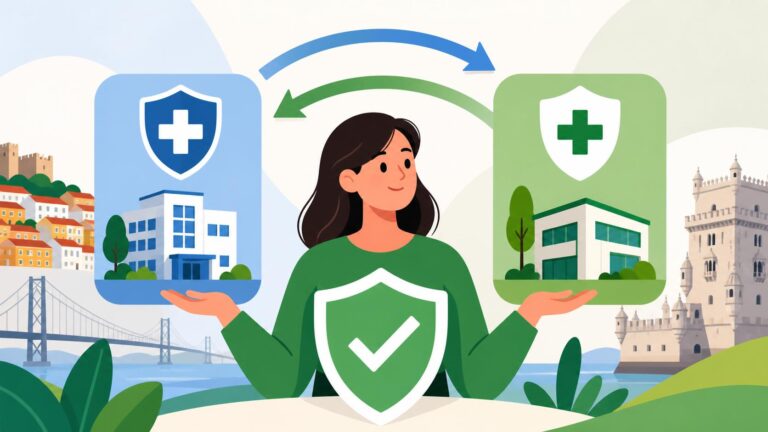
Because the public system can have long waiting lists for non-urgent procedures, many retirees choose to supplement their SNS access with a private policy. This is where a provider like Cigna Global becomes invaluable. They offer the kind of comprehensive international coverage that gives you the flexibility to skip the public queues for things like knee surgeries or cataracts, allowing you to use the high-end private hospitals like CUF or Hospital da Luz while still having the safety net of the public SNS for emergencies.
Comparing Public and Private Healthcare Costs for Retirees
To help you visualize the potential costs, I’ve put together a comparison of what you might expect to encounter in the public system versus the private system in 2026. Keep in mind that these are estimates based on standard retiree experiences.
| Service Type | Public SNS (With S1/Residency) | Private (With Insurance like Cigna Global) |
|---|---|---|
| General Practitioner Visit | €0 (Usually) | €15 – €40 (Co-pay) |
| Emergency Room Visit | €0 – €20 | €40 – €100 (Co-pay) |
| Specialist Consultation | €0 (But long wait) | €25 – €50 (Co-pay) |
| Major Surgery | €0 (Wait times vary) | Covered by policy (After deductible) |
| Prescription Drugs | Subsidized (up to 100%) | Full price or small discount |
| Blood Tests/Imaging | €0 (If prescribed by GP) | €10 – €50 (Co-pay) |
While the table shows that the public system is significantly cheaper (often hitting that €0 mark), the "hidden cost" is time. In my experience, waiting six months for a dermatology appointment in the public system is common. This is why having a brand like Cigna Global in your corner is a relief; you pay a monthly premium to buy back your time and choose your own specialists.
Prescription Costs and Pharmacies
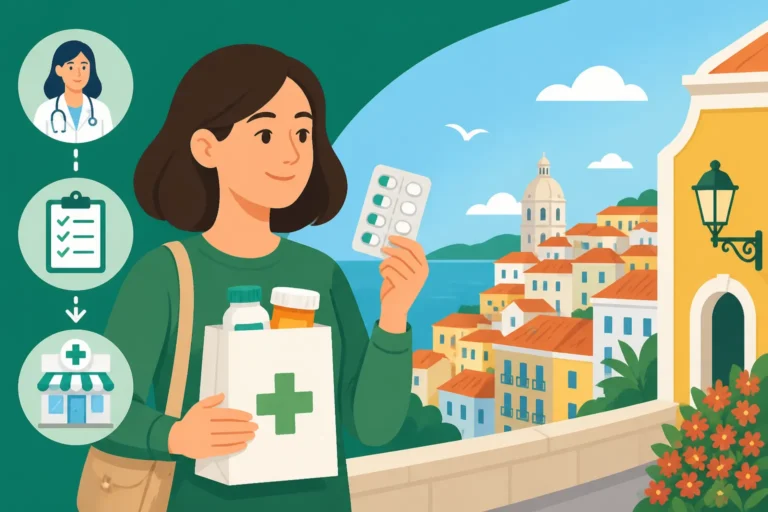
One area where healthcare is never truly "free" is at the pharmacy counter. Portugal uses a "comparticipação" (co-payment) system for medications. The government subsidizes a percentage of the cost of medicines that are on the approved list, and the patient pays the remainder.
For retirees, especially those with low incomes, the subsidies are higher. Some life-saving medications for chronic conditions are subsidized at 100%, but for the most part, you can expect to pay a small amount for your monthly prescriptions. It is vital to understand Pharmacies and Medication in Portugal: Prescriptions and OTC Drugs because the rules about what requires a prescription and what can be bought over-the-counter (OTC) are quite strict here. You won't find Ibuprofen 800mg sitting on a supermarket shelf; everything goes through the pharmacist.
For non-prescription health needs—like high-quality omega-3s, specific probiotics, or herbal teas that aren't common in Portuguese farmácias—I still rely on iHerb. The shipping to Portugal has become much more reliable in recent years, and it's a great way to maintain your health regimen without spending a fortune at the local specialty health shops, which can be quite pricey.
Why Public Healthcare Isn't Always the Only Answer
Even though the SNS is high quality, foreign retirees often face cultural and linguistic barriers that make the "free" system feel inaccessible. Most health centers communicate primarily in Portuguese, and while many doctors speak excellent English, the administrative staff may not. This can lead to massive frustration when trying to book appointments or follow up on test results.
Furthermore, the public system is currently facing significant pressure. There is a shortage of family doctors in many regions. If you move to a popular expat area like the Algarve or central Lisbon, you might find yourself in a situation where you are told there is no family doctor available for you. For more on this specific headache, check out Why does my Centro de Saúde say they have no Médico de Família available? and What to do if you don't have a family doctor but need a public consultation.
In these scenarios, having a private backup is not just a luxury; it’s a necessity for peace of mind. Using Cigna Global allows you to access a network of English-speaking doctors and modern facilities where you can book an appointment via an app in minutes. In my own life, I use the public system for my "big" things—blood work and annual screenings—but I go private for anything where I want a second opinion or a faster timeline.
Balancing Your Health Strategy in Portugal
To answer the core question: public healthcare is mostly free for foreign retirees, provided you have jumped through the correct bureaucratic hoops. If you are an EU/UK pensioner with an S1 form, your costs will be negligible. If you are from outside the EU, you will still have access to the same low-cost public care once you are a resident, but you will need to manage the initial years and the "waiting list" reality with private options.
Don't forget the small things that add up. Maintaining your health with quality supplements from iHerb and having a robust international insurance plan like Cigna Global ensures that you aren't just relying on a stressed public system. It’s about creating a hybrid model: use the public system for what it’s good at (emergency care and chronic disease subsidies) and use the private system for what it’s good at (speed, comfort, and communication).
Living in Portugal as a retiree is a dream, but that dream stays sweet only as long as you aren't stressed about your medical care. Take the time to register at your local Junta de Freguesia, get your NIF, and then head to the Centro de Saúde to get your health number. It might take a few visits and a lot of "Paciência," but once you are in the system, you can truly relax and enjoy the 300 days of sunshine.
Disclaimer
This article is for informational purposes only and does not constitute professional medical or legal advice. Healthcare laws and SNS regulations in Portugal can change frequently. Always consult with the official Portuguese health authorities (SNS) or a qualified legal professional regarding your specific residency and healthcare eligibility status.