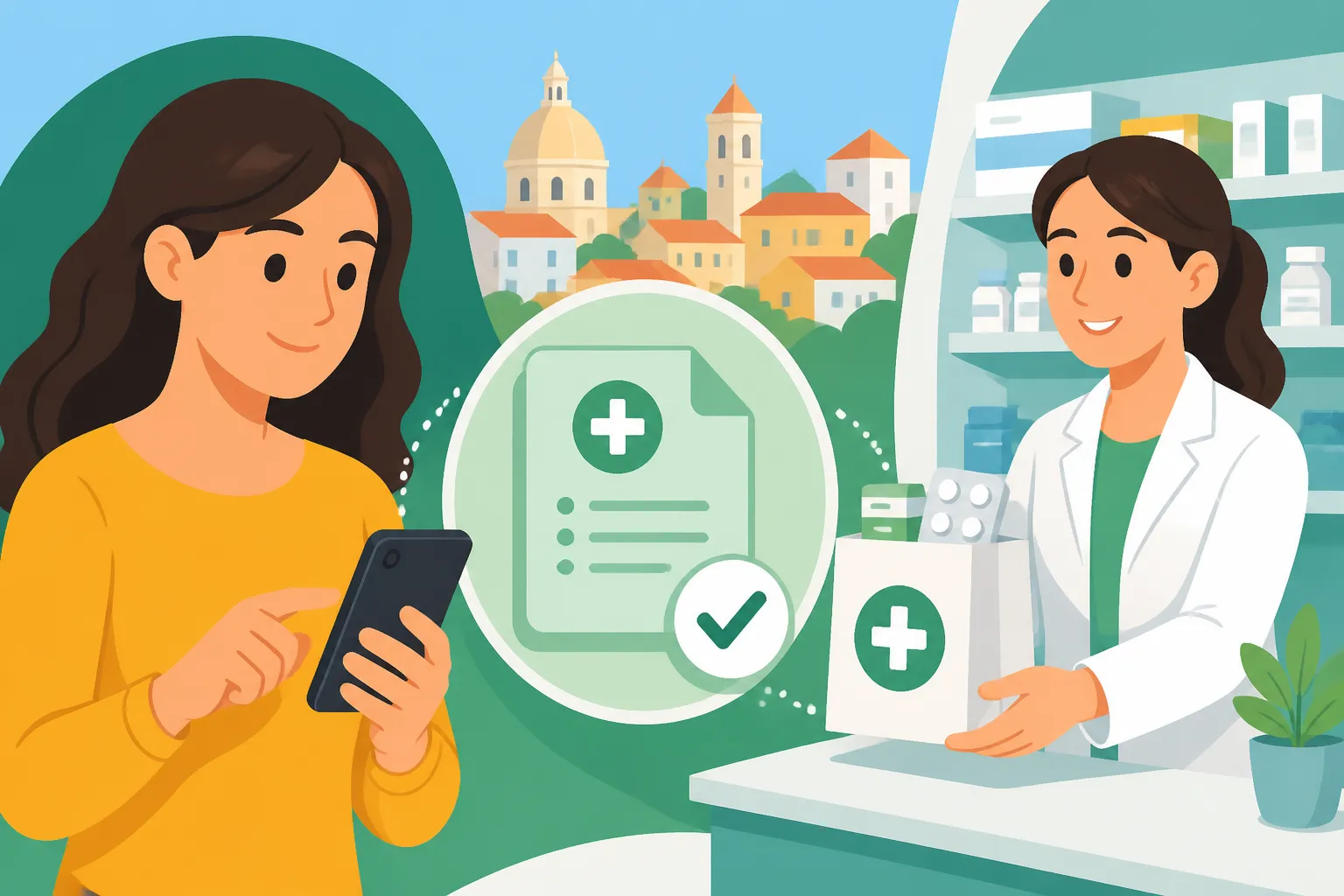
How to Fill a Prescription in Portugal (Receita Sem Papel)
Disclosure: This article contains affiliate links. If you buy through them, we may earn a commission at no extra cost to you. Read our full disclosure.
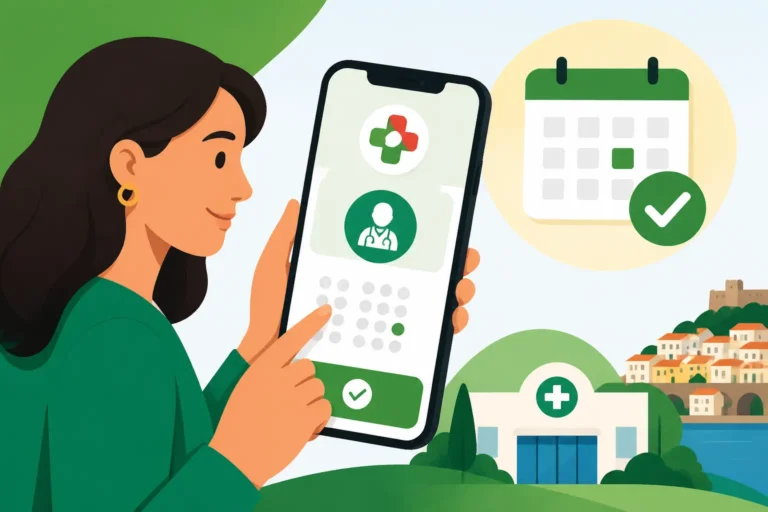
You walk out of a consultation in Lisbon or Porto. The doctor says your prescription is “already on your phone.” You have no paper, a text message full of numbers in Portuguese, and no idea what the pharmacist needs from you. This guide explains how the Receita Sem Papel system works, what each code means, and how to fill a prescription without fuss.
What the Receita Sem Papel Actually Is
The first time this happened to me, I stood outside a centro de saúde in Arroios staring at my phone. I was sure I’d been sent away without a prescription. I hadn’t. Portugal has moved almost entirely to electronic prescribing, and once you understand it, it is one of the smoother parts of the healthcare system. For a wider view of how pharmacies fit into daily life here, see Pharmacies and Medication in Portugal: Prescriptions and OTC Drugs.
Why There Is No Paper Prescription Anymore
“Receita Sem Papel” literally means “prescription without paper.” When a doctor prescribes something, the prescription goes into a central national system instead of onto a pad. Any pharmacy in the country can then pull it up. That covers the corner farmácia in a village in the Alentejo, the busy pharmacy at Rossio, and a 24-hour pharmacy in Faro.
For you, this means three things:
- You never have to carry the prescription back to a specific pharmacy.
- You can’t lose it in the way you’d lose a slip of paper.
- One prescription can hold several different medicines, and you can collect them at different times and in different places.
The trade-off is that you depend on a few codes. If you don’t know what they are, the system feels opaque.
The Codes in Your Text Message
After your appointment you’ll normally get an SMS, and sometimes an email, from the national health system. It contains:
- Número da receita. This is the long prescription number. It identifies your prescription in the national system.
- Código de acesso e dispensa. This is a shorter access code that authorizes the pharmacy to dispense the medicine. Treat it like a PIN, because anyone holding the number and this code can collect your medication.
- Código de direito de opção. This is the “right of option” code. You use it when you choose a different product from the one the pharmacy would otherwise dispense within the same medicine group, for example a specific brand instead of the generic.
You rarely need to type anything yourself. You show the message at the counter, and the pharmacist enters the codes or scans them.
The Guia de Tratamento as Your Backup
If you don’t have a Portuguese phone number, or you’d rather have something physical, ask for the guia de tratamento. This is a printed treatment guide. It lists each medicine, the dosage instructions, the validity dates and the same codes from the SMS. Older Portuguese patients often prefer it, and nobody will think it odd if you ask.
I strongly recommend asking for the guia in your first months, before your phone number is properly linked to your health record. It has saved me more than once when an SMS went to an old number.
You can also view your active prescriptions later in your online health area. See Accessing your medical records in Portugal: Using the SNS Portal do Utente for how that works.
Step-by-Step: Filling Your Prescription at a Portuguese Pharmacy
Look for the green cross. Pharmacies here are run by trained pharmacists, and the staff are often more helpful than you might expect. They will explain dosages, flag interactions and suggest cheaper equivalents.
Before You Leave the Doctor’s Office
A few seconds of checking here saves a lot of frustration later:
- Confirm the doctor has your correct mobile number. If they don’t, ask them to update it or ask for the printed guia.
- Check that the SMS has actually arrived before you walk away, or at least before you leave the building.
- Ask whether each medicine has a generic option, and whether the doctor has blocked substitution for any of them.
- If you take something long term, ask whether the doctor can issue a renewable prescription. This is called a receita renovável.
- Note the validity dates. Each line on the prescription has its own expiry, so a medicine you don’t collect in time may need a new prescription.
At the Counter
The interaction is usually quick:
- Say “Bom dia, tenho uma receita eletrónica” (“Good morning, I have an electronic prescription”).
- Show the SMS or the guia de tratamento.
- The pharmacist pulls up the prescription and confirms which medicines you want today.
- They may ask about generics: “Quer o genérico?” Saying yes usually lowers the price.
- Give your NIF if you want the purchase on your tax record. More on that below.
- Pay by card, cash or, in many pharmacies, MB Way.
If your Portuguese is still at the “obrigado and nothing else” stage, don’t worry. Many pharmacists in cities and tourist areas speak good English, and pointing at the screen works everywhere. For phrases and strategies beyond the pharmacy, see Navigating the public health system if you only speak English (Translation tips).
Filling Part of a Prescription Now and the Rest Later
This feature surprises newcomers in a good way. Suppose your doctor prescribes an antibiotic, an anti-inflammatory and a nasal spray on one Receita Sem Papel. You can collect the antibiotic today at the pharmacy next to the health centre. You can pick up the spray tomorrow at a pharmacy near your flat, and skip the anti-inflammatory entirely if you already have some at home.
Each line is tracked separately. The system knows what has been dispensed and what remains, so you just bring the same codes to the next pharmacy. Watch the validity date on each remaining line, because an uncollected line eventually expires.
If you need something urgently at night, the system works the same way at the rotating duty pharmacies. See What is a Farmácia de Serviço and how to find one open at 2 AM.
Generics and Your Right to Choose
Portuguese doctors usually prescribe by active ingredient, not by brand. That leaves the pharmacy free to offer you any equivalent product in that group, and the generic is often the cheapest.
If you want a particular brand, perhaps because it’s the one you’ve taken for years, you can ask for it. The código de direito de opção exists for exactly this. Expect to pay more for a branded product when a cheaper equivalent exists.
Sometimes a doctor marks a prescription so it can’t be substituted, for clinical reasons. In that case the pharmacist will dispense exactly what is written.
Different Situations, Different Experiences
How smooth the process feels depends a lot on your status. A resident with a utente number and a tourist with a sore throat have quite different experiences.
SNS Patients With a Número de Utente
If you’re registered with the public system, the process is at its easiest. Your prescriptions are tied to your health record, your phone number receives the codes, and the state contribution toward the price applies automatically at the pharmacy for eligible medicines. That contribution is called comparticipação.
If you haven’t registered yet, it’s worth doing early, because it affects what you pay at the counter. See Registering with the Centro de Saúde: Getting Your SNS Número de Utente.
Private Doctors at CUF, Lusíadas, or Hospital da Luz
Private doctors in Portugal also prescribe through the Receita Sem Papel system. A prescription from a specialist at a CUF hospital looks and works the same as one from your public family doctor. If your utente number is on file with the private clinic, the state contribution can still apply to eligible medicines.
Make sure the private clinic has your utente number in your patient profile. If it doesn’t, the prescription may still be issued, but you’ll lose the state contribution and pay more.
Tourists, Nomads, and People Without a Utente Number
You can still get a Portuguese electronic prescription without being in the public system. A doctor at a private clinic, or a Portuguese-licensed doctor working online, can issue one. You’ll generally pay the full retail price at the pharmacy, because there is no state contribution to deduct.
For digital nomads, a remote consultation is often the fastest route to a local prescription. See Telehealth and Online Doctors: Using TravelDoctores and Doctorsa.
If you’re covered by a travel medical policy such as SafetyWing, keep the consultation invoice and the pharmacy receipt together. Prescription costs linked to a covered illness or injury may be claimable, but the rules depend on your policy wording. Check your plan documents or SafetyWing’s own pages for the details.
Foreign Prescriptions
A paper prescription from your doctor in Ohio or Manchester generally won’t be enough to get prescription-only medicine in Portugal. Pharmacists can’t dispense it on a non-Portuguese prescription in most cases. EU prescriptions sit in a different category and may be honoured at the pharmacist’s discretion.
The practical solution is to book a local consultation and have your medication re-prescribed through the Receita Sem Papel system. Bring the original packaging or a doctor’s letter listing the active ingredients. Brand names often differ between countries, and the ingredient name is what the Portuguese doctor needs. For the full picture, see Can I use a US or UK medical prescription at a Portuguese pharmacy?
| Situation | How You Receive the Prescription | What You Typically Pay | Key Tip |
|---|---|---|---|
| SNS resident with utente number | SMS, email, or printed guia | Reduced price on eligible medicines due to state contribution | Keep your phone number updated on your health record |
| Private doctor, utente number on file | SMS or printed guia via Receita Sem Papel | State contribution can still apply to eligible medicines | Confirm the clinic has your utente number |
| Private doctor, no utente number | SMS or printed guia | Full retail price | Ask for generics to keep costs down |
| Tourist or nomad via online doctor | SMS or email | Full retail price | Save invoices for your travel insurer |
| Foreign paper prescription only | Not valid for most prescription-only drugs | Not applicable | Get a local consultation and re-prescription |
Payment, Insurance Reimbursement, and Long-Term Medication
Prices at the counter can vary noticeably from one visit to another, even for what seems like the same thing. It helps to know why.
What Determines the Price You Pay
Four factors shape your bill:
- Whether the medicine is eligible for state contribution.
- Which contribution level applies to that medicine.
- Whether you’re registered with the SNS.
- Whether you choose a generic or a brand.
Certain patient groups and certain chronic conditions can qualify for higher contribution levels.
Always give your NIF at the till. Pharmacy purchases with your tax number feed into your e-Fatura record as health expenses, and these can reduce your annual tax bill. See Deducting Expenses on IRS: e-Fatura, Supermarkets, Rent, and Healthcare.
Getting Reimbursed by Private Insurance
Portuguese private health plans and international expat plans handle medication differently. Some reimburse a share of prescription costs. Others only cover medicines linked to a hospital stay or a covered treatment. Many exclude medication entirely on basic tiers.
If you hold an international policy such as Cigna Global, check your outpatient benefits for prescribed medicines. Each insurer sets its own limits and conditions, so always read the plan documents.
For any claim, you’ll typically need:
- The pharmacy invoice issued with your name and NIF.
- A copy of the prescription, either the guia de tratamento or a screenshot of the prescription details.
- The consultation invoice, if the insurer asks for proof of the medical reason.
- A completed claim form or an in-app submission, depending on the insurer.
For the mechanics of submitting claims, see How to File a Private Health Insurance Claim in Portugal. If you’re weighing up an international policy, Cigna Global and similar providers are compared in Using Cigna Global or Allianz for international expat healthcare in Portugal.
Chronic and Repeat Prescriptions
If you take blood pressure tablets, thyroid medication or anything else long term, ask your doctor for a renewable prescription. It lets you collect your medication in several rounds over a longer period without booking a new appointment each time. Your medicines appear on one prescription, and you return to any pharmacy with the same codes when you need the next pack.
Plan ahead, because waiting times for a family doctor appointment can be long in some areas. Keep an eye on the remaining lines in your online health area and request a renewal before you run out. See How to Refill Long-Term Medication in Portugal.
Troubleshooting Common Prescription Headaches
Even a good system has bad days. These are the problems I’ve run into myself or watched friends deal with, and how to solve them.
The SMS Never Arrived
Start by checking your spam or blocked-message folders. Some phones filter automated health system messages.
If nothing is there:
- Log into your online health area and look under prescriptions. Your active prescriptions should appear with their codes.
- Go back to the health centre or clinic reception and ask them to resend the codes or print the guia de tratamento.
- Ask the pharmacist. In some cases they can locate your prescription with your identification and utente number, though practice varies between pharmacies.
The most common cause is an outdated phone number on your record. Fix it at your next visit and the problem usually disappears.
The Pharmacy Doesn’t Have Your Medicine in Stock
Smaller neighbourhood pharmacies don’t stock everything. They usually order from a distributor and can often have the item ready later the same day or the next day.
You have two options. Leave your details and collect later, or take your codes to another pharmacy. Because nothing is tied to one location, switching costs you nothing but a walk. During supply shortages, the pharmacist may also suggest an equivalent product, which you can accept or refuse.
Expired Lines and Lost Codes
If a line on your prescription expires before you collect it, the pharmacy can’t dispense it, and you’ll need a new prescription from a doctor. Set a phone reminder for each medicine’s validity date so it doesn’t catch you out.
If you lose the codes and can’t access your online health area, the clinic that issued the prescription can reprint the guia. For antibiotics in particular, don’t expect any pharmacy to give you the medicine without a valid prescription, however friendly the pharmacist is. See Antibiotics rules in Portugal: Why you absolutely need a doctor’s prescription.
Once you’ve done it a couple of times, the Receita Sem Papel stops feeling like a puzzle. You’ll show your phone, choose generic or brand, give your NIF, pay, and leave in a few minutes.
Disclaimer
This article is for general informational purposes only and does not constitute professional advice. Laws, prices and regulations vary by location and change over time. Consult a qualified professional for guidance on your specific situation.