How to convert a US driver’s license to a Portuguese license (IMT process)
Disclosure: This article contains affiliate links. If you buy through them, we may earn a commission at no extra cost to you. Read our full disclosure.
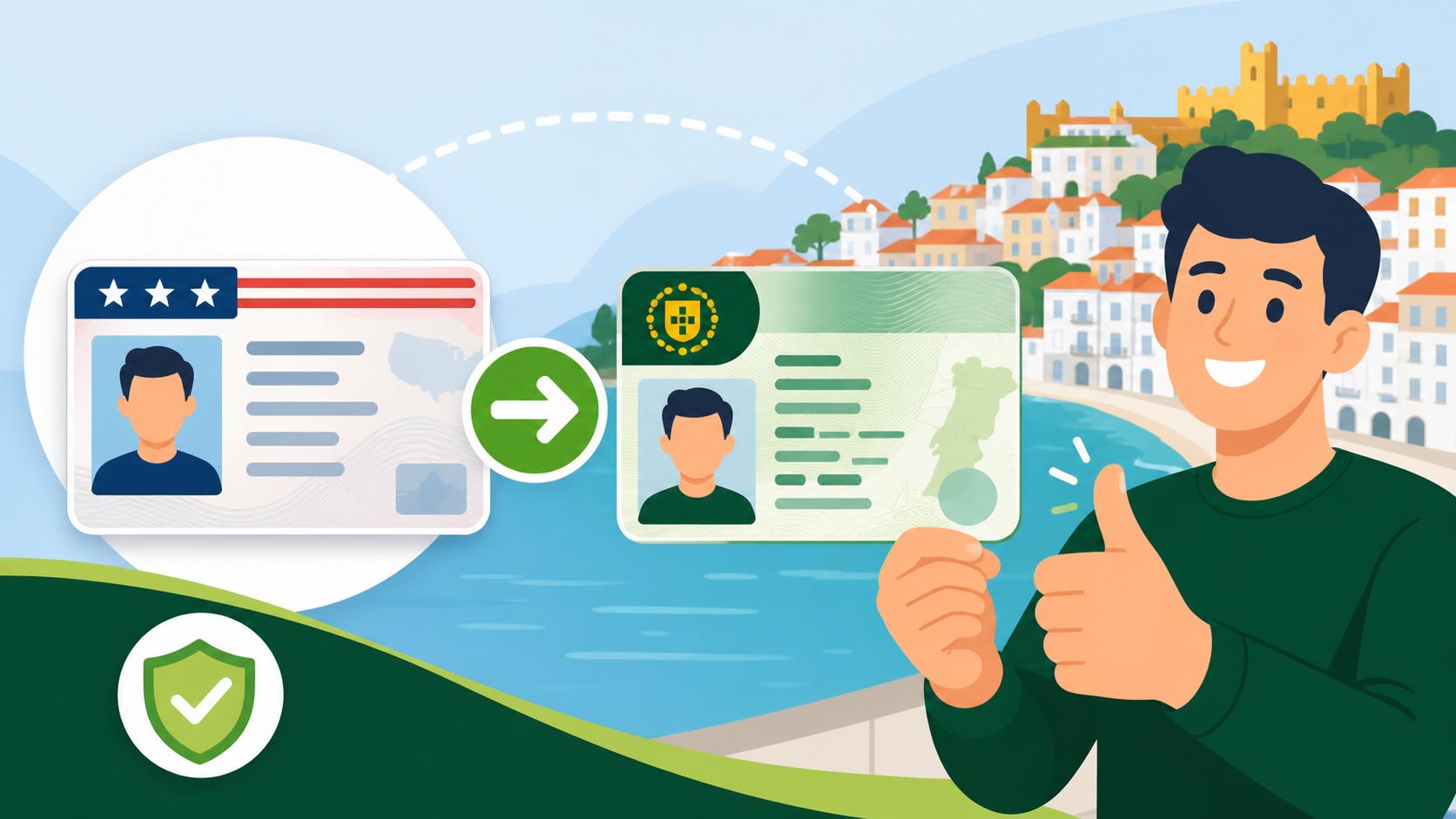
Staring at a Portuguese traffic circle while your US driver's license is just days away from its legal expiration in this country is a special kind of stress that I wouldn't wish on anyone. I remember the cold sweat I broke into when a local friend told me my California license was basically a souvenir after six months of residency. This guide breaks down the high-stakes, often confusing IMT exchange process so you can keep driving legally without starting from scratch at a Portuguese driving school.
The Legal Window and Why You Cannot Afford to Wait
Many expats arrive in Lisbon or Porto thinking they have years to figure out the driving situation, but the Portuguese authorities operate on a very specific, tiered timeline. If you miss these windows, you aren't just looking at a fine; you might be forced to take the full Portuguese driving exam, which is notoriously difficult, expensive, and conducted entirely in Portuguese.
The 90 Day Grace Period for New Residents
From the moment you receive your residence permit from AIMA, the clock starts ticking. For the first 90 days, you are technically allowed to drive on your US license, provided it is valid and you have an International Driving Permit (IDP) to accompany it. However, the IMT (Instituto da Mobilidade e dos Transportes) strongly suggests you start the exchange process during this window. I found that having a stable home base through a service like Uniplaces made this much easier, as you need a fixed address to even begin the paperwork. During these first three months, you are in the "safety zone," but don't let the relaxed Mediterranean lifestyle fool you into procrastination.
The 183 Day Hard Deadline
This is the date that keeps expats awake at night. Once you have been a resident for 183 days, you are legally required to have exchanged your license. If you are caught driving on a US license after this point without having at least started the IMT application, the police (GNR or PSP) can treat you as if you have no license at all. This involves heavy fines and the potential impounding of your vehicle. More importantly, if you are involved in an accident after the 183-day mark without a Portuguese license, your insurance provider will almost certainly deny your claim, leaving you personally liable for damages. You should consult a Living in Portugal Guide 2027: The Complete Relocation Manual for Expats to ensure your overall residency timeline aligns with these driving requirements.
The Two Year Cutoff for Automatic Exchange
If you wait longer than two years after becoming a resident to start the process, you lose the right to a direct exchange. At that point, the IMT requires you to pass a practical driving test. Some expats have lived here for three years, ignored the letters, and ended up spending over 1,000 Euros on driving lessons just to get back the privileges they already had. Avoid this at all costs by initiating the process the moment your AIMA Portugal: Navigating the New Immigration Agency and Residence Permits paperwork is finalized.
Gathering Your Documents for the Paperwork Mountain
The Portuguese bureaucracy loves paper, and the IMT is no exception. You cannot simply walk into an office with your US license and expect a swap. You need a very specific "kit" of documents, some of which must come from the United States.
The Driver's Abstract and the Authenticity Issue
Your physical US plastic card isn't enough proof for the IMT. They require a "Driver's Abstract" or a "Certified Driving Record" from your home state's DMV. This document must prove that your license is valid, has no active suspensions, and—crucially—must be apostilled. I had to have a family member back in California physically go to the DMV, get the record, and then mail it to the Secretary of State for the apostille before shipping it to me in Portugal. To stay connected with everyone back home during this logistical nightmare, I used an eSIM from Airalo to avoid roaming charges while I sat on long-distance hold with the DMV.
The Medical Certificate or Atestado Médico
Unlike the US, where you just peek at an eye chart, Portugal requires a formal medical evaluation. You need to visit a doctor to get an "Atestado Médico de Condutor." This is an electronic certificate that the doctor uploads directly to the IMT database. You can get this from a private doctor or at your local health center once you have completed Registering with the Centro de Saúde: Getting Your SNS Número de Utente. The doctor will check your vision, hearing, and basic motor skills. Be prepared to answer questions about any chronic medications you take, as certain prescriptions can trigger the need for a secondary psychological evaluation.
NIF and Proof of Residency
You cannot move a finger in the Portuguese system without your NIF (Número de Identificação Fiscal). You will need to provide your NIF and a digital copy of your residence card. Additionally, you need an "Atestado de Morada" from your local Registering Your Address with Junta de Freguesia (Atestado de Morada) to prove that you actually live where you say you do. The IMT is very strict about address matching; if the address on your medical certificate doesn't match the address on your residence card, your application will likely be rejected.
| Document Required | Source | Notes |
|---|---|---|
| US Driver's License | Your Wallet | Must be valid and original |
| Driver's Abstract | US State DMV | Must be apostilled and recent |
| Medical Certificate | Portuguese Doctor | Must be the electronic version |
| Residence Permit | AIMA | Must show your current Portuguese address |
| NIF Document | Finanças | Essential for all government portals |
| Passport | US State Dept | Used for identity verification |
The Step-by-Step IMT Online Portal Submission
In the old days, you had to camp out in front of the IMT office at 5 AM. Thankfully, the process has moved largely online through the "IMT Online" portal, though it still requires a fair amount of patience and a high-speed internet connection.
Creating Your Account and Initial Upload
First, you’ll need to register on the IMT portal using your NIF and a password. If you have a Portuguese "Chave Móvel Digital," the login process is much smoother. Once inside, you’ll look for the section titled "Troca de Carta de Condução Estrangeira." This is where you will upload scans of all the documents we discussed. Ensure your scans are clear and in PDF format. Applications can be delayed for weeks just because a scan of a passport was slightly blurry. While waiting for the portal to load, you might want to look into NIF and NISS: How to Get Your Portuguese Tax and Social Security Numbers if you haven't fully secured your tax credentials yet.
Paying the Fees and the Waiting Game
After you submit your digital application, the IMT will review it. This can take anywhere from a few weeks to several months. Once they approve the digital files, they will issue a "DUC" (Documento Único de Cobrança), which is essentially an invoice. You can pay this at any Multibanco ATM or through your home banking app. The cost for a standard exchange is typically around 30 Euros. Keep the receipt! It is a vital part of your paper trail. If you are nervous about the wait times, it’s worth reading up on Driving in Portugal: Exchanging Your Foreign License to a Portuguese One to see how other expats have managed the delay.
The Biometrics Appointment
Once the fee is paid, you will eventually receive an email (check your spam folder daily!) inviting you to a physical IMT office for a biometrics appointment. This is where they take your photo, scan your signature, and—most importantly—take your physical US driver's license. Yes, you have to surrender it. I felt a weird pang of loss handing over my US license, but it's a mandatory part of the exchange. In return, they will give you a temporary paper license called a "Guia."
Real-World Challenges and Survival Tips
Navigating the IMT isn't just about the rules; it's about the "soft skills" of living in Portugal. The system is currently under significant strain due to the influx of new residents, and backlogs are common.
Dealing with Language Barriers and the Guia
While many IMT officers in Lisbon or Porto speak some English, it is not guaranteed. If your Portuguese is still at the "ordering a coffee" level, I highly recommend bringing a friend who speaks the language or hiring a relocation assistant for the biometrics day. The "Guia" they give you is a piece of paper that allows you to drive in Portugal, but be warned: it is generally not valid for driving outside of Portuguese borders. If you plan to take a road trip to Spain, you will likely need to wait for your physical plastic card to arrive in the mail. If you're staying local, you might want to order a high-quality phone mount from Amazon Spain to help navigate the tricky streets of Lisbon while using your GPS.
What Happens to Your US License?
Many people ask if they can just say they lost their US license so they can keep it. I wouldn't recommend this. The IMT often sends the surrendered licenses back to the issuing DMV in the United States. If you ever return to the US for a visit and need to drive, most states allow you to use your Portuguese license as a tourist, or you can "exchange" it back for a US one if you move back permanently. For those who frequently travel back and forth, understanding the broader Public Transport and Driving in Portugal: Trains, Tolls, and Licenses landscape is helpful for those times you are between licenses.
Managing the Wait for the Physical Card
Once you have your Guia, the physical Portuguese license will be mailed to your registered address. This can take two weeks or two months depending on the time of year and the current backlog. Ensure your mailbox is clearly marked with your name; CTT (the Portuguese post office) is notorious for not delivering mail if the name on the box doesn't match the recipient. While you wait, make sure you are familiar with Navigating the Portuguese Toll System: Via Verde and Electronic Tolls, as driving in Portugal involves much more than just having a valid license—it’s also about navigating the complex highway payment systems.
Essential Safety and Legal Reminders
Driving in Portugal is a privilege that comes with strict responsibilities. The transition from US driving culture to European road rules involves more than just a new piece of plastic.
Understanding the Points System
Your new Portuguese license comes with a "points" system. You start with 12 points, and infractions like speeding or using a mobile phone will deduct points. If you reach zero, you lose your license. The fines are significantly higher here than in many US states, and the "zero tolerance" for drinking and driving is strictly enforced. It’s a completely different world than the relatively lax enforcement on some US highways.
Keeping Your Documents in the Car
In the US, we often just carry our license. In Portugal, if you are pulled over, the police will ask for four things: your license, your ID (residence card), the car's registration (Documento Único Automóvel), and the proof of insurance (the green square in your windshield). Missing any of these can result in an on-the-spot fine. I keep all my "car papers" in a specific folder in the glove box so I’m never scrambling during a routine check.
Disclaimer
This guide is intended for informational purposes only and does not constitute legal advice. Immigration laws and IMT regulations in Portugal are subject to frequent change. Always verify the latest requirements with the official IMT portal or a qualified legal professional before beginning your application. The author is a lifestyle blogger sharing personal experiences and research, not a government official.