How to Use Via Verde and Pay Tolls in Portugal
Disclosure: This article contains affiliate links. If you buy through them, we may earn a commission at no extra cost to you. Read our full disclosure.
Picture this: you have just driven your new-to-you car off an electronic-toll motorway, and there was no toll booth, no barrier and nobody to pay. A week later you are wondering whether a fine is on its way. This guide covers how Via Verde works, how to pay electronic tolls with or without a device, and what to do when a passage goes unpaid.
I have lived through every version of this. There was the rental car with a mystery transponder, the first car I bought here that came with no device at all, and the friend visiting from Seville whose Spanish tag worked better than my Portuguese setup. Portuguese tolls are logical once you see the system, but nobody explains it when you arrive. Let’s fix that.
How Tolls in Portugal Actually Work
Before getting into Via Verde itself, you need the basic map in your head. Portugal runs two kinds of tolled motorways side by side, and the confusion foreigners feel comes from the fact that they look almost identical from behind the wheel.
Traditional Toll Plazas With Barriers
On many of the older concession motorways, such as large stretches of the A1 between Lisbon and Porto or the A2 heading south towards the Algarve, you still meet a classic toll plaza. You take a ticket when you enter the motorway and pay when you exit, based on the distance travelled. The plaza has several types of lanes, and picking the right one matters.
- Lanes marked with a green “V” sign are reserved for Via Verde devices. The barrier lifts automatically as the device beeps.
- Lanes with a card or coin symbol let you pay with a bank card or cash at a machine or with an attendant.
- Some lanes take cards only, which helps if you never carry coins.
If you have no device, never drive into a green “V” lane. Usually you will be stuck at a barrier with a queue of irritated Portuguese drivers behind you. I did this exactly once, on the A1 near Santarém, and I still remember the horn chorus. If it happens to you, stay calm, put your hazards on and press the help button. An operator will talk you through it, usually in Portuguese, though a basic English request tends to work. Do not reverse out of the lane.
Electronic-Only Tolls on the Former SCUT Motorways
The second system catches people out. Many motorways that were once toll-free, known as SCUT roads, were converted to electronic-only tolling. Examples include parts of the A28 north of Porto and of the A41 and A42 around Porto, but which roads are tolled has changed over time, so check the current list on the official toll information pages before you drive. There are no booths here. Instead, overhead gantries read your device or photograph your number plate as you pass at full speed.
You will see blue signs saying “Portagem Electrónica” or “Electronic Toll Only” as you approach these roads. Tolls are charged per gantry, so a short hop between two exits might cost very little, while a longer drive racks up a series of small charges. The gantry does not care whether you meant to pay. It records the passage, and the responsibility for paying falls on the vehicle’s registered owner or, for rentals, on whoever holds the contract.
When you first get here, the situation can feel unfair: you have done nothing wrong and simply drove on a public road, yet now you owe money with no obvious way to pay. That is a completely valid reaction. The good news is that the payment routes are well established once you know them.
Where Via Verde Fits In
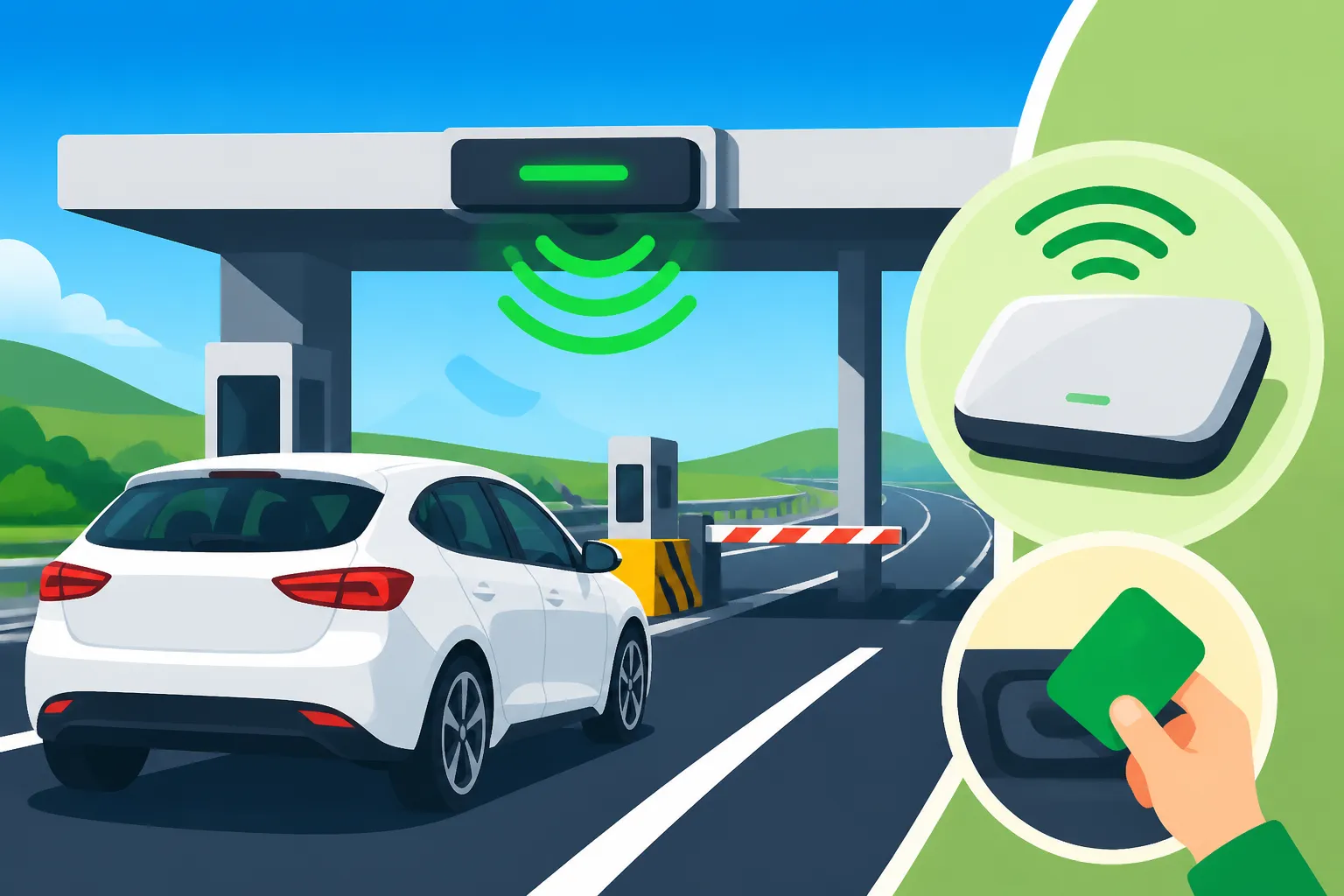
Via Verde is the electronic toll-payment system used across almost the whole Portuguese motorway network, both at barrier plazas and electronic gantries. It works through a small device, called an identificador, stuck to the inside of your windscreen. The device is linked to a payment method, typically a Portuguese bank account or card. Every passage is charged automatically, and you see the details in the Via Verde app or on your statement.
If you live here and drive more than a handful of times a year, a Via Verde device is the single best quality-of-life upgrade you can make. For a fuller picture of the network, see Navigating the Portuguese Toll System: Via Verde and Electronic Tolls.
Getting and Using a Via Verde Device as a Resident
When I finally got my own device, I wished I had done it in my first month. Here is what the process looks like and what the device does beyond tolls.
What You Need Before You Sign Up
Via Verde contracts are designed for people embedded in the Portuguese system, so you will want a few things in place first:
- A Portuguese NIF, the tax number you need for almost everything here.
- A Portuguese bank account with an IBAN, or a payment method Via Verde accepts. Check their current list of accepted methods on their own site, because the options change over time.
- The vehicle’s registration details, including the plate number and vehicle class.
- A postal address where you can receive correspondence.
- A phone number and email address for account alerts and the app.
The address piece can be awkward for brand-new arrivals living out of a suitcase. If you are spending your first months in a mid-term furnished flat, a platform like Spotahome can at least give you a stable rental address with a contract while you hunt for something longer term. That makes the wider admin chain, from bank to Via Verde, much smoother. If the bank account is still on your to-do list, see Opening a Bank Account in Portugal: Best Banks for Foreigners and Expats.
Similarly, the Via Verde app and many confirmation steps rely on SMS codes and mobile data. If your Portuguese SIM is not sorted yet, an Airalo eSIM keeps you online in the meantime, although for SMS-based verification you will usually want a local number. Getting a Portuguese SIM card at Lisbon Airport: Vodafone vs NOS vs MEO walks through the local options.
Step-by-Step: Activating Your Device
The exact flow evolves, so treat this as the shape of the process and confirm the details on the Via Verde site or in a Via Verde shop.
- Choose your channel. You can sign up online, through the app, or in person at a Via Verde store. They have shops in larger cities and at some service areas, plus partner points.
- Pick a plan. Via Verde offers different subscription models, ranging from a basic toll-only option to plans bundling extra services. Compare them on the official page, because the structure and pricing are revised from time to time.
- Enter your vehicle details. The device is tied to a specific vehicle class, which matters because tolls differ by class.
- Link your payment method. Usually this is a direct debit from your Portuguese IBAN or a linked card.
- Receive the device. In a shop you leave with it; online orders arrive by post.
- Mount it correctly. Stick it to the windscreen behind the rear-view mirror as instructed. Some modern cars have a metallised windscreen with a dedicated clear zone for transponders, so check your car’s manual.
- Test it. The first time you pass a gantry or green lane, listen for the single beep, then check the app a day or two later to see the passage logged.
A practical note on mounting: if you share the device between two cars, a simple windscreen transponder holder makes swapping easy. Only do this if your contract allows it and the vehicle classes match. Small accessories like these are easy to find on Amazon Spain, which ships to most of mainland Portugal, along with things like a phone mount for navigation so you can watch for those “Electronic Toll Only” signs.
Understanding the Beeps and the App
The device communicates with you through beeps, and learning them saves stress:
- One short beep usually means the passage was registered normally.
- Several beeps, or an unusual pattern, can signal a problem such as a low battery, a payment issue or a device not correctly associated with your account.
If you hear an odd beep, open the app as soon as you can safely do so and look at your account status. Contact Via Verde’s support if something looks wrong. A recorded passage with an account problem can still end up as an unpaid toll, so do not ignore it.
The app is where Via Verde really earns its keep. It shows each toll passage with the gantry name, time and amount, so you can see exactly what you paid for that Sunday trip to Lagos. You can download invoices, which matters if you deduct business expenses. You can also manage which vehicles are on your account.
Beyond Tolls: Parking, Fuel and More
Depending on your plan, the same device can pay for things that have nothing to do with motorways. Many underground car parks in Lisbon and Porto have Via Verde lanes, so the barrier lifts and the charge lands on your account. Some fuel stations and even certain drive-throughs accept it too. Via Verde has also expanded into app-based services such as street parking payment in some municipalities.
Which services work depends on your subscription, so check the plan details before assuming the airport car park will lift its barrier for you. Some extra services may only come with certain plans.
Paying Tolls Without a Via Verde Device
This is where most of the confusion lives, and where your number plate’s country of registration completely changes the answer.
Portuguese-Plated Cars Without a Device
Say you have just bought a second-hand car with Portuguese plates, and the previous owner took their device with them. You spend a weekend driving on electronic-toll motorways, passing a string of gantries. Nothing beeps and nothing happens. Here is what you do.
As of October 2026, according to CTT’s information for vehicles without a device, you have 15 working days after the trip to pay electronic tolls. The amounts can take up to 48 working hours to become payable after you pass the gantry, so if you try to pay the same evening and find nothing listed, that is normal. Wait two working days and check again.
You can pay in several ways:
- At a CTT post office counter.
- At a Payshop agent, the small payment points you find in many newsagents, cafés and kiosks.
- By MB WAY.
- With a Multibanco reference.
As of October 2026, this post-payment route adds an administrative charge of EUR 0.32 per passage, capped at EUR 2.56 per payment. In practice, if your weekend trip crossed several gantries, each one carries that small extra charge until you hit the cap for that payment. Paying several passages together rather than one at a time keeps the overhead under control.
This post-payment option is available only for Portuguese-plated vehicles. If your car has foreign plates, skip to the next subsection.
Here is the routine I used during my device-less months:
- Drive normally, and make a mental note or quick phone memo of the date and which electronic-toll roads you used.
- Wait at least two working days so all passages have time to become payable.
- Go to a CTT counter or Payshop point with your number plate, or use MB WAY or a Multibanco reference.
- Pay everything outstanding for that plate in one go, well inside the 15 working days.
- Keep the receipt until you are sure nothing else turns up.
The Multibanco route is underrated. If you already use the ATM network for utility bills, see How to use the Multibanco ATM network to pay taxes, tolls, and utility bills. And if MB WAY is not on your phone yet, Using the MB Way app: Why it’s better than carrying cash in Portugal makes a good case for setting it up.
Foreign-Plated Cars
If you drive into Portugal on Spanish, French, German, UK or other foreign plates, the CTT post-payment route is not open to you. You need to arrange payment in advance or have a compatible device. The main options have historically included the following, though names, availability and conditions change, so verify each one on the official Portugal Tolls information pages before your trip:
- A Spanish Via-T device. Thanks to interoperability between Spain and Portugal, many Spanish toll tags work on Portuguese motorways, including electronic gantries. My Seville friend never thought about tolls at all. Check with your Spanish tag provider that Portuguese use is enabled on your contract.
- A temporary Via Verde device for visitors, rented for a short stay and returned afterwards.
- A registration system that links your number plate to a bank card at dedicated roadside points near the main land border crossings. Charges for electronic gantries then go straight to the card.
- Prepaid toll options that you buy in advance and that cover electronic tolls up to a set value or for a set period on certain roads.
If you are moving to Portugal with a foreign-plated car before importing it, sort this out before you cross the border. Driving onto electronic-toll roads without any arrangement means passages you may have no simple way to settle afterwards.
Rental Cars and Their Toll Devices
Rental cars deserve their own warning, because the cost lands on your card days or weeks later. Most rental companies in Portugal offer a Via Verde device as an add-on, often charged as a daily fee plus the tolls you actually use. Some include it automatically; others treat it as optional.
My advice, learned the hard way at Lisbon airport:
- Ask at the counter whether the car has a toll device and whether it is activated.
- Read the contract line about tolls and the fee the company charges for handling any unpaid passages.
- If you decline the device, plan your route to avoid electronic-only roads or understand how you will pay.
- Check your card statement after the trip and query any toll or admin charge that looks wrong.
Rental admin fees for processing unpaid tolls can dwarf the tolls themselves, so the device is almost always worth it if you are going anywhere near electronic-toll roads. For rental-specific details, see How to Rent a Car in Portugal Without Toll Surprises and How Do Tolls Work in Portugal for Rental Cars?.
Comparing Your Payment Options
Here is everything side by side.
| Situation | Best Payment Method | When You Pay | Extra Charges | Key Watch-Out |
|---|---|---|---|---|
| Resident with Portuguese-plated car, frequent driver | Via Verde device linked to bank account or card | Automatically, charged to your account | Depends on the Via Verde plan you choose; check the official page | Keep payment details valid and the device correctly mounted |
| Portuguese-plated car, no device | CTT counter, Payshop point, MB WAY or Multibanco reference | Within 15 working days after the trip; amounts can take up to 48 working hours to appear | EUR 0.32 per passage, capped at EUR 2.56 per payment, as of October 2026 | Wait two working days before checking, and pay in one batch |
| Foreign-plated car with Spanish Via-T device | Spanish tag through interoperability | Automatically, through your Spanish provider | Set by your Spanish provider | Confirm Portuguese use is enabled on your contract |
| Foreign-plated car, no device | Temporary visitor device, plate-to-card registration at border points or prepaid toll options | Arranged before or on entering the electronic-toll roads | Varies by option; check the official toll information pages | CTT post-payment is not available for foreign plates |
| Rental car | Rental company’s Via Verde device | Billed by the rental company after the rental | Daily device fee plus tolls, as set by the rental company | Unpaid tolls can trigger rental admin fees |
When Things Go Wrong: Unpaid Tolls, Disputes and Practical Habits
Even careful drivers miss a payment eventually. Life happens, a weekend trip slips your mind, or a device fails silently. Here is how to handle it without panicking.
What Happens If You Miss the Payment Window
If a Portuguese-plated vehicle passes an electronic gantry and the toll is not paid within the 15 working days, the debt moves out of the simple post-payment system. The motorway operator pursues it, and the owner usually gets a notification by post at the address on the vehicle registration. That letter will set out the toll amount plus administrative costs, and it gives you a deadline to pay at that stage.
If that is ignored too, the matter can escalate into an administrative offence process, with fines and procedural costs that are many times the original toll. In the later stages, collection can pass to the Autoridade Tributária, the tax authority, which means the debt shows up against your NIF on the Portal das Finanças. Unpaid debts there can complicate other admin, including situations where you need a certificate showing you owe nothing to the state.
The amounts and stages are set by law and are revised, so check the notification you receive and the official sources rather than relying on anyone’s memory of figures. The principle is simple: the earlier you pay, the cheaper it is. For the online steps, How to pay an unpaid SCUT electronic toll online before getting fined is the place to start, and How to pay a Portuguese traffic fine (Multa) using the Portal das Finanças covers the tax-portal side if it has gone that far.
A real scenario: a neighbour of mine in Loulé bought a car, but the registration transfer took weeks to process. Toll notices for the previous owner’s trips kept arriving at her address, and some of her own early trips were initially linked to the old owner. She sorted it by keeping her purchase documents and dated sale paperwork handy, and contacting the operator to prove when ownership changed. If you buy a used car, keep that paperwork somewhere safe. Buying a Car in Portugal: IUC Tax, Inspections (IPO), and High Vehicle Costs covers the transfer process in more detail.
Disputing a Toll Charge
Mistakes happen. Cameras misread plates, devices register a passage twice, or someone clones a plate. If you get a notice for a trip you did not make, take these steps:
- Do not simply ignore it. Silence is treated as acceptance.
- Gather evidence: where your car was on that date, photos, work records, receipts showing you were elsewhere.
- Contact the entity named on the notice using the contact details on the letter, and lodge a formal complaint within the deadline it states.
- If you have a Via Verde device, pull the passage history from the app. Gaps or duplicates are often obvious.
- Keep copies of everything you send and receive, and send important letters by registered post so you can prove the date.
For Via Verde account issues, such as a double charge or a passage billed to the wrong vehicle class, the app and customer service are usually quick to correct obvious errors once you send them the passage details. The Livro de Reclamações, Portugal’s official complaints book, is also available if a service provider does not respond reasonably.
Habits That Keep You Out of Trouble
After years of driving here, these are the routines I swear by:
- Watch for the signs. Blue “Electronic Toll Only” or “Portagem Electrónica” signs tell you the next stretch has gantries. Navigation apps also let you avoid tolls, though the alternative national roads can be much slower.
- Avoid green “V” lanes without a device. At barrier plazas, follow the card or attendant lanes instead.
- Batch your post-payments. Without a device, set a reminder two or three working days after any trip involving gantries, then pay everything together to minimise the per-passage extra charge.
- Update your address. Toll and fine notices go to the address on your vehicle registration. If you move flats, update it so letters do not pile up at an old address.
- Check the Via Verde app monthly, even when everything seems fine. It takes two minutes and catches device or payment problems early.
- Sort tolls before border trips. If friends or family are driving in from Spain or further afield on foreign plates, send them the official toll information pages before they set off.
For a broader look at driving admin, including licences, see Driving in Portugal: Licenses, Tolls, and Via Verde.
A Quick Word on Whether Via Verde Is Worth It
People ask me constantly whether they really need a device. The honest answer depends on how you drive.
If you live in Lisbon, rarely leave the city and use the train for longer trips, you might go months without touching a toll road. Post-payment at CTT or by MB WAY handles the odd trip perfectly well. The small extra charge per passage is a minor annoyance, not a budget issue.
If you live anywhere electronic-toll roads are part of daily life, a device pays for itself in saved time and saved stress almost immediately. No trips to the post office, no wondering whether you missed a gantry, no letters arriving weeks later. Add the convenience of barrier-free car parks and the ability to sail through the green lanes on the A1, and it becomes one of those Portuguese admin wins that actually makes life easier.
Whichever route you choose, the key is to choose deliberately. The system punishes drift, not drivers. Once you know whether your plates are Portuguese or foreign, whether you have a device, and how you will pay, Portuguese motorways become exactly what they should be: fast, well maintained and a genuinely pleasant way to see the country.
Disclaimer
This article is for general informational purposes only and does not constitute professional advice. Laws, prices and regulations vary by location and change over time. Consult a qualified professional for guidance on your specific situation.