How to Find Family-Friendly Areas in Portugal
Disclosure: This article contains affiliate links. If you buy through them, we may earn a commission at no extra cost to you. Read our full disclosure.
Moving to a new country with your family is a huge undertaking, filled with exciting possibilities but also a mountain of questions and worries. One of the biggest concerns for any expat parent eyeing Portugal is, undoubtedly, finding that perfect spot where your kids can truly flourish, where safety, community, and good schools aren't just buzzwords but a daily reality. This guide is here to walk you through the nuances of finding those genuinely family-friendly areas across this beautiful country.
What Makes an Area "Family-Friendly" in Portugal for Expats?
It’s not just about playgrounds and sunny weather, although Portugal certainly has an abundance of both. For expat families, "family-friendly" takes on a whole new layer of meaning, encompassing a blend of practical necessities and lifestyle aspirations. It’s about creating a soft landing for your children in a foreign land.
Access to Quality Schools and Education
This is often at the very top of the list for expat families, and for good reason. The education system here, whether public or private, can be quite different from what you're used to. You’ll be weighing up the benefits of immersing your children in a Portuguese public school against the familiarity and international curriculum offered by private institutions. The availability and quality of international schools often dictate where many expat families choose to settle. For instance, the Lisbon and Porto metropolitan areas boast the highest concentration of international schools, offering curricula like the International Baccalaureate or British and American systems. These schools typically come with significant tuition fees, but they often provide a smoother transition for children who may not yet be fluent in Portuguese.
Public schools are a fantastic option for full cultural immersion and are free for residents, but the teaching will be entirely in Portuguese. Younger children tend to adapt quickly, but older kids might find the language barrier challenging initially. This means that if you're leaning towards the public system, choosing an area with a strong local community that embraces foreigners can make all the difference, providing a supportive network for your children as they navigate a new language and educational style. Deciding between these options is a big step, and you can learn more about the intricacies by reading our detailed guide on Public Schools vs International Schools in Portugal: Costs and Curriculums.
Safety, Community, and Green Spaces
When you're choosing a home for your family, safety is paramount. Portugal consistently ranks as one of the safest countries in the world, which is a huge draw for expats. However, within that general safety, some neighborhoods offer a more tranquil, pedestrian-friendly environment ideal for children. You want places where kids can ride bikes, walk to a friend's house, or simply play outdoors without constant worry. This often means looking beyond the bustling city centers to their charming suburbs or smaller towns.
Beyond safety, a sense of community is crucial. Will your kids find friends easily? Are there local activities, sports clubs, or cultural events geared towards families? Expats often seek out areas with established expat communities, not just for adult friendships but also so their children can connect with others who understand the unique experience of growing up abroad. Green spaces are also non-negotiable for active families. Parks, nature reserves, sports facilities, and access to beaches are invaluable for children’s physical and mental well-being. Think about the simple joy of a family picnic in a local park or a weekend hike, and factor these amenities into your decision-making process.
Healthcare and Support Services
Having reliable access to healthcare is another cornerstone of a family-friendly environment. Portugal has a dual healthcare system: a public National Health Service (SNS) and a robust private system. For families, understanding how these work and ensuring you have access to pediatricians, emergency services, and general practitioners is vital. Many expat families opt for private health insurance for quicker access to specialists and English-speaking doctors, especially while navigating the initial stages of getting into the public system. It's reassuring to know there are quality clinics nearby should a scraped knee or a sudden fever strike.
Beyond medical care, consider the availability of support services. Are there local childcare options like creches (nurseries) or kindergartens? Are there after-school programs or tutors if your children need extra help with Portuguese? These practical support systems can make a world of difference in a family’s daily life and overall integration. Don't forget to look into the broader picture of Healthcare in Portugal for Expats: The Complete 2026 Medical Guide to get a full understanding of your options.
Top Family-Friendly Regions and Cities in Portugal
While Portugal as a whole is welcoming, some areas truly shine for families. These spots often strike a balance between good infrastructure, educational opportunities, and a lifestyle that caters to both parents and children.
Lisbon Metropolitan Area: Beyond the Bustle
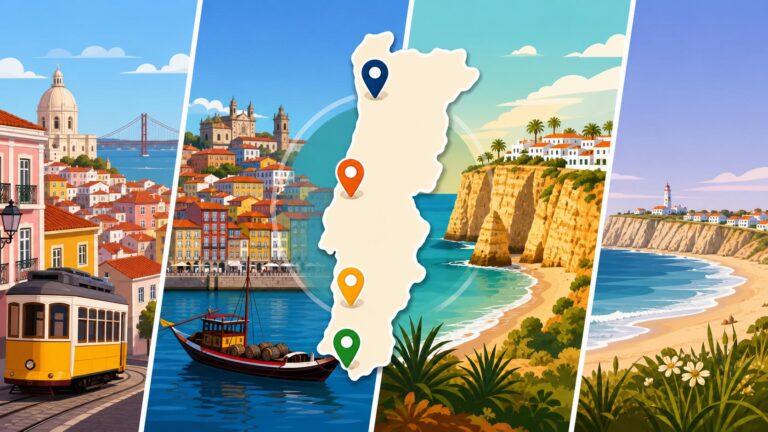
Lisbon itself is a vibrant, bustling capital, but for families, the true gems often lie just outside the city center. Areas like Cascais, Estoril, and Oeiras, along the stunning Estoril Coast, are perennial favorites for expat families. They offer a fantastic quality of life, with beautiful beaches, expansive parks, and a more relaxed pace than the city, while still being a short train or car ride away from Lisbon's amenities and job opportunities. These towns are home to some of Portugal's most prestigious international schools, making them a natural magnet for families. Cascais, for example, boasts several international schools, a lively town center, and endless opportunities for outdoor activities, from surfing to cycling.
Oeiras is another strong contender, known for its science and technology park, which draws many professionals and their families. It offers a good mix of residential areas, green spaces, and excellent public and private schools. Even within Lisbon, neighborhoods like Parque das Nações offer a more modern, spacious, and family-oriented environment with riverside promenades and playgrounds. While the cost of living here can be higher than in other parts of Portugal, the benefits of convenience, quality education, and a strong international community often outweigh the expense for many. Dive deeper into specific areas with our Lisbon Neighborhood Guide: Best Areas for Expats and Digital Nomads.
Porto and the North: Culture and Coziness
Porto, Portugal's second-largest city, offers a different flavor of family life – one rich in history, gastronomy, and a cozy, welcoming atmosphere. Like Lisbon, the immediate city center might be a bit hectic for young children, but the surrounding areas provide excellent alternatives. Foz do Douro, with its upscale feel and proximity to the ocean, is a popular choice, featuring lovely beaches and promenades. Matosinhos, just north of Porto, is known for its fantastic seafood, vast beaches, and a more laid-back vibe, making it appealing for families seeking a coastal lifestyle. There are also reputable international schools in and around Porto, ensuring educational choices.
Beyond the immediate urban sprawl, the entire Northern region offers a strong sense of community and a more traditional Portuguese experience. Cities like Braga and Guimarães are historically significant, often more affordable, and offer a slower pace of life with excellent local amenities, making them appealing to families who want a deeper immersion into Portuguese culture without sacrificing quality of life. The region is also dotted with beautiful national parks and natural landscapes, perfect for family adventures. For more detailed information on living in Portugal's second city, check out our Porto Neighborhood Guide: Where to Live for Culture, Tech, and Family.
The Algarve: Sun, Sand, and International Communities
For families who dream of year-round sunshine and a beach-oriented lifestyle, the Algarve is often the first and last stop. This southern region is incredibly popular with expats, meaning there are well-established international communities and a range of services catering to foreigners. Towns like Lagos, Faro, Tavira, and Loulé are particularly attractive for families. Lagos offers a vibrant, youthful atmosphere with stunning beaches and a variety of activities. Faro, as the regional capital, provides excellent infrastructure, including a major airport and hospitals.
The Algarve also has several international schools, particularly around the central region (e.g., Lagoa, Loulé), which are crucial for many expat families. While tourism is a major industry, particularly in summer, many towns retain a charming local feel. The region offers an abundance of outdoor activities, from watersports to hiking, making it ideal for active families. However, it's worth noting that outside of the peak tourist season, some areas can become very quiet. We have a great resource if you're considering this region: The Algarve for Expats: Lagos, Faro, and Tavira Compared.
Central Portugal and Silver Coast: Authenticity and Affordability
If the hustle and bustle of major cities isn't for you, or if budget is a significant factor, look to Central Portugal and the Silver Coast (Costa de Prata). These regions offer a more authentic Portuguese experience, often at a much lower cost of living. Towns like Coimbra, known for its historic university, offer a vibrant student atmosphere combined with a family-friendly vibe. It has good public schools and access to amenities, and its central location makes it a great base for exploring the country.
Along the Silver Coast, places like Nazaré, Foz do Arelho, and Peniche offer beautiful coastal living without the tourist crowds of the Algarve. These towns are more traditionally Portuguese, with lovely beaches, fresh seafood, and a strong community feel. While international schools are less common here, the public schools are generally good, and the smaller communities can provide a wonderfully immersive experience for children who are ready to embrace the Portuguese language and culture. For those seeking a blend of affordability and charm, the Silver Coast (Costa de Prata): Affordable Expat Living Outside the Cities provides excellent insights. When you're out exploring these regions, having reliable mobile data is key for navigation and staying connected; consider a global eSIM from a provider like Airalo to ensure you're never without service.
Practical Considerations for Families Moving to Portugal
Beyond the scenic beauty and school choices, there are nuts-and-bolts practicalities that every expat family needs to address to make their move successful and sustainable.
Cost of Living and Housing for Families
The cost of living for a family in Portugal can vary dramatically depending on your chosen location and lifestyle. Major cities like Lisbon and Porto, especially their sought-after suburbs, will naturally be more expensive in terms of rent, groceries, and services. Areas further inland or along the Silver Coast offer significantly more bang for your buck. When budgeting, consider not just rent, but also utilities, school fees (if choosing private), and activities for the children. Heating, for instance, can be surprisingly costly in older, poorly insulated Portuguese homes during the cooler months.
Finding suitable family housing can also be a challenge. Larger apartments or houses are less common in very central urban areas and can command high prices. Many families look for T2 or T3 (two or three-bedroom) apartments, or small moradias (houses) in the suburbs. It's common to pay several months' rent as a deposit, sometimes coupled with an additional month or two in advance, especially if you don't have a Portuguese guarantor. Websites like Spotahome can be useful for securing initial accommodation, particularly if you need to arrange something before you arrive in Portugal. Getting a clear picture of what to expect is essential, so check out our comprehensive guide on the Cost of Living in Portugal 2026: Detailed Budgets for Singles and Families.
Transportation and Accessibility
How will your family get around? Portugal offers a decent public transportation network, especially in Lisbon and Porto, with metros, buses, and trams. Many suburban areas are well-connected by regional trains. For families, however, a car often offers invaluable flexibility, especially for school runs, grocery shopping, and weekend explorations. Be prepared for high car purchase taxes and fuel costs in Portugal, which are generally higher than in many other European countries.
Consider the layout of your chosen neighborhood: is it walkable? Are there safe sidewalks and pedestrian crossings? How far is it to the nearest supermarket, pharmacy, or park? For older children, access to public transport might be a factor in their independence, allowing them to travel to school or meet friends. Understanding the local transport options is crucial for daily life.
Integrating into Local Life and Expat Networks
One of the most enriching aspects of moving abroad is the opportunity to immerse your family in a new culture. Encourage your children to learn Portuguese; even basic phrases can open doors and build connections. Many towns offer free or affordable language classes, and local schools are often very supportive. Making friends, both local and expat, will be key to feeling settled. Look for local sports clubs, youth groups, or community events. Online expat groups are also a fantastic resource for connecting with other families in your area, sharing advice, and organizing playdates. For more on navigating this, see Making Friends and Networking in Portugal: Expat Groups and Meetups. Don't be afraid to put yourselves out there; the Portuguese are generally warm and welcoming people, and a friendly smile goes a long way.
How to Research and Choose Your Family's New Home
The sheer volume of information can be overwhelming, but a systematic approach will help you narrow down your choices and find the perfect fit for your family.
Online Resources and Local Insights
Start your research online, but don't stop there. Websites like Idealista and Imovirtual are great for getting a feel for rental prices and housing availability in different areas. Many expat Facebook groups dedicated to specific regions or cities in Portugal are invaluable resources for real-time advice, recommendations, and honest opinions from people who've already made the move. You can ask specific questions about schools, kid-friendly activities, and local challenges. Forums and blogs (like this one!) often provide detailed insights that official sites can't.
Remember that a place might look perfect on paper, but local insights can highlight potential issues you wouldn't otherwise know, such as noise levels, traffic patterns, or the actual accessibility of amenities. For essential goods that might be harder to find locally, or for specific items you're used to from back home, Amazon Spain can often deliver to Portugal, which is a lifesaver for expat families.
Visiting and Experiencing Neighborhoods Firsthand
There's simply no substitute for visiting the areas you're considering. What might seem like a short walk on a map could be a steep, cobblestone climb in reality, or a quiet residential street could transform into a noisy thoroughfare during rush hour. If possible, plan an exploratory trip with your family. Spend time in different neighborhoods during various times of day. Walk to the local park, check out the nearest café or pastelaria, and observe families going about their daily lives.
Visit potential schools, talk to other parents, and even pop into a local farmácia (pharmacy) or supermercado (supermarket) to get a feel for the local vibe. If you're considering a public school, try to visit the school and the surrounding area. This firsthand experience will give you a much more accurate and intuitive sense of whether a place truly feels like "home" for your family.
Family-Friendly Cities in Portugal Comparison
To help visualize some of the choices, here’s a quick comparison of some top family-friendly areas in Portugal:
| Feature | Cascais (Lisbon Coast) | Matosinhos (Porto Coast) | Lagos (Algarve) | Coimbra (Central Portugal) |
|---|---|---|---|---|
| School Access | Excellent (many international schools) | Good (several international schools) | Fair (some international, good public) | Good (strong public, university town) |
| Cost of Living | High | Moderate-High | Moderate | Moderate-Low |
| Community | Large, active expat community | Mix of local & growing expat community | Large expat and tourist community | Strong local, academic community |
| Green Spaces/Nature | Beaches, parks, Sintra-Cascais Natural Park | Beaches, city parks, riverside | Beaches, cliffs, nature trails | Mondego River, botanic garden, parks |
| Healthcare Access | Excellent (public & private hospitals/clinics) | Excellent (public & private hospitals/clinics) | Good (local hospitals, private clinics) | Excellent (university hospital) |
| Activities for Kids | Beach sports, playgrounds, cultural events | Beach, surfing, playgrounds, aquarium | Water sports, zoo, amusement parks | Museums, parks, historical sites |
| Walkability/Transport | Good, excellent public transport to Lisbon | Good, excellent public transport to Porto | Good, car often useful for region | Good, compact city center |
Disclaimer
The information provided in this guide is for general informational purposes only and does not constitute professional advice. While we strive to keep the information up-to-date and correct, Portugal's laws and regulations, especially concerning immigration, taxation, and healthcare, can change frequently. Therefore, it is essential to consult with qualified legal, financial, or immigration professionals for advice tailored to your specific situation. Reliance on any information in this guide is solely at your own risk.