How to Ride the Santa Justa Lift and See Lisbon’s Viewpoints
Disclosure: This article contains affiliate links. If you buy through them, we may earn a commission at no extra cost to you. Read our full disclosure.
Ah, Lisbon! The city of seven hills, endless charm, and sometimes, endless stairs. One of the classic tourist quandaries here is figuring out the Santa Justa Lift – what it is, how to use it, and whether it’s truly the best way to get those iconic panoramic shots everyone raves about. Many folks arrive, see the queue, and wonder if there's a trick to it, or if it’s just another beautiful but slightly overwhelming part of Portuguese life. Well, consider this your insider's guide. We're going to dive deep into the Santa Justa Lift, explore its historical significance, navigate the ticket options, and then zoom out to uncover all the other magnificent viewpoints Lisbon has to offer, so you can conquer those hills like a seasoned local.
Understanding the Santa Justa Lift: History, Mechanics, and Modern Use
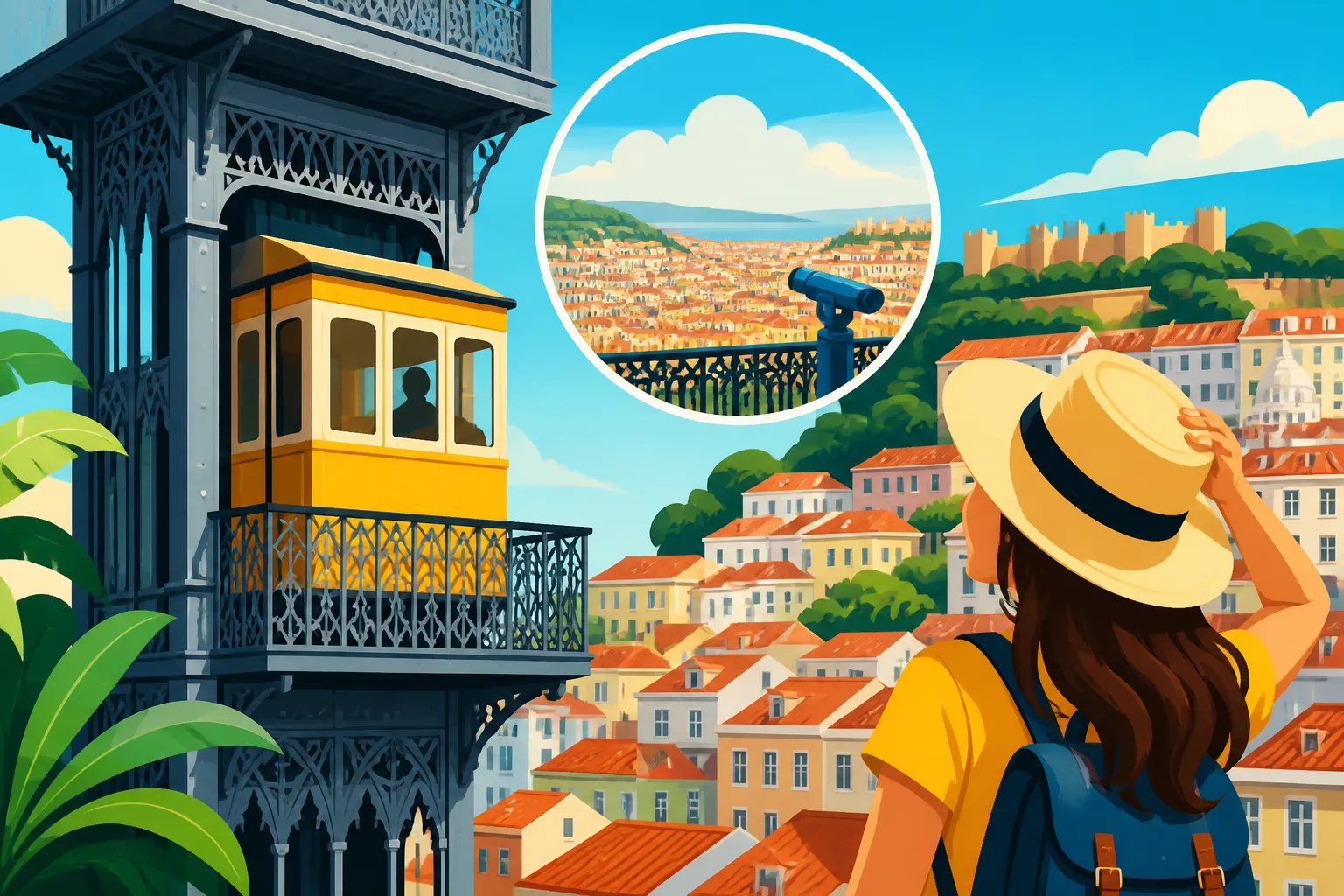
The Santa Justa Lift, or Elevador de Santa Justa as the locals call it, isn't just a means to get from the Baixa district up to the Largo do Carmo square; it’s a piece of living history, an ornate iron structure that stands as a testament to Lisbon’s Belle Époque era. It connects the lower streets of Baixa to the higher-lying Largo do Carmo and the ruins of the Carmo Convent, making a steep climb effortless, or at least, that was the original idea.
A Glimpse into Lisbon's Engineering Past
Imagine Lisbon at the turn of the 20th century. The city was growing, bustling, and the need for efficient public transport to traverse its dramatic hills was paramount. Enter Raoul Mesnier du Ponsard, an apprentice of none other than Gustave Eiffel (yes, that Eiffel). Commissioned in 1900 and inaugurated in 1902, the Santa Justa Lift was initially powered by a massive steam engine before being electrified in 1907. Its wrought-iron structure, intricate filigree details, and neo-Gothic arches scream industrial elegance. It was designed to blend form and function, providing not just transportation but also a breathtaking urban sculpture that quickly became a landmark.
For over a century, this vertical street elevator has ferried passengers up and down, becoming an integral part of Lisbon’s public transport network. While it still operates daily, its role has shifted somewhat. In its early days, it was a vital lifeline for residents. Today, it’s primarily a tourist attraction, drawing crowds eager to experience a piece of history and, of course, capture the iconic views. It’s a bit like stepping back in time; the wooden cabins, the brass fittings, and the slow ascent all contribute to a unique experience that's distinctly Lisbon.
How to Ride the Lift: Tickets and Access Points
Navigating the Santa Justa Lift can be a bit confusing if you’re not prepared. There are two main ways to experience it: as a genuine public transport ride or purely for the viewpoint.
If you want to ride up from Baixa (Rua de Santa Justa), you'll typically find a queue that can stretch quite long, especially during peak season or sunny afternoons. The ride itself is short, only about a minute or two, but it’s the journey to get on board that takes time. Tickets can be purchased at the base of the lift. A single return trip usually costs around €5.30 to €6. This ticket is just for the lift and does not include access to the upper viewing platform, which requires a separate, smaller fee (usually around €1.50 to €2) paid at the top.
Here’s a pro tip for the budget-conscious and those who dislike queues: If you have a Viva Viagem card loaded with a 24-hour public transport pass, or a Zapping balance, the ride on the Santa Justa Lift is typically included in your pass. This means you can just tap your card at the turnstile, just like you would for a bus or metro, avoiding the ticket booth queue for the ride itself. However, remember, the separate fee for the very top viewing platform still applies.
Alternatively, you can access the lift from the upper level, near the Largo do Carmo, without even entering the cabins. Head to the top of Rua do Carmo (which transitions into Largo do Carmo), walk towards the Carmo Convent, and you’ll find a pedestrian walkway that leads directly to the lift's upper platform. From here, you can pay the small fee to access the highest viewing deck, completely bypassing the lift ride and its queues. Some savvy travelers choose to walk up the surrounding hills and then simply descend the lift, or bypass the lift altogether using the connecting walkways from Largo do Carmo.
The lift operates from early morning until late evening, typically from 7:30 AM to 9 PM or 10 PM, with extended hours in summer. Always double-check the exact times, as they can fluctuate with the seasons and public holidays.
The View from the Top: Is it Worth the Climb?
This is the million-dollar question for many first-time visitors. From the main platform of the Santa Justa Lift, you're treated to a spectacular 360-degree panorama of Lisbon. You’ll see the terracotta rooftops of the Baixa district stretching towards the Tagus River, the imposing Castelo de São Jorge perched on its hill, the ruins of the Carmo Convent right beside you, and across the river, the Ponte 25 de Abril bridge and the Cristo Rei statue. It’s genuinely stunning, offering a unique perspective of the city's grid-like lower town contrasting with the ancient hills surrounding it.
For many, the unique historical experience combined with the magnificent view makes it absolutely worth it. However, if your primary goal is just a great view without the historical transport experience or the wait, there are other equally (if not more) impressive viewpoints in Lisbon, often for free or with less hassle. The crowds can be thick, and the feeling of being rushed to make way for the next group can detract slightly from the contemplative experience of soaking in the vista.
Consider if you want the full experience – the historic ride, the views, and the unique architecture – or if you're just after the photo opportunity. If it's the latter, then Lisbon offers a plethora of alternatives that might suit you even better. The experience of riding this iconic piece of history, however, is something truly special.
Alternative Ways to Reach Lisbon's Upper Baixa and Chiado
While the Santa Justa Lift is charming, it's certainly not the only way to conquer Lisbon's hills. In fact, relying solely on it means you'd miss out on so much of the city's character and other fantastic modes of transport. Lisbon is known for its ascensors and elétricos, a network of funiculars and trams that have been helping locals navigate the steep topography for decades, each offering its own slice of history and convenience.
The Elevadores and Elétricos: Other Historic Transport
Lisbon boasts several other historic "elevadores" (funiculars) that offer a similar, if less grandiose, experience to the Santa Justa Lift, but often with far fewer crowds. These are essentially small cable cars that ascend steep streets.
- Elevador da Glória: Connects Baixa (Restauradores Square) to the Bairro Alto district, offering fantastic views as you climb. It's often adorned with graffiti art, adding a modern urban twist to its historic charm.
- Elevador da Bica: Perhaps the most picturesque, this funicular winds its way up a charming, narrow street lined with traditional buildings, making it a favorite for photographers. It connects Rua de São Paulo (near Cais do Sodré) to Largo do Calhariz in Bairro Alto.
- Elevador do Lavra: The oldest of Lisbon's funiculars, connecting Largo da Anunciada to Câmara Pestana. It's a quieter, more local experience, often overlooked by tourists but equally charming.
All these elevadores are also part of the public transport network, meaning your Viva Viagem card with a 24-hour pass or Zapping balance covers the ride. This makes them not only picturesque but also incredibly practical for reaching higher neighborhoods like Bairro Alto and Principe Real.
Then there are the elétricos, Lisbon's iconic trams. While the Tram 28 gets all the fame, it's not the only one. These trams clatter through narrow streets, up steep inclines, and past historic landmarks, providing a truly immersive way to see the city. Tram 12 and 24 are great alternatives, offering equally scenic routes with fewer crowds. They’re a slower, more authentic way to travel and reach many of the city’s viewpoints. Just hop on, find a window seat, and enjoy the ride.
Escalators and Walking Paths: Free and Scenic Routes
Sometimes, the simplest way is the best way. Lisbon has invested in several public escalators and outdoor lifts that can whisk you up steep sections without a queue or a ticket. For instance, in the Baixa-Chiado metro station, a series of escalators takes you directly up to the Chiado district, essentially replicating the function of the Santa Justa Lift for free and underground. From Chiado, you're already in a high-up area with easy access to various viewpoints.
For the more adventurous, or those looking to stretch their legs, Lisbon is a fantastic city to explore on foot. While the hills can be challenging, they are often rewarded with unexpected small squares, beautiful tiled facades, and sudden, breathtaking miradouros (viewpoints). Just embrace the climb, wear comfortable shoes, and allow yourself to get a little lost. You might stumble upon a hidden gem.
From the Baixa, you can easily walk up towards the Castelo de São Jorge, passing through Alfama, and discover countless stunning vistas along the way. Similarly, a walk from the Rossio square up through the charming streets will lead you to the miradouros of Graça and Senhora do Monte. It might take longer, and you'll certainly feel it in your calves, but the journey itself is a huge part of the Lisbon experience.
Public Transport Options for Reaching Viewpoints
Beyond the historic trams and funiculars, Lisbon’s modern public transport network is incredibly efficient. The Metro, buses, and even the train system can get you surprisingly close to many of the city's best miradouros.
For example, to reach the famous Miradouro da Senhora do Monte and Miradouro da Graça, you can take a bus that drops you off right near the top, saving you a steep walk. Similarly, getting to the Parque Eduardo VII viewpoint is a breeze with the Metro (São Sebastião or Parque stations), placing you directly at the base of the grand park with its sweeping city views.
Even for those staying further afield, the suburban train lines can be incredibly useful. For instance, the Cascais line (serviced by Comboios de Portugal (CP)) runs along the Tagus estuary, offering stunning riverside views and connecting you to coastal towns, each with its own unique perspective of the region.
When planning your route, use Google Maps or the official public transport app (like "Viva" or "Lisboa Viagem") to see the most efficient way to reach your desired viewpoint. Don't be afraid to mix and match – a metro ride to get close, followed by a short walk or a funicular ride, can be the perfect combination. And remember, the general public transport passes, available on your Viva Viagem card, are your best friend for making these journeys affordable and hassle-free.
Lisbon's Best Viewpoints Beyond Santa Justa
While the Santa Justa Lift offers a fantastic central perspective, Lisbon’s true magic lies in its multitude of miradouros – observation points scattered across its hills, each offering a distinct and equally captivating vista. Long-term expats can spend hours at these spots, watching the city breathe and change with the light. Trust me, you don't want to miss these.
Miradouro da Senhora do Monte and Miradouro da Graça
These two adjacent viewpoints, perched on one of Lisbon’s highest hills, offer arguably the most expansive and dramatic panoramas of the city.
The Miradouro da Senhora do Monte is my personal favorite. It’s a bit of a climb to get there (or a short bus ride), but the reward is immense. From here, you get an uninterrupted, sweeping view that includes the Castelo de São Jorge, the mosaic of rooftops in Baixa, the vibrant Mouraria district, the Tagus River, the Ponte 25 de Abril, and even the distant Serra de Monsanto park. There’s a small chapel dedicated to Our Lady of the Hill, and the atmosphere is often buzzing with local musicians, small vendors, and couples enjoying the sunset. It’s less manicured than some other spots, feeling more authentic and lived-in. I’ve spent many evenings here, just watching the city lights come alive – it's pure magic.
Just a short walk away is the Miradouro da Graça (officially Miradouro Sophia de Mello Breyner Andresen, named after a beloved Portuguese poet who frequented the spot). This viewpoint is often a bit more bustling, with a popular cafe-kiosk where you can grab a coffee or a glass of wine to enjoy with your view. It offers a slightly different angle, with the castle dominating the foreground, and often has a more lively, social vibe. Both of these miradouros are exceptional for sunset, but also stunning at any time of day. They provide a sense of scale and beauty that captures the essence of Lisbon's unique topography.
Castelo de São Jorge and its Panoramic Terraces
No visit to Lisbon is complete without exploring the ancient Castelo de São Jorge. While it's a historical landmark in its own right, its elevated position provides some of the most impressive views over the city and the Tagus River. The castle complex itself is vast, with ramparts, battlements, and several terraces that offer different perspectives.
As you wander the castle grounds, you'll constantly be treated to new vistas. From one point, you might see the winding streets of Alfama below; from another, the entire Baixa grid, from Rossio Square to Praça do Comércio, laid out like a miniature city. The highest points offer distant views across the river and beyond. The entrance fee to the castle is well worth it, not just for the historical immersion but also for the unparalleled photographic opportunities. Unlike the more open miradouros, the castle provides a structured viewing experience within its ancient walls, offering a different kind of charm. Plus, exploring the castle itself is a journey through Portugal's rich past, from Roman times to the Age of Discoveries.
Lesser-Known Gems: Local Favorites for Stunning Vistas
While the big names are undeniably beautiful, some of Lisbon's hidden miradouros offer a more intimate and authentic experience, often with fewer crowds. These are the spots where locals go for a quiet moment or an impromptu picnic.
- Miradouro de São Pedro de Alcântara: Located in Príncipe Real, just above the Elevador da Glória, this viewpoint offers a stunning, sprawling view across Baixa to the Castelo de São Jorge. It's often manicured with gardens, a fountain, and sometimes features street artists. What's special here is the large map etched into the stone, helping you identify the various landmarks you're seeing. It’s a popular spot for both day and night views, offering a different angle than the Alfama viewpoints.
- Miradouro das Portas do Sol and Miradouro de Santa Luzia: These two are practically neighbors in Alfama, offering postcard-perfect views over the terracotta rooftops of the old district and the winding river below. Portas do Sol is bustling, often with performers and vendors, while Santa Luzia is a little more tranquil, adorned with beautiful azulejo tiles depicting scenes of Lisbon. They're both easily accessible and make for excellent stops while exploring Alfama.
- Parque Eduardo VII: Not a traditional miradouro in the sense of being on a hill, but this grand park, located at the top of Avenida da Liberdade, offers a magnificent formal view down the avenue towards the Praça Marquês de Pombal and the Tagus River. The symmetrical hedges and monumental flag create a dramatic, expansive perspective of modern Lisbon. It's a great spot for a stroll and a different kind of panoramic experience.
Remember, the beauty of Lisbon is that almost every corner, particularly on its hills, has the potential for a stunning view. Keep your eyes open, look for elevated parks or squares, and you're bound to discover your own personal favorite miradouro.
Practical Tips for Visiting Lisbon's Hills and Attractions
Exploring Lisbon, especially with its challenging topography and popular attractions, can be much more enjoyable with a few insider tips. From avoiding crowds to finding the perfect sunset spot, a little planning goes a long way.
Timing Your Visit: Avoiding Crowds and Catching Sunsets
Lisbon is incredibly popular, and its main attractions, like the Santa Justa Lift and the most famous miradouros, can get incredibly crowded. To have the best experience, timing is everything.
For the Santa Justa Lift, try to go either first thing in the morning when it opens (around 7:30 AM) or later in the evening, closer to closing time. Weekdays are generally less crowded than weekends. If you're determined to ride it for the view, going shortly after sunrise can offer soft, beautiful light and fewer people. Similarly, for the most popular miradouros like Senhora do Monte, Portas do Sol, or São Pedro de Alcântara, arrive early in the morning to enjoy the tranquility and excellent light for photography, or stake out your spot well before sunset. Sunset is undoubtedly magical, but these spots become standing-room-only affairs. Arrive at least an hour before the sun is scheduled to dip below the horizon to secure a good viewing spot. Many people also enjoy the city lights at night, so consider returning to a favorite viewpoint after dark.
Here's a quick table to help you compare the experiences:
| Feature | Santa Justa Lift (Ride) | Upper Platform (Walk-Up) | Miradouro da Senhora do Monte | Elevador da Bica (Ride) | Castelo de São Jorge (Entry) |
|---|---|---|---|---|---|
| Primary Focus | Historic ride + Baixa view | Baixa view + Carmo ruins | Expansive city panorama | Picturesque street views | History + Panoramic views |
| Cost (approx.) | €5.30-€6 (ride) + €1.50 (platform) | €1.50-€2 (platform) | Free | €3.80 (return) or Viva | €10-€15 (entry) |
| Crowd Level (Peak) | Very High | Moderate | High | Moderate | High |
| Best Time to Visit | Early AM, late PM | Any time | Early AM, pre-sunset | Any time, pre-sunset | Early AM, late PM |
| Public Transport Access | Metro Baixa-Chiado | Metro Baixa-Chiado | Bus 737, Tram 28 (walk) | Tram 28 (walk), Bus | Tram 28 (walk) |
| Unique Selling Point | Eiffel-style architecture | Carmo Convent access | Highest, unblocked views | Instagrammable street | Historic immersion |
Combining Viewpoints with Nearby Attractions
Lisbon's charm often lies in its tightly packed neighborhoods, where history, culture, and stunning views intertwine. Instead of making a special trip just for a viewpoint, try to integrate it into your wider exploration of a district.
For instance, if you're exploring the historic Alfama district, the Miradouro das Portas do Sol and Miradouro de Santa Luzia are natural stopping points. You can wander through the narrow, winding streets, visit the Lisbon Cathedral, explore the Fado Museum, and then refresh yourself with a breathtaking view. This way, the viewpoint becomes a highlight of a richer cultural experience.
Similarly, if you're planning to visit the Castelo de São Jorge, you'll naturally be on a high point with fantastic views. Afterwards, you could descend into Alfama or head towards the Miradouro da Senhora do Monte for a different perspective.
The Santa Justa Lift itself is ideally located between the bustling Baixa district (perfect for shopping and traditional Portuguese food) and the elegant Chiado district (known for its theaters, cafes, and bookstores). You can ride the lift, explore the Carmo Convent ruins, then stroll through Chiado, perhaps enjoying an espresso at A Brasileira, before making your way to the Miradouro de São Pedro de Alcântara for yet another stunning sunset view. This integrated approach not only saves time but also makes your day feel more cohesive and rewarding. Don't forget to check out what tours are available on GetYourGuide that might combine a few of these spots with expert local commentary!
Essential Gear and Local Etiquette for Explorers
To make your Lisbon adventures as smooth as possible, a few practical considerations are in order.
- Comfortable Shoes: This is non-negotiable. Lisbon is a city of hills, cobblestones, and endless walking. Leave the high heels at home and opt for sturdy, comfortable footwear that can handle uneven surfaces and steep inclines.
- Sun Protection: Even in winter, the Lisbon sun can be intense. A hat, sunglasses, and sunscreen are essential, especially when spending time at open-air miradouros.
- Water Bottle: Stay hydrated! There are public fountains, and cafes are plentiful, but having your own water is always a good idea, especially on long walks.
- Portable Charger: You'll be taking lots of photos and using maps, so a portable charger will save you from a dead phone at a crucial moment.
- Viva Viagem Card: As mentioned earlier, this rechargeable card is your key to Lisbon's public transport. Load it with "Zapping" money or a 24-hour pass for easy, discounted travel on the metro, buses, trams, and funiculars. You can usually buy and load these at any metro station.
- Respect Local Culture: While Lisbon is a tourist hotspot, it’s still a living, breathing city. Be mindful of noise levels, especially in residential areas, and always ask before taking photos of people. When at cafes or restaurants near viewpoints, remember the Portuguese Coffee Culture and Restaurant Etiquette: Ordering Like a Local, and don't forget to factor in Tipping culture in Portugal: Do you leave 10% or just round up the bill? It's always appreciated.
- Stay Aware: Like any major European city, pickpocketing can be an issue in crowded tourist areas and on popular trams. Keep your valuables secure and be aware of your surroundings. For broader safety tips, refer to our guide on Crime Rates and Neighborhood Safety in Portugal's Major Cities.
- Book Accommodation Smartly: If you're looking for a base that offers easy access to viewpoints and attractions, consider areas like Baixa, Chiado, or Alfama. You can find many options on Booking.com. When planning your arrival in Portugal, remember you might need to coordinate transport from the airport. Omio is a useful tool for finding train or bus connections if you're arriving from another European city or even another part of Portugal.
By keeping these tips in mind, you'll be well-prepared to navigate Lisbon's stunning hills and discover all the incredible viewpoints this captivating city has to offer, making your visit truly unforgettable.
Disclaimer
The information provided in this guide is for general informational purposes only and is subject to change. While we strive to provide accurate and up-to-date content, public transport fares, opening hours, and specific regulations can vary. It is always recommended to verify details with official sources or local authorities before making plans. We assume no responsibility for any loss or inconvenience incurred by relying on this information.