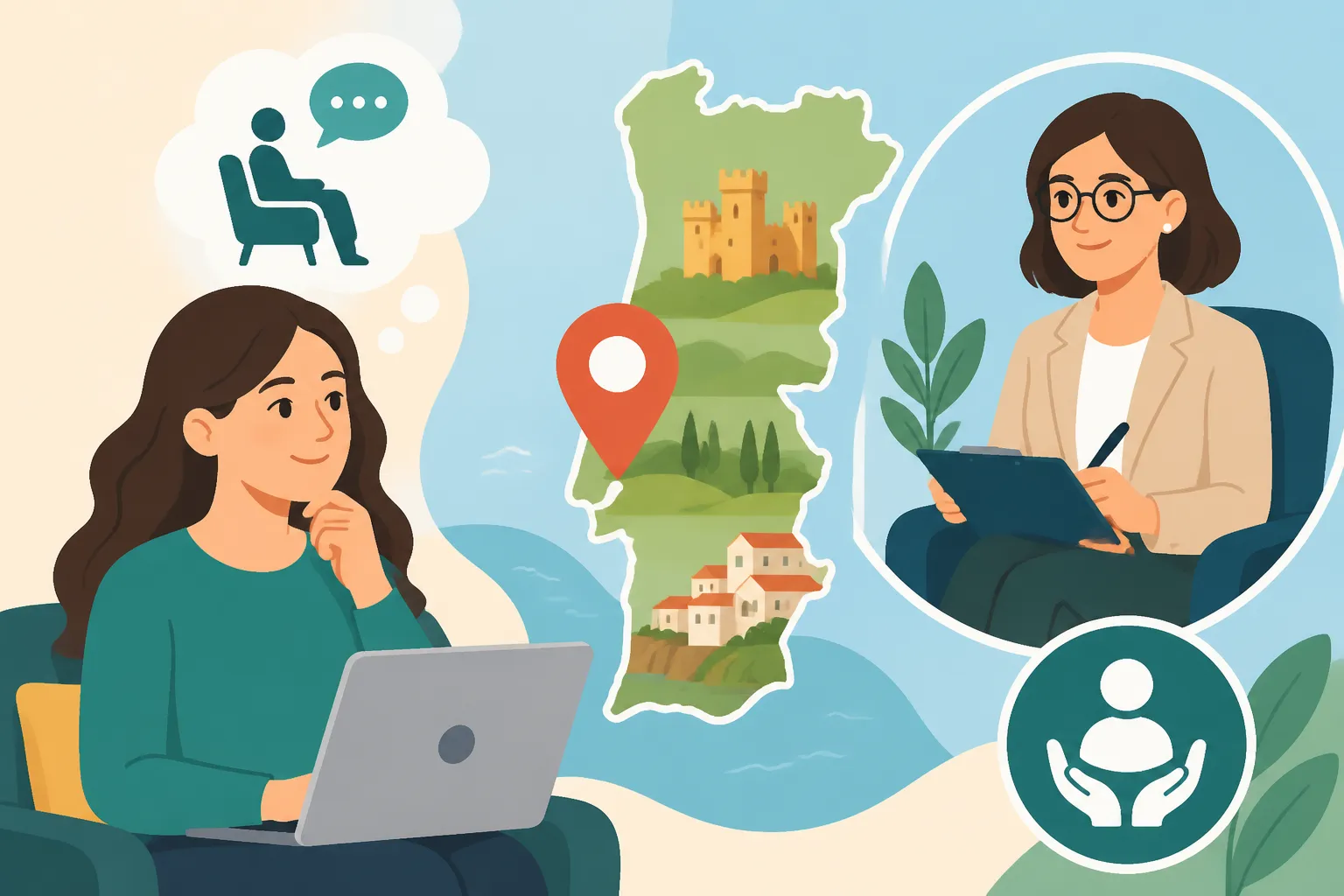
How to Find a Therapist Who Works in English in Portugal
Disclosure: This article contains affiliate links. If you buy through them, we may earn a commission at no extra cost to you. Read our full disclosure.
Trying to explain your deepest anxieties or childhood traumas is hard enough in your native tongue, but doing it while mentally translating "attachment theory" into Portuguese can feel like an impossible hurdle. I remember sitting in a dimly lit office in Lisbon, heart racing, trying to describe a panic attack using only the vocabulary I’d learned at the grocery store—it was exhausting and ultimately unhelpful. This guide is designed to cut through that frustration and show you exactly how to find a qualified, empathetic therapist who speaks your language fluently so you can focus on healing instead of grammar.
Understanding the Mental Health Landscape in Portugal for Expats
Navigating mental health care in a new country is often a secondary thought until the weight of "expat burnout" or culture shock truly sets in. In Portugal, the system is split into two very distinct worlds: the public National Health Service (SNS) and the thriving private sector. While the public system is a source of pride for the country, it is currently under immense strain. If you are a resident, you have the right to access mental health services through your local health center, but you must be prepared for the reality of long waiting lists and a "lottery" of whether your assigned professional speaks English.
When you are Registering with the Centro de Saúde: Getting Your SNS Número de Utente, you technically gain access to psychologists and psychiatrists. However, most expats find that the public route is best suited for long-term, non-urgent medication management rather than weekly talk therapy. For someone looking for a "fit" and the ability to communicate nuances of emotion in English, the private sector is almost always the necessary path. This isn't just about convenience; it's about the efficacy of the therapeutic alliance, which relies heavily on shared language and cultural understanding.
The private sector in Portugal is robust, with many practitioners having trained abroad in the UK, US, or Northern Europe. This means you aren't just getting someone who "knows" English, but someone who understands the specific stressors of living between cultures. Whether you are dealing with the isolation of remote work or the administrative stress of AIMA Portugal: Navigating the New Immigration Agency and Residence Permits, finding a therapist who "gets it" makes a world of difference.
How to Search for English-Speaking Therapists in Portugal
Finding the right person requires more than a Google search for "psychologist near me." You need to look in the places where international-friendly doctors congregate. One of the most reliable ways to start is through the major private hospital networks like CUF or Hospital da Luz. These institutions have extensive international departments where English is the standard. You can often use the Hospital da Luz app: How to book a specialist appointment on your phone to filter for doctors who list English as a spoken language, making the initial booking process much less intimidating.
Beyond the big hospitals, many expats prefer the intimacy of private clinics or independent practitioners. Websites like "It’s Complicated" or "Psychology Today" allow you to filter specifically for English-speaking therapists in Lisbon, Porto, or the Algarve. These platforms often include detailed bios where therapists describe their approach—be it Cognitive Behavioral Therapy (CBT), Psychodynamic, or EMDR. Reading these bios is crucial because it helps you gauge if the therapist has experience with English-Speaking Therapy: Online Counseling and Local Psychologists and the unique hurdles of the expat journey.
Don't underestimate the power of local expat groups on social media, but take their advice with a grain of caution. A therapist who was great for a digital nomad in Ericeira might not be the right fit for a retiree in Tavira. Always verify that any independent therapist you find is registered with the Ordem dos Psicólogos Portugueses (OPP). This ensures they meet the national standards for education and ethical practice. If you are struggling with the specific emotional toll of a move, looking for a therapist who understands Mental Health in Portugal: Finding Therapists and Psychiatrists for Expats can save you from having to explain why "the bureaucracy" is making you cry every Tuesday.
The Logistics of Therapy: Costs, Insurance, and Legalities
One of the biggest surprises for newcomers is the cost of private therapy. Compared to the US or Northern Europe, out-of-pocket rates in Portugal are relatively accessible, typically ranging from €50 to €90 per session. However, if you are attending weekly, this adds up quickly. This is where your insurance coverage becomes vital. Many expats use international plans like SafetyWing or Cigna Global, which often provide better mental health benefits than the standard local "base" plans.
When looking at Private Health Insurance in Portugal: Costs, Coverage, and Best Providers, you need to check the "Outpatient" or "Ambulatory" section of your policy. Some local insurers like Médis or Multicare require you to see a therapist within their specific network to get a co-payment rate (usually around €15–€30). If you choose an out-of-network English-speaking therapist, you might have to pay the full price upfront and then submit a claim for a percentage refund. Using a provider like Cigna Global can be particularly helpful here, as they are accustomed to dealing with international claims and often have higher annual limits for psychiatric care and psychological counseling.
It is also important to distinguish between a Psicólogo (Psychologist) and a Psiquiatra (Psychiatrist). In Portugal, only a psychiatrist can prescribe medication. If you are seeking a diagnosis for something like ADHD or clinical depression that may require a prescription, you will need a psychiatrist. We dive deeper into this in our guide on Psychiatrist vs Psychologist in Portugal: Who can prescribe medication?. For those on the D8 visa, your SafetyWing plan might offer specific "add-ons" for mental health, which is worth checking before you book your first intake session to avoid a "bill shock."
| Provider Type | Average Cost (Private) | Best For | Language Availability |
|---|---|---|---|
| Private Hospital (CUF/Luz) | €70 – €100 | General diagnosis, English-speaking staff | High |
| Independent Psychologist | €50 – €80 | Long-term talk therapy, specialized care | Varies (check bios) |
| Online/Telehealth | €40 – €120 | Convenience, specific niche expertise | Very High |
| SNS (Public Health) | €0 – €7 (Taxa) | Medication management, long-term stability | Low to Moderate |
Telehealth and Online Therapy as a Reliable Alternative
If you live in a more rural part of the Silver Coast or the Alentejo, your local options for an English-speaking therapist might be non-existent. This is where telehealth has become a game-changer for the expat community. Many therapists in Lisbon and Porto now offer 100% remote sessions, and there are even dedicated platforms like Telehealth and Online Doctors: Using TravelDoctores and Doctorsa that can bridge the gap for those needing mental health support without a long commute.
Online therapy isn't just a "backup" option; for many, it's the preferred method. It allows you to maintain a relationship with a therapist even if you move from an apartment in Lisbon to a farmhouse in the North. It also opens up the possibility of working with someone back in your home country. However, be aware that for insurance purposes, some companies like Cigna Global may require the therapist to be licensed in the country where they are practicing. Always confirm with your insurance provider whether a Zoom session with a therapist based in London or New York is covered while you are a resident in Portugal.
For digital nomads specifically, services like SafetyWing have been designed with this mobile lifestyle in mind, often offering easier pathways to claim for "remote" medical services. If you find the local Portuguese platforms too difficult to navigate, don't be afraid to look at international platforms that specialize in the expat experience. The most important thing is that you feel safe and understood, regardless of whether you are sitting in a physical office in Chiado or on your sofa with a laptop.
Emergency Mental Health Support in Portugal
If you find yourself in a mental health crisis, you cannot wait for a private appointment or a claim to be processed. In Portugal, the primary resource for immediate help is the SNS 24 helpline. By calling 808 24 24 24, you can access a dedicated psychological support line (Apoio Psicológico). While they strive to have English speakers available, it can sometimes be a wait. We have a detailed breakdown of how to use this service in our article on SNS 24 Helpline (808 24 24 24): Triage, Advice, and Sick Notes.
In a life-threatening situation, you should call 112 or head directly to the nearest public hospital's emergency room (Urgências). Major hospitals like Santa Maria in Lisbon or São João in Porto have psychiatric emergency teams on-site 24/7. Even if you have private insurance, for a severe acute crisis, the public system is often better equipped for immediate stabilization. You can learn more about the triage process and what to expect in Emergency Medical Care in Portugal: Calling 112 and Going to the Hospital.
Remember that the "Manchester Triage System" used in Portuguese ERs applies to mental health as well. If you are in distress but not in immediate physical danger, you may be given a "Yellow" or "Green" bracelet, which can lead to long wait times in the ER lobby. Being aware of Emergency Rooms (Urgências) in Portugal: Triage Colors and Wait Times can help manage your expectations during a highly stressful moment. Do not hesitate to seek help; the Portuguese medical community takes mental health crises very seriously, and help is available regardless of your residency status or language ability.
Finding a Specialist for Specific Conditions
If you are looking for support for a specific condition, such as ADHD, eating disorders, or trauma, a generalist may not be enough. In Portugal, you will find that specialists often cluster in the major cities. For instance, if you need a pediatric specialist for your child, you should look for an English-speaking pediatrician (Pediatra) for your baby who has connections to child psychologists. The "Equipa de Saúde Escolar" (School Health Team) in public schools can also sometimes provide referrals, though the language barrier remains a factor there.
For those needing specialized diagnostic testing for neurodivergence, there are private clinics like PIN (Progresso Infantil) that have international departments. These clinics are expensive and often not fully covered by basic insurance, but they provide the gold standard for English-language assessments. If you are managing a chronic condition alongside your mental health, you might find it useful to read our guide on Managing Chronic Illnesses: Diabetes and Hypertension Care in Portugal, as physical and mental health are deeply intertwined.
Finally, if your struggle is specifically related to the "newness" of your life here, look for a therapist who mentions "Expat Counseling" or "Third Culture Kids" (TCK) in their profile. There is a specific kind of grief that comes with moving—leaving behind friends, family, and a familiar sense of self—that a local who has never lived abroad may find hard to relate to. Finding a therapist who has personally navigated the transition to Portugal is like finding a shortcut to being understood.
Important Medical Disclaimer
The information provided in this article is for informational and educational purposes only and does not constitute professional medical advice, diagnosis, or treatment. Always seek the advice of a qualified healthcare provider or mental health professional with any questions you may have regarding a medical condition. Never disregard professional medical advice or delay in seeking it because of something you have read on this website. If you are experiencing a mental health emergency, please call 112 immediately or contact the SNS 24 helpline at 808 24 24 24.