Step-by-Step: Connecting Electricity (EDP) and Water in Your Name
Disclosure: This article contains affiliate links. If you buy through them, we may earn a commission at no extra cost to you. Read our full disclosure.
Picture this: you’ve just collected the keys to your new flat in Arroios or Matosinhos, your landlord has gone quiet on WhatsApp, and the lights still run on someone else’s contract. Or worse, nothing works at all. This guide explains, step by step, how to put electricity and water in your own name in Portugal, which documents to have ready, and what to do when the process goes wrong.
Who Actually Runs Your Power and Water in Portugal
Before you call anyone, it helps to know who does what. Much of the frustration newcomers face comes from contacting the wrong company. Each one then politely tells you it is “not their department.”
E-Redes, EDP and the Retailer System
Portugal splits electricity into two layers. The first is the physical network: the cables, transformers and meters that bring power into your building. That network is managed by E-Redes, the distribution operator for mainland Portugal. E-Redes handles meter installation, physical connections, reconnections after a cut, and technical faults in the street. You never sign a supply contract with E-Redes. Even so, you will deal with them if your meter is switched off or a technician needs to visit.
The second layer is the retailer (comercializador), the company that sells you energy and sends the bill. EDP Comercial is the best-known name, and many people say “EDP” to mean electricity in general. It is not your only option. The free market also includes Endesa, Iberdrola, Galp, Goldenergy and several smaller suppliers. There is also a regulated “last resort” supplier, SU Eletricidade. Whichever retailer you pick, the electricity reaches you through the same E-Redes network, so reliability does not depend on your retailer choice.
This split matters in practice. Billing questions, contract changes and tariff choices go to your retailer. A dead meter, a sparking cable in the street or a reconnection after a cut-off goes through E-Redes. Usually your retailer raises that request for you. The sector is supervised by ERSE, the energy services regulator, which sets the rules on switching, billing and consumer protection.
Municipal Water Utilities and Why Each Town Is Different
Water is a different world entirely. There is no national water company and no free market. Each municipality, or a company acting for it, supplies water in its area. In Lisbon the supplier is EPAL. In Porto it is Águas do Porto. In many other towns it is the local SMAS (Serviços Municipalizados) or a regional concession company. Your landlord or the previous tenant can usually tell you which one serves your street. So can a quick look at an old bill left in a kitchen drawer.
Because water is municipal, procedures vary from town to town. One council lets you do everything online in ten minutes. Another wants you at a counter with paper copies. Your water bill will also usually bundle several charges: water supply, sewage (saneamento) and urban waste collection (resíduos sólidos). This surprises many newcomers. You are not being overcharged; this is simply how Portuguese councils collect for those services.
For the bigger picture across gas, internet and the rest, see Setting Up Utilities in Portugal: Electricity, Gas, Water, and Internet.
The Documents You Need Before You Call Anyone
Nothing ends a utilities appointment faster than a missing document. Prepare everything below in both paper and digital form.
NIF, ID, Lease and IBAN
Your NIF (Número de Identificação Fiscal) is non-negotiable. No Portuguese utility will open a contract without one. If you do not have it yet, see Getting a NIF in Portugal: The Tax Number You Need First. Next comes your identification: a passport works, as does an EU ID card or a Portuguese residence card.
You will also need proof that you have the right to occupy the property. Usually that is your signed rental contract (contrato de arrendamento) or, if you bought the home, the deed or land registry certificate. Water utilities in particular often ask for this. Some also want written authorisation from the owner if your name does not appear on the lease.
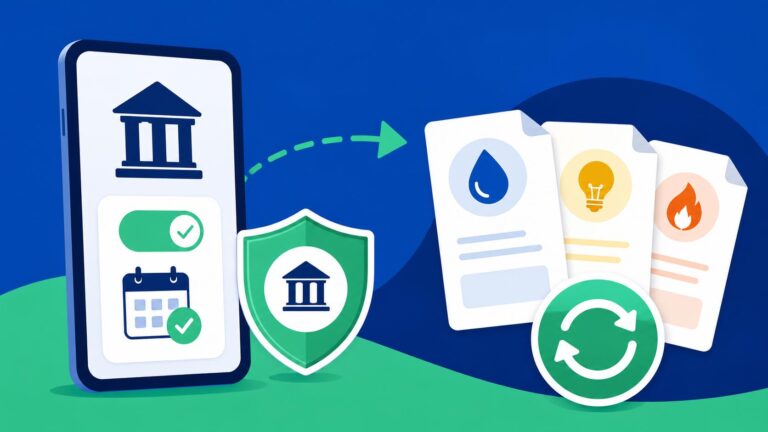
Finally, have a Portuguese or SEPA IBAN ready for direct debit. Most retailers and many water utilities strongly prefer débito direto. Some water companies ask for a deposit (caução) if you choose another payment method. For the setup itself, see How to set up direct debit (Débito Direto) for your utility bills using Multibanco.
Finding Your CPE and Water Meter Number
For electricity, the single most useful number is the CPE (Código de Ponto de Entrega). This code identifies your exact supply point on the E-Redes network. It begins with “PT” followed by a long string of digits and letters. It appears on any previous electricity bill, so ask your landlord for a recent one. If you cannot get a bill, the retailer can usually find the CPE from your full address. That works badly in buildings with many flats, so the bill is the safer route.
Also photograph the meter itself and its current reading on the day you move in. Electricity meters are often in a cabinet on the landing or in a shared box at the building entrance, labelled by floor and side (“2.º Esq.”, “3.º Dto.”). Water meters are often in a niche near the entrance or under the stairwell. Write down the meter’s serial number, which is printed on it. That number is what the water utility will ask for.
| Item | Electricity contract | Water contract |
|---|---|---|
| NIF | Required | Required |
| Passport, EU ID or residence card | Required | Required |
| Rental contract or deed | Often requested | Almost always requested |
| IBAN for direct debit | Strongly preferred | Strongly preferred, may avoid a deposit |
| Supply point code | CPE from an old bill | Meter serial number or client number |
| Meter reading on move-in day | Required | Required |
| Who you contact | Your chosen retailer | Your municipal water utility |
Step-by-Step: Putting Electricity in Your Name
Change of Holder vs a New Connection
There are two very different situations, and you need to know which one you are in. The common one is a change of holder (mudança de titular). The electricity is still flowing on the previous tenant’s or landlord’s contract, and you simply take it over in your name. This is quick and usually involves no technician visit.
The second situation is a new connection or reconnection (ligação or religação). Here the meter has been switched off, often because the previous contract was cancelled, and power must be restored. Your retailer asks E-Redes to schedule the reactivation, which can mean waiting for a technician and being at home during an appointment window. If the building is new or the meter has been removed, you may first need a full installation, which takes longer and involves more paperwork.
Imagine Sarah, who moved from Manchester into a T1 in Campo de Ourique. She arrived late on a Friday to find the fridge dead and the switchboard unresponsive. The previous tenant had cancelled their contract on leaving, so her meter was switched off. Signing up online took ten minutes. Then she had to wait for E-Redes to reactivate the supply, and she spent the weekend charging her phone in a café. The lesson: ask your landlord days before move-in whether the power is “ligada” (on) and whose name the contract is in.
Choosing Your Power Rating and Tariff
Every contract has a contracted power (potência contratada), measured in kVA. It determines how many appliances you can run at once before the main breaker trips. A small flat with gas cooking and no electric heating can live on one of the lower steps. A home with an electric oven, an induction hob, a washing machine and electric heaters running together in winter needs a higher step. Higher power means a higher fixed daily charge. Do not overbuy, but do not underbuy either. Constantly resetting a tripped breaker at dinnertime gets old fast. Winter is when most households find out their rating is too low; for more on that, see Heating and Insulation in Portuguese Homes: Fighting Winter Cold and Mold.
You will also choose a tariff structure. The table below shows how the options compare.
| Tariff type | How it works | Best suited to |
|---|---|---|
| Simples | One price per kWh at all hours | People home during the day, or who do not want to think about timing |
| Bi-horária | Cheaper rate at night and on weekends in some cycles, dearer at peak times | Remote workers who can run laundry and dishwashers at night |
| Tri-horária | Three periods: peak, intermediate and off-peak | Households with heavy, flexible usage such as electric car charging |
Price per kWh and fixed charges change and differ between retailers. Compare current offers on each retailer’s own page, or use ERSE’s online price simulator. For help reading the bill once it arrives, see How to read an EDP electricity bill: Taxes, bi-hourly tariffs, and peak hours.
If you want to see which appliances actually drive your consumption, a plug-in energy monitor is a cheap way to find out. Amazon Spain delivers these to Portugal, along with Schuko-standard adapters if your devices came from the UK or US.
The Online and In-Store Process
Here is the process in the order it usually happens:
- Confirm with your landlord whether the meter is active and whose name the current contract is in.
- Get the CPE from a previous bill and photograph the meter reading on the day you take possession.
- Choose a retailer and compare power ratings and tariff types on their website.
- Start the contract online, by phone, or at a retailer’s store. EDP has shops in most towns, and many supermarkets and shopping centres host retailer stands.
- Submit your NIF, ID, IBAN, CPE, meter reading and, if asked, your rental contract.
- Say clearly whether this is a change of holder or a reconnection, because the timeline differs.
- Sign the contract digitally or on paper and keep a copy of the confirmation email.
- If a reconnection is needed, wait for the E-Redes appointment and make sure someone can give access to the meter.
- Check the first bill carefully against your move-in reading.
One practical snag: online sign-ups often send verification codes by SMS. A foreign number sometimes works, and sometimes the message never arrives. An Airalo eSIM is useful for having data the moment you land, so you can email, browse and use WhatsApp straight away. For SMS codes, though, a Portuguese mobile number is the safer bet; see Getting a Portuguese SIM card at Lisbon Airport: Vodafone vs NOS vs MEO.
Switching retailers later is free under ERSE’s rules. Your new retailer handles the change, and the power never goes off. If a better offer appears in six months, you are not locked in forever. Do read the contract for any loyalty clause (fidelização) tied to a promotional discount.
If your home also uses gas, whether bottled or piped, that is a separate contract. See Switching from bottled gas (Garrafão) to piped city gas in Portugal.
Step-by-Step: Setting Up Water in Your Name
Lisbon, Porto and Elsewhere
In Lisbon, EPAL runs water contracts through its online customer area and its customer service channels. In Porto, Águas do Porto offers a similar setup. Both are used to dealing with foreign residents, and online forms are usually the quickest route if your documents are ready as PDFs. In smaller towns served by an SMAS, expect a more traditional experience. You may need to visit a counter at the municipal services building, take a ticket and wait your turn. Bring paper copies of everything.
The general sequence looks like this:
- Identify your water utility through the landlord, an old bill or your Câmara Municipal’s website.
- Note the water meter serial number and today’s reading.
- Gather your NIF, ID, rental contract and IBAN.
- Apply online or in person for a change of holder, or a new contract if supply was cut.
- Set up direct debit at the same time to avoid a deposit where your utility requires one.
- Keep the contract confirmation and check that your first bill starts from your reading, not an estimate.
Mark, a retired teacher who settled near Caldas da Rainha, had a different experience from friends in Lisbon. His local water service asked for an appointment at the municipal office. They wanted the landlord’s written authorisation because only the owner’s name appeared on the property records. It took two visits. He now advises everyone to ask their landlord for a short signed authorisation letter before moving in, just in case.
The Deposit, the Waste Fee and the Meter
Some water utilities ask for a caução (deposit) when you open a contract. Portuguese consumer rules generally exempt you from this if you pay by direct debit, so ask about that option first. If you do pay a deposit, keep the receipt. You will want it back when you close the contract on leaving. Before you hand back the keys, see How to Cancel Utilities When Leaving a Portuguese Rental.
Remember that your water bill usually carries sewage and waste collection charges. In some municipalities the waste charge is calculated in relation to your water consumption. These are legitimate council charges, not errors.
Once your contract is active, you may be asked to report meter readings regularly online or by phone. If you do not, the utility bills you on estimates and corrects later, which can produce an unpleasant catch-up bill. A monthly photo of the meter takes thirty seconds and saves a lot of arguments. If you are wondering whether the water from your tap is good to drink, see Is it safe to drink tap water in Portugal? Water quality by region.
When Things Go Wrong
The Previous Tenant Left Unpaid Bills
This is one of the most stressful situations a newcomer faces. You call to put the electricity in your name and are told there is an outstanding debt on the supply point. Here is the key fact: utility debt belongs to the person who held the contract, not to the property or the next occupant. You are not responsible for a previous tenant’s unpaid electricity or water bills.
Handle it calmly and in writing:
- State clearly that you are a new occupant and the debt belongs to the previous contract holder.
- Send your rental contract showing your start date, plus your ID, by email so there is a written record.
- Ask the retailer or water utility to open a new contract in your name with no transfer of debt.
- If they refuse, ask for a written response and the reference number of your request.
- If that fails, file a complaint through the Livro de Reclamações, which also has an online version. You can also go to the regulator or a consumer arbitration centre.
For a detailed walkthrough of the complaint process, see What is the ‘Livro de Reclamações’ and how does it solve consumer disputes?. Also tell your landlord straight away. They have every incentive to sort out a problem that would otherwise leave their property without utilities.
Power Cuts, Estimated Bills and Room Rentals
If your electricity cuts out after you have signed, first check the switchboard (quadro elétrico) inside the flat. A tripped breaker is the most common culprit, often from too many appliances on a low power rating. If the whole building or street is dark, the fault sits with E-Redes, and you can report it to their fault line. If only your flat is affected and the breakers are fine, contact your retailer. Your contract may not have activated yet, or a reconnection request may still be pending.
Estimated bills are the other classic headache. Both electricity retailers and water utilities estimate consumption when they lack a real reading. The fix is simple: submit readings yourself through the retailer’s app or website, and keep dated photos. If a bill looks wildly off, query it in writing with your photo attached.
Finally, consider whether you need to do any of this at all. Many room rentals and student flats, including those booked through Uniplaces, come with bills already included in the rent, and the landlord keeps the contracts in their own name. Check the listing carefully. A good place to start is What does “Despesas Incluídas” mean in a Portuguese rental advertisement?. If bills are included, confirm in writing whether there is a consumption cap. Some landlords include utilities only up to a certain amount and charge extra above it, which can come as a surprise in winter.
A Quick Pre-Move Checklist
To pull everything together, run through this list a week before you get your keys:
- Ask the landlord which water utility serves the property and whether electricity and water are currently on.
- Request a recent electricity bill showing the CPE, and a water bill showing the meter or client number.
- Get a signed authorisation from the owner if your name will not appear on property records.
- Have your NIF, ID, lease and IBAN scanned and ready as PDFs.
- Make sure you have a Portuguese mobile number for SMS verification codes.
- Plan to photograph both meters on move-in day.
- Decide on a power rating and tariff type based on how you actually live, especially your heating in winter.
Once your internet is next on the list, see Home Internet and Mobile Plans: Vodafone, MEO, and NOS Compared. With electricity and water in your name, you have cleared one of the most important hurdles of settling in Portugal.
Disclaimer
This article is for general informational purposes only and does not constitute professional advice. Laws, prices and regulations vary by location and change over time. Consult a qualified professional for guidance on your specific situation.