Porto Neighborhood Guide: Where to Live for Culture, Tech, and Family
Disclosure: This article contains affiliate links. If you buy through them, we may earn a commission at no extra cost to you. Read our full disclosure.
Choosing a neighborhood in Porto feels like a high-stakes gamble when you are looking at a map from thousands of miles away. I spent my first month here in a drafty, overpriced tourist flat near Ribeira, waking up to the screams of seagulls and midnight pub crawls before I realized there were far better spots for real life. This guide settles the debate on where to settle based on your specific life needs.
Navigating the Porto Rental Market: What to Know Before You Choose
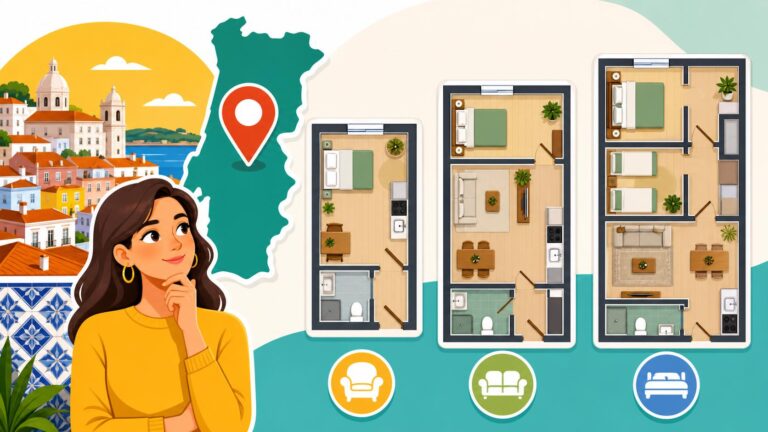
The rental market in Porto has transformed significantly over the last few years. While it was once the "affordable" alternative to Lisbon, the secret is well and truly out. When you start your search, you will notice that apartments are classified by a "T" system. A T0 is a studio, a T1 has one bedroom, a T2 has two, and so on. Understanding this is the first step in Renting an Apartment in Portugal: Contracts, Fees, and Tenant Rights because it dictates your space and your budget.
One thing that catches many expats off guard is the "T1+1" designation. In Porto, this usually means a one-bedroom apartment with an extra windowless room, often used as a storage space or a very cramped office. If you are a digital nomad, don't assume a T1+1 is a true two-bedroom. Some people have signed leases thinking they were getting a guest room, only to find they were renting a glorified walk-in closet. Always ask for the square footage (area útil) to avoid this common disappointment.
The Role of the Fiador and Your Security Deposit
The most significant administrative hurdle you will face is the fiador (guarantor). In Portugal, landlords traditionally require a Portuguese citizen with significant assets or income to sign your lease as a guarantee. As a new expat, you likely won't have one. This is a common point of frustration, and I’ve been in those shoes, feeling like the door was being slammed in my face simply because I didn't have a local aunt or uncle to vouch for me.
To bypass this, landlords will almost certainly ask for more rent upfront. While the law technically limits how many months a landlord can demand, it is common for foreigners to pay anywhere from six to twelve months of rent in advance. If you are not ready for that capital outlay, platforms like Uniplaces can be a lifesaver for finding mid-term accommodation that doesn't require a local guarantor, giving you time to build a local network. For more on the financial side of moving, check out our guide on the Cost of Living in Portugal 2026: Detailed Budgets for Singles and Families.
Furnished vs Unfurnished Rentals
In Porto, you will find a mix of furnished and unfurnished options, but they mean different things than in North America or Northern Europe. An "unfurnished" apartment often does not even include light fixtures or kitchen appliances.
"Furnished" apartments are often former short-term rentals. While convenient, the furniture might be basic "IKEA-style" and not built for long-term comfort. If you choose an unfurnished route to save money, you will likely spend your first week ordering essentials from Amazon Spain, which is the go-to for expats here since it offers fast delivery to Porto and a massive selection of household goods that are often cheaper than local specialty stores. This is a crucial part of Setting Up Utilities in Portugal: Electricity, Gas, Water, and Internet because your energy consumption will depend heavily on the appliances you choose.
Top Neighborhoods for Digital Nomads and Tech Workers
If you are moving to Porto to work in tech or run a remote business, your priorities are likely high-speed internet, proximity to specialty coffee shops, and a community of like-minded internationals. Porto’s tech scene is centered around a few key "cool" zones where the vibe is more "startup" and less "traditional tourist."
When you first land, you’ll want to stay connected immediately. While you wait for your home fiber to be installed—which can take a week or two—using an eSIM from Airalo is a great way to keep your Slack and Zoom calls running without hunting for public Wi-Fi. It’s those little "I've-been-there" hacks that make the first 48 hours in Porto less stressful.
Cedofeita: The Creative and Art District
Cedofeita is widely considered the trendiest neighborhood in Porto. It centers around Rua de Miguel Bombarda, which is famous for its art galleries and "concept" stores. For a digital nomad, it’s paradise. You are surrounded by brunch spots like Zenith or Early Cedofeita, where nobody will look twice if you have your laptop open for two hours.
The housing here is a mix of beautifully renovated 19th-century buildings and some older, more "rustic" options. Be warned: the beautiful stone walls that look great on Instagram are also incredible at holding in the winter dampness. Living in Cedofeita gives you that quintessential Porto experience, but you need to budget for a high-quality dehumidifier. For those looking for a modern lifestyle, navigating Private Health Insurance in Portugal: Costs, Coverage, and Best Providers is also easier here, as many clinics in this area have English-speaking staff accustomed to the expat crowd.
Bonfim: The Rising Tech and Startup Hub
If Cedofeita is the "cool" older brother, Bonfim is the younger, edgier sibling. Located just east of the city center, it was once a neglected working-class area but has become the go-to for the tech community. It is significantly more affordable than the historic center, though prices are catching up.
Bonfim feels like a real neighborhood where people actually live. You’ll find traditional tascas (small taverns) sitting right next to craft beer bars and vegan bakeries. It’s a great place to find a T1 with a bit more space for a home office. Many digital nomads choose this area because it’s a short walk to the Campanhã train station, making it easy to head down to Lisbon for networking events. It's a key spot to consider when Finding a Job in Portugal: Top Industries, Portals, and Strategies.
Baixa: The Heart of the Hustle
Baixa is Porto's "downtown." It’s loud, it’s crowded, and it’s where all the action is. If you want to walk out of your front door and be steps away from the Avenida dos Aliados and the nightlife of Galerias de Paris, this is for you. However, as someone who lived near here, I can tell you that the noise is a real factor. The granite cobblestones amplify every rolling suitcase and late-night conversation.
For a tech worker, the advantage of Baixa is the density of co-working spaces. Places like Selina or Porto i/o are right in the thick of it. You’ll never be lonely here, but you might find yourself escaping to a park on the weekends just to hear some silence. If you are considering this area, make sure your rental contract includes double-glazed windows (vidros duplos)—they are non-negotiable for a good night's sleep in Baixa.
Family-Friendly Areas with Schools and Parks
Moving with children changes the equation entirely. You aren't just looking for a cool bar; you are looking for proximity to the Public Schools vs International Schools in Portugal: Costs, Curriculums debate, wide sidewalks for strollers, and green spaces. Porto is a very vertical city with many stairs, which can be a nightmare for families in the historic center. These neighborhoods offer a flatter, more accessible lifestyle.
Foz do Douro: Seaside Luxury and Quiet
Foz is where the Douro River meets the Atlantic Ocean. It is arguably the most prestigious neighborhood in Porto. If your budget allows, this is the gold standard for family life. The air is fresher, the streets are lined with trees, and you have the "Passeio Alegre" garden for weekend walks.
Families love Foz because it is home to several top-tier international schools. It feels like a separate village within the city. You have high-end grocery stores and boutique pharmacies where the service is personalized. However, be prepared for the "Foz fog" in the mornings and a slightly longer commute if you need to go into the city center daily. It's the perfect place to settle while you are Moving to Portugal with Kids: Schools, Childcare, and Family Life.
Boavista: Central Convenience and Green Spaces
Boavista is the business hub of Porto, centered around the iconic Casa da Música. It offers a more "modern city" feel than the rest of Porto. The apartments here are generally newer, which means they often have central heating and underground parking—two luxuries that are rare in the older parts of town.
The crown jewel of Boavista is the Parque da Cidade, the largest urban park in Portugal, which stretches all the way to the ocean. For a family, having this in your backyard is life-changing. You can cycle, run, or have picnics every weekend. Boavista is also excellently connected by the Metro, making it easy to navigate Public Transport and Driving in Portugal: Trains, Tolls, and Licenses without needing a car for every single errand.
Antas: The Local Suburban Choice
Antas is a traditional, upscale residential neighborhood in the eastern part of the city. It is famous for being the home of the FC Porto stadium (Estádio do Dragão). While it might not have the "hipster" appeal of Bonfim or the seaside glamour of Foz, it is where many upper-middle-class Portuguese families live.
The benefit of Antas is the quality of life vs. cost. You get more square footage for your Euro here. There are plenty of local schools, tutoring centers, and sports clubs. It feels safe and established. If you want your children to integrate and learn the language quickly, Antas offers a more authentic Portuguese environment than the expat bubbles. It's a great location to practice what you learn from Learning European Portuguese: Top Apps, Tutors, and Free Government Classes.
Comparison of Porto’s Main Neighborhoods
| Neighborhood | Primary Vibe | Best For | Noise Level | Price Range |
|---|---|---|---|---|
| Cedofeita | Trendy/Artistic | Nomads & Couples | Medium | Mid-High |
| Bonfim | Hipster/Local | Young Pros | Low-Medium | Mid |
| Baixa | Urban/Historic | Socialites | High | High |
| Foz do Douro | Coastal/Luxury | Families | Low | Very High |
| Boavista | Business/Modern | Families & Tech | Medium | High |
| Antas | Residential | Local Integration | Low | Mid-High |
| Vila Nova de Gaia | Scenic/Quiet | Budget Seekers | Low | Low-Mid |
| Matosinhos | Beach/Seafood | Surfers & Foodies | Medium | Mid |
Budget-Friendly Alternatives and the Greater Porto Area
As Porto grows, the definition of "central" is expanding. If the prices in Foz or Cedofeita make your eyes water, you don't have to give up on the Porto lifestyle. You just need to look across the river or a few stops further on the Metro. Many of us started in these areas and found we actually preferred the breathing room they offer.
Vila Nova de Gaia: Just Across the Bridge
Gaia is technically a separate city, but for anyone living here, it’s effectively Porto's "South Bank." Historically known for the Port wine cellars, the area along the river has been heavily redeveloped. If you move slightly inland, away from the tourist-heavy Cais de Gaia, you will find modern apartments with incredible views of Porto’s skyline for 20-30% less than you’d pay in the center.
Living in Gaia means you are likely dependent on the Yellow Metro line (Linha Amarela) or the bridge traffic. However, the shopping centers like Gaia Shopping and El Corte Inglés offer conveniences that are harder to find in Porto's narrow streets. It's an excellent area to consider if you are looking for Where to Live in Portugal: Lisbon, Porto, Algarve, and Silver Coast Compared.
Matosinhos: For Surf, Seafood, and Fresh Air
Matosinhos is Porto's gateway to the Atlantic. It is famous for having the best fish restaurants in the country (Rua de Heróis de França is legendary). For digital nomads who surf, there is no better place to live. You can catch waves in the morning and be at your desk by 10 AM.
The Blue Metro line connects Matosinhos to Porto’s center in about 25-30 minutes. It has a very distinct "beach town" energy that is much more relaxed than the city. The buildings here are mostly mid-century or modern, so you avoid many of the "old house" problems like crumbling plaster or lack of elevators. It’s a great spot to look for mid-term stays via Uniplaces if you want to test the coastal lifestyle before committing to a long lease.
Paranhos: The Student District Value
Paranhos is home to the city’s largest university campus (Pólo Universitário). While it is heavily populated by students, it offers some of the best rental values in the city. There are many new developments being built here specifically for the rental market.
The vibe is young and energetic, with plenty of cheap eats and laundromats. If you are a single expat on a budget or a student moving for a Master's, Paranhos is a strategic choice. It’s well-connected by the Metro, meaning you can be in the center for dinner in 10 minutes but return to a much cheaper bedroom. It's a key area to explore in our Studying in Portugal: University Admissions and International Student Guide.
Logistics of Living in Porto: Transport, Groceries, and Utilities
Once you pick a neighborhood, the "real" work of being an expat begins. I remember my first week, trying to figure out why the "Parque de Estacionamento" was so expensive or why I couldn't find a simple bottle of heavy cream in the supermarket. Porto has its own rhythm, and mastering it is part of the fun.
Using the Metro do Porto and Andante Card
The Porto Metro is one of the cleanest and most efficient in Europe. To use it, you need an Andante card. For residents, the "Andante Municipal" or "Metropolitano" monthly passes are the way to go. You can top these up at any yellow kiosk or at a Multibanco ATM.
One thing that trips up newcomers is the "zoning" system. Porto is divided into concentric circles. If you live in Gaia but work in Matosinhos, you’ll need a card that covers those specific zones. Don't forget to "validate" your card every single time you enter a station, even if you have a monthly pass. The fines are steep, and the ticket inspectors are remarkably efficient at spotting confused-looking foreigners. For more travel tips, see Public Transport and Driving in Portugal: Trains, Tolls, and Licenses.
Setting Up Utilities and Fighting Winter Mold
Porto is beautiful, but it is humid. In the winter, the temperature rarely drops below freezing, but the "cold" in Porto is a damp, bone-chilling cold that gets into your house. Most older buildings lack central heating. You will find yourself relying on space heaters, which can send your electricity bill through the roof.
When setting up your EDP (electricity) account, look into "bi-horário" tariffs, which make electricity cheaper at night. This is the best time to run your dishwasher or laundry. To protect your clothes and health, you will likely need to order a heavy-duty dehumidifier from Amazon Spain. Expats can lose entire wardrobes to mold in just one winter because they didn't realize how much moisture the granite walls absorb. This is a common topic in Living in Portugal Guide 2027: The Complete Relocation Manual for Expats.
Shopping for Essentials in Porto
For your weekly groceries, you will likely frequent Pingo Doce or Continente. Pingo Doce is great for fresh produce and meat, while Continente often has a better selection of international brands. If you are looking for those "taste of home" items—like specific hot sauces or peanut butter—the larger Auchan stores or El Corte Inglés are your best bets.
Don't ignore the local "mercados." The Mercado do Bolhão is the most famous, and while it's a bit touristy now, the fresh fish and flowers are still top-quality. For household goods, if you don't want to wait for delivery, "Loja China" (Chinese-run variety stores) are found in every neighborhood and sell everything from screwdrivers to shower curtains at very low prices. They are a staple of Daily Life in Portugal: Supermarkets, Language, and Cultural Etiquette.
Cultural Nuances and Social Integration in Porto
The people of Porto, known as Tripeiros, are famously blunt, fiercely proud of their city, and incredibly hospitable once you break the ice. There is a saying that "Lisbon plays while Porto works," and you will feel that industrious energy here. However, integration takes effort.
Porto vs Lisbon: The Local Identity
There is a friendly (and sometimes not-so-friendly) rivalry between the two cities. In Porto, people speak their minds. If you are blocking the Metro door, someone will tell you. But that same person will also spend ten minutes helping you find your way if you look lost.
To win over the locals, learn a few words of Portuguese beyond "Obrigado." Using "Bom dia" in the morning at your local café goes a long way. Also, be prepared for the local accent, which is quite different from what you might hear in Lisbon. The "v" and "b" sounds often swap places, and the rhythm is faster. It’s all part of the charm you’ll explore in Portuguese Work Culture: Hours, Communication, and Office Etiquette.
Making Friends and Networking
Porto has a thriving expat community, but it is smaller and more tight-knit than Lisbon’s. Facebook groups like "Porto Expats" or "Digital Nomads Porto" are great starting points. However, I highly recommend joining a local hobby group—whether it’s a surf school in Matosinhos or a wine-tasting club in Gaia.
The tech scene is particularly welcoming. Events like Porto Tech Hub or regular meetups at co-working spaces are where most people find their "tribe." If you are here on a Portugal D8 Digital Nomad Visa: How to Work Remotely and Live Legally, these networks are essential for both professional growth and emotional support during those first few months of "culture shock."
Important Legal Disclaimer
The information provided in this guide is for general informational purposes only and does not constitute legal, financial, or professional advice. While we strive to keep the details accurate and up-to-date, laws and regulations regarding immigration, housing, and taxes in Portugal can change frequently. Always consult with a qualified professional, such as a real estate lawyer or a certified accountant, before making significant financial commitments or legal decisions.