How to Visit Tomar and the Convent of Christ
Disclosure: This article contains affiliate links. If you buy through them, we may earn a commission at no extra cost to you. Read our full disclosure.
You've settled into Portugal, maybe you've explored Lisbon and Porto, seen the Algarve beaches, but now you're itching for something truly unique, something that whispers tales of knights and ancient orders. Often, visitors overlook Tomar, a relatively small city tucked away in the Centro region, and its magnificent Convent of Christ, feeling overwhelmed by the sheer number of incredible sights. But let me tell you, bypassing this gem is a huge missed opportunity, and this guide is here to ensure you get there, explore it thoroughly, and truly appreciate its profound history without the usual expat headaches.
Why Tomar and the Convent of Christ Should Be on Your Portugal Itinerary
Tomar is far more than just another charming Portuguese town; it's a living, breathing testament to one of history's most enigmatic and powerful organizations: the Knights Templar. Many expats and tourists focus on the coastal cities, which are undeniably beautiful, but venture inland, and you find places like Tomar that offer a completely different, deeper dive into the country's soul and its crucial role in European history. This isn't just a day trip; it's a journey back in time, and I promise you, it's worth every bit of effort to get there.
The Knights Templar Legacy and Historical Significance
The story of the Convent of Christ begins with the Knights Templar, a military order that played a pivotal role in the Crusades. Founded in 1119, they quickly amassed immense wealth and power, becoming a state within a state across Europe. Their influence in Portugal was particularly strong, as they were instrumental in the Reconquista, helping to drive the Moors out of the Iberian Peninsula. Tomar itself was granted to the Templars in 1159, and construction of the castle and the convent began shortly after. It was designed not just as a religious site but as a formidable fortress, reflecting the dual nature of the order.
When the Knights Templar were suppressed by Pope Clement V in 1312 under pressure from the French King Philip IV, the Portuguese King D. Dinis shrewdly refused to simply dissolve them. Instead, he transferred their assets and members into a newly created order: the Order of Christ. This act effectively preserved the Templar legacy, allowing the knights and their vast resources to continue operating, albeit under a new name. This continuity is what makes Tomar so unique; it's one of the few places where you can trace the uninterrupted architectural and spiritual lineage of these legendary knights. Visiting here, you're not just seeing old stones; you're walking through centuries of secret societies, crusading zeal, and political maneuvering that shaped Portugal and beyond.
Architectural Marvels: Blending Styles and Eras
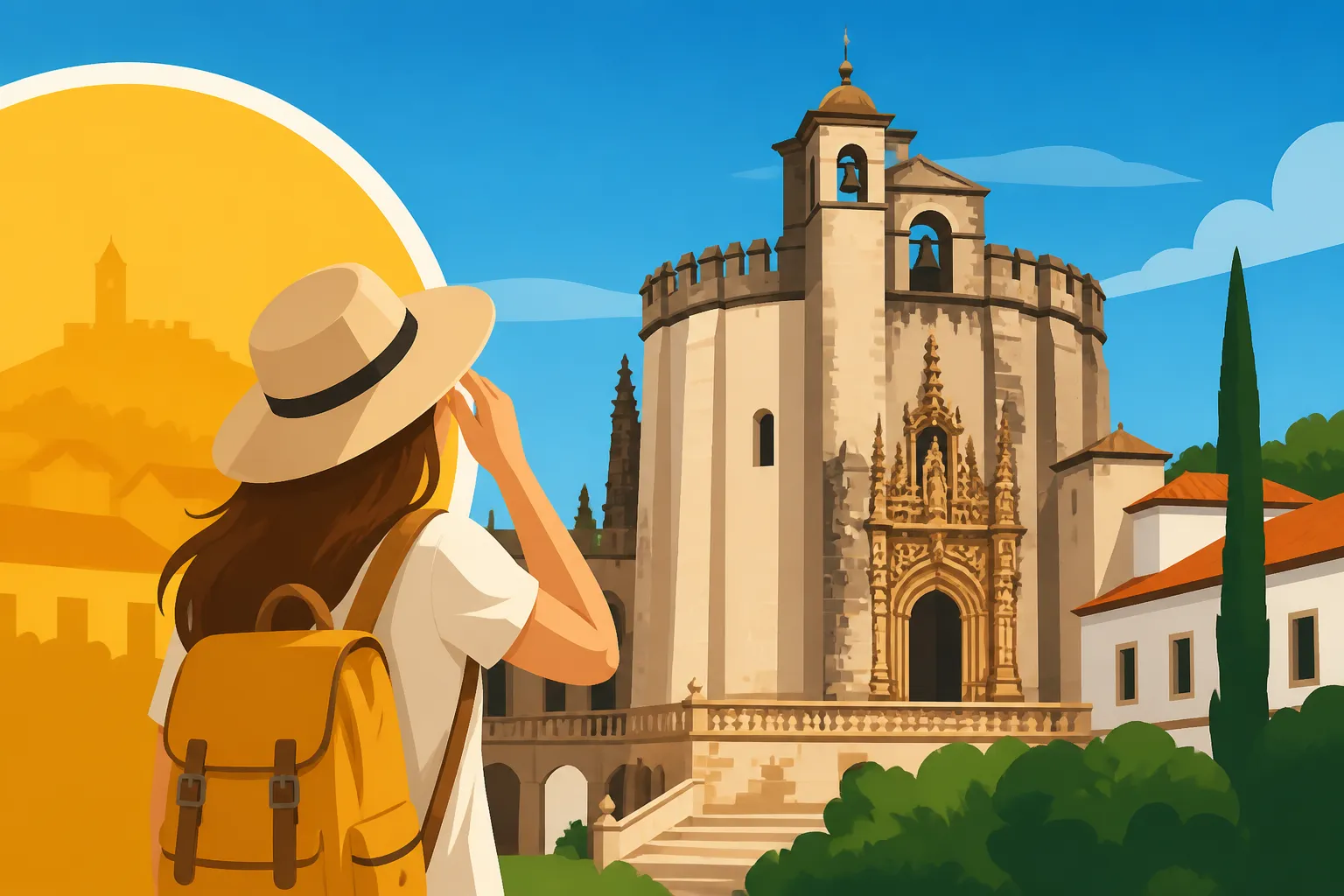
What truly sets the Convent of Christ apart, beyond its historical narrative, is its astounding architectural evolution. As the Order of Christ gained prominence, especially during Portugal's Age of Discoveries, the convent was continuously expanded and embellished, absorbing the dominant architectural styles of each era. You’ll see the original Romanesque elements, particularly in the Charola, the Templar's circular church, which was modeled after the Holy Sepulchre in Jerusalem. This is the heart of the original Templar fortress and is truly breathtaking.
As you wander through the complex, you’ll encounter stunning examples of Gothic, Manueline, Renaissance, and even Baroque architecture. The Manueline style, Portugal's unique late-Gothic expression, is particularly prominent and simply dazzling here. Think intricate maritime motifs, armillary spheres, ropes, and coral carvings that reflect Portugal's seafaring prowess and exploration. The famous Manueline Window in the Chapter House, with its elaborate symbolism, is a masterpiece not to be missed. It’s a riot of detail that tells a story of discovery and national pride. Then there are the cloisters—no less than eight of them, each built in a different period, showcasing a remarkable blend of styles. It's like a living museum of architectural history, all within one sprawling, magnificent complex.
Planning Your Trip to Tomar: Getting There and Around
One of the biggest hurdles for many expats exploring Portugal is figuring out the logistics. While Tomar isn't as easily accessible as, say, Sintra from Lisbon, it's definitely manageable, and the journey itself offers a glimpse into Portugal's beautiful interior. Don't let the thought of navigating public transport or driving scare you; with a bit of planning, you'll find it's a relatively smooth experience.
Traveling by Train from Lisbon or Porto
Taking the train is often the most relaxed way to reach Tomar, especially if you’re coming from Lisbon. The Portuguese railway company, Comboios de Portugal (CP), operates regular services. From Lisbon, you'll typically depart from Santa Apolónia or Oriente station, both easily accessible by metro. The journey takes approximately 1.5 to 2 hours, depending on the number of stops. The trains are generally comfortable and offer a pleasant ride through the Portuguese countryside. While you won't find high-speed Alfa Pendular trains directly to Tomar, the InterRegional or Regional services are perfectly adequate. For those arriving from Porto, the journey is longer, usually around 3 to 4 hours, and often requires a change at a hub like Entroncamento or Lisbon Oriente.
When planning your trip, it's always a good idea to check the latest schedules and book your tickets in advance, especially during peak season or holidays. You can do this directly on the Comboios de Portugal website, or through platforms like Omio, which can sometimes simplify international travel planning by showing various transport options in one place. Remember that while public transport is generally reliable, rural lines might have fewer services on weekends or holidays, so always double-check. For more general advice on using trains, you might want to read our guide on Using Comboios de Portugal (CP) Trains and the Navegante Pass.
Driving to Tomar: A Scenic Route and Parking Tips
If you prefer the flexibility of having your own wheels, driving to Tomar is a fantastic option. It allows you to explore the surrounding areas at your own pace and perhaps combine your visit with other nearby historical sites like Almourol Castle. From Lisbon, the drive is straightforward, primarily via the A1 motorway north, then merging onto the A13. The journey takes about 1.5 hours, assuming clear traffic. From Porto, you'd take the A1 south, which is a longer drive of about 2.5 to 3 hours. The highways in Portugal are generally well-maintained, but be aware that many are toll roads.
Parking in Tomar, especially near the Convent of Christ, can be a bit tricky, but it's not impossible. There's usually paid street parking available in the town center, and some dedicated parking lots are within walking distance of the convent. Follow the signs for "Convento de Cristo" or "Castelo de Tomar" as you approach the city. Often, you can find free parking slightly further out and enjoy a pleasant walk through the town. Just be mindful of parking restrictions, indicated by blue and white signs, and always ensure you understand how to use the parquímetro (parking meter). If you're new to driving here, check out our insights on Driving in Portugal: Exchanging Your Foreign License to a Portuguese One and Navigating the Portuguese Toll System: Via Verde and Electronic Tolls.
Here's a quick comparison of travel options:
| Feature | Train (from Lisbon) | Car (from Lisbon) |
|---|---|---|
| Travel Time | 1.5 – 2 hours | 1.5 hours |
| Cost | €10 – €15 (one-way, per person) | Fuel (€15-€25) + Tolls (€10-€15) + Parking |
| Flexibility | Limited by train schedule | High, can explore surrounding areas |
| Comfort | Relaxed, no driving stress | Can be stressful in traffic/parking |
| Convenience | Easy booking, stations in city centers | Door-to-door, but parking can be an issue |
| Best For | Solo travelers, budget-conscious, avoiding driving | Families, groups, those wanting to explore beyond Tomar |
Local Transportation within Tomar
Once you arrive in Tomar, whether by train or car, getting to the Convent of Christ is straightforward. The convent sits atop a hill overlooking the city, about a 15-20 minute walk from the historic center. It’s a pleasant walk, though it is uphill, so wear comfortable shoes, especially if you plan to do a lot of exploring once you get there. The path is well-marked and winds through some lovely green spaces, offering great views back towards the town.
If walking uphill isn't appealing, or if you're traveling with small children or those with mobility issues, local taxis are readily available, especially near the train station or in the main square (Praça da República). A taxi ride up to the convent will be quick and relatively inexpensive, usually just a few euros. Alternatively, for those who enjoy a bit of a challenge, some local tour operators or even Tuk-Tuk services (common in more touristy areas) might offer rides, though these are less ubiquitous than in Lisbon or Porto. The compactness of Tomar's center means that most other attractions, shops, and restaurants are easily reachable on foot.
Exploring the Convent of Christ: What to Expect
Visiting the Convent of Christ isn't like popping into a small church; it's an immersive experience in a sprawling complex that can easily take half a day or more to fully absorb. Many expats have told me they felt rushed, or didn't know where to start, and wished they'd planned better. So, let me walk you through how to make the most of your time within these historic walls.
Essential Tips for Your Visit: Tickets, Hours, and What to See First
First things first: plan your arrival. The Convent of Christ is generally open from 9:00 AM to 5:30 PM or 6:00 PM, depending on the season, with the last entry about 30 minutes before closing. It typically closes on national holidays like Easter Sunday, Christmas Day, and New Year's Day. Always double-check the official Direção-Geral do Património Cultural (DGPC) website or the Convent's direct site for the most up-to-date opening hours and any potential temporary closures before you set off. Admission tickets usually cost around €6-€8 for adults, with discounts for seniors, students, and children. You can purchase tickets at the entrance, and while queues aren't usually as long as at Lisbon's Jerónimos Monastery, arriving shortly after opening or later in the afternoon can help you avoid any crowds.
Upon entering, I highly recommend making your way directly to the Charola, the original Templar church. It's the spiritual and historical core of the complex and offers a powerful starting point for understanding the site's origins. From there, you can branch out into the surrounding cloisters and other structures. Allow yourself ample time; this is not a place to rush through. The intricate details, the sheer scale of the architecture, and the sense of history demand patient exploration. Consider hiring an audio guide at the entrance or joining a guided tour, perhaps booked through a platform like GetYourGuide, if you want a deeper narrative than what the explanatory plaques provide.
Key Highlights: The Charola, Manueline Window, and Cloisters
The Charola, or Rotunda, is truly unique. This circular, fortified church was where the Templar knights, on horseback, would attend mass. Its interior is richly decorated with Gothic paintings and sculptures, added later by the Order of Christ. Standing inside, you can almost feel the presence of the knights. Surrounding it, and equally captivating, are the multiple cloisters. The Main Cloister (Claustro Principal), a masterpiece of Renaissance architecture, connects many different parts of the complex and offers stunning views, especially from its upper level. The Claustro de Santa Bárbara is another must-see, as it’s where you'll find the famous Manueline Window. This window, intricately carved with nautical and natural elements, is a breathtaking example of Portugal's unique architectural style and a symbol of its Age of Discoveries.
Beyond these, explore the Chapter House, the dormitory, the refectory, and the various chapels. Each corner of the convent tells a piece of Portugal's layered history. Look for the symbolic carvings, the defensive structures that remind you this was once a fortress, and the serene courtyards that offer a moment of quiet reflection amidst the grandeur. Don't forget to climb to some of the higher vantage points within the castle walls for panoramic views of Tomar and the surrounding landscape – it’s a perspective that truly brings the scale of this place into focus.
Beyond the Convent: Tomar's Charming Town Center
While the Convent of Christ is undoubtedly the star, don't make the mistake of leaving Tomar without exploring its charming town center. The town itself has a relaxed, authentic Portuguese vibe that often feels a world away from the bustling tourist hubs. The River Nabão meanders through the heart of Tomar, with picturesque bridges and riverside parks, perfect for a leisurely stroll. The Praça da República, the main square, is a delightful spot for people-watching, surrounded by cafes, shops, and the beautiful Church of São João Baptista.
Wander through the narrow, cobbled streets and discover artisan shops, local bakeries, and traditional taverns. Tomar is also known for its Jewish heritage, and you can visit the beautifully preserved 15th-century Synagogue of Tomar, one of Portugal's oldest. If you're there in July, you might even catch the Festa dos Tabuleiros (Festival of Trays), a quadrennial festival that is a UNESCO Intangible Cultural Heritage event, though this is a very specific occurrence. Even without a festival, the town offers a genuine slice of Portuguese life, making for a perfect end to your historical exploration. For other aspects of daily life, our guide on Portuguese Coffee Culture and Restaurant Etiquette: Ordering Like a Local might come in handy for navigating the local eateries.
Where to Stay and Eat in Tomar
A visit to Tomar and the Convent of Christ can easily fill an entire day, so considering an overnight stay can transform your experience from a rushed tour into a truly immersive historical retreat. Plus, it gives you more time to savor the local flavors and unwind in a setting that feels distinctly Portuguese.
Accommodation Options: From Boutique Hotels to Guesthouses
Tomar offers a range of accommodation options to suit different preferences and budgets. If you're looking for a more luxurious or historically themed stay, there are several charming boutique hotels and guesthouses within the historic center, some even housed in beautifully renovated traditional buildings. These often provide a wonderful blend of modern comforts and authentic Portuguese ambiance. Imagine waking up and stepping out directly onto a cobbled street, ready to grab a pastel de nata and a bica before heading out for the day. Platforms like Booking.com are excellent for exploring these choices, offering user reviews and a wide selection.
For budget-conscious travelers or those seeking a more communal experience, Tomar also has a selection of hostels and smaller, family-run alojamento local (local accommodation) options. Many offer private rooms alongside dormitories, often with shared kitchen facilities, which can be great if you're looking to save on eating out. If you're driving, look for places that offer parking, as it can simplify your stay. Staying overnight allows you to experience Tomar in the evening when the crowds have thinned, and the town takes on a different, more serene atmosphere. You'll truly feel like an expat living the dream rather than just a fleeting tourist.
Savoring Tomar: Local Cuisine and Recommended Eateries
Portuguese cuisine is all about fresh, local ingredients, and Tomar is no exception. The region is known for its hearty, traditional dishes that often feature river fish from the Nabão, game meats, and rich stews. You absolutely must try some of the local specialties. Enguias fritas (fried eels) are a regional delicacy, as are lampreia (lamprey) during its season, though these are certainly acquired tastes! If those sound a bit too adventurous, you can't go wrong with classic Bacalhau à Brás (shredded cod with onions, potato sticks, and scrambled eggs) or a succulent chanfana (slow-cooked goat stew). The restaurants around Praça da República and along the riverfront offer a lovely setting for a meal.
For a sweet treat, keep an eye out for local pastries. Tomar is famous for its Fatias de Tomar (slices of Tomar), a rich, eggy cake, and Queijadas de Tomar, small cheese tarts. You'll find these in local pastelarias (pastry shops). Don't be shy about asking locals for their recommendations; they often know the best hidden gems for authentic, home-style cooking. The prices for food and drink in Tomar are generally more affordable than in Lisbon or Porto, giving you excellent value for a truly delicious culinary experience. For insights into managing your budget while exploring, you might find our guide on the Cost of Living in Portugal 2026: Detailed Budgets for Singles and Families useful.
Disclaimer
The information provided in this guide is for general informational purposes only and is subject to change. While we strive to keep the content up-to-date and accurate, opening hours, ticket prices, transportation schedules, and specific regulations can vary. We recommend always checking official websites and local sources for the most current information before making travel plans.