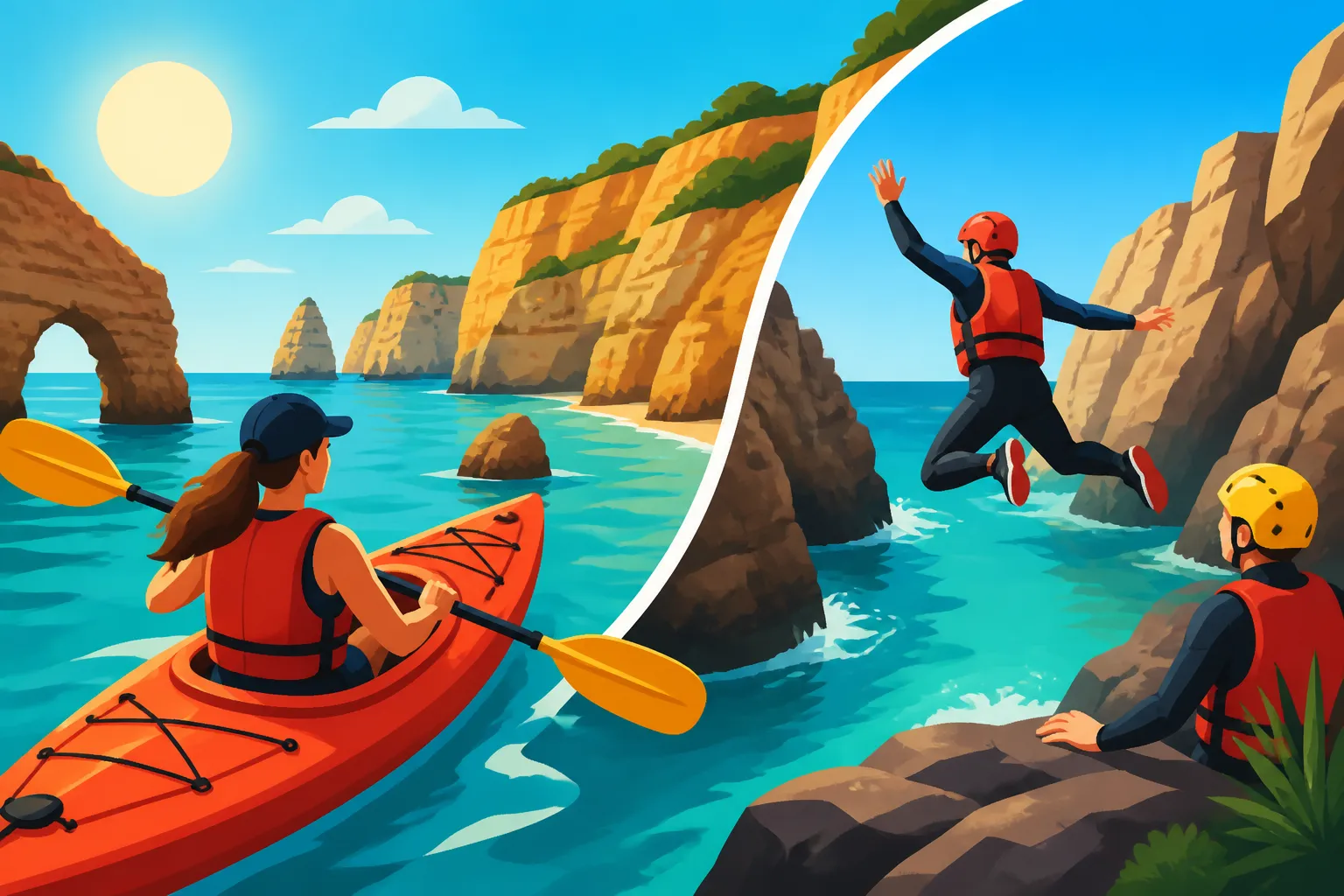
How to Go Kayaking and Coasteering in the Algarve
Disclosure: This article contains affiliate links. If you buy through them, we may earn a commission at no extra cost to you. Read our full disclosure.
Navigating the myriad of outdoor activities in a new country can feel like a daunting task, especially when you're craving adventure beyond the well-trodden paths. Many of us expats arrive in Portugal drawn by the stunning coastline, only to feel overwhelmed by how to actually get out there and experience it. If you've been dreaming of exploring hidden sea caves or leaping from sun-drenched cliffs, this guide will walk you through everything you need to know about kayaking and coasteering in the breathtaking Algarve region.
Discovering the Algarve's Coastal Wonders by Kayak
There’s something truly magical about paddling a kayak through the calm, turquoise waters of the Algarve, inching your way into a hidden grotto that feels like your own secret discovery. This region, particularly around Lagos and Benagil, is famed for its incredible sandstone cliffs, intricate cave systems, and pristine beaches that are often only accessible by sea. Kayaking offers an intimate and serene way to experience these natural marvels, allowing you to get up close to the rock formations and the vibrant marine life beneath. It’s a completely different perspective than seeing them from a large tour boat, which often can't squeeze into the smaller, more enchanting nooks and crannies.
Iconic Kayaking Spots and Tour Experiences
When it comes to kayaking in the Algarve, the Benagil Cave (Algar de Benagil) is undoubtedly the star of the show. This natural cathedral, with its colossal skylight and sandy beach inside, is a truly awe-inspiring sight. To truly appreciate it, you must go by kayak or stand-up paddleboard, as larger boats are not allowed to land inside, and frankly, you wouldn't want to be jostling for space. Most tours depart from Benagil Beach or the nearby Praia de Carvoeiro, but many also start further afield from Portimão or Lagos, transferring you by boat closer to the caves before you launch your kayak.
Another unmissable area is the Ponta da Piedade in Lagos. Here, the coastline is a maze of sea arches, grottoes, and towering rock pillars that defy gravity. Kayak tours from Lagos Marina or Praia da Batata will take you through these incredible formations, often guided by locals who know every secret passage and quiet cove. You'll learn about the geology, the local legends, and even spot a few seabirds nesting in the cliffs. The calm morning waters are usually best for this, offering the most serene conditions for exploration and stunning golden light for photos. Many tour operators will combine this with a short boat trip to cover more ground, letting you paddle the most scenic sections.
What to Expect on a Kayaking Tour
Most kayaking tours in the Algarve cater to a wide range of fitness levels, from complete beginners to experienced paddlers. You’ll typically be provided with all the necessary equipment: a sit-on-top kayak (usually double, but singles are available), paddles, and a life jacket. Before heading out, your guide will give a comprehensive safety briefing and some basic paddling instructions. Don't worry if you've never kayaked before; these boats are very stable, and the guides are experts at making sure everyone feels comfortable and safe. The tours usually last between 2 to 3 hours, including the time spent exploring the caves and perhaps a quick dip in the ocean.
It’s always a good idea to bring water, sunscreen, a hat, and a waterproof bag for your phone or camera. Some tours even provide dry bags, but it’s best to confirm in advance. The guides are often multilingual, speaking excellent English, Portuguese, and sometimes other European languages, making the experience accessible and informative for a diverse group of expats and tourists. For those looking to secure their spot, especially during peak season, booking in advance through platforms like GetYourGuide or Booking.com is highly recommended. These platforms often list various tour options, read reviews, and compare prices, ensuring you find the perfect adventure for your group.
Embracing the Thrill: Coasteering Adventures in the Algarve
If kayaking offers a serene communion with nature, coasteering is its adrenaline-fueled cousin. This exhilarating activity combines cliff jumping, swimming through natural pools, scrambling over rocks, and exploring sea caves along the coastline, all without the aid of boats or ropes. It’s an immersive, high-energy way to experience the Algarve's rugged shores, pushing your boundaries and rewarding you with incredible views and unforgettable moments. While it sounds intense, coasteering tours are run by experienced professionals who prioritize safety above all else, making it accessible to adventurous souls of varying fitness levels.
What Coasteering Entails and Where to Do It
Coasteering is essentially navigating the intertidal zone of the coastline on foot, by swimming, and by jumping. You'll don a wetsuit, helmet, and buoyancy aid, and under the watchful eye of certified guides, you'll traverse sections of the coast that are usually inaccessible. The jumps are entirely optional, starting from lower heights (a few meters) and gradually increasing for those who feel comfortable. There's never any pressure to jump higher than you want; you can always opt for a smaller jump or simply swim around a section if a particular leap feels too daunting.
The western Algarve, particularly around the Sagres and Lagos areas, is the prime spot for coasteering. The dramatic cliffs, crystal-clear waters, and numerous coves and inlets here create a natural playground. Sites like those near Ponta da Piedade or along the Costa Vicentina Natural Park offer diverse terrain, from smooth rocks perfect for scrambling to deep water jumps into hidden lagoons. The guides are not just there for safety; they're also incredibly knowledgeable about the local marine life, geology, and history, making it an educational experience as much as an adventurous one. It's a fantastic way to see the raw, untamed beauty of Portugal's westernmost coast.
Safety, Equipment, and Physical Requirements
Safety is paramount in coasteering, which is why all reputable tour operators provide professional, qualified guides and top-quality equipment. You'll be fitted with a thick wetsuit (essential for warmth and protection against scrapes), a helmet, and a buoyancy aid (not a life vest, but one designed for movement in the water). Additionally, you'll wear specific closed-toe shoes with good grip, often provided by the tour, or you can bring your own sturdy trainers that you don't mind getting wet. The guides are trained in first aid and rescue techniques and will carefully assess conditions before and during the activity, ensuring it's safe to proceed.
While you don't need to be an Olympic athlete, a basic level of fitness and confidence in the water is required. You should be able to swim comfortably and be prepared for some physical exertion—scrambling over rocks, treading water, and climbing out of the sea onto slippery surfaces. Most tours specify a minimum age (often 8 or 10 years old) and a maximum weight, so it's wise to check these details when booking. For families with adventurous older children, it can be an incredible bonding experience! If you're looking for an unforgettable thrill, search for reputable coasteering outfits that emphasize safety, like those found with high ratings on platforms like GetYourGuide, which often provide detailed descriptions of what each tour entails.
Planning Your Adventure: Booking, Gear, and Safety
Once you've decided to dive into the aquatic adventures the Algarve has to offer, a bit of planning goes a long way. Portugal's administrative quirks and seasonal variations mean that a spontaneous decision can sometimes lead to disappointment, so it's best to be prepared. From securing your spot to packing correctly, let's make sure your experience is smooth sailing.
Choosing and Booking Your Tour Operator
The Algarve is brimming with tour operators offering kayaking and coasteering, so choosing the right one can feel a bit like sifting through sand. Here's what to look for:
- Reputation and Reviews: Always check online reviews on platforms like TripAdvisor, Google Maps, or directly on booking sites. Look for consistent positive feedback on safety, guide professionalism, and the overall experience.
- Certifications and Insurance: Ensure the company is legally registered and its guides are certified (e.g., in first aid, rescue, and specific activity instruction). They should also carry appropriate insurance. Don't be shy about asking if it's not explicitly stated.
- Group Size: Smaller groups often offer a more personalized and intimate experience, especially for kayaking into tight caves. For coasteering, smaller groups also mean better supervision.
- Inclusions: Confirm what's included in the price. This typically covers equipment (kayak, paddle, life jacket, wetsuit, helmet), guide, and sometimes transportation to the launch point.
- Language: Most operators in the Algarve cater to international tourists, so finding English-speaking guides is generally not an issue.
For ease of booking, especially during the bustling summer months (June to September), using online platforms is incredibly convenient. Sites like Omio for transport to the region, or GetYourGuide and Booking.com for activity bookings, allow you to compare various tours, read authentic reviews, and secure your spot with confidence. They often have flexible cancellation policies, which can be a lifesaver if plans change.
Essential Gear and What to Bring
Beyond the equipment provided by your tour operator, there are a few personal items you absolutely shouldn't forget:
| Item | Purpose | Notes |
|---|---|---|
| Swimsuit | Worn under your wetsuit or for kayaking. | Quick-drying fabrics are always a bonus. |
| Towel | For drying off after the activity. | A microfiber travel towel is compact and efficient. |
| Sunscreen | Essential for protecting exposed skin, especially on the water. | Choose water-resistant options, minimum SPF 30. |
| Hat and Sunglasses | Protection from the intense Portuguese sun. | Sunglasses with a strap are recommended to prevent losing them in the water. |
| Water Bottle | Staying hydrated is crucial, especially during physical activity. | Many tours provide breaks, but it’s good to have your own. |
| Snacks | A small, energizing snack like a granola bar can be helpful. | Especially for longer tours. |
| Waterproof Camera/Phone Case | To capture those incredible moments without damage. | Test it beforehand! |
| Change of Clothes | Fresh clothes for after the activity. | You’ll likely be wet and sandy! |
| Sturdy Water Shoes/Trainers | For coasteering, if not provided, or for comfort in a kayak. | Make sure they have good grip and can handle getting wet. |
Remember, the Atlantic waters, even in the Algarve, can be surprisingly cool, especially outside of high summer. The provided wetsuits are a blessing for coasteering and can also be beneficial for longer kayaking trips, keeping you comfortable.
Important Safety Considerations
While these adventures are thrilling, safety should always be your top priority.
- Listen to Your Guides: This cannot be stressed enough. Your guides are local experts with extensive training. Their instructions are for your safety.
- Assess Conditions: Reputable operators will cancel tours if weather or sea conditions are unsafe. Don't push to go out if advised against it. Understanding the local weather patterns, especially wind and swell, is crucial.
- Know Your Limits: Be honest about your swimming ability and comfort with heights (for coasteering jumps). There's no shame in choosing a smaller jump or skipping one altogether.
- Stay Hydrated: Dehydration can quickly sap your energy, particularly under the Portuguese sun.
- Inform About Medical Conditions: Let your guide know about any medical conditions, allergies, or injuries that might affect your participation. This information is confidential and helps them ensure your safety.
Remember that even with all precautions, accidents can happen. It's wise to ensure you have adequate travel insurance that covers adventurous activities. Consider comprehensive plans like those from Cigna Global, which are popular with expats for their broad coverage. Knowing your options for Emergency Medical Care in Portugal: Calling 112 and Going to the Hospital is also an important part of preparing for any unforeseen circumstances.
Beyond the Caves: Other Coastal Explorations
While kayaking and coasteering steal the show for many, the Algarve's coast offers a wealth of other ways to explore its rugged beauty and clear waters. For those who want to mix up their adventures or prefer a slightly different pace, there are plenty of options.
Stand-Up Paddleboarding (SUP)
For many, SUP offers a fantastic blend of kayaking's serenity and a slightly different physical challenge. It allows you to stand tall, giving you a better vantage point for spotting marine life in the clear waters below or gazing at the towering cliffs. Similar to kayaking, you can find SUP tours to the Benagil Cave and Ponta da Piedade, offering that unique, up-close perspective. It's also a great activity for exploring quieter coves and practicing your balance. You'll find many rental shops along popular beaches like Praia da Rocha or Praia da Marinha, where you can rent boards for an hour or a half-day. This is a wonderfully peaceful way to enjoy the coastline and a great workout too.
Boat Tours to Hidden Beaches and Grottoes
If paddling isn't quite your speed, but you still want to see the stunning coast, various boat tours can take you to many of the same incredible locations. These range from smaller, traditional fishing boats that can navigate into smaller grottoes to larger catamaran cruises that offer a more relaxed experience with sunbathing and swimming stops. These tours are fantastic for those traveling with very young children or individuals with mobility issues, ensuring everyone can enjoy the spectacular scenery. Just be aware that larger boats won't offer the same intimate experience of paddling into every single nook and cranny. Many of these tours depart from major marinas like those in Lagos, Portimão, or Albufeira, and often include stops for swimming in secluded bays that are otherwise difficult to reach.
Hiking the Seven Hanging Valleys Trail
While not an aquatic activity, the Seven Hanging Valleys Trail (Percurso dos Sete Vales Suspensos) offers a breathtaking perspective of the very same coastal cliffs and grottoes you’d explore from the water. This stunning clifftop hike, stretching from Praia da Marinha to Praia de Vale Centeanes, provides panoramic views of the ocean, dramatic rock formations, and even features viewpoints directly above the Benagil Cave. It’s a moderately challenging trail that offers a different way to appreciate the Algarve's unique landscape. Combining a morning hike with an afternoon kayak or SUP tour provides a comprehensive exploration of the region's natural wonders. Just remember to bring plenty of water, wear proper hiking shoes, and check the weather before you go. The Algarve can get very hot, especially in summer, so early morning or late afternoon hikes are usually best. For those relying on public transport to get around, understanding the local networks is key, and our guide on Public Transport and Driving in Portugal: Trains, Tolls, and Licenses can be really helpful.
The Algarve coastline is a treasure trove of natural beauty, and whether you choose to paddle through its secret caves or leap from its cliffs, you're guaranteed an adventure of a lifetime. So pack your swimsuit, get ready to embrace the elements, and prepare to be utterly captivated by Portugal's stunning southern edge.
Disclaimer
The information provided in this guide is for general informational purposes only and is subject to change. While we strive to keep it accurate and up-to-date, rules and conditions, especially concerning tour operations and local regulations, can evolve. Always verify details with specific tour operators, local authorities, and official sources before making travel arrangements or participating in activities. Safety instructions from qualified guides should always be followed rigorously. Participation in kayaking and coasteering involves inherent risks, and it is advisable to have appropriate travel insurance coverage.