Lisbon for First-Time Visitors: Neighborhoods and Highlights
Disclosure: This article contains affiliate links. If you buy through them, we may earn a commission at no extra cost to you. Read our full disclosure.
Stepping off the plane at Humberto Delgado Airport often leads to immediate overwhelm as you navigate the aggressive hills, the confusing ticket machines, and the sheer density of Lisbon's historical layers. This guide solves the first-timer’s paralysis by breaking down exactly where to stay, what to prioritize, and how to navigate the city’s unique cultural quirks without feeling like a lost tourist.
Choosing the Right Neighborhood: Where to Stay Based on Your Vibe
Selecting a base in Lisbon is the most consequential decision you will make for your trip. The city is essentially a series of steep hills, and where you choose to sleep dictates whether you will be starting your day with a grueling hike or a gentle stroll. For many first-timers, the initial instinct is to book the first charming apartment they see on Booking.com, but without understanding the topography, you might find yourself in an area that doesn’t match your energy levels or interests.
Baixa and Chiado: The Heart of the Action
Baixa is the "Downtown" of Lisbon, characterized by its flat, grid-like streets—a rarity in this city. It was completely rebuilt after the 1755 earthquake, and today it serves as the central hub for shopping and transport. If you stay here, you are steps away from the Praça do Comércio and the Rossio train station. It is perfect for those who want to be in the middle of everything and prefer to avoid the steepest climbs. However, be aware that Baixa can feel a bit "commercial" and lacks the residential soul found in other quarters.
Chiado, sitting just above Baixa, is the city’s sophisticated literary and shopping district. Think of it as the elegant older sister to Baixa's bustling center. Here, you’ll find historic cafes like A Brasileira and high-end boutiques. It is arguably the best-connected area in the city, but because it is so desirable, the prices for accommodations can be significantly higher. When browsing for a place to stay, you can use Booking.com to filter for "Boutique Hotels" in this specific area to ensure you get that classic Pombaline architecture experience.
The real-world catch with Chiado and Baixa is the noise. Because these are the primary arteries for the famous yellow trams and late-night revelers, light sleepers should look for rooms with reinforced windows or stay on the higher floors. Many travelers regret their "central" location at 2 AM when the sound of the tram’s screeching wheels echoes through the narrow streets. If you are looking for a deeper dive into these areas, check out our Lisbon Neighborhood Guide: Best Areas for Expats and Digital Nomads.
Alfama: Stepping Back in Time
Alfama is the Lisbon you see on postcards. It is the oldest district, a medieval maze of narrow alleys, drying laundry, and hidden squares where Fado music drifts out of tiny taverns. Staying here is an immersive experience. You aren't just a visitor; you are part of the neighborhood fabric. You will likely be woken up by the sound of a neighbor shouting a greeting across the street or the smell of grilled sardines during the summer months.
However, the logistical reality of Alfama can be frustrating. Most of the district is car-free, meaning if you have heavy suitcases, you will be dragging them up hundreds of stone steps. Taxis and Ubers cannot reach many of the front doors. If you choose Alfama, pack light and be prepared for a daily workout.
Despite the physical toll, Alfama offers a magic that no other neighborhood can replicate. It is the soul of the city. You can spend an entire afternoon simply getting lost in its "becos" (alleys). Just remember that in June, during the Popular Saints festivals, this neighborhood becomes one giant party, and sleeping becomes nearly impossible. For a realistic look at navigating these logistics, you might want to read about Common tourist scams in Lisbon: Pickpockets on Tram 28 and fake hash sellers, as the high density of tourists in Alfama attracts opportunistic pickpockets.
Príncipe Real: The Upscale, Trendy Escape
If you want to feel like a wealthy local rather than a tourist, Príncipe Real is the place. Located on a ridge above the rest of the city, it is known for its beautiful park (Jardim do Príncipe Real), concept stores like Embaixada, and some of the best independent restaurants in the country. It feels much more residential and polished than the historic center. The streets are wider, the gardens are lush, and the pace is a bit slower.
The downside to Príncipe Real is the lack of a direct Metro connection. You will either be walking down to Rato or Chiado, or relying heavily on buses and taxis. For expats and long-term visitors, this is often the preferred neighborhood because it offers a break from the "Disney-fication" of the downtown core. It’s the kind of place where you can find a quiet wine bar and sit for hours without being bothered by tour groups.
Príncipe Real suits families and couples on a second or third visit, but even for a first-timer, it provides a fantastic perspective on modern, prosperous Lisbon life. If you’re coming from the airport, the easiest way to reach this hilltop is via a ride-sharing app. You can compare options in our guide on Using Bolt vs Uber in Portugal: Which ride-hailing app is cheaper?.
Essential Sightseeing: Navigating Lisbon's Iconic Landmarks
Lisbon’s highlights are spread out, and many people make the mistake of trying to see everything in two days. The geography simply won't allow it without leaving you completely burnt out. The key is to group your sightseeing by "zones" and to book your tickets in advance. Using services like GetYourGuide is highly recommended for the most popular sites to avoid standing in the sun for two hours.
Belém: History, Monuments, and Pastéis
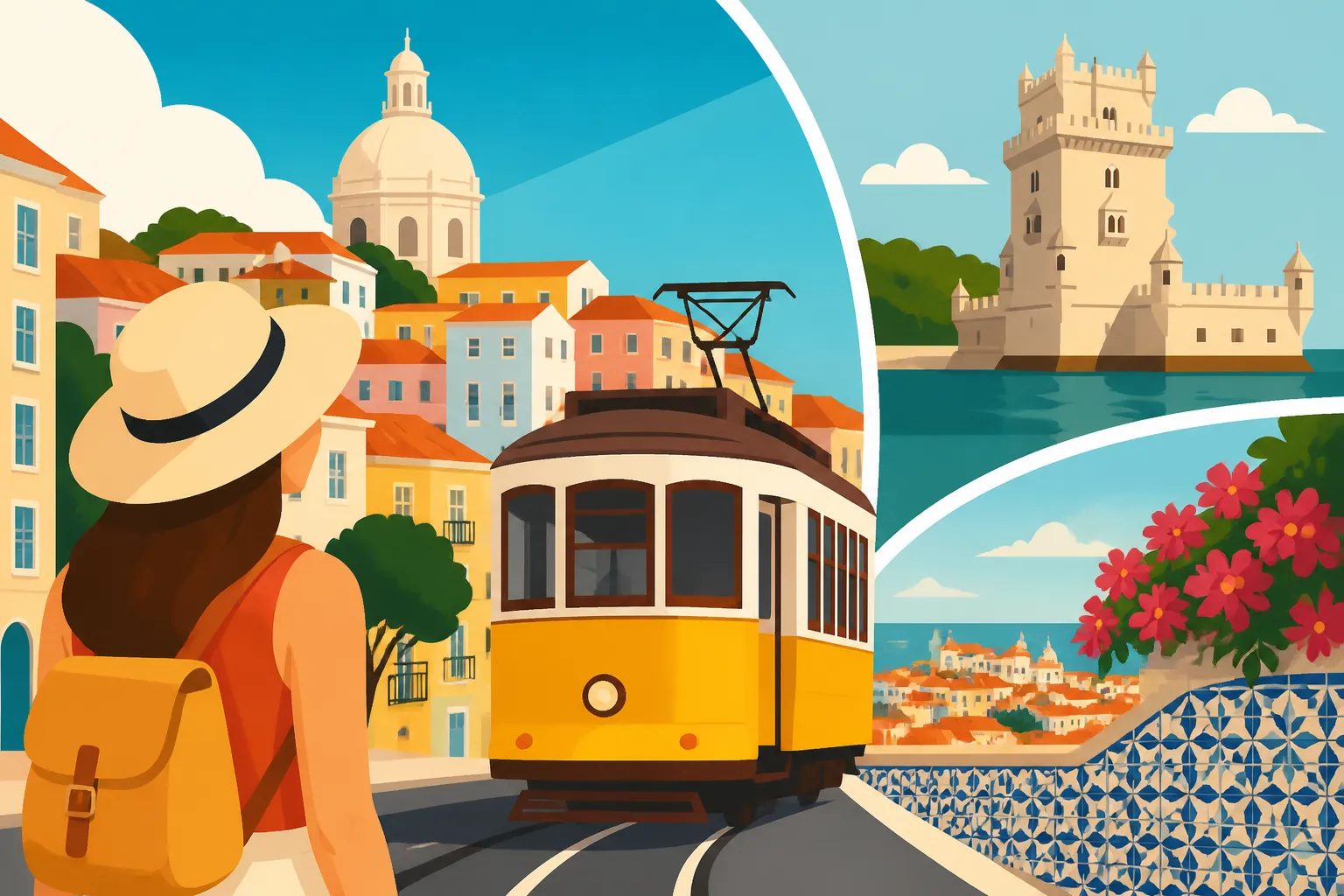
Belém is located about 6 kilometers west of the city center and requires a dedicated half-day or full-day trip. This is where the Age of Discovery began. You’ll find the Jerónimos Monastery, the Belém Tower, and the Padrão dos Descobrimentos (Monument to the Discoveries). The architecture here is "Manueline"—a highly decorative, maritime-inspired Gothic style that is unique to Portugal. It is breathtaking, but the queues are legendary.
The most common frustration in Belém is the line for the monastery. It is wise to use GetYourGuide to book a skip-the-line entry. Even with a pre-booked ticket, you’ll still have to wait a bit, but it saves you from the primary scrum. After the history lesson, your next stop must be the Antiga Confeitaria de Belém for the original Pastel de Nata. Pro tip: Don’t join the massive line of people standing on the sidewalk; that’s for takeaway. Go inside, find one of the many sprawling dining rooms, and sit down. You’ll be served much faster, and the experience is far more civilized.
To get to Belém, most people take the 15E tram from Praça do Comércio. It gets incredibly crowded. If you have a larger group, it’s often cheaper and faster to just take a Bolt. For those planning to use the public system heavily, you should definitely look into the Navegante Pass Lisbon: How to get the €40 monthly unlimited transit card to see if the logistics of the card system make sense for your stay.
The Miradouros: Capturing the Best Views of the City
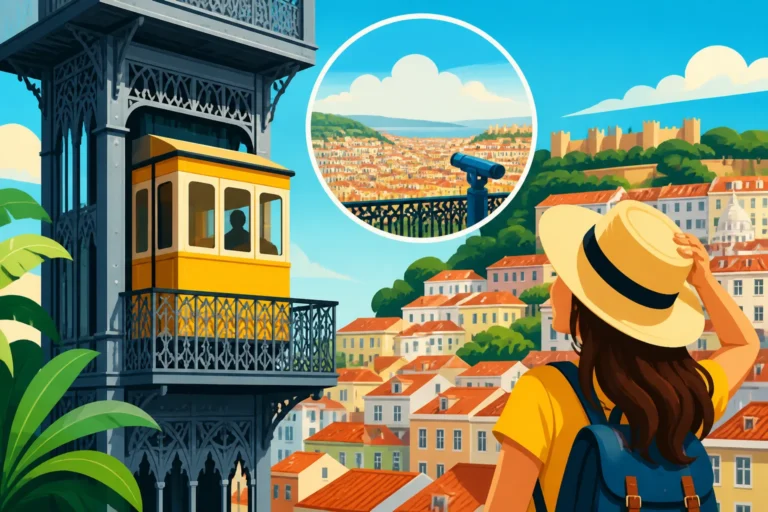
Lisbon is known as the City of Seven Hills, and the reward for all that climbing is the "Miradouros" or viewpoints. These are public terraces where locals and tourists alike gather to watch the sunset, drink a beer from a nearby kiosk, and listen to buskers. Each miradouro has a different personality. Miradouro da Graça offers a classic view of the castle, while Miradouro de Santa Catarina is the hangout spot for the younger, more bohemian crowd.
My personal favorite is Miradouro da Senhora do Monte. It is the highest point in the city and offers a panoramic view that includes the river, the bridge, and the Monsanto forest. It’s a bit of a hike to get there, but it is worth every drop of sweat. If you go during the "Golden Hour," the light hitting the white and pastel buildings of the city is something you won't forget.
Keep in mind that these spots can get very crowded. If you want a more private experience, try visiting early in the morning with a coffee in hand. To understand how to order that coffee properly before you head up the hill, read our guide on How to order coffee in Portugal: Bica, Meia de Leite, Pingado, and Galão.
Tram 28 and Beyond: Managing Transportation Realities
The yellow Tram 28 is arguably Lisbon's most famous "sight," but for many, it is also a major disappointment. Because it passes through the most scenic parts of the city, it is perpetually packed. You will likely spend an hour standing in line at Martim Moniz only to end up standing the entire journey, squeezed between other tourists, unable to see out the window. It is also the primary hunting ground for pickpockets.
Instead of the 28, I suggest taking the 24E, which goes from Chiado up to Campolide. It uses the same vintage cars but is far less crowded. Or, simply walk. Lisbon is a city that reveals its best secrets to those on foot. You’ll find tiny chapels, tiled facades, and hidden courtyards that the tram simply bypasses.
If you do decide to use the trams, buses, or metro, you must understand the "Zapping" system on the Navegante card. You cannot pay with cash on most vehicles, and buying a single ticket on board the tram is much more expensive. For the full breakdown of how to handle the machines and the different card types, consult Using Comboios de Portugal (CP) Trains and the Navegante Pass.
Living Like a Local: Culture, Etiquette, and Practical Tips
The most beautiful thing about Lisbon isn't just the architecture; it's the lifestyle. However, there are several "unwritten rules" that can make or break your experience. If you walk into a restaurant expecting North American-style service speed or British-style queuing, you are going to be frustrated.
Coffee Culture and Pastry Obsessions
In Lisbon, coffee is not just a drink; it's a social ritual. You don't grab a giant latte to-go and walk down the street. You sit down, or you stand at the counter ("ao balcão"). The standard order is a "Bica"—a small, potent espresso. If you want something with milk, you ask for a "Galão" (served in a tall glass) or a "Meia de Leite" (served in a cup).
Pastry shops, or "Pastelarias," are on every corner. While the Pastel de Nata is the king, don't ignore the other treats like the "Pão de Deus" (bread of God) or the "Travesseiro" if you head out to Sintra. The etiquette is generally to order at the counter, eat, and then pay. It’s an incredibly efficient system once you get the hang of it. For a deep dive into the nuances of these interactions, our article on Portuguese Coffee Culture and Restaurant Etiquette: Ordering Like a Local is essential reading.
One mistake tourists often make is ordering a "Coffee" and expecting a large filtered drip coffee. That doesn't really exist in traditional shops. You will get an espresso unless you specifically ask for an "Abatanado," which is an espresso with extra hot water.
Dining Out: Petiscos and the Tipping Dilemma
Dining in Lisbon is a leisurely affair. Lunch starts around 1:00 PM, and dinner rarely begins before 8:00 PM. When you sit down, the waiter will often bring out "couvert"—small dishes of olives, cheese, bread, and perhaps tuna pate. These are not free. If you eat them, you will be charged. If you don’t want them, simply say "Não, obrigado" and they will take them away. It isn't a scam; it’s just the traditional way of starting a meal.
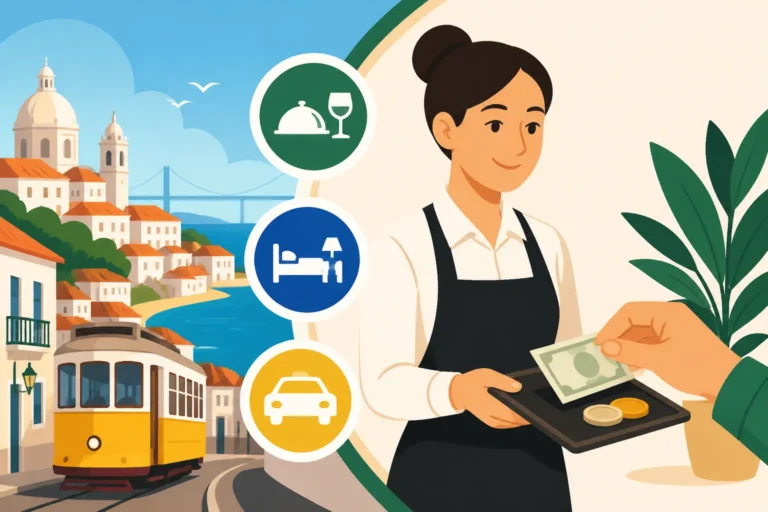
Tipping is another area of confusion. Unlike in the United States, there is no mandatory 20% tip. In a casual "tasca" (a traditional tavern), rounding up to the nearest Euro or leaving a couple of coins is plenty. In a high-end restaurant, 5% to 10% is seen as generous. The staff are paid a monthly wage and do not rely on tips for their survival. You can find more details on this in our guide: Tipping culture in Portugal: Do you leave 10% or just round up the bill?.
When choosing a restaurant, look for places with paper tablecloths and a "Prato do Dia" (Plate of the Day) written on a chalkboard. These are the authentic spots where you can get a massive plate of grilled fish or "Bitoque" (steak and eggs) for less than 12 Euros. Avoid the places in Baixa with people outside waving menus at you; those are classic tourist traps with mediocre food.
Language and Logistics: Making Your Stay Smoother
While almost everyone in the Lisbon tourism industry speaks excellent English, making an effort to say a few words in Portuguese goes a long way. Use "Bom dia" (Good morning) before noon and "Boa tarde" (Good afternoon) after. Use "Obrigado" (if you are male) or "Obrigada" (if you are female) for thank you. Avoid using Spanish; while the languages are related, Portuguese people are very proud of their linguistic identity and can find it slightly offensive when tourists assume they speak Spanish.
Logistically, the biggest hurdle for first-timers is the "Calçada Portuguesa"—the beautiful but treacherous limestone pavements. They are incredibly slippery, especially when wet or even just worn down by millions of footsteps. Leave your high heels at home. You need shoes with excellent grip. Tourists often slip and fall on even the slightest incline when wearing smooth-soled flip-flops.
Also, be aware of the "August Shutdown." While Lisbon remains open for tourists, many smaller, family-run shops and restaurants close for two to three weeks in August so the owners can go to the Algarve. If you have your heart set on a specific local haunt, check their Instagram or Google Maps listing before trekking across town.
Getting Around: From the Airport to Day Trips
Lisbon is a gateway to the rest of Portugal, but for a first-time visitor, just getting out of the airport can be a challenge. The airport is located within the city limits, which is a blessing, but the taxi line can be an hour long.
Navigating Lisbon's Public Transit System
The Metro is the cleanest and most efficient way to get from the airport to the city center. The Red Line connects the airport to the rest of the network. You will need to buy a Navegante card for 0.50 Euros at the machine and then load it with credit. The interface can be confusing, but there is usually an English language option.
For regional travel, Lisbon has several major stations. Santa Apolónia is the terminus for many long-distance trains, while Sete Rios and Oriente are major hubs for both trains and buses. If you are planning to travel to Porto or the Algarve after your Lisbon stay, I recommend using Omio to compare the prices and times between the Rede Expressos buses and the Comboios de Portugal (CP) trains. Sometimes the bus is faster and cheaper, depending on your final destination.
If you find the Metro too daunting with luggage, Bolt and Uber are ubiquitous and very affordable. A ride from the airport to Chiado will typically cost between 8 and 15 Euros, depending on the time of day. Taxis are also available but can sometimes take "the scenic route" with unsuspecting tourists. Always make sure the meter is running.
Planning the Perfect Day Trip to Sintra or Cascais
No first-time visit to Lisbon is complete without a day trip to Sintra. It is a UNESCO World Heritage site filled with fairytale palaces and misty forests. However, it is also a logistical nightmare. The train leaves from Rossio Station every 20 minutes, but the crowds are intense. Once in Sintra, you cannot easily walk between the palaces. You need to take the local 434 tourist bus or a tuk-tuk.
My advice for Sintra is to pick two sites—ideally the Pena Palace and the Quinta da Regaleira—and focus on them. Trying to see the Moorish Castle, Monserrate, and the National Palace all in one day is impossible. You should book your Pena Palace entry time via GetYourGuide weeks in advance, as they sell out. If you miss your time slot, they will not let you in.
If you prefer the ocean, Cascais is a beautiful seaside town only 40 minutes away by train from Cais do Sodré. The train ride itself is lovely, hugging the coastline the entire way. It is a much more relaxed day trip than Sintra. You can walk along the "Paredão" (sea wall), eat some gelato, and enjoy the sandy beaches.
Managing Your Travel Budget and Tech
Lisbon is still one of the more affordable Western European capitals, but prices have risen sharply. A realistic daily budget for a mid-range traveler is around 80-120 Euros, excluding accommodation. This covers a nice lunch, a decent dinner with wine, transport, and a couple of museum entries.
To keep costs down, use the Metro and buy your groceries at Pingo Doce or Continente. For data, don’t rely on your home roaming plan. You can pick up a local SIM card at the airport, or use an eSIM app. Having data is essential for navigating the winding streets of Alfama with Google Maps.
If you are coming from outside the Eurozone, use a card like Revolut or Wise to avoid terrible exchange rates at the airport ATMs. Avoid the "Euronet" ATMs you see in the streets; they charge massive fees. Always look for a "Multibanco" ATM, which is the national standard and much fairer.
Neighborhood Comparison Table for First-Time Visitors
| Neighborhood | Vibe | Best For | Transport Connectivity |
|---|---|---|---|
| Baixa | Bustling, Commercial | Shopping, Central Access | Excellent (Metro/Train/Bus) |
| Chiado | Elegant, Literary | Boutique Stays, Dining | Very Good (Metro/Trams) |
| Alfama | Historic, Soulful | Fado, Photography | Poor (Mostly walking/Steps) |
| Príncipe Real | Trendy, Upscale | Expats, Local Design | Moderate (Buses/Taxis) |
| Bairro Alto | Rowdy, Nightlife | Bars, Young Travelers | Moderate (Walking to Chiado) |
| Belém | Historic, Open | Museums, River Views | Fair (Tram 15/Train) |
Disclaimer
The information provided in this guide is for informational purposes only and reflects the personal experiences and research of the author. While we strive to provide accurate and up-to-date details regarding Lisbon's neighborhoods and attractions for 2026, administrative rules, prices, and business operations in Portugal can change without notice. Always verify specific requirements, such as museum opening hours or transport regulations, through official government or service provider websites before your trip.