Beach Towns of the Algarve Compared: Lagos to Tavira
Disclosure: This article contains affiliate links. If you buy through them, we may earn a commission at no extra cost to you. Read our full disclosure.
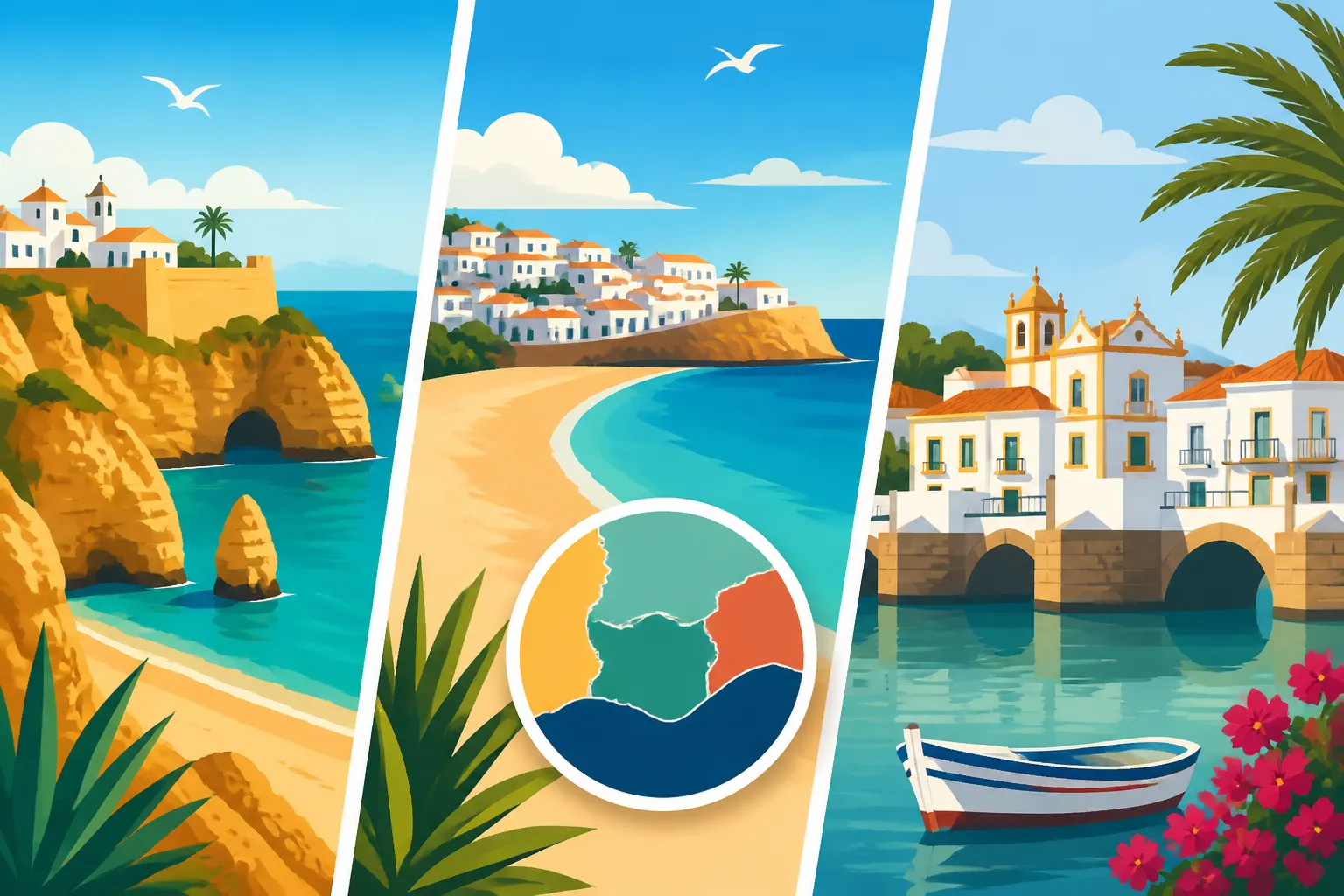
Deciding where to plant your roots or even where to spend a two-week vacation in the Algarve can feel like a high-stakes guessing game. You see the glossy photos of turquoise water and golden cliffs, but no one tells you about the soul-crushing traffic on the EN125 or the way some towns completely "ghost" you in January. This guide meticulously compares the Algarve's most iconic beach towns from Lagos to Tavira, ensuring you find the specific vibe and infrastructure that fits your lifestyle.
The Western Frontier: Lagos and the Wild West
The Barlavento, or Western Algarve, is defined by its dramatic limestone cliffs, scalloped bays, and a slightly cooler, windier climate that becomes more pronounced as you head toward the Atlantic. For many expats, Lagos is the first place they fall in love with. It has a youthful energy that many other towns in the south lack, largely due to its history as a hub for explorers and its current status as a digital nomad hotspot.
Lagos: The Expat Favorite for History and Adventure
Lagos is often the "Goldilocks" town for foreigners. It is large enough to feel like a real city with year-round services, but small enough to navigate on foot—provided your calves are ready for the hills. The historic center is a maze of calçada-tiled streets, but I’ll be honest: in July and August, these streets can feel like a claustrophobic bottleneck of tourists. If you are looking for peace, you won’t find it in the center during summer. However, the proximity to Meia Praia, a massive 4km stretch of sand, means you can always find space to breathe if you're willing to walk.
From an administrative perspective, Lagos is well-equipped. It has a decent local health center, though you should certainly look into Private Health Insurance in Portugal: Costs, Coverage, and Best Providers because the public waiting lists here, especially for specialists, can be a major source of frustration. For those looking to explore the coast by water, using GetYourGuide to book a grotto tour of the famous Ponta da Piedade is essentially a rite of passage. It is one of the few places where the "tourist trap" is actually worth every cent because the rock formations are truly world-class.
Sagres and Vila do Bispo: Solitude and Surf
If Lagos is the cool older brother, Sagres is the eccentric cousin who lives in a van. This is the end of the world, quite literally, as the Romans believed. The wind here is a permanent resident. If you’re considering moving here, you need to understand that the "Algarve weather" people brag about is different in Sagres. It’s wilder, saltier, and much harder on your house’s exterior paint.
For tourists, Sagres offers an unmatched sense of freedom. It is less about fancy cocktails and more about post-surf beers at the local tasca. The infrastructure is sparse. You won't find major shopping malls here; for that, you’ll be driving 30 minutes back to Lagos or Portimão. This distance makes Buying a Car in Portugal: IUC Tax, Inspections (IPO), and High Vehicle Costs a crucial topic to research if you plan on living this far west. Without your own wheels, you are at the mercy of infrequent buses that don't always align with a professional schedule.
The Central Algarve: Luxury, Nightlife, and Convenience
The central strip, roughly between Portimão and Vilamoura, is the Algarve you see on postcards and travel brochures. This is the land of the "British Pub," the high-end golf resort, and the most photographed caves in Europe. It is also the most developed area, which is a double-edged sword for residents and long-term visitors.
Albufeira: The Polarizing Heart of Tourism
Albufeira is divided into two distinct worlds: the Old Town and the Strip (Areias de São João). If you are an expat looking for a quiet, authentic Portuguese life, the Strip will likely be your version of hell—it’s loud, neon, and caters heavily to the stag-do crowd. However, the Old Town still retains a certain charm, and the surrounding residential areas like Guia or Galé are actually quite lovely for families.
The main advantage of Albufeira is the convenience. You are never more than ten minutes from a major supermarket like Pingo Doce or Continente. It is also a central hub for transport. You can easily use Omio to compare bus and train prices when you want to head up to Lisbon for a weekend. For those visiting, Booking.com offers a staggering variety of options here, from budget apartments in the thick of the party to secluded villas with private pools in the outskirts. Just be aware that the hills in Albufeira are no joke; "near the beach" on a map might mean a 15-minute uphill trek in 35-degree heat.
Carvoeiro and Ferragudo: Picturesque Cliffside Living
Carvoeiro was once a tiny fishing village, but it has transformed into a high-end residential enclave. It’s popular with northern European expats because it manages to feel "boutique" despite the crowds. The town is built into a cleft in the cliffs, and the main beach is undeniably beautiful. However, because it’s so popular, the Cost of living in the Algarve: Winter vs Summer price differences for expats is very apparent here. Rent prices in Carvoeiro can rival Lisbon during the peak season.
Just a few minutes away is Ferragudo, which many claim is the most "authentic" village left in the central Algarve. It faces the Arade River toward Portimão, giving you a stunning view of the marina without the high-rise concrete feel of the city across the water. If you are scouting for property here, you will absolutely need to find an English-speaking real estate lawyer for property closing in Portugal to navigate the complexities of older village homes that may have "creative" paperwork regarding their historical boundaries.
Vilamoura: The Manicured Resort Life
Vilamoura isn't exactly a "town" in the traditional sense; it’s a purpose-built luxury resort. It’s centered around a massive marina filled with yachts that cost more than most people’s lifetimes of earnings. For an expat, Vilamoura offers a "bubble" of safety, cleanliness, and English-speaking services. It is the easiest place to live if you don't speak a word of Portuguese, but it can also feel a bit sterile.
The golf courses here are some of the best in the world, and if that’s your hobby, you’ll be in heaven. To get a feel for the area before committing, I recommend using Booking.com to stay near the Marina for a few days. You’ll quickly realize if the "resort life" is for you or if you crave more "Real Portugal." Logistics-wise, Vilamoura is very close to Loulé, where you’ll need to go for most of your administrative tasks, such as Registering with the Centro de Saúde: Getting Your SNS Número de Utente.
The Eastern Algarve: Authenticity and Island Beaches
As you pass Faro and head east toward the Spanish border, the landscape changes. The cliffs disappear, replaced by the vast lagoons of the Ria Formosa Nature Park. This is the Sotavento (Leeward Algarve). The water is generally a few degrees warmer, the pace of life is slower, and the tourists are more likely to be Portuguese families than rowdy tourists.
Faro and Olhão: Gateway and Salt of the Earth
Most people treat Faro as a landing strip, but the city itself is the administrative heart of the region. For expats, Faro is often the most practical choice. It’s a university city, which means it has a life independent of tourism. You have access to the main public hospital, though for non-emergencies, you might prefer Healthcare in the Algarve: HPA (Hospital Particular) review for expats for faster service.
Olhão, just east of Faro, is the Algarve’s "gritty" gem. It’s a fishing port known for its cubist architecture and the best seafood market in the country. It doesn’t have a beach you can walk to; you must take a ferry to the islands of Armona, Culatra, or Farol. This is a dealbreaker for some, but a blessing for others, as it keeps the "instant access" crowds away. If you enjoy the water, you can find various boat tours through GetYourGuide to explore the hidden channels of the Ria Formosa.
Tavira: The Roman Bridge and the Golden Sands
Tavira is widely considered the most beautiful town in the Algarve. It spans the Gilão River with a Roman-style bridge and is dotted with 37 churches. It feels regal and historic. Like Olhão, the beach (Ilha de Tavira) requires a quick ferry or a miniature train ride, but the sand is incredibly soft, and the water is the calmest in the region.
Living in Tavira offers a high quality of life, but it’s important to note that it’s further from the "major" action. If your job requires frequent travel to Lisbon, you’ll be spending a lot of time on the train. You can check the schedules Using Comboios de Portugal (CP) Trains and the Navegante Pass to see if the commute works for you. Tavira is also a favorite for those who want to integrate more with the locals, as the community is tight-knit and traditional.
Comparative Overview of Top Algarve Beach Towns
| Town | Primary Vibe | Best For… | Beach Access | Expat Density |
|---|---|---|---|---|
| Lagos | Trendy / Historic | Digital Nomads & Surfers | Walkable (Coves) | High |
| Albufeira | High Energy | Families & Nightlife | Walkable (Large) | Very High |
| Carvoeiro | Boutique / Upscale | Couples & Retirees | Walkable (Small) | Moderate |
| Vilamoura | Luxury / Manicured | Golfers & Yacht Owners | Walkable / Shuttle | High |
| Olhão | Authentic / Edgy | Foodies & Boaters | Ferry Only (Islands) | Moderate |
| Tavira | Historic / Peaceful | Culture & Slow Living | Ferry/Train Only | Moderate |
Navigating the Logistics of the Algarve
Living or traveling in the Algarve requires a bit of logistical savvy. The region is long, and the A22 motorway is efficient and has been toll-free since 1 January 2025, though some other Portuguese motorways still use electronic tolls that confuse almost every newcomer. Make sure you read up on Navigating the Portuguese Toll System: Via Verde and Electronic Tolls before you rent a car and end up with a stack of fines two months later.
Transport Options: Car vs. Public Transit
Public transport in the Algarve has improved, but it’s still far from perfect. The regional train (the "Linha do Algarve") runs from Lagos to Vila Real de Santo António, but it’s slow and doesn't always go into the town centers. For example, the station for Albufeira is actually in Ferreiras, several kilometers away.
For longer trips, such as Faro to Seville or Faro to Lisbon, Omio is your best friend for comparing the Rede Expressos buses against the Comboios de Portugal trains. Buses are often faster and more frequent for the cross-border route to Spain. If you decide to live here, you will eventually want your own car to explore the hidden beaches that no bus will ever reach. Just be prepared for the high cost of used vehicles in Portugal compared to the UK or the US.
Managing the Seasonal Swing
One thing veteran expats will tell you is that the "August Algarve" and the "January Algarve" are two different planets. In August, you will struggle to find a parking spot, a restaurant table, or a quiet moment. In January, some towns in the central Algarve (like parts of Albufeira) feel like ghost towns with shuttered businesses and empty streets.
Lagos, Faro, and Tavira tend to stay more "alive" during the winter because they have a higher percentage of year-round residents. If you're planning a scouting trip to see where you might want to live, I strongly suggest visiting in November or February. This is when you see the "real" town, the quality of the local clinics, and the true temperament of the locals when they aren't exhausted by the summer rush.
The Cultural Nuance of Living in the South
Moving to the Algarve isn't just about the sun; it's about a fundamental shift in how you perceive time. In the beach towns, "Portuguese time" is even more relaxed than in Lisbon. A "quick" coffee at a local café is rarely under 30 minutes. You will deal with a fair amount of bureaucracy, whether you are trying to get your NIF or simply setting up your water bill.
When settling into any of these towns, the first thing you should do is find your local "Junta de Freguesia" to get established. The community in the south is incredibly welcoming if you make an effort to speak even a few words of the language. While you can get by with English in the tourist centers of Vilamoura or Lagos, showing up at a small-town pharmacy in Olhão or Tavira with a few Portuguese phrases will change the level of service you receive entirely.
Whether you choose the rugged cliffs of the West or the serene islands of the East, the Algarve offers a lifestyle that is hard to match anywhere else in Europe. It’s a place where you can work in the morning and be on a world-class beach by 4:00 PM. Just do your homework on the logistics, respect the seasonal changes, and don't forget to validate your parking at the supermarket.
Disclaimer
The information provided in this guide is for informational purposes only and does not constitute legal, financial, or professional advice. Immigration laws, tax regulations, and local business operations in Portugal can change frequently. Always consult with a qualified professional, such as an immigration lawyer or a certified accountant, before making significant life or financial decisions regarding moving to or investing in Portugal. Prices and service availability mentioned (such as transport or healthcare) reflect the market status as of 2026 and are subject to change.