Portuguese Daily Rhythm and Café Culture for Visitors
Disclosure: This article contains affiliate links. If you buy through them, we may earn a commission at no extra cost to you. Read our full disclosure.
If you have ever stood in front of a locked restaurant door at 6:30 PM or felt the silent judgment of a waiter when you asked for a "large latte" at 4:00 PM, you know that Portugal operates on a clock entirely of its own. This guide deconstructs the unique Portuguese daily rhythm and the deep complexities of its café culture to help you stop feeling like a frustrated outsider and start flowing with the local pulse.
Understanding the Portuguese Daily Schedule
The most common mistake visitors make is trying to impose a Northern European or North American schedule on a country that breathes through its mid-afternoon pauses and late-night dinners. In Portugal, time is elastic, but the sequence of events is sacred. If you try to fight the rhythm, you will find yourself hungry when kitchens are closed and alone when the streets are finally coming alive.
The Morning Ritual and the Myth of the Early Start
While you might see the occasional "early bird" jogger along the Ribeira in Porto or the Tagus in Lisbon, the true Portuguese morning begins between 8:30 AM and 10:00 AM. For the local population, the morning is not a race; it is a gradual awakening. Most small businesses and boutiques do not roll up their metal shutters until at least 10:00 AM. If you are an early riser, use this time to wander the empty streets and appreciate the architecture before the heat and the crowds set in.
The breakfast, or pequeno-almoço, is rarely a seated, multi-course affair at home. Instead, it is a communal event at the neighborhood pastelaria. You will see office workers, construction crews, and retirees all gathered at the counter. The standard order is a café (espresso) and a piece of toast—but not just any toast. The torrada is a thick-cut, heavily buttered slab of bread that is a staple of the national diet. Understanding this morning flow is one of the essential Expat life hacks: Never rush a coffee, and other daily cultural adjustments that will make your transition to Portuguese life much smoother.
The Holy Grail of Lunch 1 PM to 3 PM
Lunch is arguably the most important block of time in the Portuguese day. Between 1:00 PM and 3:00 PM, the country effectively pauses. This is not the "sad desk salad" culture of London or New York. Even in the busiest parts of Lisbon, people sit down for a warm, two-course meal. If you need to visit a bank, a government office, or a small local shop during these hours, forget it. They are likely closed or operating with a skeleton crew.
During this window, look for the prato do dia (plate of the day). This is the most authentic and economical way to eat. It usually includes a soup, a main dish (often fish or meat with rice, potatoes, and salad), a drink, and a coffee. It is a time for social connection and mental decompression. If you find yourself in a tourist-heavy area, you might be tempted to skip the wait, but sitting through a long lunch is how you earn your stripes here. Just remember that the bill doesn't come automatically; you must ask for it, and you should be aware of the Tipping culture in Portugal: Do you leave 10% or just round up the bill? before you leave.
Late Night Dining and Socializing
If you show up at a traditional restaurant for dinner at 6:00 PM, you will likely be the only person there, and the staff might still be setting the tables. The Portuguese dinner hour starts at 8:00 PM at the earliest, with 9:00 PM being the peak time for locals. This can be a shock to families with young children or those used to early bedtimes. However, once you adapt, the atmosphere of a midnight stroll through a bustling plaza becomes addictive.
The evening is when the concept of convívio (socializing/living together) truly shines. After dinner, people don't necessarily go straight home. They might head back to a café for a final bica or a small glass of licor beirão. For visitors, booking a stay via Booking.com in a central neighborhood like Alfama or Príncipe Real allows you to witness this transition from the daytime hustle to the nocturnal social hum without a long commute back to your accommodation.
Deciphering the Café Culture
In many countries, a café is a place to grab a caffeine fix and leave. In Portugal, the café (or more accurately, the pastelaria) is the neighborhood’s living room, office, and newsroom all rolled into one. It is a social institution that bridges the gap between the private home and the public square.
How to Order Coffee Like a Local
Ordering a "coffee" in Portugal will always get you a small, potent espresso. If you want something else, you need to know the specific terminology. This isn't just about semantics; it's about respecting the craft of the machine operator. The Portuguese take immense pride in their coffee, and the lexicon is vast.
For a standard espresso, ask for a café. In Lisbon, you might hear people ask for a bica, while in Porto, it’s often a cimbalino. If you want a slightly weaker espresso, ask for a café cheio (filled to the top of the cup). If you prefer milk, your go-to should be a meia de leite (half milk, half coffee) or a galão (a tall glass with more milk than coffee, similar to a latte). Mastering these terms is the first step in Portuguese Coffee Culture and Restaurant Etiquette: Ordering Like a Local and will immediately change how the staff perceives you.
| Coffee Type | Description | Best Time to Order |
|---|---|---|
| Café / Bica | Standard, strong espresso | Anytime (especially after meals) |
| Café Cheio | Espresso with a bit more hot water | When you want a slightly longer drink |
| Galão | Mostly milk with a shot of espresso in a glass | Breakfast or afternoon snack |
| Meia de Leite | Half milk, half coffee in a ceramic cup | Breakfast |
| Café Pingado | Espresso with a "drop" of cold milk | Mid-morning |
| Abatanado | A black coffee, similar to an Americano | When you need more volume |
Pastries and the Pastelaria Environment
You cannot discuss café culture without mentioning the doçaria (sweets). Every region has its specialty, but the pastel de nata is the undisputed king. However, don't limit yourself to just the famous custard tart. Explore the queijadas (cheese-based tarts), the travesseiros of Sintra, or the bolo de arroz (rice cake).
The pastelaria is also where you go for savory snacks like empadas (small pies) or folhados (puff pastry with various fillings). It’s common to see people having a lanche (afternoon snack) around 4:30 PM or 5:00 PM. This bridge between lunch and the late dinner is crucial for maintaining your energy. If you are planning your day, checking GetYourGuide for a food tour can help you identify the best hidden pastelarias that don't appear in the standard guidebooks.
The Café as an Extension of the Living Room
In many Portuguese apartments, especially the older ones in historic centers, space is at a premium. Consequently, the local café becomes the place where people meet friends, read the newspaper (A Bola for sports fans is ubiquitous), or watch the evening news. You will see groups of elderly men sitting for hours over a single cup of coffee, debating politics or football.
This is a culture of presence. There is no pressure to "turn the table" or leave as soon as your cup is empty. As long as you have something on your table, you are welcome to stay. This slow-paced environment is a perfect place to practice your language skills or simply observe the Portuguese greeting etiquette: When to use Beijinhos vs Handshakes between regulars and the staff. It’s a masterclass in community building that many Westerners have forgotten.
Navigating Public Transport and Urban Life Rhythms
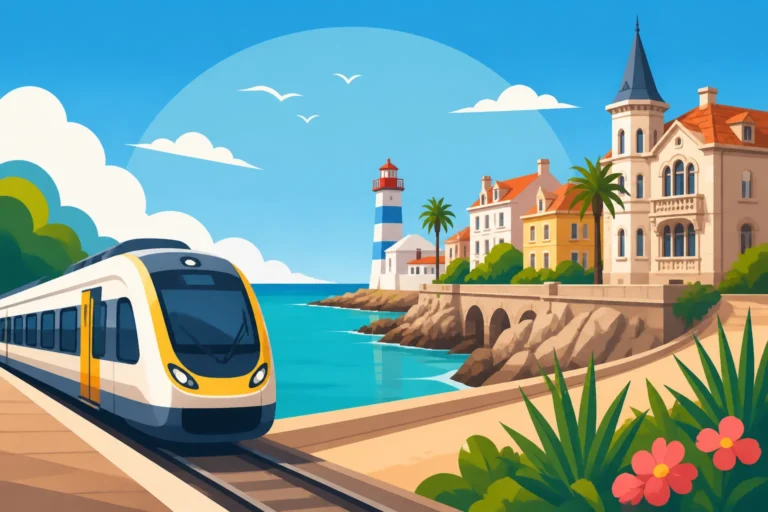
To truly sync with the daily rhythm, you have to understand how the Portuguese move. Whether it’s the iconic yellow trams of Lisbon or the sleek Alfa Pendular trains connecting the north to the south, the pace of transit dictates the pace of life.
Trains and Regional Connectivity
If you are traveling between major hubs like Lisbon, Porto, Coimbra, or Faro, the train is your best friend. The state-owned railway, CP (Comboios de Portugal), is generally reliable and offers a window into the changing landscapes of the country. For the best experience, you should look into Using Comboios de Portugal (CP) trains and the Navegante Pass to understand how to book tickets and manage city-to-city transfers efficiently.
For those planning multi-city itineraries, platforms like Omio can be invaluable for comparing train and bus times. The bus network in Portugal (Rede Expressos) is actually more extensive than the rail network and often reaches the smaller, more traditional villages where the daily rhythm is even more pronounced. Regardless of how you travel, remember that "on time" in Portugal usually means within a five-to-ten-minute window of the scheduled departure.
Urban Commuting Metro and Bus Etiquette
In the cities, the rhythm is faster but still governed by specific social norms. On the Lisbon or Porto Metro, it is standard to stand on the right of the escalator to let those in a hurry pass on the left. However, once you are on the street, the "rush" disappears. People will stop in the middle of a sidewalk to greet a friend, and no one huffs or puffs in frustration.
When using buses, it’s polite to greet the driver with a Bom dia or Boa tarde. If you are staying long-term, you will likely be Using the MB Way app: Why it’s better than carrying cash in Portugal to pay for your monthly transit passes at an ATM. This local fintech solution is integrated into almost every aspect of Portuguese life, from splitting restaurant bills to paying for a taxi.
Walking the Calçada: Shoes, Safety, and Pace
The calçada portuguesa (traditional basalt and limestone pavement) is beautiful but treacherous. It is notoriously slippery, especially when wet or worn down by centuries of footsteps. The rhythm of walking in Portugal is naturally slower because you have to watch where you step. High heels are a rare sight on the cobblestone hills of Lisbon for a reason.
While walking, you will notice that the Portuguese are generally very law-abiding when it comes to traffic lights, but they expect drivers to stop at passadeiras (crosswalks). Always make eye contact with the driver before stepping out. If you are worried about safety while wandering through winding alleys at night, rest assured that Portugal is one of the safest countries in the world. However, it is always wise to be aware of Common tourist scams in Lisbon: Pickpockets on Tram 28 and fake hash sellers just to keep your wits about you in crowded areas.
Cultural Nuances and Social Etiquette
The rhythm of the day is punctuated by social interactions that might feel overly formal or surprisingly intimate to a visitor. Understanding these nuances will prevent you from accidentally being "the rude foreigner."
Greetings and Physical Proximity
Portuguese culture is "high-touch." When friends meet, it is customary to exchange two kisses (starting with the right cheek) or a warm handshake. Even in professional settings, the distance between people is smaller than in many Anglo-Saxon cultures. If someone stands "too close" to you in a queue or while talking, they aren't being aggressive; they are simply being Portuguese.
The way people address each other also changes the rhythm of a conversation. Using titles like Senhor or Senhora followed by a first name is common even among acquaintances. It adds a layer of respect to the daily flow. If you find yourself needing to interact with the local bureaucracy or medical services, knowing how to navigate these social waters is as important as Navigating the public health system if you only speak English (Translation tips) to ensure you get the help you need.
The Importance of Bom Dia and Politeness
You should never enter a shop, a café, or an elevator without a greeting. A simple Bom dia (before 12 PM), Boa tarde (before sunset), or Boa noite (after dark) is the social glue that keeps the country running smoothly. Ignoring this is seen as a significant slight.
Similarly, when you leave, a Tchau or Adeus is expected. This emphasis on politeness extends to how you ask for things. Using por favor (please) and obrigado/a (thank you) is non-negotiable. If you are looking for specific or hard-to-find items, such as Finding Asian, Mexican, or specialty food ingredients in Lisbon and Porto, being polite to the shopkeeper will often result in them calling a friend or another store to help you find exactly what you need.
Fado, Festas, and Evening Entertainment
As the sun goes down, the rhythm shifts to the soulful sounds of Fado or the energetic beats of a local festa. Fado is the heartbeat of Portuguese culture—a melancholic, expressive style of singing that usually happens in small, dimly lit taverns. If you attend a Fado performance, the most important rule is silence. The music is a sacred expression of saudade (a unique Portuguese word for longing or nostalgia), and talking during a set is considered extremely disrespectful.
During the summer months, the rhythm is dominated by the Santos Populares festivals. The streets are filled with the smell of grilled sardines, the sound of pimba music, and people dancing until dawn. If your visit coincides with Portuguese public holidays 2026: When supermarkets and banks are closed, be prepared for the regular rhythm to be replaced by a city-wide party. During these times, the usual rules of time and schedule are completely thrown out the window.
Practical Tips for Integrating into the Rhythm
Adapting to a new country's pace takes time, but there are practical steps you can take to make the transition less jarring.
Managing Business and Admin Expectations
If you are in Portugal for more than just a short holiday—perhaps for a scouting trip or a temporary remote work stint—you will likely encounter the "slow" side of Portuguese administration. Patience is your most valuable asset. Whether you are dealing with a rental contract or Navigating the Portuguese Toll System: Via Verde and Electronic Tolls, do not expect things to happen instantly.
The Portuguese "desenrascar" (the ability to find a solution or "make it work" at the last minute) is a national trait. This means that while the formal process might be slow, a personal connection or a polite conversation can often solve a problem that seemed insurmountable. Never show anger or entitlement; it will only slow the process down further.
Shopping and Sunday Closures
While large shopping malls (like Colombo in Lisbon or NorteShopping in Porto) are often open until midnight and on Sundays, the small local shops follow a traditional schedule. They often close for lunch (1 PM – 3 PM) and are frequently closed all day Sunday.
Plan your grocery shopping and errands accordingly. If you rely on tap water, you should check if Is it safe to drink tap water in Portugal? Water quality by region applies to your specific area, as some rural regions still prefer bottled water for taste. This planning ensures you aren't caught without essentials on a Sunday afternoon when your neighborhood market is shuttered.
Using Technology to Stay Ahead
While the culture is traditional, Portugal is surprisingly tech-forward. Apps for everything from food delivery (Glovo or Uber Eats) to ride-hailing (Bolt or Uber) are widely used. Using these tools can help you navigate the gaps in the traditional schedule.
For instance, if you've missed the lunch window at the local tasca, you can often find a restaurant that delivers or remains open on a delivery app. However, I urge you to use these sparingly. The real magic of living in or visiting Portugal is found in the slow moments—the twenty-minute wait for a fresh batch of pastéis de nata or the long, rambling conversation with a neighbor at the café.
| Time Block | Typical Activity | Expat/Visitor Tip |
|---|---|---|
| 08:30 – 10:00 | Breakfast at the Pastelaria | Order a 'torrada' and a 'meia de leite'. |
| 10:00 – 13:00 | Productive hours / Sightseeing | Best time for museums and shops. |
| 13:00 – 15:00 | Long Lunch | Look for the 'Prato do Dia' and don't rush. |
| 15:00 – 17:00 | The Afternoon Slump / Admin | Many smaller shops may close or be quiet. |
| 17:00 – 19:00 | The Lanche (Snack) | Time for a second coffee and a pastry. |
| 19:00 – 20:30 | The 'Intermission' | Locals are at home; streets can feel quiet. |
| 20:30 – 22:30 | Dinner | Restaurants are at their peak. |
| 22:30 – Late | Convívio / Drinks | Nightlife starts in Bairro Alto or Ribeira. |
Disclaimer
This guide is intended for informational purposes and reflects the personal experiences and observations of a veteran expat living in Portugal. While every effort has been made to ensure the accuracy of the cultural and logistical information provided for the years 2024 through 2026, local customs, business hours, and regulations can change without notice. Always verify specific holiday schedules and administrative requirements with local authorities or official sources before making significant travel or relocation plans.