Vinho Verde and Portugal’s Wine Regions
Disclosure: This article contains affiliate links. If you buy through them, we may earn a commission at no extra cost to you. Read our full disclosure.
Standing in the wine aisle of a Portuguese supermarket for the first time is a daunting experience that often leads to "label paralysis." You are surrounded by hundreds of bottles, most priced between three and eight euros, with cryptic names like Colheita Selecionada or Reserva and regions you’ve never heard of. This guide demystifies the complex world of Portuguese viticulture, from the effervescent "green" wines of the north to the bold, sun-drenched reds of the south, ensuring you always choose the perfect bottle for your terrace sunset or dinner party.
Understanding Vinho Verde: It is Not Just Green Wine
One of the most common misconceptions I encountered when I first moved to Porto was the idea that Vinho Verde is a type of grape or a wine that is literally green in color. It isn't. Vinho Verde is actually a large wine region in the northwest of Portugal, officially known as the Entre-Douro-e-Minho. The name "Verde" (green) refers to the fact that these wines are intended to be drunk young and fresh, in contrast to "Mature" wines that age for years. If you are browsing the shelves during your weekly Grocery Shopping in Portugal: Continente, Pingo Doce, Auchan, and Mercados, you’ll notice these bottles are usually the most affordable and refreshing options available.
The Region and Terroir of the Minho
The Vinho Verde region is lush, rainy, and dominated by granite soils. Because the Atlantic Ocean brings so much moisture, the vines traditionally had to be grown high off the ground on pergolas—sometimes even climbing up trees—to prevent rot and allow for air circulation. While modern vineyards use more standard trellising, the region’s high humidity and cool temperatures are what give the wine its signature high acidity and low alcohol content.
As an expat living here, you quickly learn that Vinho Verde is the lifeblood of a Portuguese summer. It is light, often slightly effervescent (a result of added carbon dioxide to mimic the historical fermentation process), and incredibly easy to drink. The acidity makes it the perfect companion for the salty, fried snacks you find in local tascas. Understanding the local Portuguese Coffee Culture and Restaurant Etiquette: Ordering Like a Local is helpful here, as you'll often see locals ordering a "tigela" or a small glass of white Vinho Verde with their mid-afternoon petiscos.
Styles of Vinho Verde: White, Rose, and Red
While the world knows the fizzy white version, the region actually produces a wide variety of styles. The "Queen" of the whites is Alvarinho, particularly from the sub-regions of Monção and Melgaço. Unlike the cheap, bubbly versions, an Alvarinho is often still, more alcoholic, and has complex notes of peach and citrus. If you want something a bit more floral, look for Loureiro, which is the dominant grape in the Lima Valley.
Then there is the red Vinho Verde (Vinho Verde Tinto). I have to warn you: this is an acquired taste. It is deep purple, bone-dry, incredibly acidic, and often served cold in ceramic bowls. It is the traditional pairing for fatty dishes like Sarrabulho or grilled sardines. Most foreigners find it jarring at first, but after a year of living in the Minho, you might find yourself craving that sharp, mouth-puckering finish on a hot July afternoon.
The Douro Valley: A UNESCO Masterpiece
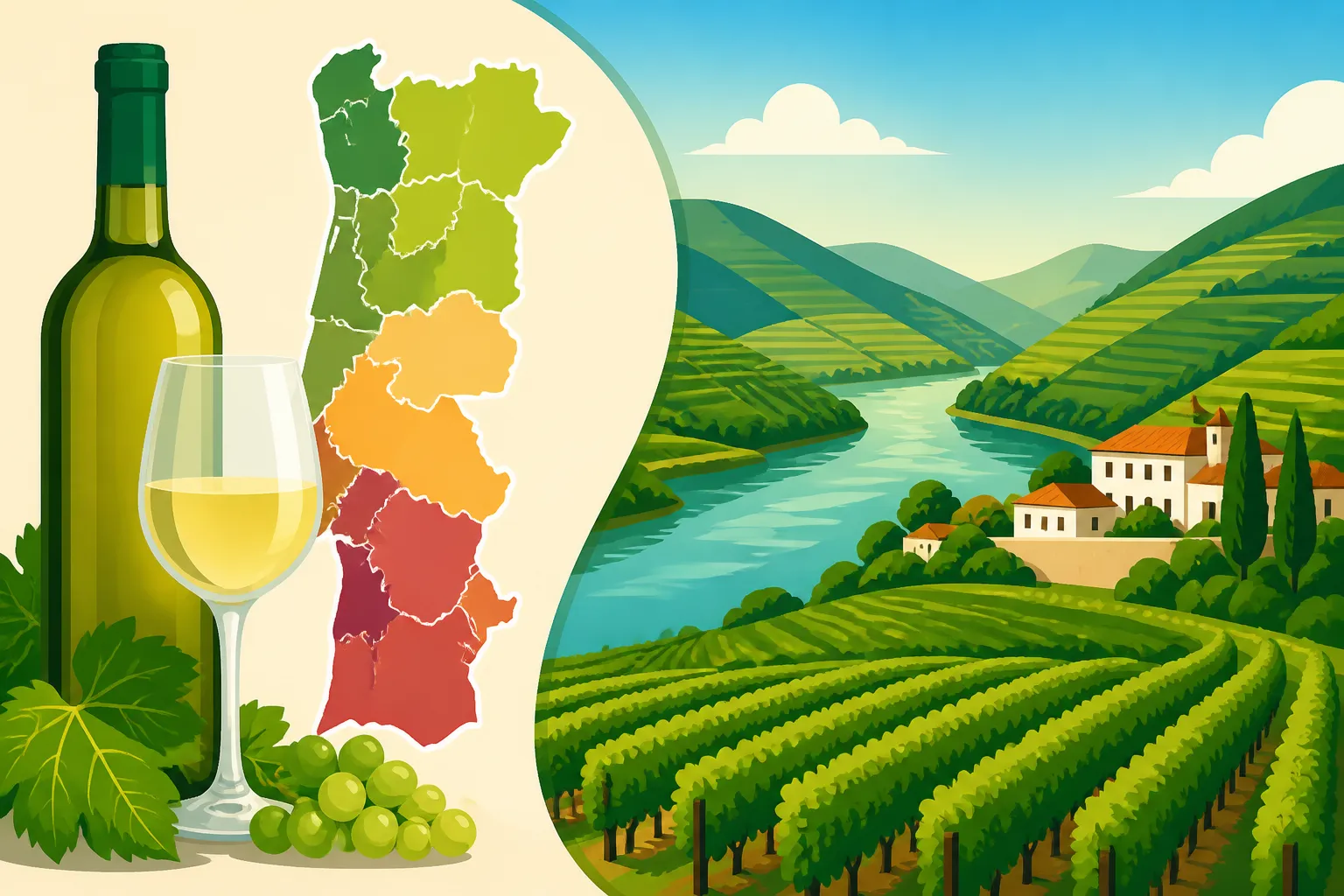
If Vinho Verde is the refreshing appetizer, the Douro Valley is the main course. As the oldest demarcated wine region in the world (established in 1756), the Douro is a place of pilgrimage for anyone serious about wine. The landscape is characterized by steep, terraced vineyards carved into schist rock, following the winding path of the Douro River. It is undeniably beautiful, but the history here is one of back-breaking labor and extreme weather—scorching summers and freezing winters.
Port Wine vs. Douro DOC Table Wines
For centuries, the Douro was known almost exclusively for Port wine. Port is a fortified wine, meaning grape spirit (aguardente) is added during fermentation to stop the process, leaving residual sugar and boosting the alcohol content to around 19-22%. However, in the last thirty years, there has been a revolution in "table wines"—non-fortified reds and whites labeled as Douro DOC.
These table wines use the same grapes as Port—Touriga Nacional, Touriga Franca, and Tinta Roriz. They are powerful, tannic, and often age beautifully in French oak. When you are looking at a wine list in a fancy Lisbon bistro, a Douro Red is your go-to for a heavy steak or a rich lamb stew. The whites from the Douro are also gaining international fame; they are often grown at higher altitudes to maintain freshness and offer a mineral, flinty quality that rivals fine white Burgundies.
Planning a Trip to the Douro Valley
Visiting the Douro is a rite of passage for expats. While you can drive, the best way to experience it is by taking the train from Porto’s São Bento station to Pinhão. This is one of the most scenic rail journeys in Europe. You can use platforms like Omio to check schedules and book your tickets in advance, which I highly recommend during the peak harvest season in September.
Once you arrive in Pinhão, you are in the heart of the "Cima Corgo" sub-region. Many of the famous Quintas (wine estates) are within walking distance or a short boat ride away. I suggest booking a room at a vineyard through Booking.com to truly soak in the silence of the valley after the day-trippers have left. For a more structured experience, you can find excellent guided tastings and boat tours on GetYourGuide, which often include visits to smaller, family-run cellars that aren't always open to the general public.
| Wine Region | Signature Grape | Primary Style | Best Pairing |
|---|---|---|---|
| Vinho Verde | Alvarinho / Loureiro | Light, acidic, fizzy | Grilled sardines, salads |
| Douro | Touriga Nacional | Bold, tannic, complex | Roasted meats, Port with cheese |
| Alentejo | Aragonês / Trincadeira | Smooth, fruity, high ABV | Pork Alentejana, hard cheeses |
| Dão | Encruzado (White) | Elegant, balanced, mineral | Roasted cod (Bacalhau) |
| Bairrada | Baga | High tannin, acidic, earthy | Suckling pig (Leitão) |
| Setúbal | Moscatel | Sweet, fortified, floral | Desserts, fruit tarts |
Alentejo: The Sunny Soul of Portuguese Wine
While the north is defined by granite and rain, the Alentejo—covering nearly a third of Portugal's landmass—is defined by heat, vast plains, and cork oak forests. The Alentejo produces what I like to call "crowd-pleaser" wines. They are generally riper, fruitier, and have softer tannins than their northern cousins. If you are transitioning from New World wines (like those from California or Australia) to Portuguese wines, the Alentejo is the perfect entry point.
Characteristics of Alentejo Reds and Whites
Alentejo reds are often blends of Aragonês (known as Tempranillo in Spain), Trincadeira, and Alicante Bouschet. The latter is interesting because it is a teinturier grape—one of the few grapes with red flesh as well as red skin—which gives Alentejo wines their deep, opaque color and "big" mouthfeel. These are the wines you open for a Sunday barbecue or a casual dinner with friends.
The whites from this region, particularly from the sub-region of Vidigueira, are surprisingly fresh despite the heat. Producers use the Antão Vaz grape to create wines that are full-bodied but still have enough acidity to balance out the ripeness. Because of the vastness of the region, the Cost of Living in Portugal 2026: Detailed Budgets for Singles and Families is significantly impacted by the affordability of these high-quality regional wines, which often cost less than a fancy coffee in London or New York.
The Talha Tradition: Ancient Amphora Wine
If you want to experience something truly unique to the Alentejo, look for Vinho de Talha. This is wine made using a 2,000-year-old Roman tradition of fermenting and aging the juice in massive clay amphorae (talhas) coated with beeswax and resin.
Talha wine is becoming incredibly trendy in the "natural wine" scene. It has a distinct, rustic flavor profile—sometimes a bit earthy or cider-like—and is traditionally "opened" (tapped) on St. Martin’s Day in November. Visiting a local Adega in the Alentejo during this time is an unforgettable experience, as the whole village comes together to taste the new year's production straight from the clay.
Beyond the Big Names: Dão, Bairrada, and Setúbal
Once you’ve mastered the "Big Three" (Vinho Verde, Douro, and Alentejo), it’s time to explore the hidden gems. These regions often provide the best value for money because they aren't as famous internationally, but they are beloved by Portuguese oenophiles.
The Elegance of the Dão Region
Located in the center of the country and surrounded by mountains, the Dão region is protected from both the Atlantic's rain and the interior's scorching heat. The result is a temperate climate that produces "elegant" wines. If the Douro is a heavy velvet curtain, the Dão is a silk sheet.
The star white grape here is Encruzado. It is one of the most remarkable white grapes in the world, capable of being fresh and floral when young, but evolving into a complex, nutty, and buttery wine as it ages. For reds, the Touriga Nacional here is often considered the most "pure" expression of the grape, leaning more towards violet aromas and black fruit than the spicy, chocolatey notes found in the Douro.
Bairrada and the Baga Revolution
Bairrada is located on the coast, south of Porto, and is the home of the Baga grape. For a long time, Baga had a bad reputation for being "mean"—tough, highly acidic, and mouth-drying. However, a new generation of winemakers has figured out how to tame this grape, creating wines that many critics compare to Nebbiolo (Barolo) or Pinot Noir.
Bairrada is also the center of Portuguese sparkling wine (Espumante). Because of the high acidity of the grapes, the region produces excellent traditional-method sparklers that are much better value than many Champagnes. If you find yourself in the town of Mealhada, you must try the local specialty: Leitão (suckling pig) paired with a crisp Bairrada Espumante. It is a culinary marriage made in heaven.
Moscatel de Setúbal and Lisbon’s Coastal Breezes
Just across the bridge from Lisbon lies the Setúbal Peninsula. This region is famous for Moscatel de Setúbal, a fortified sweet wine made from Muscat of Alexandria grapes. Unlike Port, the grape skins are left in the wine for several months after fortification, which extracts an intense orange peel and honey aroma. It is the perfect liquid dessert.
The Lisbon wine region (formerly known as Estremadura) also produces a huge amount of "Vinho Regional Lisboa." Because the vineyards are so close to the ocean, the wines have a distinct salinity and freshness. They are often incredibly affordable, making them staples for those living in the capital and weighing the pros and cons of Lisbon vs Porto for Tech Workers: Salaries, Startups, and Lifestyle.
How to Navigate Portuguese Wine Lists and Supermarkets
Now that you know the regions, how do you actually buy the stuff without looking like a confused tourist? The Portuguese labeling system can be tricky, but there are a few keywords that will help you identify quality.
Reading a Portuguese Wine Label
- DOC (Denominação de Origem Controlada): This means the wine comes from a strictly regulated region with specific grape and production rules. It is usually a mark of higher quality.
- Vinho Regional: These are wines from a larger area with more flexible rules. Don't be fooled—many of Portugal’s most creative and expensive wines are labeled as "Regional" because the winemakers wanted to use "illegal" grapes like Cabernet Sauvignon or Syrah to improve the blend.
- Reserva: In Portugal, this usually means the wine has a slightly higher alcohol content and has undergone some aging, though the rules vary by region.
- Garrafeira: This is a step above Reserva. For a red, it must age for at least two years in the cellar and six months in the bottle before release.
- Quinta: This refers to the estate where the grapes were grown. If you see "Engarrafado na Propriedade," it means it was estate-bottled, which generally implies better quality control.
Wine Etiquette and the "Copos" Culture
When dining out, don't feel pressured to buy a full bottle. Most traditional restaurants have a "Vinho da Casa" (house wine) served in a 0.5L or 1.0L carafe. In many cases, the house wine is surprisingly good and costs less than a glass of water. If you are in a more modern wine bar, you’ll likely see a wide selection of wines by the glass (a "copo").
Tipping is another area where foreigners get confused. While not mandatory, leaving a small amount is appreciated. You can read more about the specifics in our guide on Tipping culture in Portugal: Do you leave 10% or just round up the bill?. Generally, if you've had a great bottle and excellent service, rounding up or adding a couple of euros is the local way.
Practical Tips for Wine Tourism in Portugal
If you are planning to tour these regions, you need to be aware of the "Portuguese way" of doing things. It’s not always as streamlined as Napa Valley, but that is part of the charm.
Transportation and Logistics
While the train is great for the Douro, the Alentejo and Dão regions really require a car. The vineyards are spread out, and public transport in rural areas is sparse. Driving in Portugal can be an adventure—the tolls are electronic, and the drivers are "assertive." Make sure you understand the local Using Comboios de Portugal (CP) Trains and the Navegante Pass if you are sticking to the urban hubs, but for the wine country, a rental is your best bet.
One crucial tip: Many wineries require an appointment for a tasting. You can’t always just "walk in" like you can in other countries. This is especially true during The "August Shutdown": Why getting things done in summer is impossible, when many smaller producers take their own holidays. Always call or email at least 48 hours in advance.
Finding the Best Quintas
To find the best places to visit, I often cross-reference local blogs with platforms like GetYourGuide for tour availability. Some of my favorite experiences have been at "adegas cooperativas"—large cooperatives where local farmers bring their grapes. They might not be as pretty as a private Quinta, but they offer a raw, authentic look at the scale of Portuguese wine production.
If you are staying in Porto, you don't even need to leave the city to experience wine culture. The Port wine cellars are actually located in Vila Nova de Gaia, just across the Luis I Bridge. You can spend an entire day walking from one cellar to the next, tasting tawny, ruby, and vintage Ports. Use Booking.com to find a hotel with a view of the river in Gaia to stay close to the action.
Disclaimer
This guide is for informational purposes only and represents the personal experiences and research of the author. Wine regions and regulations in Portugal can change, and you should always check the official website of the Instituto da Vinha e do Vinho (IVV) for the most current legal definitions. Please consume alcohol responsibly and never drink and drive; Portugal has strict blood-alcohol limits and heavy fines for violations.