Portuguese Regional Dishes Every Visitor Should Try
Disclosure: This article contains affiliate links. If you buy through them, we may earn a commission at no extra cost to you. Read our full disclosure.
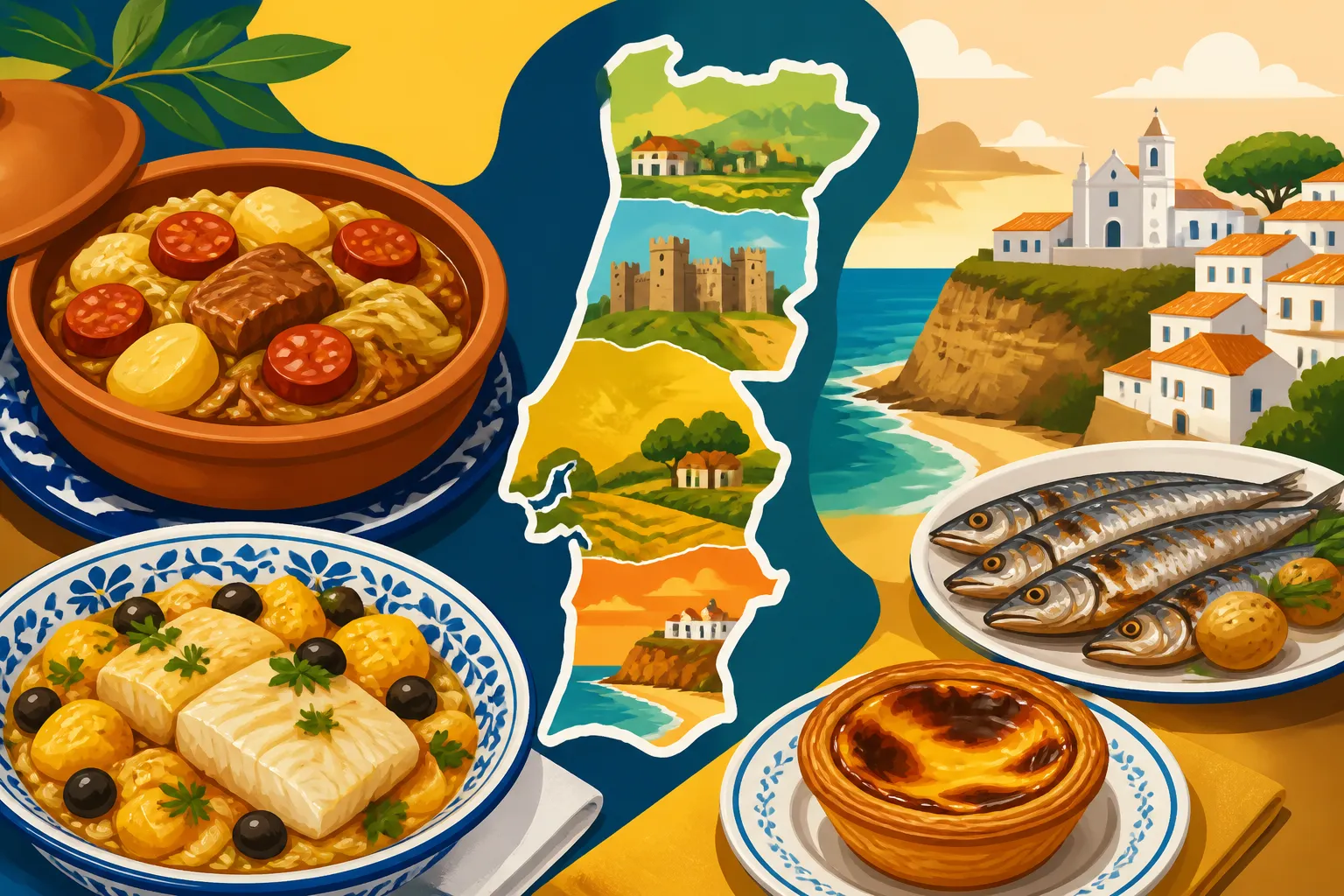
Most visitors to Portugal find themselves trapped in a cycle of eating grilled sea bass and Pasteis de Nata, completely missing the rugged, soulful, and deeply localized flavors that define the country's actual identity. Many travelers look at a traditional menu, get intimidated by the lack of English descriptions, and settle for a generic tourist burger. This guide solves that problem by breaking down the must-try regional dishes that will transform your trip from a surface-level vacation into a deep culinary immersion.
Northern Portugal: Hearty Comfort from the Minho and Douro
The north of Portugal is a land of granite mountains, misty valleys, and people who express love through massive portions of meat and potatoes. If you are coming from the south, the transition in the kitchen is palpable; the light olive oils and grilled fish give way to lard, smoked sausages, and slow-cooked stews that were designed to fuel farmers through damp, chilly winters. I remember my first winter in the north, feeling perpetually cold until I sat down for a proper northern lunch—it is the ultimate "hug in a bowl" cuisine.
Francesinha: Porto’s Heavyweight Champion
You cannot visit Porto without facing the Francesinha. It is often described as a "sandwich," but that is a massive understatement. It is a structural engineering feat consisting of toasted bread, ham, linguiça, fresh sausage, steak or roast beef, all covered in melted cheese and a thick, spicy sauce made with beer and tomato. Most locals have a favorite spot and will argue for hours about whose sauce is superior. The secret is usually in the addition of Port wine or brandy to the simmering pot.
When you sit down at a traditional café in the Porto Neighborhood Guide: Where to Live for Culture, Tech, and Family, do not expect a light snack. This is a meal that demands a nap afterward. Newcomers are often advised to order it "com ovo" (with a fried egg on top) and accompanied by a pile of French fries, which are essential for soaking up the extra sauce. If you’re traveling up from Lisbon, using Omio to book your train ticket is the easiest way to get here just for the sake of this sandwich.
Caldo Verde: The Soul of the North
While the Francesinha is a beast, Caldo Verde is the gentle grandmother of Portuguese cuisine. Originally from the Minho region, this "green broth" has become a national staple. It is a deceptively simple soup made from potatoes, onions, garlic, and a specific type of thinly shredded kale (couve galega). The texture is creamy because the potatoes are boiled and then mashed or blended into the broth before the greens are added at the very last second.
The magic of Caldo Verde lies in the single slice of chouriço that sits at the bottom of the bowl. That one piece of smoked pork fat infuses the entire soup with a smoky, salty depth that balances the bitterness of the kale. It is traditionally served in an earthenware bowl with a side of broa (a heavy, crusty corn and rye bread). Whether you are staying in a luxury hotel found on Booking.com or a rustic guesthouse, you will find this on every menu. It is the cheapest, most authentic way to start a meal in Portugal.
Tripas à Moda do Porto: The History in a Pot
To truly eat like a Tripeiro (a nickname for people from Porto), you have to try the tripe. The dish dates back to the 15th century when the people of Porto gave all their good meat to the sailors heading off on the Age of Discovery, leaving themselves only with the offal. They turned those scraps into a masterpiece. This stew features tripe, white beans, smoked sausages, and often calf’s feet, all slow-cooked until the flavors meld into a rich, gelatinous gravy.
It is a dish that challenges many foreigners, but for those who value culinary history, it is a must. The texture is soft, and the flavor is surprisingly mild, leaning heavily on the cumin and the richness of the beans. If you aren't ready to dive into tripe yet, you can find food tours on GetYourGuide that help ease you into these traditional flavors with a guide who can explain the nuances of the preparation.
Central Portugal: Roasted Meats and Mountain Traditions
As you move into the heart of the country, the landscape changes to rolling hills and the high peaks of the Serra da Estrela. This is the land of the shepherd and the hunter. The food here is focused on the quality of the livestock. In the central region, you start to see more goat, lamb, and the famous suckling pig, all prepared in ways that have not changed in centuries.
Leitão da Bairrada: The King of Roasts
If there is one dish worth a specific detour, it is Leitão da Bairrada. This is a suckling pig, usually between 4 and 6 weeks old, seasoned with a paste of garlic, pepper, and lard, then roasted on a spit in a wood-fired oven fueled by vine prunings. The result is a skin so crispy it shatters like glass, protecting meat that is incredibly tender and succulent.
The "Bairrada" style is very specific. You will see dozens of restaurants along the N1 road near Mealhada dedicated solely to this pig. It is traditionally served cold or lukewarm—which often surprises tourists—but this is done to keep the skin from becoming soggy from the meat's steam. It is always accompanied by sparkling wine from the region and homemade potato chips. If you are following the Living in Portugal Guide 2027: The Complete Relocation Manual for Expats, you will eventually realize that a weekend trip to eat Leitão is a rite of passage for every resident.
Chanfana: The Resilience of Old Goat
Chanfana is a dish born of necessity during the Napoleonic invasions. Legend has it that the locals killed their goats so the French wouldn't take them, and cooked the meat in wine to preserve it. Today, it is a celebrated specialty of the Coimbra and Lousã regions. Old goat meat is marinated in red wine, garlic, bay leaves, and cloves, then slow-baked in black clay pots for several hours.
The long cooking process transforms the tough goat meat into something that falls apart at the touch of a fork. The wine creates a deep, dark sauce that is incredibly robust. It is a "heavy" dish, usually served with boiled potatoes and greens. This is the kind of meal that reflects the stoic and resilient nature of the central Portuguese people. It’s a far cry from the Cost of Living in Portugal 2026: Detailed Budgets for Singles and Families discussions; this is about the wealth of the land and tradition.
Arroz de Cabidela: A Tart and Traditional Treasure
This is perhaps the most "extreme" dish for a casual visitor, but it is a foundational part of the Portuguese palate. Cabidela is a rice dish cooked with poultry (usually chicken or rabbit) and, crucially, the animal’s blood. Just before the rice finishes cooking, a mixture of blood and vinegar is stirred in. The vinegar prevents the blood from curdling and gives the dish a signature "tang" that cuts through the richness.
The result is a creamy, dark-colored rice with a flavor profile that is savory, acidic, and deeply earthy. It is not "bloody" in a raw sense; the blood acts as a thickening agent, much like a French coq au vin but with a more pronounced vinegar kick. It is a dish that highlights the Portuguese philosophy of "nothing goes to waste."
Lisbon and the Tejo: Coastal Classics and Urban Staples
Lisbon’s food scene is a mix of the traditional and the global, but at its heart, it remains tied to the Tejo river and the nearby Atlantic. The city’s history as a hub for trade means you find more spices and diverse influences here than in the isolated mountain villages. This is the best place to explore the infinite ways the Portuguese prepare their beloved "faithful friend," salt cod.
Bacalhau à Brás: The Everyman’s Favorite
You cannot talk about Portuguese food without mentioning Bacalhau. They say there are 365 ways to cook it—one for every day of the year—but Bacalhau à Brás is arguably the most approachable and beloved. Originating in the Bairro Alto district, it consists of shredded salt cod, thinly sliced onions, and matchstick-sized fried potatoes (batata palha), all bound together with scrambled eggs.
It is topped with black olives and fresh parsley, creating a perfect balance of salty, crunchy, and creamy textures. For many expats living in the Lisbon Neighborhood Guide: Best Areas for Expats and Digital Nomads, this becomes the ultimate comfort food. It’s available in almost every "Tasca" (traditional tavern) in the city and is a safe but delicious entry point into the world of salt cod.
Sardinhas Assadas: The Smoke of the City
In June, during the Feast of Saint Anthony, the entirety of Lisbon smells like grilled sardines. But even outside of festival season, the Sardinha Assada is an icon. These are not the tiny fish in a tin; these are fat, juicy Atlantic sardines grilled whole over charcoal with nothing but a heavy dusting of sea salt.
The proper way to eat them is on a thick slice of sourdough bread. You eat the fish off the bread, allowing the oils and salt to soak into the crumb, and then you eat the bread last. It is messy, it is simple, and it is quintessential Lisbon. Many visitors struggle with the bones, but locals know that the meat pulls away easily from the spine if the fish is fresh. If you’re trying to navigate the city to find the best grill spots, Public Transport and Driving in Portugal: Trains, Tolls, and Licenses will help you get to the riverside districts where the best charcoal grills are located.
Amêijoas à Bulhão Pato: The Perfect Coastal Starter
Named after a 19th-century poet, this clam dish is the epitome of Portuguese coastal cooking. It uses the simplest ingredients: fresh clams, olive oil, plenty of garlic, coriander (cilantro), and lemon juice. The clams are sautéed until they pop open, releasing their briny liquor into the garlic-infused oil.
The secret to this dish isn't actually the clams; it is the bread you use to mop up the sauce afterward. In Portugal, leaving that sauce in the bowl is considered a tragedy. You will find this dish in almost every seafood restaurant along the coast. If you want to learn the specifics of how to order this and other snacks, check out our guide on Portuguese Coffee Culture and Restaurant Etiquette: Ordering Like a Local.
Alentejo: The Bread and Herbs of the Golden Plains
The Alentejo region covers a third of Portugal but is home to only a fraction of its population. It is a vast, sun-drenched landscape of cork oaks and wheat fields. Consequently, the cuisine here is built on three pillars: bread, olive oil, and aromatic herbs like cilantro and pennyroyal. Alentejano food is often described as "peasant cooking" at its finest—taking very little and turning it into something extraordinary.
Açorda Alentejana: The Magic of Bread and Garlic
Açorda is a dish that confuses people until they taste it. At its most basic, it is a bread soup. Slices of stale, crusty Alentejo bread are placed in a bowl with garlic, salt, olive oil, and a massive amount of fresh cilantro or pennyroyal. Boiling water is poured over the mixture, and a poached egg is usually perched on top.
It sounds like a "poverty dish," but the fragrance of the herbs and the richness of the olive oil create a complex, refreshing, and deeply satisfying meal. In more upscale versions, you will find it served with shrimp or cod. It perfectly demonstrates the Alentejo's ability to make bread the star of the table. While Grocery Shopping in Portugal: Continente, Pingo Doce, Auchan, and Mercados will give you the ingredients to try this at home, nothing beats eating it in a whitewashed village in the middle of a heatwave.
Carne de Porco à Alentejana: Surf and Turf with a Twist
This is perhaps the most famous Alentejo export, though its origins are actually in the Algarve (it was named "Alentejana" because that's where the best pigs came from). It is a unique combination of cubed pork marinated in paprika paste (massa de pimentão), garlic, and white wine, fried and then simmered with fresh clams.
The sweetness of the pork and the briny, salty tang of the clams create a flavor profile that is uniquely Portuguese. It’s always topped with cilantro and served with cubes of fried potatoes that soak up the sauce. It is a heavy, savory dish that perfectly bridges the gap between the land and the sea.
Migas: The Versatile Heart of the Table
Migas are essentially "crumbs," but in the Alentejo, they are a delicacy. Stale bread is soaked in water and then fried in pork fat (often from the famous black Iberian pigs) until it forms a golden, moist, and savory mass. They can be flavored with garlic, asparagus, tomato, or even cilantro.
Migas are rarely a standalone dish; they are usually served as a side to fried pork ribs or sausages. The texture is dense and rich, and it is incredibly filling. For many visitors, the idea of eating fried bread as a side dish is foreign, but once you taste Migas made with high-quality Alentejo olive oil, there is no going back.
The Algarve and the Islands: Ocean Bounties and Volcanic Flavors
In the far south and out in the Atlantic, the food takes on a more tropical and maritime character. The Algarve is the kingdom of shellfish, while the Azores and Madeira offer flavors influenced by their volcanic soil and isolated locations.
Cataplana de Marisco: The Copper Pot Masterpiece
The Cataplana is both a dish and the vessel used to cook it—a clam-shaped copper pot that acts like an early pressure cooker. In The Algarve for Expats: Lagos, Faro, and Tavira Compared, you will see these pots hanging in every restaurant window. The most common version is the Cataplana de Marisco, a seafood medley of clams, mussels, shrimp, and monkfish, cooked with onions, peppers, tomatoes, and a dash of white wine.
Because the pot is sealed, all the steam and juices are trapped inside, meaning the seafood is incredibly moist and the broth is intensely flavorful. When the waiter opens the Cataplana at your table, the burst of aromatic steam is one of the great sensory experiences of Portuguese travel.
Cozido das Furnas: Earth-Cooked Stew from the Azores
If you find yourself on the island of São Miguel in the Azores, you must try the Cozido das Furnas. This is a traditional Portuguese meat stew (with cabbage, carrots, potatoes, beef, pork, and various sausages) with a geological twist. The pots are wrapped in cloth and buried in the naturally hot volcanic soil near the Furnas Lake.
The stew slow-cooks for about six or seven hours using nothing but geothermal heat. This gives the meat a distinct, slightly sulfuric but pleasant mineral undertone that you cannot replicate in a standard kitchen. It is the ultimate example of a region using its environment to define its cuisine.
Espetada Madeirense: The Bay Leaf Skewer of Madeira
In Madeira, the Espetada is the star of any celebration. It consists of large chunks of beef rubbed with garlic and salt, skewered onto branches of laurel (bay leaf) wood, and grilled over an open fire. The heat from the fire causes the bay leaves in the wood to release their essential oils, flavoring the meat from the inside out.
The skewers are often hung from metal hooks at the table, allowing the juices to drip onto a plate of milho frito (fried cornmeal cubes) below. It is a simple, primal way of eating that highlights the quality of the beef.
| Dish Name | Region | Primary Ingredients | Adventurous Level |
|---|---|---|---|
| Francesinha | Porto (North) | Steak, Sausage, Cheese, Spicy Sauce | Low |
| Tripas à Moda do Porto | Porto (North) | Tripe, White Beans, Smoked Sausage | High |
| Leitão da Bairrada | Central | Suckling Pig, Garlic, Pepper | Low |
| Arroz de Cabidela | Minho/Central | Chicken, Rice, Vinegar, Blood | Very High |
| Bacalhau à Brás | Lisbon | Salt Cod, Eggs, Matchstick Potatoes | Low |
| Açorda Alentejana | Alentejo | Bread, Garlic, Cilantro, Poached Egg | Medium |
| Cataplana de Marisco | Algarve | Mixed Seafood, Peppers, Tomatoes | Low |
| Cozido das Furnas | Azores | Mixed Meats, Vegetables, Volcanic Heat | Medium |
Navigating the Portuguese Menu: Tips for the Hungry Traveler
One of the biggest frustrations for newcomers is the "Couvert." When you sit down, the waiter will immediately bring bread, butter, olives, and sometimes cheese or ham. This is not free. If you eat it, you will be charged. If you don't want it, simply say "No, thank you" or leave it untouched, and it will be removed and taken off your bill. Many tourists get angry when they see an extra €5-€10 on their bill for "snacks they didn't order," but it is simply the way things work here.
Another tip for saving money while eating like a king is to look for the Prato do Dia (Plate of the Day). Most local restaurants offer a set menu for lunch that includes a soup, a main dish, a drink, and a coffee for a very low price—usually between €9 and €15. This is where you will find the most authentic regional cooking, as these menus are designed for local workers rather than tourists.
When it comes time to pay, remember that Tipping culture in Portugal: Do you leave 10% or just round up the bill? is much more relaxed than in the US. Rounding up to the nearest Euro is common for a coffee, and leaving 5-10% is generous for a full dinner. Finally, if you are traveling between these regions, Using Comboios de Portugal (CP) Trains and the Navegante Pass is not only efficient but allows you to see the landscape change as drastically as the flavors on your plate.
Disclaimer
This guide is for informational purposes only. Culinary traditions and availability of specific dishes may vary by season and local restaurant policies. Always check for food allergies, especially with dishes involving blood or hidden shellfish. Prices and regional designations are based on 2026 data and are subject to change.