Antibiotics rules in Portugal: Why you absolutely need a doctor’s prescription
Walking into a Portuguese pharmacy expecting to buy antibiotics over the counter is a rite of passage for many expats that usually ends in a polite but firm "não." I remember my first winter in Porto, shivering with a chest infection and assuming my old home-country habits would apply here. This guide explains why that's impossible and exactly how to navigate the system to get the medicine you need.
Understanding the Legal Landscape of Antibiotics in Portugal
Portugal takes its pharmaceutical regulations incredibly seriously, specifically when it comes to antimicrobial resistance. For many newcomers, the realization that you cannot simply "buy" a round of Amoxicillin or Azithromycin is a shock. In some countries, a persuasive conversation with a pharmacist might yield results, but in the land of Camões, the law is iron-clad. Infarmed, the National Authority of Medicines and Health Products, oversees these regulations with a heavy hand, ensuring that no pharmacy dispenses antibiotics without a valid, digitally logged prescription.
The Strict "No Prescription, No Sale" Rule
In Portugal, the law explicitly classifies antibiotics as "medicamentos sujeitos a receita médica" (medicines subject to a medical prescription). This isn't just a suggestion or a guideline; it is a legal requirement that carries heavy fines for the pharmacy and the individual pharmacist. If you walk into a Farmácia and ask for an antibiotic to treat what you "know" is a sinus infection, the pharmacist will look at you with sympathy but will ultimately refuse.
They are not being difficult. Every prescription in Portugal is now largely digital (Receita Sem Papel). When a doctor prescribes a medication, it is linked to your tax number (NIF) or your health number (Número de Utente). When the pharmacist scans your ID or the barcode on your prescription, the system logs the sale in real-time. This level of oversight makes "under-the-counter" sales virtually non-existent in modern Portuguese society.
Why the Rules are So Tight
The primary driver behind these strict rules is the global fight against antibiotic resistance. Southern Europe, including Portugal, has historically had higher rates of antibiotic use compared to Northern Europe. To combat this, the government launched several public health campaigns to educate the population that antibiotics do not cure viruses like the common flu or most sore throats.
From an expat perspective, this can feel like an unnecessary hurdle when you are feeling miserable. However, once you understand that the goal is to prevent the rise of "superbugs" that could render these life-saving drugs useless in the future, the administrative headache becomes a bit more bearable. It also ensures that a medical professional has actually confirmed that your infection is bacterial and not viral, saving you from taking unnecessary medication that could mess with your gut health.
The Role of the Pharmacist in Portugal
It is important to recognize that pharmacists in Portugal are highly trained healthcare professionals who often act as the first point of medical contact. While they cannot give you antibiotics, they can offer a wide range of symptomatic relief. They might suggest high-quality supplements to boost your immune system, often recommending products you can also find on iHerb to keep your medicine cabinet stocked for the future. They can also perform basic triage, telling you whether your symptoms warrant an immediate trip to the emergency room or if a simple tele-consultation will suffice.
How to Get an Antibiotic Prescription as an Expat
Since you cannot buy these drugs directly, your entire strategy must shift toward "How do I get a doctor to see me as quickly as possible?" Depending on your residency status and whether you have private insurance, you have three main paths. Each has its pros and cons, especially when you are currently dealing with a fever or a painful infection.
Visiting the Centro de Saúde (Public System)
If you are a legal resident and have gone through the process of Registering with the Centro de Saúde: Getting Your SNS Número de Utente, this is your most affordable option. You would typically go to your local health center early in the morning to request a "consulta aberta" (an open consultation for acute issues).
The downside is the wait time. I've spent four hours in a plastic chair in a drafty waiting room just to get a five-minute check-up for a UTI. However, once the doctor confirms the infection, they will issue a digital prescription. The major benefit here is the cost; prescriptions issued through the SNS (Serviço Nacional de Saúde) are subsidized. You might only pay a few Euros for the actual medication at the pharmacy. If you find your local center is overwhelmed, you might wonder Why does my Centro de Saúde say they have no Médico de Família available?, which is a common frustration, but they are still required to see you for acute infections during open hours.
Using Private Clinics and Hospitals
For those who value time and comfort, the private system is the way to go. Major providers like Hospital da Luz and CUF: Navigating Portugal's Biggest Private Hospitals offer "Atendimento Permanente" (Urgent Care) where wait times are significantly shorter than in the public system.
If you have a policy with Cigna Global, the cost of these visits is often largely covered, though you will likely have to pay upfront and claim it back later. A private consultation for a respiratory infection or a skin issue will usually cost between €30 and €100 depending on the hospital and your insurance. The doctor will perform a quick exam and provide you with a printed or digital prescription that is valid at any pharmacy in the country. This is often the preferred route for expats who aren't yet fully integrated into the public system.
Telehealth and Online Doctors
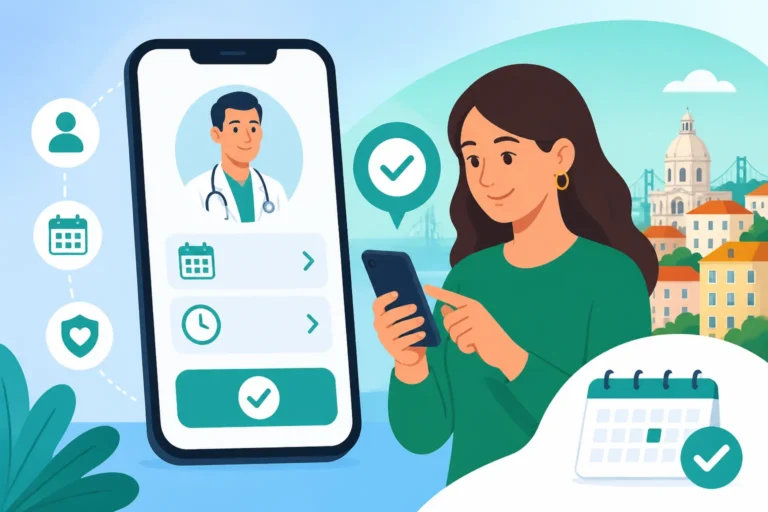
If you are too sick to leave the house, telehealth has become a lifesaver in Portugal. Using platforms like Telehealth and Online Doctors: Using TravelDoctores and Doctorsa can get you a video call with a licensed physician within an hour. For clear-cut cases like a recurring UTI or a visible skin infection, these doctors can issue a digital prescription that is sent directly to your smartphone.
You then simply take your phone to the nearest Pharmacies (Farmácias) in Portugal: Green Crosses and After-Hours Service, and the pharmacist will scan the barcode from your screen. This is by far the most "expat-friendly" way to handle minor infections without navigating the bureaucracy of a physical waiting room.
| Path | Average Wait | Cost (Estimate) | Best For |
|---|---|---|---|
| Public (SNS) | 2 – 6 Hours | €0 – €5 | Residents on a budget |
| Private Urgent Care | 30 – 90 Mins | €30 – €100 | Speed and comfort |
| Telehealth | 15 – 45 Mins | €25 – €60 | Contagious or mild issues |
| Emergency Room | 4 – 12 Hours | €20 – €200 | Severe/Life-threatening |
Navigating the Pharmacy Experience
Once you have your prescription in hand—whether it’s a physical paper with a barcode or a PDF on your phone—you need to find a pharmacy. In Portugal, pharmacies are easily identified by a large, often neon-green cross.
Recognizing the Farmácia de Serviço
If your infection flares up at 10 PM on a Saturday, you cannot just go to the nearest green cross, as most pharmacies close by 7 PM or 8 PM. You need to find the "Farmácia de Serviço." Every pharmacy window will have a posted list showing which local shop is on duty for the night. You can also check online to find What is a Farmácia de Serviço and how to find one open at 2 AM. These duty pharmacies are the only places where you can get your prescription filled after hours, and they may charge a small fixed fee (usually around €2-€3) for the out-of-hours service.
Costs and Generic vs. Brand Name
Portugal has a high adoption rate of generic medications. When you hand over your prescription, the pharmacist will often ask if you want the "genérico" or the brand name. In almost every case, the generic is exactly the same and significantly cheaper. The government encourages this to keep the SNS sustainable. If you are using Cigna Global for your healthcare, keep your receipts, as even the small costs of antibiotics can be added to your annual claims if you meet your deductible.
Rules for Foreign Prescriptions
A common question I get is: "Can I use a prescription from my home country?" The answer is generally no for non-EU prescriptions. If you have a script from the US, Canada, or the UK, a Portuguese pharmacist cannot legally fill it. You can read more about the specifics here: Can I use a US or UK medical prescription at a Portuguese pharmacy?. You will need to take that foreign prescription to a local Portuguese doctor (either via telehealth or a private clinic) and ask them to "convert" it into a Portuguese digital prescription. They will usually do this after a brief consultation to ensure the dosage and medication are appropriate by local standards.
Practical Tips for Managing Infections in Portugal
Managing your health in a foreign country requires a mix of local knowledge and preparation. While you can't bypass the antibiotic rules, you can make the process much smoother.
When You Actually Need an Antibiotic vs. OTC Support
Before rushing to the doctor, many expats use the SNS 24 Helpline (808 24 24 24): Triage, Advice, and Sick Notes. This is a free service where you can speak with a nurse (often in English) who will evaluate your symptoms. If they believe you need a doctor, they can sometimes even schedule an appointment for you or authorize a "baixa" (sick note).
For symptoms that don't quite reach the level of a bacterial infection, you'll still find that most relief is behind the counter. For example, Buying Ibuprofen or Paracetamol in Portugal: Why it's behind the counter is a common surprise; you won't find 100-count bottles of painkillers in the supermarket aisles. You have to ask the pharmacist, who will give you a smaller, regulated box.
Stocking Your First-Aid Kit
To avoid the 2 AM scramble, it is wise for expats to keep a well-stocked home kit for symptomatic relief. While you won't have "spare" antibiotics (and you should never save leftovers anyway!), having high-quality vitamins, probiotics, and saline sprays is essential. I personally order my supplements and specialized wellness products from iHerb because it’s often cheaper than the local specialty shops, and they ship reliably to Portugal. Having these on hand can help you manage a viral cold so it doesn't develop into a secondary bacterial infection that requires the dreaded prescription hunt.
Language Tips for the Pharmacist
While many pharmacists in urban centers like Lisbon, Porto, and the Algarve speak excellent English, it helps to know a few key phrases if you are in a smaller village or a "rural" pharmacy.
- "Tenho uma receita médica" (I have a medical prescription).
- "É uma infeção" (It is an infection).
- "Preciso de um antibiótico" (I need an antibiotic).
- "Onde está a farmácia de serviço?" (Where is the duty pharmacy?).
Remember, the pharmacist is your ally. If they refuse to sell you something, they are protecting their license and your health. If you are struggling to find a doctor who speaks your language to get that script, consult our guide on Finding an English-Speaking General Practitioner (Médico de Família) to build a long-term relationship with a provider who understands your history.
Managing Chronic Issues
If you suffer from recurring infections (like chronic bronchitis or UTIs), don't wait until you are in pain. Establish yourself with a private doctor early on. Explain your history, and they may be able to provide you with a "just in case" prescription or a more direct line of communication so you can avoid the emergency room later. Being proactive is the only way to beat the "no-OTC" system in Portugal.
Disclaimer
This article is for informational purposes only and does not constitute professional medical advice, diagnosis, or treatment. Always seek the advice of your physician or other qualified health provider with any questions you may have regarding a medical condition. Never disregard professional medical advice or delay in seeking it because of something you have read on this website. The pharmaceutical laws in Portugal are subject to change, and you should always consult with a licensed local pharmacist or doctor regarding current regulations.