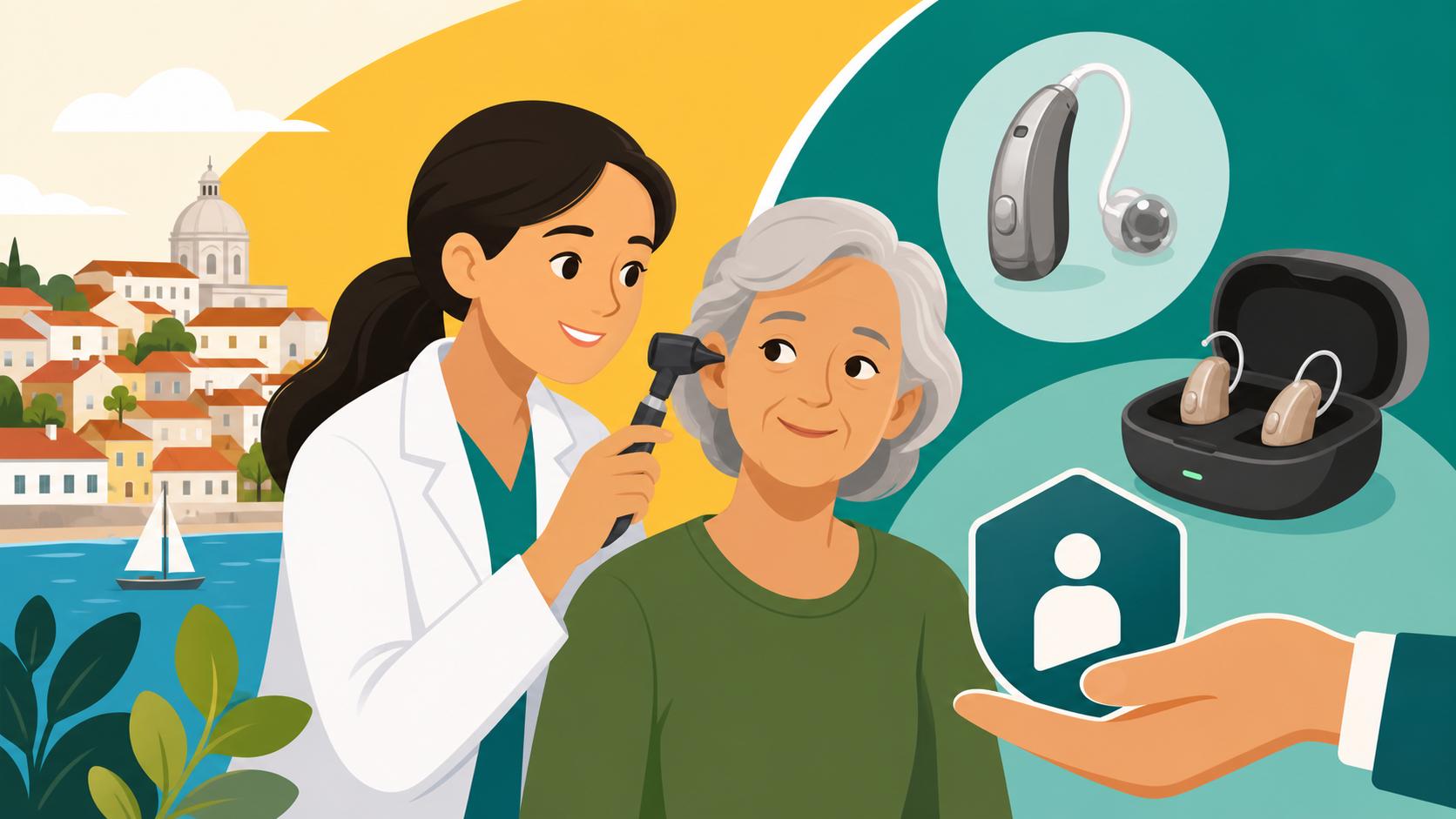
Hearing Care in Portugal: Audiologists, Hearing Aids, and Subsidies
You have finally admitted you can’t follow conversations in noisy Portuguese restaurants, or your spouse has asked you to turn the TV down one too many times. Then the questions start. Who do you see? Does the SNS cover hearing aids? Is there any subsidy for foreigners? This guide covers audiologists, hearing aid shops, funding routes and insurance in Portugal.
How Hearing Care Is Organised in Portugal
When I first moved here, I assumed hearing care would work like it did back home. I thought I would book a hearing test, see an audiologist and walk out with a recommendation. In Portugal the pieces are spread across several kinds of professionals and several kinds of places. Once you understand who does what, the system makes much more sense, and you stop feeling bounced between waiting rooms.
The big picture is simple. There is a public route through the Serviço Nacional de Saúde, the SNS. There is a private route through hospital groups and clinics. Running alongside both is a large retail network of hearing centres that sell and fit hearing aids. Most expats end up using a mix of all three. For a wider view of how the two healthcare worlds fit together, see Healthcare in Portugal for Expats: The Complete 2026 Medical Guide.
Who Does What: Otorrino, Audiologista, and Hearing Aid Technician
The doctor you need is the otorrinolaringologista, which everyone shortens to “otorrino”. This is the ear, nose and throat specialist. The otorrino diagnoses the cause of your hearing loss and rules out anything medical, such as infections, perforated eardrums, otosclerosis or, rarely, tumours on the auditory nerve. They also decide whether you are a candidate for surgery or a cochlear implant. In the SNS, the otorrino is also the person who can formally prescribe a hearing aid for subsidy purposes, which matters later in this guide.
The audiologista is a separate, degree-qualified health professional, not a doctor. Audiologists run the actual hearing tests. These include the audiogram, which charts the softest sounds you can hear at different pitches, and the tympanogram, which measures how well your eardrum moves. Other tests check speech understanding and middle ear reflexes. In hospitals they work alongside the otorrino. In private hearing centres, an audiologist is often the main person you deal with from first test to final fitting.
Then there is the commercial side, where things blur. Many hearing aid shops employ qualified audiologists. Some rely on technicians trained mainly by the manufacturer. My advice is always to ask, politely but directly, “O senhor é audiologista?” before you sit down for a test. A good centre will be happy to tell you about the person’s training. A vague answer tells you something too.
The Public Route Through the SNS
In the public system, everything starts at your Centro de Saúde, your local health centre. You need to be registered and hold a número de utente before you can access anything beyond emergency care. If you are not there yet, see Registering with the Centro de Saúde: Getting Your SNS Número de Utente. Your family doctor, the médico de família, examines your ears, checks for wax or infection, and refers you to a hospital otorrino if hearing loss is suspected.
The public route is thorough and very affordable once you are in it. The frustrating part, and I won’t pretend otherwise, is waiting. ENT referrals in many regions can take months. Some areas, especially parts of the Algarve and the interior, have long queues for first specialist consultations. If your health centre tells you there is no family doctor for you at all, see Why does my Centro de Saúde say they have no Médico de Família available?, because that changes how you get your referral.
The real strength of the SNS route is that it opens the door to the official subsidy system for hearing aids, called produtos de apoio. A prescription from a private clinic generally does not carry the same weight in that process. So even people who pay privately for speed often keep an SNS referral running in the background.
The Private Route: Hospitals, Clinics, and Hearing Centres
Private healthcare in Portugal is well developed, and hearing care is no exception. The large groups all have ENT departments with audiology units. These are CUF, Hospital da Luz, Lusíadas Saúde and, in the Algarve, HPA Saúde. You can usually book an otorrino within days and have your audiogram done the same day or soon after, often in the same building.
Separate from hospitals, there are the dedicated hearing centres you will see on high streets and in shopping centres. Minisom, GAES, Widex and Acústica Médica are names you will notice almost everywhere, from central Lisbon to small towns in the Silver Coast. Many opticians also run a hearing corner. These centres commonly offer free hearing screenings. That is genuinely useful as a first step, but keep in mind that their business is selling hearing aids.
The private route suits people who want answers quickly, who are not yet fully registered with the SNS, or who already know they will pay for premium devices. The trade-off is cost. Without insurance, you pay for every consultation, every test and every device. For a closer look at how the two systems compare on referrals, see Specialist Referrals: The Process in Public SNS vs Private Clinics.
Getting Your Hearing Tested
The test itself is painless and fairly quick. Getting to the test is where expats tend to lose patience. Below I walk through both routes in the order things actually happen. I also cover children, because hearing care for kids follows a slightly different path.
Step by Step Through the Centro de Saúde
Here is the sequence I went through myself, and it is what most of my friends in the Lisbon area have experienced too.
- Book a regular consultation with your médico de família, either in person at reception, by phone, or through the SNS 24 app or portal if your health centre allows online booking.
- At the appointment, describe your symptoms clearly, for example that you struggle to follow conversations, hear ringing, or have one ear worse than the other. Ask directly for a referral to otorrinolaringologia.
- Your doctor examines your ears and may first treat wax build-up or an infection, asking you to come back afterwards if the problem persists.
- If hearing loss is still suspected, the doctor submits an electronic referral to your area’s reference hospital. This goes through the national system for first hospital consultations.
- You receive a letter, text message or call from the hospital with your ENT appointment date. Keep your contact details up to date at the health centre so you don’t miss it.
- At the hospital, the otorrino examines you and orders audiology tests, which may happen the same day or at a separate audiology appointment.
- You return to the otorrino with your results for a diagnosis and a treatment plan. If hearing aids are recommended, you can ask about a prescription for the produtos de apoio funding process.
Two practical tips from experience. First, if your hearing makes phone calls difficult, tell reception. Ask them to note that you prefer contact by text or by a family member’s number. Second, bring a short written summary of your symptoms in Portuguese. Doctors here are busy, and a clear note saves everyone time. For language help in general, see Navigating the public health system if you only speak English (Translation tips).
Booking a Private Audiogram
If waiting months is not an option, the private route is straightforward. You can book an otorrino at CUF, Hospital da Luz or Lusíadas online or by phone, and many of their ENT doctors speak good English. Ask when booking whether the audiogram can happen on the same day as the consultation. Coordinating both saves you a second trip.
A typical private visit runs like this. You arrive and register with your passport or residence card and your NIF, so the invoice can go to e-Fatura. Next comes a short consultation with the otorrino, who looks into your ears with an otoscope. Then you go into a soundproof booth with the audiologist, who plays tones through headphones and has you press a button or raise a hand. You will also repeat words read at different volumes. You go back to the doctor, who explains your audiogram, and you leave with a report you can take anywhere.
That report is valuable, so ask for a printed or PDF copy. You can take it to hearing centres for quotes without repeating tests, and you can show it to your SNS doctor to support a referral. My neighbour Margaret, a retired teacher in Tavira, did exactly that. She paid for one private audiogram at a clinic in Faro and used the report to get three separate hearing aid quotes. She also used it to speed things up when her SNS ENT appointment finally came through.
Hearing Care for Children and Newborns
If you are having a baby here, you will meet Portugal’s hearing care system almost immediately. Hospitals carry out a neonatal hearing screening, the rastreio auditivo neonatal, usually before the baby goes home. It is quick and painless, often done while the baby sleeps. If the result is inconclusive, which happens fairly often, you will be booked for a repeat test. Try not to panic. Fluid in a newborn’s ears is a common reason for a first test not passing.
For older children, hearing problems often show up as speech delay, inattention at school or frequent ear infections. Pediatricians in both the SNS and private sector refer to pediatric ENT specialists, and many larger hospitals have dedicated pediatric audiology. If your child goes to a Portuguese public school, teachers will sometimes raise concerns before you notice anything. Take those conversations seriously. For more on routine checks, see Pediatric Care in Portugal: Vaccinations and Child Health Checks.
Children with significant hearing loss can also access the subsidy system for hearing aids. Schools can arrange educational support, including specialist teachers and, in some cases, enrolment at reference schools for bilingual education in Portuguese Sign Language. An expat family I know in Porto went through this with their son. Their key lesson was to ask the hospital’s social worker early, because they knew the local funding routes far better than any online forum.
Buying Hearing Aids in Portugal
Once you have a diagnosis, the shopping begins. It can feel a bit like buying a car, with ranges, technology levels, trial periods and a salesperson who really wants you to choose the top model. Let me walk you through what to expect, so you go in confident rather than overwhelmed.
Where to Shop: Chains, Independents, and Opticians
The big chains have the advantage of convenience and coverage. Minisom, GAES, Widex and Acústica Médica have branches across the mainland and on the islands. That matters if you split your time between, say, Lisbon and the Algarve and need adjustments in both places. Chains usually offer financing plans, regular check-ups and battery or charging accessories in-store.
Independent audiology clinics are worth seeking out, especially in larger cities. They often carry several manufacturers rather than mainly one, which can give you a more neutral recommendation. A friend in Cascais swears by her small independent clinic. Over the years the same audiologist has adjusted her devices dozens of times, and that continuity is hard to put a price on.
Opticians with hearing departments are the third option, and they suit simple needs such as mild, age-related loss. Whatever you choose, get at least two quotes based on the same audiogram. Prices for comparable technology can vary noticeably between shops. Ask each one to put the quote in writing, a document called an orçamento, with the model name, the warranty and what aftercare is included. If you end up applying for a subsidy, you will need written quotes anyway.
What a Good Fitting Process Looks Like
A proper hearing aid fitting is a process, not a single appointment. Be wary of anyone who wants you to sign and pay on the first visit. Here is what a good fitting generally looks like.
- The audiologist reviews your audiogram and asks about your lifestyle, such as restaurants, family dinners, TV, phone calls, church or concerts.
- They take ear impressions if you need custom moulds, or select dome sizes for open-fit devices.
- You receive the devices, which are programmed to your hearing loss, ideally with real-ear measurements that check the sound inside your actual ear canal.
- You take them home for a trial period and wear them in real situations, keeping notes on what works and what doesn’t.
- You return for fine-tuning, often several times, while your brain adjusts to hearing sounds it has missed for years.
- Once you are happy, you complete the purchase and schedule follow-up checks.
Ask about the trial period before anything else. Reputable centres allow you to try devices at home before you commit, and the length and conditions vary between shops. Make sure you understand what happens if you return them, including whether there is any fee for moulds. Get that in writing too.
The emotional side catches many people off guard. In the first few days, everything sounds too loud, too sharp and too metallic. Your own voice sounds strange, and paper rustling feels like gunfire. That is normal, and it improves as your brain adapts. Persist, go back for adjustments, and don’t let the drawer become your hearing aids’ permanent home.
Batteries, Maintenance, and Accessories
Most modern hearing aids are rechargeable, but many people still use disposable zinc-air batteries, especially with smaller or older devices. You can buy batteries at hearing centres, pharmacies and larger supermarkets such as Continente and Pingo Doce. Prices vary a lot between outlets, so buying in multipacks usually works out better.
Portugal’s climate brings its own maintenance challenges. Humidity is a real enemy of hearing aids, particularly in coastal areas and in older homes that get damp in winter. A drying box or dehumidifying jar overnight makes a real difference. So does wiping your devices daily and changing wax filters regularly. Your hearing centre will show you how. Ask for spare filters and domes to keep at home so you are not stuck waiting over a long weekend.
For accessories and ear care products that are harder to find locally, many expats order online. iHerb is a common choice in the expat community for ear care basics such as gentle ear drops and cleaning supplies. Delivery to Portugal generally works fine, although customs handling can occasionally slow parcels. For tips on receiving deliveries smoothly, see How to Get Mail and Parcels Delivered in Portugal. Always check with your audiologist before putting any drops in your ears if you wear hearing aids or have a history of perforation.
Subsidies and Financial Support for Hearing Aids
This is the section most people are looking for. The honest answer is that support exists, but it is not automatic, it is not instant, and it depends on your situation. With patience and good paperwork, plenty of residents do get help. Here is how it works.
The Produtos de Apoio System Explained
Portugal provides support for assistive products through a national framework known as the Sistema de Atribuição de Produtos de Apoio, usually called SAPA. Hearing aids fall under produtos de apoio, the official term for assistive products, alongside wheelchairs, walking aids and many other items. The system is coordinated nationally, with the Instituto Nacional para a Reabilitação playing a central role. The actual funding comes from different public bodies depending on who you are.
In practice, which body pays depends on your circumstances. For most people the route is through the health system. The SNS hospital where you are followed acts as both prescribing and funding entity. People of working age with disabilities may be supported through the IEFP, the employment and training institute, when the hearing aid is needed for work or training. Social Security, the Segurança Social, can play a role in other situations. Some professional health subsystems also have their own reimbursement rules for members.
Here is a simple overview of the main routes.
| Funding route | Who it typically serves | How you access it | What to expect |
|---|---|---|---|
| SNS hospital via SAPA | Residents followed by an SNS hospital ENT | Prescription from the hospital otorrino, plus quotes | Most common route; depends on hospital budget and queues |
| IEFP via SAPA | Workers, job seekers or trainees with disabilities | Prescription linked to employment or training needs | Focused on keeping people in work or training |
| Segurança Social via SAPA | Cases outside the health and employment routes | Assessment through Social Security services | Often involves a social worker assessment |
| Health subsystems | Members of specific schemes such as civil servant plans | Reimbursement claim with invoice and prescription | Rules set by each subsystem |
| Private insurance | Policyholders with hearing or prosthesis cover | Claim under the policy terms | Depends entirely on your policy wording |
The key point for expats is that you generally need to be a legal resident registered with the SNS. You also need a prescription from the right entity, usually the hospital otorrino rather than a private clinic. Tourists and people only holding travel insurance are not the target of this system.
How to Apply for Funding
The steps below follow the order in which things normally happen through the SNS hospital route. Details can differ slightly between hospitals and regions, so treat this as a map and confirm locally.
- Make sure you are registered at your Centro de Saúde with an active número de utente and your current address.
- Get a referral from your médico de família to the hospital otorrinolaringologia department.
- Attend your ENT consultation and audiology tests at the SNS hospital.
- Ask the otorrino whether you qualify for a hearing aid prescription under produtos de apoio, and request the prescription form, often called a prescrição de produtos de apoio.
- Ask to be put in contact with the hospital’s social service, the serviço social. They explain the local procedure, the documents you need and how long the queue usually is.
- Collect written quotes, orçamentos, from hearing aid suppliers for the prescribed device. The hospital will tell you how many quotes they need and what details must appear.
- Submit the full file to the hospital. This includes the prescription, the quotes, a copy of your identification and residence document, your número de utente and NIF, and any income declarations requested.
- Wait for the funding decision. This can take some time, because approvals depend on the hospital’s yearly budget for assistive products.
- Once approved, follow the hospital’s instructions on purchasing. Usually you buy from the chosen supplier and either the hospital pays the supplier directly or you get reimbursed.
- Keep every invoice and receipt, and make sure your NIF appears on them for tax purposes.
The most common frustration I hear is about step eight. Budgets for produtos de apoio are allocated annually, and when they run out, files can sit in a queue. One British couple I know in Coimbra applied, waited, and eventually bought one hearing aid privately while the subsidy for the second ear was still pending. It wasn’t ideal, but it got the husband back into dinner-table conversations months earlier.
Another tip is to be friendly and persistent with the serviço social. These social workers manage huge caseloads, and a polite visit or call to check on your file is normal and expected here. If you hit a genuine wall, ask the hospital about the Gabinete do Cidadão, the patient office, which handles formal questions and complaints.
Tax Relief and the Disability Certificate
Even if you pay entirely out of pocket, you can recover part of the cost through your annual IRS tax return. Hearing aids, hearing tests and ENT consultations count as health expenses. When you pay, give your NIF so the invoice appears on the e-Fatura portal under health. Check the classification before the validation deadline, because supplier invoices are sometimes filed under the wrong category. For the full process, see Deducting Expenses on IRS: e-Fatura, Supermarkets, Rent, and Healthcare.
For more significant hearing loss, there is the Atestado Médico de Incapacidade Multiuso. This multi-purpose disability certificate is issued after an assessment by a medical board, the junta médica. You request it through your local public health unit, and you bring medical reports such as your audiograms and ENT letters. If your assessed degree of disability reaches the legal threshold, the certificate can unlock tax benefits and other advantages. It can also support applications for various forms of assistance.
The process takes patience, because junta médica appointments can involve long waits in some areas. Even so, I would strongly encourage anyone with moderate to severe hearing loss to look into it, especially if they also have other health conditions that add up in the assessment. Ask your family doctor or the hospital social worker whether your situation is likely to qualify before you gather all the paperwork.
Insurance and Hearing Care
Insurance can soften the cost of hearing care, but it is rarely as generous as people hope. Hearing aids are often treated as prostheses or medical devices rather than routine care. That means they can be excluded, capped or covered only after a waiting period. Reading the policy wording is not optional here.
Portuguese Private Health Plans
Local insurers such as Médis, Multicare and AdvanceCare-based plans are popular with expats. They usually cover ENT consultations and diagnostic tests within their network at reduced prices. That alone can make a private audiogram and specialist visit much more affordable. For a side-by-side look at these providers, see Médis, Multicare, and AdvanceCare: Comparing Top Private Insurers.
Coverage for the hearing aids themselves is more variable. Some plans include a prosthesis benefit that can apply to hearing aids. Others offer discounts at partner hearing centres instead of actual reimbursement. Some cover nothing at all on the device side. Many policies also apply waiting periods, called períodos de carência, before prosthesis benefits kick in. They may exclude hearing loss you already had when you joined. See Waiting periods (Períodos de Carência) in Portuguese health insurance policies before you sign up with hearing aids in mind.
Here is a practical approach that has served me well. Before buying any policy, email the insurer and ask three specific questions in writing. Are hearing aids covered as a prosthesis, and under which benefit? Is there a waiting period for that benefit? Does a pre-existing hearing loss affect eligibility? A written answer protects you far better than a sales call.
International Expat Insurance
International plans are another option, especially for people who travel a lot or split time between countries. Cigna Global is one of the international insurers often used by expats in Portugal. It is also commonly used to meet the health insurance requirement during visa applications. With these plans, hearing-related benefits usually depend on which modules you add to the core cover. Check the provider’s own policy documents for current details on what is included.
The attraction of a plan like Cigna Global is flexibility. You can typically see specialists in private hospitals in Portugal and abroad, and choose your own doctors. That suits people who don’t want to depend on a single local network. The flip side is that comprehensive international cover tends to sit at the higher end of the cost spectrum. Hearing aid benefits, where available, often come with specific limits or conditions written into the policy.
If you are weighing an international plan against a local one, see Using Cigna Global or Allianz for international expat healthcare in Portugal for a broader comparison. My personal view is that for hearing care alone, the SNS plus a local policy covers most needs well. International plans make more sense when you need broader global coverage for other reasons.
Comparing Your Options at a Glance
This table brings the main routes together so you can see where each one fits.
| Route | Speed | Typical cost shape | Best for |
|---|---|---|---|
| SNS referral and hospital ENT | Slow, depends on region | Low user fees; devices possibly subsidised | Residents willing to wait who want subsidy eligibility |
| Private hospital ENT | Fast | Pay per consultation and test | Quick diagnosis and a portable report |
| Hearing centre screening | Very fast | Screening often free; devices paid privately | First check and comparing device quotes |
| Local private insurance | Fast within network | Monthly premium; reduced consultation prices | Regular ENT follow-ups and diagnostics |
| International expat insurance | Fast, wide choice | Higher premium; device benefits depend on modules | Frequent travellers and visa applicants |
Many people use a combination. They take the SNS route for subsidy eligibility, use a private audiogram for speed and quotes, and buy from the hearing centre that offers the best aftercare near home.
Living Well With Hearing Loss in Portugal
Hearing loss in a country where you are also learning a new language is a double challenge. Portuguese is fast, full of swallowed vowels and often spoken over clattering cafés and televisions. Hearing aids help enormously, but so do a few practical habits.
Communicating at Appointments When Portuguese Is Hard to Hear
Tell people about your hearing loss. It sounds obvious, but many of us hide it out of embarrassment. A simple phrase works wonders: “Tenho dificuldades de audição, pode falar mais devagar, por favor?” That means “I have hearing difficulties, could you speak more slowly, please?” Most Portuguese people are kind and patient once they know, and doctors will often switch to writing key points down.
Bring a companion to important appointments whenever you can, especially for test results and treatment decisions. Use your phone’s live transcription feature during consultations. Ask the doctor’s permission first, as a courtesy. Many people find a speech-to-text app helps them follow both Portuguese and English conversations in noisy places such as hospital waiting areas, where names are called out over loudspeakers.
Ask for written information at the end of each visit, including the summary letter, the audiogram and any prescriptions. At hospital reception, ask staff to come and find you rather than relying on a loudspeaker call. Many hospitals now use screens with ticket numbers, which is a real blessing for those of us who can’t catch a name announced across a busy room.
Tinnitus, Ear Wax, and Everyday Ear Health
Tinnitus, the ringing, buzzing or hissing many of us live with, often comes alongside hearing loss. In Portugal, it is assessed by the otorrino, and many hearing centres also offer tinnitus management. This can include sound generators built into hearing aids. If your tinnitus is affecting your sleep or mood, say so clearly, because support can include counselling as well as devices.
You will see supplements marketed for tinnitus in pharmacies and online shops, including on iHerb. Treat these with caution and talk to your doctor before taking anything, particularly if you already take regular medication. There is no shortcut that replaces a proper ENT assessment, and some supplements interact with common prescriptions.
Ear wax is the unglamorous cause of a surprising number of “hearing loss” scares. Pharmacies sell softening drops, and your Centro de Saúde can often arrange ear cleaning by a nurse or doctor. Private ENT clinics also offer microsuction. Avoid cotton buds, which push wax deeper, and be gentle if you swim often at the coast. Recurrent swimmer’s ear is common among expats who take up daily dips at Carcavelos or Praia da Rocha.
Building a Support Network
Hearing loss can be isolating, especially when you are already far from family and old friends. Portugal has associations for people with hearing loss and for the deaf community, including organisations linked to Portuguese Sign Language. Hospitals and hearing centres can point you towards local groups. Some expat social clubs have informal circles for people adjusting to hearing aids, and they can be wonderfully practical places to trade tips.
For older expats, hearing care often fits into a wider picture of staying independent. Simple adjustments make daily life much easier. Examples include doorbell flashers, amplified phones, vibrating alarm clocks and TV listening devices. Hearing centres and online retailers stock these. Families caring for elderly relatives here may also find Senior Care in Portugal: In-home Nursing, Care Homes, and Accessibility helpful for the broader accessibility picture.
Finally, be patient with yourself. Adjusting to hearing aids, learning to navigate a new healthcare system and keeping up with Portuguese conversation all at once is a lot. I still miss the punchline of jokes at long family lunches. The difference now is that I ask people to repeat themselves without feeling ashamed. In my experience, Portuguese friends have always been happy to oblige, usually with a smile and another glass of wine.
Disclaimer
This article is for general informational purposes only and does not constitute professional advice. Laws, prices and regulations vary by location and change over time. Consult a qualified professional for guidance on your specific situation.