Prescriptions in Portugal: The Receita Sem Papel System
Disclosure: This article contains affiliate links. If you buy through them, we may earn a commission at no extra cost to you. Read our full disclosure.
Standing at a pharmacy counter in Lisbon while a line of impatient locals huffs behind you is a rite of passage for every expat. I remember my first time vividly; I was waving a crumpled piece of paper that looked like a grocery list, only to have the pharmacist ask me for a digital code I didn't even know existed. This guide solves the mystery of the Portuguese "Receita Sem Papel" system so you never have to feel that "lost in translation" panic at the pharmacy again.
Understanding the Receita Sem Papel System
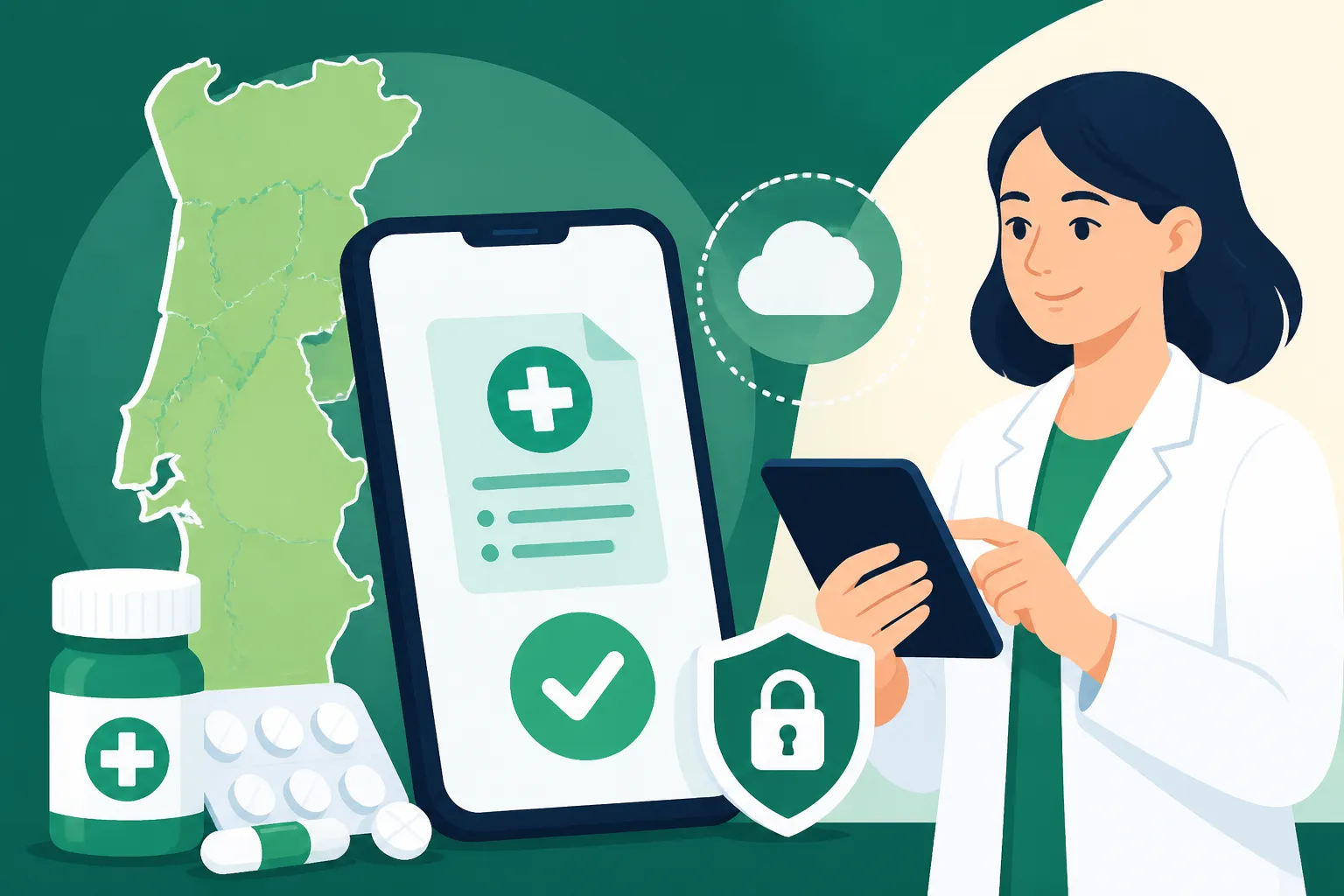
Portugal has moved aggressively toward a fully digital healthcare infrastructure, and the "Receita Sem Papel" (Paperless Prescription) is the crown jewel of this effort. In the old days, you’d walk out of a doctor’s office with a physical prescription that you could easily lose or spill coffee on. Today, the system is designed to live entirely in the cloud, linked directly to your national health number.
How the Digital System Works for Expats
When a doctor in Portugal—whether in the public or private sector—prescribes medication, they enter it into a national database. The system then generates a unique set of codes. These aren't just random numbers; they include a prescription ID and a security code (PIN) that are required for the pharmacist to "unlock" the medication in their system. For those just starting their journey, Registering with the Centro de Saúde: Getting Your SNS Número de Utente is the absolute first step, as the entire digital prescription system is built around this unique identifier.
Without a Número de Utente, the system simply cannot track your prescriptions digitally, and you might find yourself stuck with manual, private-style prescriptions that don't always carry the same state subsidies. Many new arrivals struggle because they assumed their foreign insurance would bypass the need for local registration, but even with a policy from SafetyWing for your initial months, having that local number is what makes the pharmacy experience seamless.
The SMS and Email Notifications
Once the doctor hits "send" on their computer, you will typically receive an SMS or an email almost instantly. This message contains the "Guia de Tratamento" (Treatment Guide). It’s a PDF or a text string that includes the name of the drug, the dosage, and most importantly, the access codes. If you are sitting in a consultation and your phone doesn't buzz within a minute, do not leave that room. Ask the doctor to double-check the mobile number they have on file for you.
Many expats, including myself during my first year, forget to update their contact details at the Centro de Saúde. If your prescription goes to an old burner phone number you used when you first arrived, you’ll have a headache of a time retrieving it. The digital guide also tells you exactly how many boxes of the medication you are allowed to buy and until what date the prescription is valid.
Security and Privacy of Your Medical Data
Understandably, the idea of your entire medical history floating in a government cloud can be nerve-wracking. However, the Portuguese system is quite robust. Pharmacists can only see what is currently prescribed to you; they don't have an all-access pass to your entire medical file. They use your NIF (tax number) or your SNS number to pull up the specific "receita" you are there to claim.
This level of digitization actually prevents a lot of the medical errors that used to happen with illegible doctor handwriting. It also means that if you lose your phone, you haven't lost your medicine. You can simply log into the national health portal or visit your doctor again to have the codes resent. It’s a far cry from the days of begging a doctor for a replacement paper slip.
Navigating the SNS 24 Portal and App
The SNS 24 app is going to become one of the most-used icons on your smartphone if you live in Portugal long-term. It is the gateway to your digital health life. If you’re ever confused about how the public system is structured, it’s worth reading about Portugal's National Health Service (SNS): How the Public System Works to understand the backbone of this digital interface.
Accessing Your Prescription History
Inside the SNS 24 app, there is a section specifically for "Receitas." Here, you can see a list of every active prescription you have, as well as an archive of past ones. This is incredibly helpful for those of us who forget the specific names of Portuguese brands. You can show the QR code directly from the app to the pharmacist, which is much more professional than scrolling through six months of text messages trying to find the right SMS.
The portal also allows you to see the "Guia de Tratamento" in full detail. It lists the "comparticipação" (the state subsidy) for each drug. You’ll see that some meds are 90% covered, while others are only 15% or not covered at all. This transparency helps you budget for your monthly healthcare costs. While SafetyWing is great for emergency travel needs, the SNS 24 app is your day-to-day tool for managing chronic health.
Renewing Long-Term Medication
One of the best "hacks" for expats is the ability to request a renewal of chronic medication through the app or portal without a face-to-face appointment. If you have a condition like asthma or hypertension, your "Médico de Família" (Family Doctor) can set up your prescriptions so that you can request a refill digitally.
You simply click "Renovação de Receitas," select the medication, and wait for the doctor to approve it. Usually, within 48 to 72 hours, a new set of codes arrives via SMS. This saves you from the grueling task of trying to book an appointment at a crowded health center just for a piece of paper. For those still looking for a consistent doctor, check out Finding an English-Speaking General Practitioner (Médico de Família) to get this process started.
Dealing with Technical Glitches
Let’s be realistic: Portuguese government tech isn't perfect. Sometimes the app crashes, or the SMS never arrives. In these cases, the "Linha SNS 24" (808 24 24 24) is your best friend. They have English-speaking operators who can often see your pending prescriptions and help troubleshoot why they aren't appearing.
If the digital system fails entirely at the pharmacy, the pharmacist can sometimes use your physical ID card to search for the prescription, but this is often at their discretion and depends on how "busy" they feel. Always have a screenshot of your codes just in case you lose internet connectivity inside a thick-walled stone pharmacy.
Private vs. Public Prescriptions: Costs and Subsidies
In Portugal, there is a distinct difference between a prescription issued by the public SNS and one issued by a private doctor at a hospital like CUF or Hospital da Luz. Understanding Public vs Private Healthcare in Portugal: Which One Should Expats Choose? is vital because it directly impacts what you pay at the pharmacy.
Comparticipação: The Subsidy System
The Portuguese government subsidizes medication based on its essential nature. These are called "Escalões" (Levels).
- Escalão A: 90% subsidy (for life-saving or essential drugs).
- Escalão B: 69% subsidy.
- Escalão C: 37% subsidy.
- Escalão D: 15% subsidy.
If your prescription comes from a public SNS doctor, these subsidies are applied automatically at the pharmacy. You only pay the "out of pocket" remainder. However, if you see a private doctor, the subsidy might not be as high, or you might have to pay the full price and seek reimbursement later, depending on your insurance. For many, having a robust policy from Cigna Global ensures that even these private costs are covered, filling the gap where the state might not.
Using Private Insurance for Medication
If you are using private healthcare, you will still get a digital prescription, but it may look slightly different or come from a different software. Most private hospitals use the same national database, so the "Receita Sem Papel" rules still apply. However, your private insurance (like Cigna Global) might have specific pharmacies they prefer you use, or they might offer an "unlimited medication" add-on that brings your costs down to nearly zero.
It is wise for expats to keep their pharmacy receipts (the "fatura"). Even if the medicine was only €5, you can often deduct these expenses on your annual IRS tax return if you have your NIF attached to the purchase. This is a small but helpful way to lower your overall cost of living.
Prescription Costs Comparison
| Medication Category | SNS (Public) Cost | Private (No Insurance) | Private (With Cigna/Insurance) |
|---|---|---|---|
| Basic Antibiotics | €2 – €8 | €10 – €25 | €2 – €5 (Co-pay) |
| Chronic (Blood Pressure) | €1 – €5 | €15 – €30 | €0 – €5 |
| Specialized Creams | €5 – €12 | €20 – €45 | €5 – €10 |
| Birth Control | €0 – €5 | €10 – €20 | €0 – €5 |
At the Farmácia: Buying Your Prescribed Meds
The "Farmácia" in Portugal is more than just a shop; it’s a community hub. The pharmacists are highly trained and often act as the first line of medical advice. For a deeper look at what you can buy without a doctor, see Pharmacies and Medication in Portugal: Prescriptions and OTC Drugs.
Showing Your NIF and ID at the Counter
When you walk up to the counter, the first thing the pharmacist will ask is for your "receita" (the codes) and your NIF. Even if you don't have a prescription and are just buying aspirin, always give them your NIF. This links the purchase to your tax profile, allowing for those medical deductions I mentioned earlier.
If you are using the digital system, you can either:
- Read out the Access Code and PIN from your SMS.
- Show the QR code from the SNS 24 app.
- Give them your physical Citizen Card (if you are an EU citizen/resident with one).
Understanding Generic vs. Brand Name Drugs
By law, Portuguese pharmacists must inform you if a cheaper generic version of your medication exists. This is called a "Genérico." In many cases, the generic is exactly the same formula but costs 50% less. If you are on a budget, always ask, "Existe um genérico mais barato?" (Is there a cheaper generic?).
Some doctors will "lock" the prescription to a specific brand for medical reasons, but this is rare. Usually, the choice is yours. I’ve saved hundreds of Euros over the years by opting for the generic versions of basic things like cholesterol medication or antihistamines.
After-Hours Service: Farmácia de Serviço
If you get a prescription at 11 PM on a Sunday, you need to find a What is a Farmácia de Serviço and how to find one open at 2 AM. Every pharmacy has a sign in the window listing which nearby location is "on duty" for the night. You might have to ring a bell and talk to the pharmacist through a small window, and there is usually a small "night fee" (around €2-€5), but the digital "Receita Sem Papel" works exactly the same way at 3 AM as it does at noon.
Managing Chronic Conditions and High-Cost Meds
For expats living with chronic illnesses, the digital system is a literal lifesaver, but it requires some initial legwork. You should familiarize yourself with Managing Chronic Illnesses: Diabetes and Hypertension Care in Portugal to see how the system handles long-term care.
Bringing Your Own Meds vs. Local Prescriptions
Many people arrive in Portugal with a six-month supply of medication from their home country. While this is a good safety net, you must eventually transition to the Portuguese system. You cannot simply take a US or UK prescription to a Portuguese pharmacy; they cannot legally fulfill it.
You will need to take your foreign medical records to a local doctor who will then "translate" those needs into the "Receita Sem Papel" system. For details on the legalities of transit, read Bringing Prescription Drugs to Portugal: Customs and Import Rules. It’s often easier to get a private consultation at a clinic like CUF to get your first local prescription quickly while you wait for a public family doctor assignment.
Specialist Referrals and Prescriptions
If you need specialized medication—say, for a neurological condition or oncology—you will likely need a referral. The process for Specialist Referrals: The Process in Public SNS vs Private Clinics can be slow in the public system. If you use a private specialist, they can still issue a "Receita Sem Papel" that is recognized by the pharmacy, but the subsidy might be lower than if it were issued by an SNS specialist.
This is where having a premium insurance provider like Cigna Global becomes invaluable. They often cover the higher costs of specialized medications that aren't fully subsidized by the state when prescribed in a private setting.
Common Issues and Troubleshooting
No matter how prepared you are, you will eventually run into a "Sistema em baixo" (System is down) situation. It’s part of the Portuguese charm.
What to Do If Your Receita Code Doesn't Arrive
If the doctor says they sent the code but your phone remains silent, check your email (including the spam folder). If it’s still not there, ask the doctor for a "Guia de Tratamento em papel" (Paper Treatment Guide). Even though the system is paperless, they can print a physical copy that has the codes and a barcode on it. It is wise to ask for this when in a rush, just to be safe.
Expired Prescriptions and Validity Windows
Most digital prescriptions are valid for 6 months, but some (like antibiotics) might expire in as little as 10 to 30 days. The "Guia de Tratamento" will clearly state the "Data Limite." If you try to use an expired code, the pharmacy system will simply reject it. You cannot "talk your way out of it" with the pharmacist; the computer literally won't let them process the sale. You will need to request a renewal via the SNS 24 portal or call your doctor.
Language Barriers at the Pharmacy
While most pharmacists in major cities like Lisbon, Porto, or Lagos speak excellent English, those in rural Alentejo or the Centro region might not. If you are struggling, use the SNS 24 app to show the QR code. It’s a universal language. If you need to explain symptoms to get an over-the-counter supplement, having a translation app ready is helpful. For those in the early stages of relocation, Navigating the public health system if you only speak English (Translation tips) offers great advice on getting your point across without being fluent in Portuguese.
Disclaimer
The information provided in this guide is for informational purposes only and does not constitute professional medical or legal advice. While we strive to keep the details regarding the Portuguese National Health Service (SNS) and the "Receita Sem Papel" system up to date, regulations and procedures can change. Always consult with a qualified medical professional in Portugal or contact the SNS 24 helpline for specific medical concerns or official administrative guidance. Your health and safety are paramount; do not rely solely on online guides for managing serious medical conditions.