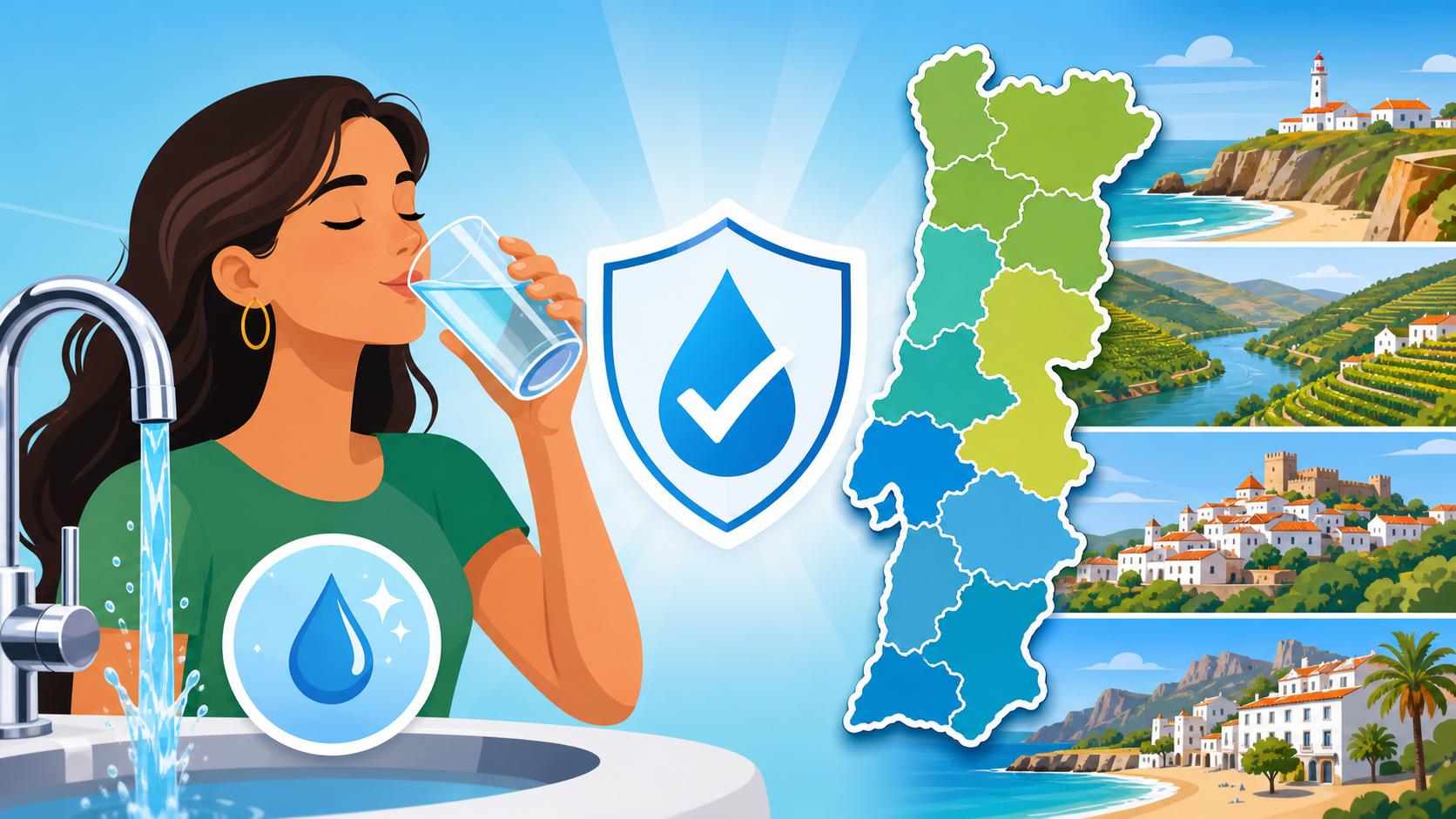
Is it safe to drink tap water in Portugal? Water quality by region
Disclosure: This article contains affiliate links. If you buy through them, we may earn a commission at no extra cost to you. Read our full disclosure.
One of the first things I did after landing at Lisbon airport was haul a massive 5-liter jug of water up four flights of stairs because I was terrified the tap water would make me sick. I spent my first three months in Portugal treating the kitchen sink like a hazard zone until a local neighbor finally laughed at my expensive "gym routine." This guide settles the debate on tap water safety, explores regional quality nuances, and explains why your plumbing matters more than the reservoir.
The Official Reality of Water Quality in Portugal
When you first arrive and start browsing the Living in Portugal Guide 2027: The Complete Relocation Manual for Expats, you will likely see a lot of conflicting information about what is safe to consume. The official word from ERSAR (The Water and Waste Services Regulation Authority) is remarkably consistent: over 99% of the tap water in mainland Portugal is safe, potable, and meets all European Union standards. This isn't just a government claim; it is backed by rigorous, frequent testing at thousands of points across the country.
Understanding the ERSAR Safety Ratings
The high percentage of "safe" water means that the bacteria levels are controlled and the chemical composition is within healthy limits. However, "safe" does not always mean "pleasant." The water in most Portuguese municipalities is treated with chlorine to ensure it stays sterile as it travels through the network. If you are coming from a country with highly filtered mountain water, the initial scent of chlorine when you turn on a tap in Lisbon might be off-putting.
It is important to remember that this chlorine is a sign of safety, not a sign of contamination. When I first started Renting an Apartment in Portugal: Contracts, Fees, and Tenant Rights, I was skeptical, but the data is clear. The water is chemically sound. The real variation comes down to the mineral content, known as "hardness," and the state of the local pipes in your specific neighborhood.
Why Many Locals Still Buy Bottled Water
If the water is so safe, why do you see locals walking out of Pingo Doce with literal crates of bottled water? This is a cultural leftover from several decades ago when infrastructure wasn't as reliable. Additionally, because the water in certain regions—especially the south—has a very distinct mineral taste, many Portuguese people simply prefer the neutral flavor of bottled mineral water.
When you are calculating your Cost of Living in Portugal 2026: Detailed Budgets for Singles and Families, you should decide early on if you want to spend €15–€30 a month on bottled water or invest in a one-time filtration solution. Personally, I grew tired of the plastic waste and the physical effort of carrying those jugs, leading me to look for better alternatives for my daily hydration.
Regional Variations in Tap Water Quality
The water you drink in the granite-heavy north is fundamentally different from the water you find in the limestone-rich south. Understanding these regional differences is crucial when you are deciding Where to Live in Portugal: Lisbon, Porto, Algarve, and Silver Coast Compared because it affects everything from the taste of your coffee to how often you’ll need to descale your kettle.
Lisbon and the Central Region
In Lisbon and the surrounding suburbs, the water quality is generally excellent. The water is sourced from the Castelo do Bode dam and is treated at massive, modern facilities. The "hardness" in Lisbon is moderate. You will notice some limescale buildup on your showerhead over time, but it isn't nearly as aggressive as what you find in other European capitals like London or Paris.
If you are staying in a short-term rental found through Uniplaces, you can almost always trust the tap water in the city center. The only real issue in Lisbon is the age of the buildings. While the city's main lines are great, the internal plumbing in a 100-year-old Pombaline building in Alfama might have old lead pipes or sediment buildup. Using a digital nomad eSIM from Airalo to check local forums for your specific "freguesia" (parish) can give you peace of mind regarding any temporary local maintenance.
Porto and Northern Portugal
The north of Portugal is famous for its soft water. Because the region is dominated by granite, the water picks up fewer minerals as it flows toward the coast. This results in water that tastes "sweeter" and is much gentler on your skin and hair. If you are moving to Porto or Braga, you might find that you don't need any filtration at all.
When I lived in the north, I noticed my soap lathered much better and my tea tasted significantly better than it did in the south. However, the north has a higher density of older, rural "quintas" (farms). If you are Buying Property in Portugal as a Foreigner: The Step-by-Step 2027 Guide in a rural northern village, your water might come from a private well (poço) rather than the municipal supply. In these cases, you absolutely must have the water tested for nitrates and runoff from local agriculture before drinking a single drop.
The Algarve and Southern Challenges
This is where the conversation changes. The water in the Algarve is "hard"—meaning it is very high in calcium and magnesium. While it is perfectly safe to drink, the taste can be quite "heavy" or metallic. For many expats, this is the region where tap water becomes a real point of contention.
When you look at the Cost of living in the Algarve: Winter vs Summer price differences for expats, you’ll see that during the dry summer months, the water levels in reservoirs can drop, occasionally intensifying the mineral taste. Beyond the taste, the hard water in the south will destroy your appliances if you aren't careful. Your dishwasher and washing machine will require constant salt and descaling agents. If you find a home in Lagos or Albufeira via Uniplaces, check the pipes under the sink; if you see white crusty deposits, you’re dealing with high limescale.
| Region | Water Hardness | Taste Profile | Primary Source |
|---|---|---|---|
| Porto / North | Soft | Clean, Neutral | Granite-filtered rivers |
| Lisbon / Central | Medium | Slight Chlorine | Surface Dams (Castelo do Bode) |
| Algarve / South | Hard | Metallic / Mineral | Underground Aquifers / Dams |
| Madeira | Soft | Fresh / Mountain | Levadas and Springs |
| Azores | Soft/Medium | Natural | Volcanic Springs / Lakes |
Practical Solutions for Better Tasting Water
If you’ve decided that you want to skip the plastic bottles but you can't stand the taste of the local "calcário" (calcium), you have several effective options. The goal is to remove the chlorine taste and soften the water without the administrative headache of Setting Up Utilities in Portugal: Electricity, Gas, Water, and Internet for complex whole-home systems.
Desktop and Faucet Filters
For most expats, a simple pitcher filter (like Brita) is the easiest starting point. It's affordable and removes that sharp chlorine edge from Lisbon or Porto water. However, for the harder water in the Algarve, you might want something more robust. Faucet-mounted filters have become incredibly popular in the expat community because they allow you to switch between filtered water for drinking and unfiltered water for washing dishes.
You can easily find these systems on Amazon Spain, which offers fast shipping to Portugal. I personally use a TAPP Water filter that screws directly onto the kitchen faucet. It’s a lifesaver because it removes microplastics and heavy metals while significantly improving the taste. When you are going through your Health checklist for your first 30 days living in Portugal as an expat, adding a water filter to your shopping list is a high-priority item for your long-term comfort.
Whole-Home Systems and Descalers
If you are buying a home or planning a long-term stay, you might consider a water softener or a reverse osmosis system. A reverse osmosis system is the gold standard; it removes almost everything, giving you water that tastes like premium bottled brands. These systems are usually installed under the kitchen sink and require a small dedicated faucet.
For those in the Algarve, a magnetic or salt-based descaler for the main water inlet is highly recommended. It won't necessarily make the water taste like a mountain spring, but it will save your water heater and pipes from being choked by limescale. You can find local contractors or use your Airalo connection to search for "tratamento de águas" specialists in your area. If you find a long-term rental through Uniplaces, you might even be able to negotiate the installation of a basic filter with the landlord in exchange for a longer lease.
Plumbing and Hidden Risks in Old Buildings
Even if the municipal water is perfect, the "last mile"—the pipes inside your building—can be the weak link. This is a common frustration for foreigners who move into a charming, "rustic" apartment only to find the water comes out slightly brown after a weekend away.
The Problem with Old Infrastructure
In many historic centers, the pipes are made of galvanized steel or, in very rare cases in unrenovated buildings, lead. Galvanized pipes rust from the inside out. This doesn't usually make the water "poisonous," but it can introduce iron and a metallic tang that no amount of municipal treatment can fix.
Whenever I move into a new place, I perform a simple "clarity test." Fill a clear glass with cold water and let it sit for a minute. If you see sediment at the bottom or a slight yellowish tint, your building's internal plumbing is likely the culprit. This is why when you are Grocery Shopping in Portugal: Continente, Pingo Doce, Auchan, and Mercados, you’ll see that even the most eco-conscious expats often have a "backup" five-liter jug of water in the pantry just in case the building's pipes are acting up.
How to Test and Remediate
If you are genuinely concerned about the safety of the water in an older rental, you can buy home testing kits on Amazon Spain. These kits check for lead, copper, nitrates, and pH levels. They are relatively inexpensive and provide results in minutes. If the test shows high levels of metals, you should immediately inform your landlord.
Another tip: never use the hot water tap for cooking or drinking. Hot water sits in the "esquentador" (water heater) and is more likely to dissolve metals or contain sediment from the tank. Always start with cold water and boil it if needed. It’s a small habit, but one that significantly reduces your exposure to any potential domestic plumbing issues. By the time you’ve settled in and used Airalo to find your way around the local hardware stores, you'll be an expert at managing these little Portuguese quirks.
Disclaimer
This guide is intended for informational purposes only. While every effort has been made to ensure the accuracy of the information provided based on current standards in 2026, water quality can vary significantly by specific building and local maintenance schedules. Always consult with local authorities or professional plumbers if you have specific health concerns or if you notice changes in your water supply.