Opening a Portuguese Bank Account from Abroad for Your Visa Application
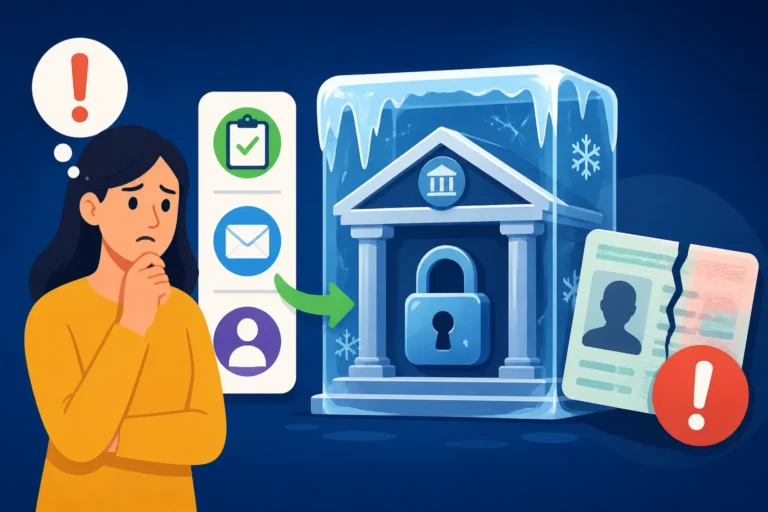
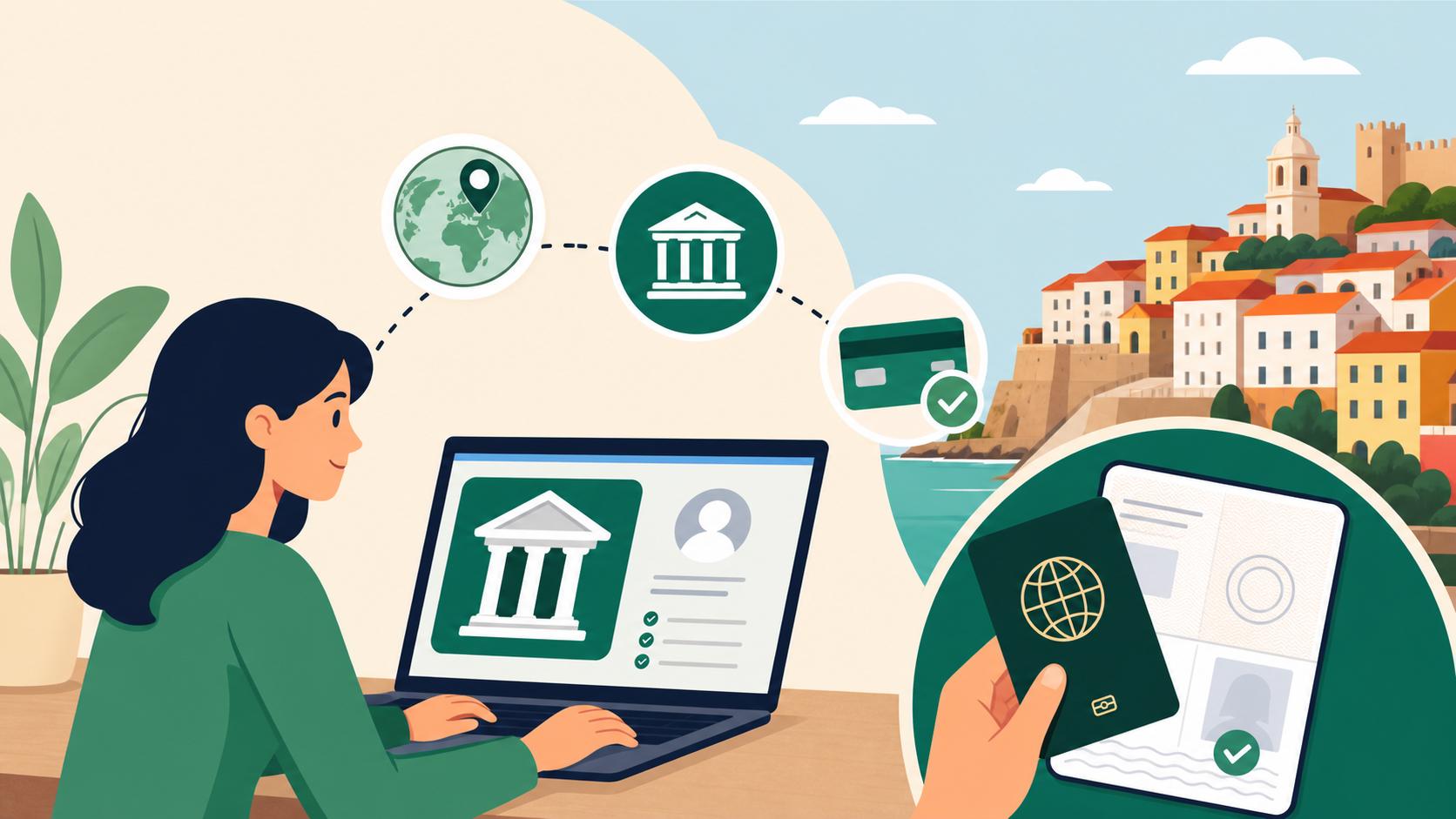
Picture this: your consulate appointment is booked, your paperwork binder is nearly full, and then you read that the officer may want a Portuguese bank account with your savings already in it. You are thousands of kilometres away, with no NIF, no address and a bank asking for documents you’ve never heard of. This guide explains, step by step, how to open that account from abroad and present it properly with your visa application.
Why a Portuguese Bank Account Matters for Your Visa
What Consulates Are Actually Looking For
When I applied, the consular officer did not care much about the account itself. What mattered was proof that I could support myself in Portugal without becoming a burden on the state. For the D7, the D8 and several other national visas, that proof is about means of subsistence. A Portuguese account holding your funds, or receiving your income, shows that the money is reachable inside the Portuguese financial system and not only on paper in another country.
Consulates and VFS centres differ in how strictly they ask for this. Some treat a local account as essential. Others accept foreign bank statements with a strong income history and see a Portuguese account as a plus. Because the requirement depends on where you apply, check the document checklist for your specific consulate before you assume either way. If you are still working out which documents prove what, Proof of Income and Funds for Portuguese Visas goes through the evidence side in detail.
The Hidden Benefits Beyond the Visa File
Even where the consulate does not formally require it, a Portuguese account makes your first months far easier. Rent, utilities, phone contracts, gym memberships and many online services expect a Portuguese IBAN for direct debits. Landlords often feel more comfortable with a tenant who pays from a local account. MB Way, the payment app everyone uses to split dinner bills and pay the man selling chestnuts, is linked to a Portuguese bank.
There is also a timing advantage. If you open the account before the visa appointment, it is already active and tested when you land, so you are not queuing at a branch during your first frantic week. That frees you to handle the steps in The 120-Day Entry Visa: What to Do Once You Arrive in Portugal instead of chasing a bank manager.
The Prerequisite: Getting Your NIF First
Why No Bank Will Open an Account Without It
The NIF, or Número de Identificação Fiscal, is your Portuguese tax number. Banks use it to identify you and to meet their reporting obligations, so practically every bank asks for it before anything else. I made the mistake of contacting three banks before I had mine, and every conversation ended with the same polite answer: come back when you have a NIF.
The NIF is free from the tax authority, but getting it from abroad is the hard part. If you live outside the EU and EEA, you will usually need a fiscal representative, a person or company in Portugal who receives official tax correspondence for you until you become resident. Getting a NIF as a non-EU citizen: The Fiscal Representative requirement explained covers how that works and how to end the representation later.
Routes to a NIF From Abroad
You have three realistic options. You can ask a trusted friend or relative who lives in Portugal to act as your representative. You can hire a lawyer or solicitor, who will often bundle the NIF with other paperwork. Or you can use an online relocation service. Bordr is one well-known example: it handles NIF applications remotely, includes fiscal representation and, depending on the package, can help with opening a bank account too. Check the provider’s own page for what each package currently includes and costs.
Whichever route you choose, keep the official NIF document safe and get a digital copy. Banks may ask for it, and so may the consulate. For the full process, including the Social Security number you will need later, see NIF and NISS: How to Get Your Portuguese Tax and Social Security Numbers.
How to Open the Account Remotely: Your Main Options
Comparing the Four Routes
You can open a Portuguese account from abroad in four main ways. The right one depends on your nationality, how comfortable you are with Portuguese-language paperwork, and whether you can visit the country before your appointment.
| Route | How It Works | Main Advantages | Main Drawbacks | Best Suited For |
|---|---|---|---|---|
| Traditional bank, remote non-resident process | Apply through the bank’s international or non-resident desk by email, video call or online form | Full Portuguese account with a local IBAN, widely recognised by consulates | Slow back-and-forth, document demands vary by branch and staff | Applicants who want the most conventional option and can be patient |
| Lawyer or relocation service with power of attorney | A representative attends the bank on your behalf using a notarised and apostilled power of attorney | Least effort for you, handles Portuguese-language communication | Service fees, plus the cost and time of preparing the power of attorney | Busy professionals and anyone who wants hands-off support |
| Bundled NIF and account service | An online provider arranges the NIF and introduces you to a partner bank | One process covers two steps, clear online tracking | Limited choice of bank, terms set by the partnership | First-timers who want a guided path from day one |
| In-person visit on a scouting trip | You walk into a branch in Lisbon, Porto or elsewhere with your documents | Fastest when it works, problems solved face to face | Requires travel, some branches still refuse non-residents | People already planning a reconnaissance visit |
Digital-only banks and multi-currency apps are useful for daily spending and transfers, but check carefully whether your consulate accepts an account that is not held at a Portuguese-licensed bank with a Portuguese IBAN. Many applicants keep both: a traditional Portuguese account for the visa file and a digital account for exchanging currency cheaply.
The Traditional Bank Remote Process
The large Portuguese banks have teams that work with non-residents and emigrant communities. You contact them, send scanned documents, complete identity checks by video call or certified copies, and sign the account agreement digitally or by courier. The process is reliable once it gets going, but it can feel like a slow tennis match of emails asking for one more document. Millennium bcp has a long history with foreign clients, and How to open a Millennium bcp account before arriving in Portugal walks through that particular bank’s process.
My advice: email in clear, simple English, and attach a neat checklist of what you are sending. When I did that, my replies came faster, presumably because the staff member could forward one tidy message instead of piecing together ten.
Using a Power of Attorney
If the bank insists on an in-person signature and you cannot travel, a power of attorney, or procuração, lets someone in Portugal sign for you. You usually prepare it with a notary in your home country, then get it apostilled so Portuguese institutions accept it. If it is not in Portuguese, a certified translation is normally required.
This route costs more because of the notary, the apostille, translation and the representative’s fee. But for people juggling a job, a house sale and children, paying to avoid a flight to Lisbon can be well worth it. Ask the bank in advance whether it accepts a power of attorney for account opening, as some only accept it for specific acts.
The Documents Portuguese Banks Will Ask For
The Core Document Checklist
Requirements vary between banks and even between branches, but this is the package that covers most remote applications:
- A valid passport, with a clear colour scan of the photo page.
- Your NIF document, showing your name and number.
- Proof of foreign address, such as a recent utility bill or bank statement in your name.
- Proof of income or occupation, such as an employment contract, an employer letter, pension statements or recent payslips.
- A tax residency self-declaration, which the bank uses for international reporting rules.
- A contact phone number and email address, sometimes verified by a code.
- Details of your fiscal representative if you are a non-EU applicant.
Some banks also ask for a reference letter from your current bank or a short note on where your funds come from. Do not take this personally. Portuguese banks are bound by strict anti-money-laundering rules, and a newcomer moving savings from abroad is exactly the kind of client they must document carefully.
Translations, Apostilles and Certified Copies
Banks often accept English documents, but not always. If a staff member asks for a Portuguese version of your employment contract or pension letter, a certified translation is the safest answer. RushTranslate is one option many expats use for certified translations of income documents and statements; confirm on their site which certification types they currently offer and whether your bank will accept them. Certain documents may also need an apostille, particularly anything signed by a notary.
For the wider rules on which immigration documents need translating, apostilling or certifying, see Translating and Certifying Documents for Portuguese Immigration. Doing the bank documents and visa documents at the same time saves money, because many of the same papers appear in both files.
American Applicants and Tax Reporting Forms
If you are a US citizen, expect extra forms. Portuguese banks must report accounts held by US persons under FATCA, so you will be asked for your US tax identification number and a specific self-certification form. A few banks used to be wary of American clients because of this paperwork, though most mainstream banks handle it routinely now.
Answer these forms truthfully and completely. Missing information is one of the most common reasons an otherwise good application stalls. US Expats: Do Portuguese banks report my balance directly to the IRS via FATCA? explains what is shared and why.
Funding the Account and Presenting It in Your Visa File
Moving Your Money In
Once the account is open, you need to fund it. For many visas, the consulate expects a balance that reflects your means of subsistence, so you may be moving a meaningful part of your savings across borders. Before you do, compare the total cost: the exchange rate margin, any sending fee from your home bank and any incoming transfer charge from the Portuguese bank. Specialist money transfer services often beat high-street banks on the exchange rate, sometimes by a wide margin on large sums.
Send a small test transfer first and confirm that it arrives with your name and reference intact. Keep the transfer receipts, because the bank or the consulate may ask where the money came from. For a full breakdown of how to save on exchange costs, see Transferring Money to Portugal: Saving on Exchange Rates and Fees.
Getting the Right Bank Declaration
Your online banking screenshot is not enough. Consulates generally want an official document from the bank, usually a balance declaration, sometimes called a declaração de saldo, or an account statement with the bank’s stamp or digital signature. It should show your name, your IBAN, the balance and the date of issue. Ask the bank exactly what it can issue and whether it can produce it in English.
Get the declaration dated close to your appointment, as officers may question a document that is several months old. Some applicants request two: one for the visa appointment and a spare in case of delays. If something goes wrong and your application is refused over financial evidence, What Happens If Your Portugal Visa Application is Rejected? explains your options.
Fitting the Account Into the Rest of Your Application
The bank account is just one part of your visa file. Your consulate will also want proof of accommodation, a criminal record certificate and health coverage for your initial stay. On the insurance side, many applicants buy an international policy such as Cigna Global to cover the period before they register with the public health system, while others choose a Portuguese private plan. Health Insurance Requirements for the D7 and D8 Visa Application explains what the consulate expects to see on that certificate.
Keep the financial documents together in one section of your binder: the NIF, the account opening confirmation, the balance declaration and the transfer receipts. When I handed my folder over, the officer flipped straight to that section and spent barely a minute on it, because everything told the same coherent story.
Common Frustrations and How to Handle Them
When the Bank Goes Quiet
Silence is the most stressful part of this whole process. You send everything, then hear nothing for days. Remember that remote non-resident applications often pass through compliance teams who never speak to you directly. A polite follow-up after a week is perfectly acceptable. Mention your visa appointment date, as a concrete deadline sometimes moves a file up the pile.
If one bank stays unresponsive, do not hesitate to try another in parallel. You are not obliged to stay with the first bank you contacted, and having two applications running reduces the risk of a missed appointment. Just make sure you close or cancel whichever you do not need.
Fees, Account Types and Small Print
Portuguese bank accounts usually carry a monthly maintenance charge, and debit cards, transfers and statements can come with their own fees. Some banks waive the maintenance fee if you deposit a regular salary or hold a certain balance, but non-resident accounts do not always qualify for these waivers. Read the bank’s price list, called the preçário, which every bank publishes, and check the current figures for the specific account you are opening.
Ask whether the account will change automatically once you become resident, or whether you will need to update your status and address yourself. In my case, I walked into a branch with my residence card a few months after arriving and the account was converted the same afternoon. For a broader look at which banks suit foreigners in daily life, see Opening a Bank Account in Portugal: Best Banks for Foreigners and Expats.
A Realistic Timeline to Plan Around
Here is a sensible order of events, working backwards from your consulate appointment:
- Start the NIF process as early as possible, since everything else depends on it.
- Gather passport scans, proof of address and income documents while you wait.
- Order any certified translations or apostilles the bank is likely to ask for.
- Apply to your chosen bank once the NIF arrives, and follow up politely every week.
- Make a small test transfer, then move the main funds once the account works.
- Request the official balance declaration shortly before your appointment.
- File the declaration, transfer receipts and NIF together in your visa binder.
The whole sequence can be quick if documents are ready and the bank responds promptly, but it is wise to leave a generous buffer. Banks slow down around Portuguese holidays and in August, when it feels like half the country is at the beach.
Opening a bank account from another continent tests your patience, and there will probably be a moment when you wonder why a country this relaxed has banks this thorough. But once your account is open and your balance declaration is in your folder, a big piece of your visa puzzle is done.
Disclaimer
This article is for general informational purposes only and does not constitute professional advice. Laws, prices and regulations vary by location and change over time. Consult a qualified professional for guidance on your specific situation.