Do I need to pay customs duties when receiving a gift package from the US?
Disclosure: This article contains affiliate links. If you buy through them, we may earn a commission at no extra cost to you. Read our full disclosure.
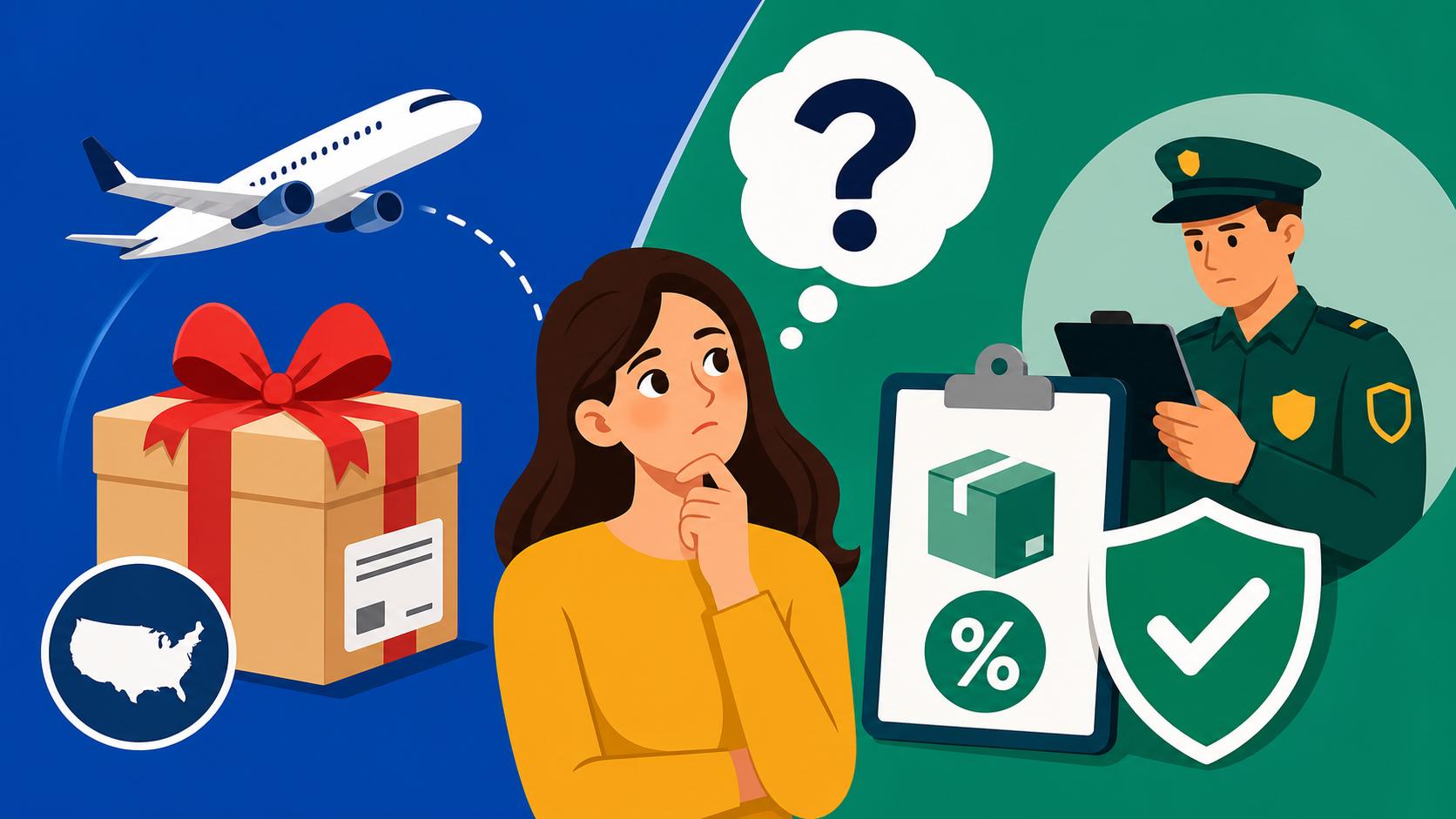
If your mom in Ohio just mailed a birthday box of books and a sweater, you may soon get a text from CTT asking you to “clear customs” and pay before delivery. The short answer is that a genuine gift package from the US can arrive free, but it can also trigger IVA and handling fees. This guide explains when you pay, what drives the cost, and how to clear the parcel without stress.
Why a Gift From the US Gets Stopped at Portuguese Customs
The first time this happened to me, I felt a little insulted on my family’s behalf. My sister had sent a small box of paperbacks, a scarf, and a handwritten card for my birthday. A few days later I got an SMS from CTT, the Portuguese postal service, saying the parcel was “retido na alfândega” and asking me to start a customs clearance process. My reaction was the same as yours probably is: it’s a present, nobody bought anything, why am I being asked for paperwork?
The answer is structural, not personal. Portugal is part of the European Union’s customs union. Anything coming from outside the EU, including the United States, counts as an import, whether it came from a big retailer or from your aunt’s kitchen table. Every non-EU parcel passes through the Autoridade Tributária e Aduaneira, the same tax authority that handles your IRS return, which runs customs (the Alfândega). Their job is to decide whether the contents are taxable, exempt, or prohibited.
The Two Charges You Might Face
When a US parcel is assessed, there are two separate layers of tax to keep in mind:
- IVA, the Portuguese VAT, which applies to imported goods the same way it applies to things you buy in a shop in Lisbon. If you want to understand the rate bands, see Portugal’s Value Added Tax (IVA): Standard, Intermediate, and Reduced Rates.
- Customs duty, which is a tariff that depends on what the item is and its value. For a typical family gift box, duty is often not the main issue; IVA is.
On top of these taxes, there is usually a handling or clearance fee charged by whoever delivers the parcel. CTT charges for presenting the parcel to customs on your behalf, and private couriers like UPS, FedEx, and DHL charge their own disbursement or brokerage fees. This fee is separate from any tax and can sometimes be the largest part of the bill on a low-value parcel. Check the carrier’s own customs page for its current charges.
What Makes a Package a True Gift in the Eyes of Customs
EU rules provide a specific relief for gifts between private individuals. For your parcel to qualify, customs generally looks for all of the following:
- It is sent by a private person in the US to a private person in Portugal, not by a business.
- It is occasional, meaning birthdays, holidays, or special occasions, not a regular monthly shipment.
- Nothing is paid for it by the recipient, in any form.
- The contents are for personal or family use, not for resale.
- The total declared value stays under the gift exemption ceiling set by EU rules.
That last point is where people get caught. There is a modest value limit for gift relief. Below it, a qualifying gift comes in without IVA or duty. Above it, the exemption does not just shave off the excess; IVA is generally assessed on the full declared value. Because these thresholds are set at EU level and can be revised, ask your family to check the current figure on the Autoridade Tributária customs information pages, or ask at CTT, before they pack an expensive box.
There are also separate quantity caps inside the gift relief for alcohol, tobacco, and perfume. A bottle of bourbon tucked into a holiday box can push an otherwise exempt parcel into taxable territory.
Real Scenarios: When You Pay and When You Don’t
Theory is one thing, but what matters is what lands on your doorstep. Here is how the most common situations tend to play out, based on my own parcels and those of friends in our expat group.
| Scenario | Usually qualifies as a gift? | What you can expect |
|---|---|---|
| Family sends a few books and a sweater, marked as a gift, modest value | Yes | Often delivered with no tax; may still be held for verification |
| Family sends a new laptop or tablet as a gift | Value likely above the gift ceiling | IVA on the full value, possibly duty, plus a handling fee |
| You order online from a US store and ship it to yourself | No, it is a purchase | IVA applies from the first cent, plus handling fees |
| Friend buys something online and has the store ship it to you | No, the sender is a business | Treated as a commercial import with IVA |
| Relative includes a bottle of whiskey and perfume | Quantity caps apply | The alcohol or perfume may be taxed even if the rest is exempt |
| Parcel contains homemade jerky or cheese | Prohibited animal products | Likely seized or destroyed, not taxed |
| Parcel with prescription medication | Special rules apply | May be held and require documentation |
The Store-Shipped Gift Trap
This one surprises families most often. Your dad wants to send you a coffee grinder, so he orders it on a US retailer’s website and types in your Lisbon address. From his point of view, it’s a gift. From customs’ point of view, the sender is a company, there’s a commercial invoice, and that makes it a purchase import. The private-to-private gift relief does not apply, so IVA is due.
The workaround is not to fight customs on this point but to change how the gift is bought. Many retailers have EU storefronts or deliver within Europe, so the item never crosses a customs border at all. If you shop on Amazon, How to receive Amazon packages in Portugal without paying customs fees walks through the practical options.
High-Value Gifts and Electronics
Let’s say your brother sends you his old but still pricey camera. Even if it’s used and given freely, customs looks at the declared value. If it sits above the gift ceiling, you will be assessed IVA on the full value, and electronics can attract duty depending on the product category. You’ll also pay the carrier’s clearance fee.
My honest advice: for anything expensive, it’s often cheaper and calmer for your family to send money and let you buy the item locally, where you get an EU warranty and a Portuguese invoice. Wise is a common way to do this, since you receive the transfer in euros directly into your Portuguese account, and you can see the exchange rate and fee before your relative hits send. The wider options are covered in Wise vs Revolut vs Bank Transfers: Cheapest Way to Move USD/GBP to EUR.
Medication, Food, and Restricted Items
Care packages often include things from home that you can’t find here, and some of these are restricted. Meat and dairy products from outside the EU are generally banned in personal consignments, so homemade jerky, sausage, or a block of cheddar is likely to be destroyed rather than taxed. Plain packaged snacks are usually less of a problem, but the description on the form needs to be clear.
Medication is its own category. If a relative wants to mail you a refill of something you take regularly, read Bringing Prescription Drugs to Portugal: Customs and Import Rules first, because parcels with medicines are frequently held and you may need a prescription or doctor’s letter to get them released.
How to Clear a Gift Parcel With CTT Step by Step
If your parcel is held, don’t panic and don’t ignore it. Unclaimed parcels are returned to the sender after a holding period, and your family pays for the box’s trip back and forth for nothing. Here’s the process I’ve followed several times.
Responding to the CTT Customs Notice
When a USPS parcel enters Portugal, it is handed over to CTT, which handles the customs side for postal shipments. You’ll typically receive an SMS or email telling you the parcel requires customs clearance, with a link and a tracking code.
- Open the link from the official CTT message, or go to the CTT website yourself and enter the tracking number. Don’t click links from unexpected texts that ask you to pay small fees, as fake “parcel held” messages are a common phishing trick.
- Choose the option to proceed with customs clearance, known as “desalfandegamento.”
- Enter your personal details, including your NIF. Customs clearance in Portugal is tied to your tax number, so have it ready.
- Declare the nature of the shipment. Select that it is a gift between private individuals if that’s true.
- Upload supporting documents. For a gift, a simple message from the sender stating it’s a gift, a list of contents, and the approximate value often helps. For a purchase, upload the invoice or order confirmation.
- Wait for the customs assessment. You’ll be told whether anything is payable.
- Pay any IVA, duty, and handling fee through the options offered, usually a Multibanco reference, MB Way, or card.
- Choose delivery to your address or pickup at your local post office.
If you’re new to paying with a Multibanco reference, How to use the Multibanco ATM network to pay taxes, tolls, and utility bills explains how it works. Paying with your phone is often faster, and Using the MB Way app: Why it’s better than carrying cash in Portugal covers setting it up.
What Your US Family Should Write on the Customs Form
Most of the drama can be prevented at the US post office counter. When your family ships through USPS, they fill out a customs declaration. A clear, honest form gets processed much faster.
- Tick the “Gift” box only when it’s genuinely a gift from them to you.
- List each item specifically: “two paperback novels, one wool scarf, one greeting card,” not “stuff” or “personal items.”
- Give a realistic value for each item. Customs officers see thousands of parcels and notice when a phone is declared at a token value.
- Write your full name exactly as it appears on your residence card or passport, along with your complete Portuguese address and postal code. If they’re unsure about the format, Portugal postal codes (Código Postal): How to read and write them correctly is worth sending to them.
- Add your Portuguese phone number so CTT can text you the notice.
Private Couriers Versus the Postal Route
If your family uses UPS, FedEx, or DHL instead of USPS, the clearance runs through the courier rather than CTT. Couriers usually move faster and handle customs themselves, then contact you by email or SMS to pay before delivery. The trade-off is that their brokerage fees are often higher than the postal handling fee, and they may pay the IVA upfront for you and bill you afterward. Check each courier’s own fee schedule before choosing.
For a broader look at how parcels move once they’re inside Portugal, including pickup points and lockers, see How to Get Mail and Parcels Delivered in Portugal.
Avoiding Surprises and Handling Disputes
After a few years here, my family and I have a system, and I almost never pay anything on birthday parcels anymore. It wasn’t about tricks; it was about shipping the right things the right way.
Habits That Keep Gift Parcels Duty-Free
- Keep gifts modest and personal. Books, clothing, photos, and small keepsakes sent occasionally are exactly what the gift relief is for.
- Avoid store-shipped items. If a relative buys something online, ask them to have it sent to their own address first and then post it as a gift, or better, buy from an EU-based seller.
- Send money for big-ticket items. Rather than shipping a laptop across the Atlantic, Wise lets them send euros directly so you can buy locally.
- Don’t split one expensive gift into several boxes to stay under the ceiling. Customs can group parcels sent together, and deliberately splitting shipments can be treated as avoidance.
- Never under-declare. If customs suspects the value is false, it can reassess the parcel, ask for proof, apply penalties, or seize the goods. It also slows down every future parcel from that sender.
- Skip prohibited foods. Swap the jerky for a handwritten recipe card. You’ll find many American ingredients locally anyway.
A friend of mine had her parents set up a small investment account for her kids instead of shipping toys every Christmas. With app-based EU brokers like Trade Republic, the gift is a transfer of money rather than goods, so there’s no customs involved at all. Investment gains are taxable in their own right, so look into how that works before going this route.
If You Think the Charge Is Wrong
Sometimes a genuine gift gets taxed anyway, often because the paperwork was incomplete or the description looked commercial. You do have options.
- During the CTT clearance process, upload better documentation: a signed note from the sender confirming it’s a gift, photos of the contents, and a breakdown of values.
- If the assessment has already been made, contact CTT’s customs service through the clearance portal to ask for a review or a correction of the declaration.
- If you’ve paid and believe the tax was applied wrongly, you can ask customs for a review of the assessment. Keep every document and receipt.
- If your issue is with the carrier’s service itself, such as a lost parcel, a damaged box, or a fee you were never told about, you can file a complaint in the official complaints book. See What is the ‘Livro de Reclamações’ and how does it solve consumer disputes? for how that works with postal and courier companies.
For sending things back the other way, especially documents or items you want tracked, Sending mail via CTT: Registered letters (Correio Registado) explained covers the registered mail options.
Questions Readers Ask Me Most
Do I need a NIF to receive a gift from the US?
For clearance, yes. Customs links the import to your tax number. If a parcel arrives before you have one, the clearance can stall, so get your NIF sorted early in your move.
Can I refuse a parcel if the fee seems too high?
Yes. You can decline clearance, and the parcel will eventually be returned to the sender. Your family won’t get the postage back, so it’s usually worth weighing the fee against the item’s value and sentimental worth first.
Do digital gifts or money transfers trigger customs?
No. Customs deals with physical goods. A money transfer, gift card code sent by email, or digital subscription doesn’t pass through the Alfândega. Some people’s relatives send crypto through platforms like Binance, but if they do, keep records of what you receive, because crypto has its own Portuguese tax treatment.
Is a parcel of my own used belongings from the US a gift?
No. Personal belongings you’re moving to Portugal fall under different relief rules for transferring your residence, which have their own conditions and paperwork. Don’t have your family declare your own things as a gift to you.
Receiving a box from home should feel like a hug, not a tax audit. Once your family knows how to fill out the form honestly and what to keep out of the box, most birthday and holiday parcels arrive smoothly. When one does get held, a calm pass through the CTT clearance steps usually sorts it out within days.
Disclaimer
This article is for general informational purposes only and does not constitute professional advice. Laws, prices and regulations vary by location and change over time. Consult a qualified professional for guidance on your specific situation.