Portugal’s Value Added Tax (IVA): Standard, Intermediate, and Reduced Rates
Disclosure: This article contains affiliate links. If you buy through them, we may earn a commission at no extra cost to you. Read our full disclosure.
Staring at a grocery receipt in a Portuguese supermarket for the first time can feel like trying to decode an ancient manuscript. I remember my first week in Cascais, sitting at a cafe with a pile of receipts, wondering why my coffee had one tax rate, my pastry another, and my bottled water a third. It felt like a chaotic math problem designed to frustrate newcomers. This guide will demystify Portugal's Value Added Tax (IVA), explaining exactly how these three tiers affect your wallet and how you can navigate the system like a local.
Understanding the Basics of IVA in Portugal
If you are coming from a country with a flat sales tax or no tax at all, the Portuguese Imposto sobre o Valor Acrescentado (IVA) can be a bit of a culture shock. It is essentially a consumption tax placed on almost every good and service you buy within the country. Unlike in the United States, where sales tax is often added at the register, in Portugal, the price you see on the tag is the price you pay. The tax is already baked in, but the breakdown of how much is going to the state is listed at the bottom of your receipt.
The system is designed to be progressive, meaning "essential" goods are taxed less than "luxury" goods. However, the definition of what is essential can sometimes feel arbitrary to an expat. Why is a specific type of bread taxed at 6% while a different, slightly crunchier version might be taxed at 13%? These are the quirks of living in Portugal that you eventually learn to embrace with a shrug and another glass of wine. Understanding these tiers is crucial for anyone trying to master their Money and Finance in Portugal: The Ultimate 2026 Guide for Expats.
How IVA Impacts the Daily Cost of Living in Portugal 2026
When you are calculating your Cost of Living in Portugal 2026: Detailed Budgets for Singles and Families, the IVA is your silent partner. It affects everything from your morning meia de leite to the fiber internet installed in your apartment. For most residents, the 23% standard rate is the one that stings the most, especially when buying electronics, furniture, or cars.
The Portuguese government continues to use IVA as a tool for social engineering and economic control. You might notice temporary "IVA Zero" campaigns on basic food baskets during periods of high inflation, but generally, you should plan for the three standard tiers. If you are managing your daily spending using a multi-currency account like Wise, you will see these transactions reflected in your balance instantly, but the receipt is where the real tax story is told. Knowing that nearly a quarter of your spending on non-essentials goes to tax helps you realize why shopping for big-ticket items in Spain or online via Amazon Spain can sometimes save you a few Euros.
The Hidden Importance of the NIF in the IVA System
In many countries, you only care about tax at the end of the year. In Portugal, it is an every-day event. You will quickly learn that every time you buy something—be it a pack of gum or a new laptop—the cashier will ask, "Deseja contribuinte?" (Do you want your tax number on the receipt?). This is where your NIF (Número de Identificação Fiscal) comes into play.
By linking your NIF to your purchases, the government tracks your spending through the e-Fatura guide: Why cashiers ask for your NIF at the supermarket. This isn't just about surveillance; it's about rewards. A portion of the IVA you pay can actually be deducted from your annual income tax (IRS) bill. If you don't provide your NIF at the point of sale, that tax money is gone forever. If you do, it accumulates in your "tax bucket," potentially resulting in a nice refund or a lower tax bill come April.
The Three Tiers: Standard, Intermediate, and Reduced Rates
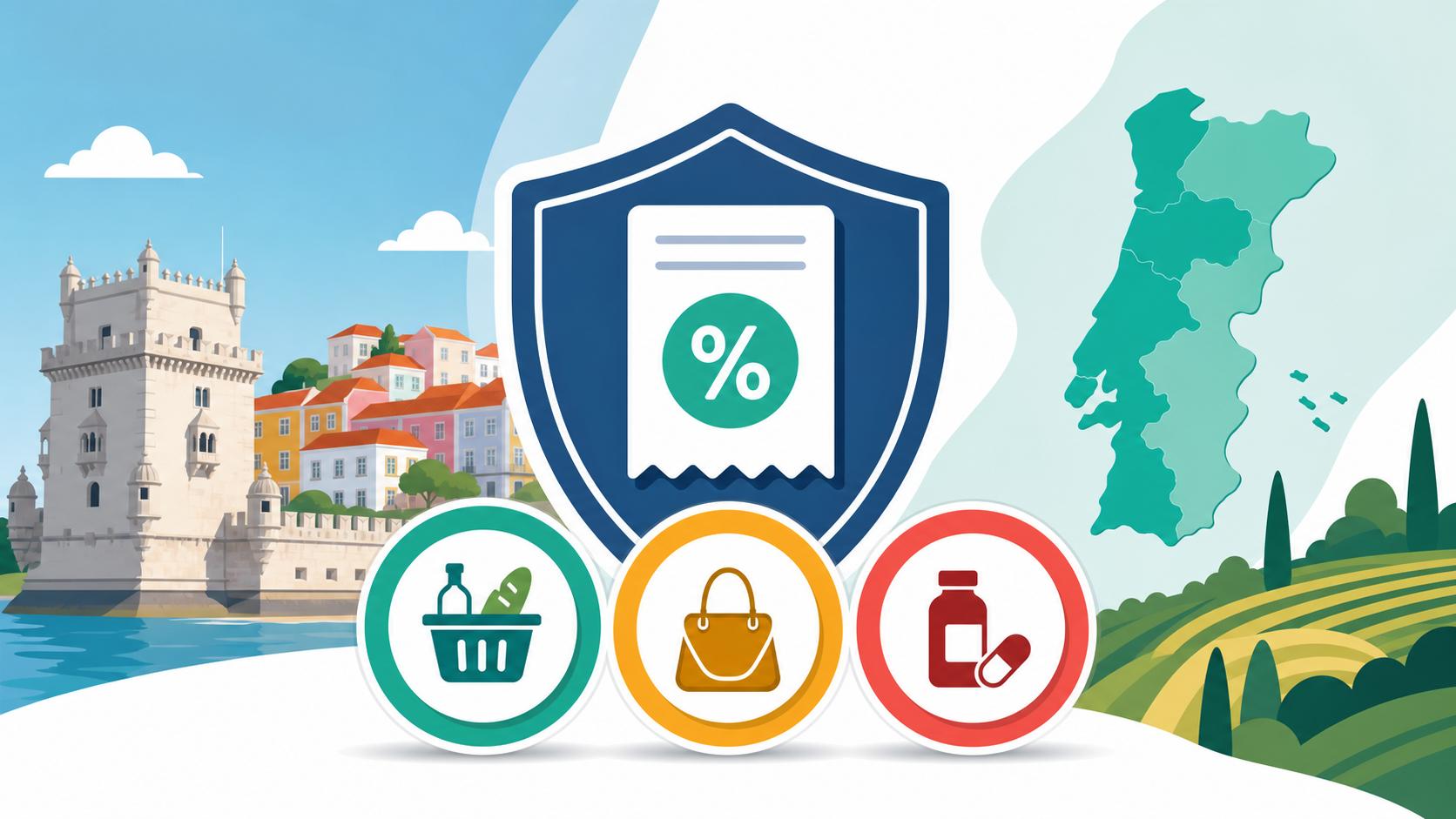
Portugal uses a tripartite system for IVA on the mainland, with slightly different rates applied in the autonomous regions of Madeira and the Azores. For most expats living in Lisbon, Porto, or the Algarve, you will be dealing with 23%, 13%, and 6%.
The logic behind these tiers is to ensure that basic survival doesn't break the bank, while those with higher disposable income contribute more to the state through luxury consumption. However, as any veteran expat will tell you, the line between "essential" and "luxury" can sometimes feel like a moving target.
The Standard Rate (23%): What Falls Under This?
The 23% rate is the "default" for everything that doesn't specifically qualify for a lower bracket. This includes most services (like lawyers and architects), electronics, clothing, gasoline, and alcoholic beverages. If you are buying a new MacBook, a pair of sneakers, or a bottle of gin at the supermarket, you are paying the full 23%.
For freelancers, this rate is particularly important to understand. If your business turnover exceeds a certain threshold, you are required to charge 23% IVA on your invoices to clients within Portugal. This can make your services feel more expensive to local customers. When you are Issuing Green Receipts (Recibos Verdes): VAT (IVA) and Withholding Tax, you must ensure you are applying the correct rate, or you could end up owing the tax office money out of your own pocket. Many expats find it helpful to keep their business funds in a separate account, perhaps using Trade Republic to earn interest on the tax money they’ve collected before they have to pay it to the government.
The Intermediate Rate (13%): Food and Culture
The 13% rate is a middle ground. It primarily covers items that the government deems important but not strictly "life or death" essentials. The most common place you will see this is in restaurants. In 2026, the rules for restaurant IVA remain complex: food and water are generally taxed at 13%, but soft drinks and alcoholic beverages served with that same meal are taxed at 23%.
This is why, if you look closely at your restaurant bill, you will see multiple tax lines. It’s also the rate applied to certain types of processed foods, some agricultural supplies, and admission tickets for cultural events like concerts, cinema, and theater. If you are trying to find a Finding an English-Speaking Certified Accountant (Contabilista Certificado), they can explain the nuances of how the 13% rate applies if you are, for example, running a small cafe or a catering business.
The Reduced Rate (6%): Essential Goods and Services
The 6% rate is reserved for the bare essentials. This includes unprocessed foods like fresh meat, fish, fruits, vegetables, and milk. It also covers pharmaceutical products, books, newspapers, and public transport. If you are taking the train from Lisbon to Porto, your ticket is taxed at this lower rate.
One of the best "hacks" for expats is knowing that home renovations intended to improve energy efficiency or the rehabilitation of older buildings can sometimes qualify for a reduced IVA rate of 6% rather than 23%. However, this requires specific paperwork and a licensed contractor who knows how to navigate the system. When you are Deducting Expenses on IRS: e-Fatura, Supermarkets, rent, and healthcare, these 6% expenses add up, but because the tax paid is lower, the potential deduction is also smaller compared to the 23% bracket.
Regional Differences: IVA in Madeira and the Azores
One of the surprises for people moving to the islands is that the tax rates are actually lower. Because Madeira and the Azores are autonomous regions with higher costs for importing goods, the Portuguese government allows them to set their own, lower IVA rates to keep the cost of living manageable.
| Region | Standard Rate | Intermediate Rate | Reduced Rate |
|---|---|---|---|
| Mainland Portugal | 23% | 13% | 6% |
| Madeira | 22% | 12% | 5% |
| Azores | 16% | 9% | 4% |
Tax Breaks in the Islands: Madeira's Rates
While the difference in Madeira might seem small (22% vs 23%), it makes a noticeable impact on high-value purchases. If you are buying a car or a kitchen full of high-end appliances, that 1% difference stays in your pocket. Madeira has long been a hub for digital nomads and retirees, and the slightly more favorable tax environment is a part of the draw.
Expats in Madeira often find that while some items are more expensive due to shipping, the lower IVA helps balance the scales. If you are investing through platforms like Binance or managing large sums of money, these regional tax nuances are worth discussing with a local tax professional. The island life offers more than just views; it offers a slightly lighter tax burden.
The Azores: Why it's the Most Tax-Friendly Region
The Azores is the real outlier in the Portuguese tax system. With a standard rate of only 16%, it is significantly cheaper to buy non-essential goods here than anywhere else in the country. This lower tax rate is a lifeline for the local population, but it's also a massive benefit for expats who choose to settle in Ponta Delgada or Horta.
Imagine buying a €2,000 laptop. In Lisbon, you pay €460 in IVA. In the Azores, you pay only €320. That €140 difference is a lot of dinners out. However, remember that if you buy something in the Azores at 16% and then immediately move it to the mainland for resale, you may run into tax adjustment issues. The system is designed for local consumption.
Managing Your Finances as an Expat
Navigating Portuguese Taxes for Expats: IRS, Tax Residency, and Filing Deadlines requires a proactive approach. You cannot simply wait until the end of the year to sort out your finances. The IVA system is integrated into your daily life, and the way you pay for things can change how much you benefit.
It is wise for new arrivals set up a solid digital banking foundation immediately. Use Wise for your initial transfers because their exchange rates are transparent, which is vital when you are trying to calculate the true cost of an item including the IVA in your home currency. Once you are settled, tracking your spending becomes a hobby for some and a chore for others, but it's the only way to ensure you're not leaving money on the table.
Using Wise for Daily Transactions and Tax Tracking
When you use a Wise debit card in Portugal, the transactions show up immediately in the app. While the app won't automatically tell you the IVA breakdown of your grocery bill, it gives you a clean record of where you spent your money. You can then take those physical receipts and cross-reference them with your How to validate your invoices on e-Fatura before the February deadline.
Many expats make the mistake of using their foreign bank cards for months after arriving. Not only do you lose money on exchange fees, but it's also harder to track your NIF-linked purchases if you aren't looking at your Portuguese financial ecosystem as a whole. Digital banking makes the "contribuinte" habit much easier to manage because you can see your balance update in real-time.
Investing and Tax Implications with Trade Republic and Binance
As you build your life in Portugal, you'll likely look beyond just spending and start thinking about saving and investing. Platforms like Trade Republic are excellent for keeping your "IVA reserve" if you are a freelancer. By earning interest on the money you've collected from clients, you turn a tax obligation into a small passive income stream.
For those interested in the crypto space, using Binance while living in Portugal requires a deep understanding of how consumption taxes like IVA differ from capital gains taxes. While you don't pay IVA on a Bitcoin purchase, you do pay it on the fees the exchange might charge. Keeping your investment records clear is essential for when you eventually have to report your global wealth to the Autoridade Tributária.
The e-Fatura System: Why You Should Always Give Your NIF
The e-Fatura (electronic invoice) system is a marvel of modern bureaucracy. It is a centralized portal where every single invoice issued with your NIF is recorded. At the end of the year, these invoices are categorized—General Household Expenses, Health, Education, Housing, etc.—and used to calculate your tax deductions.
If you are like me, you will find it annoying at first to repeat your nine-digit NIF at every checkout. "Nove, um, dois…" you'll recite while a line of people waits behind you. But don't skip it. Those small 23% taxes on your internet bill or your new clothes add up to hundreds of Euros in deductions by the end of the year.
How Giving Your NIF Saves You Money on IRS
The Portuguese government incentivizes you to ask for an invoice because it forces businesses to report their income, reducing the "shadow economy." In return, you get a "tax kickback." For example, you can deduct 15% of the IVA paid on car repairs, hairdressers, and restaurant bills, up to a certain limit.
Think of it as a loyalty program where the government is the sponsor. If you spend €1,000 on dining out over a year, you’ve paid roughly €130 in IVA. Getting 15% of that back might only be €19.50, but when you combine that with your health expenses, your rent (if registered), and your utility bills, it can mean the difference between owing the government money or getting a €500 refund.
Validating Invoices on the Portal das Finanças
Simply giving your NIF isn't enough. Many invoices will show up in the portal as "Pending" because the system doesn't know which category they belong to. A receipt from a large supermarket like Auchan might contain food (6%), a t-shirt (23%), and a notebook (6%).
You must log in to the Portal das Finanças periodically to "validate" these. If you don't, they won't count toward your deductions. I usually set a reminder for the first Sunday of every month to clear my e-Fatura queue. It’s a 10-minute task that feels like "winning" against the taxman. It’s also a good time to check if you have any outstanding Taxas Moderadoras: Co-payments and Costs in the Public Health System that need to be settled.
IVA for Freelancers and Small Business Owners
If you are moving to Portugal to work for yourself, IVA takes on a whole new level of importance. You stop being just a consumer and start being a tax collector for the state. This is one of the biggest hurdles for digital nomads who aren't used to the European VAT system.
The most important thing to remember is that IVA is not your money. It is money you are holding for the government. If you invoice a client €1,000 plus 23% IVA, they pay you €1,230. You must resist the urge to spend that extra €230. Put it in a high-yield account like Trade Republic until your quarterly IVA return is due.
Charging IVA to Clients: When and How
Whether you charge IVA depends on who your client is and where they are located.
- Portuguese Clients: You almost always charge the standard 23% rate.
- EU B2B Clients: If they have a valid VAT number, you usually apply the "Reverse Charge" mechanism, meaning you charge 0% IVA, and they account for it in their own country.
- Non-EU Clients (USA, UK, etc.): Generally, services exported outside the EU are exempt from IVA.
This complexity is why many expats end up Finding an English-Speaking Certified Accountant (Contabilista Certificado) within their first six months. One wrong move on an invoice can trigger an audit or a fine that costs far more than the accountant’s fee.
Exemption Rules (Article 53) for New Businesses
There is a silver lining for those starting small. Under "Article 53" of the IVA Code, if your annual turnover is below a certain threshold (currently €15,000 in 2026), you may be exempt from charging and submitting IVA. This is a huge relief for new freelancers as it reduces your paperwork significantly.
However, being exempt also means you cannot deduct the IVA you pay on your business expenses. If you are a photographer buying €10,000 worth of gear, you might actually want to "opt-in" to the IVA system so you can get that 23% tax back on your equipment purchases. It's a strategic decision that depends entirely on your business model and your expected expenses.
General Disclaimer
The information provided in this article is for informational purposes only and does not constitute professional tax, legal, or financial advice. Tax laws in Portugal are subject to frequent changes, and individual circumstances can significantly impact how these rules apply to you. Always consult with a certified Portuguese accountant (Contabilista Certificado) or a qualified tax lawyer before making financial decisions or filing tax returns in Portugal. Keep in mind that 2026 rates and regulations may be updated by the government throughout the fiscal year.