Opening a Sole Proprietorship (Trabalhador Independente) in Portugal
Disclosure: This article contains affiliate links. If you buy through them, we may earn a commission at no extra cost to you. Read our full disclosure.
Starting your own business in Portugal can feel like trying to navigate a labyrinth made of red tape and espresso steam. I remember my first time sitting in a chilly Finanças office, clutching a paper ticket and realizing that my "simple" plan to work as a freelance writer was about to get very complicated. This guide settles the confusion around the Trabalhador Independente setup so you can stop stressing and start earning.
Understanding the Role of a Trabalhador Independente in Portugal
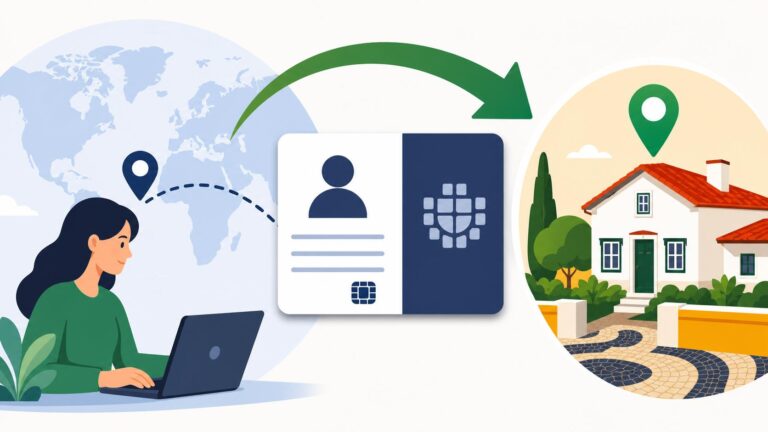
Setting yourself up as a Trabalhador Independente is the most common path for freelancers, digital nomads, and small-scale consultants moving to Portugal. Unlike a limited liability company (Lda), this structure is tied directly to your individual tax identity. It is relatively easy to open and close, making it the go-to choice for those testing the waters of the Portuguese market or serving international clients from a home office in Lisbon or the Algarve.
What Exactly is a Sole Proprietorship in Portugal
In the eyes of the Portuguese Tax Authority (Autoridade Tributária or AT), a sole proprietorship means there is no legal distinction between your personal assets and your business assets. You are the business. This means you use your personal NIF (Número de Identificação Fiscal) for all business transactions. While this simplicity is great for administrative purposes, it is vital to remember that you are personally liable for any business debts. This is a significant factor to weigh if your business involves high-risk contracts or significant overhead.
Most expats choose this route because the startup costs are zero. You do not need to deposit a minimum share capital, and you do not necessarily need a formal office space; your home address will suffice. However, as your income grows, you might find that the tax efficiency of this model starts to wane compared to a formal company structure. It is a journey many expats take: start as a freelancer, grow the brand, and eventually transition to an Lda.
Who Should Choose This Path
This structure is ideal for service providers. Whether you are a software developer, a graphic designer, or an English teacher, being a Trabalhador Independente allows you to issue Issuing Green Receipts (Recibos Verdes): VAT (IVA) and Withholding Tax legally. It is also the primary requirement for those applying for the D8 Digital Nomad Visa or the D2 Entrepreneur Visa who are not yet ready to launch a full-scale corporation.
If you are earning through various streams—perhaps a mix of consulting and a bit of affiliate marketing—the sole proprietorship allows you to register multiple activities under one tax profile. You just need to ensure you select the correct codes (CAEs or CIRS) to cover everything you do. This flexibility is a lifesaver when you are in the "hustle" phase of expat life, trying to make the most of the Money and Finance in Portugal: The Ultimate 2026 Guide for Expats landscape.
The Prerequisites Before You Open Your Activity
You cannot simply wake up and decide to "be" a business in Portugal without a few pieces of paper first. The bureaucracy here is sequential; you cannot do Step C without Step A and B being firmly in place. Many people lose weeks of work because they didn't realize their NIF was still registered to a foreign address, which complicates the "Abrir Atividade" (Opening Activity) process.
Obtaining Your NIF and NISS
Your NIF is your golden ticket. Without it, you don't exist in the Portuguese system. If you are already living here, you likely have one, but for a business, you must ensure it is updated to your Portuguese residential address. If you are still using a representative’s address or a foreign one, the system may block you from opening your activity online. Once the NIF is sorted, the next hurdle is the NISS (Número de Identificação de Segurança Social).
The NISS is your social security number. In recent years, getting this has become much easier for foreigners, often handled through an online request or during your visa process. You will need this number to link your earnings to the social security system, which eventually grants you access to healthcare and pension rights. If you are a new arrival, check out the guide on How to get your Número de Utente online without visiting the health center to see how these numbers start to connect your life together.
Choosing Your CAE or CIRS Codes
This is where many expats get stuck. Portugal uses two different coding systems to classify what you do. CIRS codes (Código do Imposto sobre o Rendimento das Pessoas Singulares) are for "scientific, artistic, or technical" professions—think doctors, lawyers, or IT consultants. CAE codes (Classificação Portuguesa das Atividades Económicas) are generally for commercial or industrial activities, like selling physical goods or running a cafe.
Choosing the wrong code can impact your tax rate and your ability to deduct expenses. For example, some CIRS codes have a "fixed" expense ratio in the simplified regime, meaning the government assumes 25% of your income goes to expenses and only taxes you on 75%. If your actual expenses are higher, you might be overpaying. It is worth consulting an expert or spending a few hours on the AT website to find the code that fits your reality most accurately.
The Fiscal Representative Requirement
If you are a non-EU/EEA resident, you initially needed a fiscal representative to get your NIF. When you open an activity to start a business, the rules get a bit stricter. Even if you are an EU citizen, if you don't have a confirmed Portuguese address in the system, you might be required to appoint someone to receive your tax mail. Most professional services like Wise offer easy ways to manage international transfers once you are set up, but they can't act as your tax rep—you'll need a lawyer or a professional accountant for that.
Step-by-Step Guide to Opening Your Activity
Once the paperwork is in order, the actual process of "Opening Activity" (Abrir Atividade) happens on the Portal das Finanças. It is a digital process, but the interface is notoriously finicky and entirely in Portuguese. If your language skills are still in the "bom dia" phase, having a translation app or a friend nearby is highly recommended.
Navigating the Portal das Finanças
Log in to your account and search for "Início de Atividade." You will be asked for an expected start date and an estimated annual income. Be honest but realistic with this estimate. If you predict you will earn over the IVA (VAT) threshold—which is currently €15,000 for 2026—you will be placed in the VAT regime immediately. If you expect to earn less, you can benefit from an exemption under Article 53.
You will also need to provide your IBAN. While you can use a foreign IBAN in some cases, it is much smoother to have a local account or a versatile business account from a provider like Wise to handle your future Receiving Green Receipts (Recibos Verdes): VAT (IVA) and Withholding Tax payments. Once you submit the form, Finanças will send a physical letter to your registered address with a validation code. You are not "officially" open until you enter that code back into the portal.
The Simplified Regime vs Organized Accounting
Most sole traders start in the "Regime Simplificado" (Simplified Regime). In this setup, the government doesn't care about your actual receipts for small expenses; they apply a flat percentage to your gross income to determine your taxable base. For most service providers, they assume 75% of your income is profit and tax you on that.
However, if your annual turnover exceeds €200,000, or if your business has very high overhead (like a retail shop), you must opt for "Contabilidade Organizada" (Organized Accounting). This requires hiring a certified accountant (Contabilista Certificado) to file your monthly returns. Even if you aren't at that level yet, understanding Filing the Annual IRS Tax Return (Modelo 3): Deadlines and Process is crucial for staying in the government's good graces.
Comparison of Business Setup Options
| Feature | Trabalhador Independente (Simplified) | Lda (Limited Company) |
|---|---|---|
| Setup Cost | €0 | €200 – €500+ |
| Minimum Capital | None | €1 per shareholder (recommended €1000+) |
| Accountant Required | No (but recommended) | Yes, Mandatory |
| Liability | Personal assets at risk | Limited to company assets |
| Tax Filing | Annual IRS | Monthly IRC + Annual IRS |
| Best For | Freelancers, Nomads | Scalable businesses, Partnerships |
Tax Obligations and Social Security for Freelancers
The "honeymoon phase" of being a freelancer in Portugal usually lasts exactly one year. That is because the first year often comes with significant exemptions. But once that year is up, the reality of the Portuguese tax system kicks in, and you need to be prepared for the quarterly and monthly "surprises" that catch many expats off guard.
Understanding IRS Withholding (Retenção na Fonte)
When you issue a receipt to a Portuguese company, they are often required to withhold a percentage of your payment (usually 25%) and pay it directly to the state on your behalf. This is "Retenção na Fonte." If you are working for clients abroad (US, UK, etc.), you generally don't withhold this at the source; instead, you are responsible for paying the full tax amount when you file your annual return.
If you have secured the NHR 2.0 (IFICI) Tax Regime: Eligibility, Flat 20% Tax, and Rules in 2026, your tax situation will look very different. The flat 20% rate can be a massive benefit, but you must ensure your business activity code matches the "high value" list approved by the government. Failing to align these can result in being taxed at the standard progressive rates, which can climb as high as 48% for high earners.
Navigating Social Security (Segurança Social)
As a Trabalhador Independente, you are responsible for your own social security contributions. There is often an exemption for the first 12 months of activity, which is a huge relief. After that, you must file a quarterly declaration (Declaração Trimestral) in January, April, July, and October, reporting what you earned in the previous three months.
The system will then calculate a monthly amount you must pay. This is roughly 21.4% of 70% of your average quarterly income. It sounds complex because it is. If you miss these payments, the fines accrue quickly. I always tell new freelancers to look into The first-year Social Security exemption for new freelancers in Portugal early so they can budget for when that "free ride" ends.
Value Added Tax (IVA) Compliance
If your income stays below €15,000, you are likely exempt from IVA. Once you cross that threshold, you must start adding 23% (on mainland Portugal) to your invoices for local clients. For international B2B clients, the "Reverse Charge" rule often applies, meaning you don't charge them VAT, but you must still file a monthly or quarterly VAT return stating these sales.
This is the part that usually requires a professional. Even if you don't use an accountant daily, having one check your first few VAT filings is a smart move. They can also help you understand how Deducting Expenses on IRS: e-Fatura, Supermarkets, Rent, and Healthcare works in conjunction with your business activity to lower your overall tax burden.
Maximizing Profits and Managing Finances
Once the administrative dust settles, your focus should shift to managing your money effectively. One of the biggest mistakes freelancers make is treating their business bank account like a personal piggy bank. In Portugal, clear boundaries are your best friend when it comes to an audit.
Expense Deductions and e-Fatura
Even in the simplified regime, you can deduct certain expenses if they are directly related to your activity. This is done through the e-Fatura portal. When you buy a laptop, pay for internet, or buy office supplies, you must ask for a "fatura com NIF" (invoice with your tax number). You then go online and categorize these as business expenses.
Be careful not to overreach. Trying to deduct your fancy dinners in Cascais as "business meetings" without proof might trigger a red flag. The system is quite integrated, and they know the typical spending patterns for your profession. Keeping your receipts organized is not just a suggestion; it's a requirement for those who want to master Money and Finance in Portugal: The Ultimate 2026 Guide for Expats.
Investing Your Freelance Income
As a sole trader, you don't have a company pension. You are the pension fund. Once you have set aside money for taxes (I recommend saving 30-40% of every payment in a separate account), look into ways to grow your surplus. Many expats in Portugal use platforms like Trade Republic to earn interest on their tax reserves or to invest in ETFs.
If you are involved in the tech or crypto space, you might be receiving payments via Binance. It is important to remember that crypto is now taxable in Portugal under specific conditions. If you hold assets for less than a year and sell for profit, you could be looking at a 28% tax rate. Always consult the latest rules on Cryptocurrency Tax Laws in Portugal 2026: 28% Rule vs 1-Year Exemption to avoid a nasty surprise during tax season.
Tools for International Payments
If you are working with clients in the US, UK, or beyond, don't let the traditional Portuguese banks eat your profits with "received wire" fees and terrible exchange rates. Using a business account from Wise allows you to receive USD, GBP, or EUR like a local, which you can then transfer to your Portuguese account for daily spending.
Many traditional banks like Millennium or Santander offer business accounts for sole traders, but they often come with monthly fees and clunky apps. Check out the guide on Opening a Bank Account in Portugal: Best Banks for Foreigners and Expats to compare which traditional and digital options fit your lifestyle best.
Common Pitfalls and How to Avoid Them
Many brilliant freelancers get defeated not by a lack of clients, but by a lack of administrative discipline. Portugal rewards those who are organized and punishes those who are "relaxed" with deadlines.
Missing Deadlines and Fines
The Portuguese tax calendar is relentless. Between the quarterly Social Security declarations, the annual IRS filing, and the potential monthly VAT returns, there is always a deadline looming. Setting up alerts on your phone or using a shared calendar with your accountant is vital.
Fines for late filing start small but can escalate into the hundreds or thousands of Euros if ignored. If you find yourself overwhelmed, don't wait. Reach out to a professional who understands Social Security Contributions for Freelancers: How to Calculate Your Quota to get your filings back on track before the authorities come knocking.
The Transition from First-Year Exemptions
The biggest "financial hangover" for new expats happens in Year Two. In Year One, you might be exempt from Social Security and potentially not making enough to pay high IRS installments. In Year Two, both hit at once.
Many people spend their entire gross income in the first year, thinking "Portugal is so cheap!" only to find they owe €5,000 or more in backdated taxes and new Social Security quotas by month 14. Always budget as if you are paying the full tax rate from Day One. If you end up with an exemption, great—you’ve just created a nice savings buffer in your Trade Republic account.
Disclaimer
This guide is based on personal experience as an expat and general information available regarding Portuguese tax and business laws as of 2026. I am not a certified accountant or a legal professional. Tax laws in Portugal change frequently, and individual circumstances can vary significantly. You should always consult with a qualified "Contabilista Certificado" or an immigration lawyer before making major financial or legal decisions. No liability is accepted for actions taken based on this content.