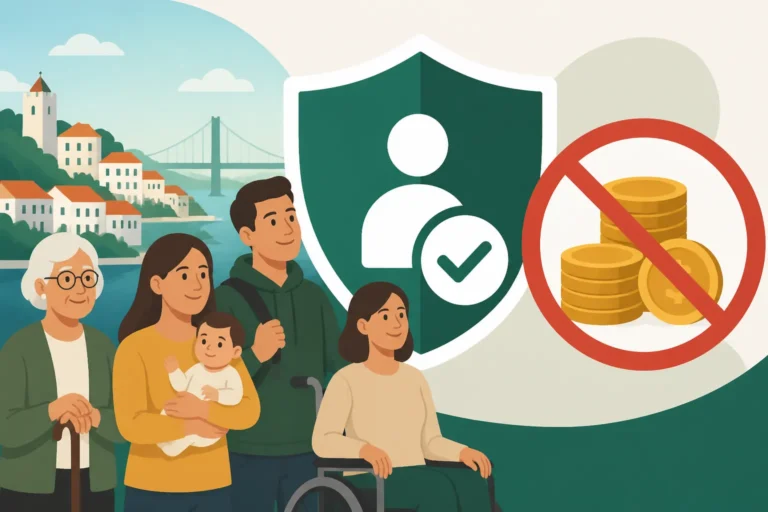
Is abortion legal and accessible for foreigners in Portugal?
Navigating a sudden medical crisis in a country where you do not yet fully speak the language is terrifying enough, but when it involves reproductive rights, the anxiety is on another level. Many foreigners end up spiraling in waiting rooms because they didn't know if they had "the right" to care as foreigners. This guide breaks down exactly how abortion works for foreigners in Portugal, ensuring you have the facts without the judgment.
Understanding the Legal Framework for Abortion in Portugal
In Portugal, the termination of pregnancy is referred to as Interrupção Voluntária da Gravidez (IVG). It was legalized in 2007 following a landmark referendum, and since then, the system has focused on providing safe, regulated, and dignified care. For many expats coming from countries with more restrictive laws, the Portuguese approach can feel like a breath of fresh air, though the administrative steps are very specific.
The 10-Week Legal Limit
The most important thing to know is the timeline. In Portugal, an abortion can be performed at the woman's request up to 10 weeks of gestation. This is calculated from the first day of your last menstrual period. While 10 weeks may seem like a reasonable window, the administrative process in Portugal can take several days, so if you find yourself in this situation, you need to act immediately.
There are exceptions to this 10-week rule. Terminations can be performed up to 16 weeks in cases of rape or sexual crimes (though a police report is usually required), up to 24 weeks if there are fetal malformations, and at any time if the mother’s life or physical/mental health is at serious risk. For the vast majority of elective cases, however, that 10-week mark is a hard deadline that the National Health Service (SNS) follows strictly.
The Mandatory Reflection Period
Portugal’s law includes a mandatory three-day "reflection period." This means that after your initial consultation where you formally request the procedure, you must wait at least 72 hours before the termination can actually take place. The law intends for this to be a time to ensure the decision is informed and voluntary.
Many expats find that this wait time can be a source of immense stress, especially if you are approaching the 10-week limit. You cannot skip this step. The medical team will provide you with information about your options, support resources, and the procedure itself during that first meeting. It is also important to note that while the law requires this reflection period, the medical staff are legally obligated to remain neutral and non-judgmental during the process.
Rights for Foreigners and Residency Status
One of the most common questions I get is, "Do I need to be a citizen?" The short answer is no. Under Portuguese law, all women on Portuguese territory—regardless of their legal status, nationality, or whether they have a residence permit—have the right to access reproductive healthcare. This is a core tenet of Healthcare in Portugal for Expats: The Complete 2026 Medical Guide.
If you have a residence permit and are registered with the SNS, the process is usually free. If you are a tourist or an undocumented immigrant, you still have the right to the procedure, but you may be asked to pay a fee if you cannot prove a lack of financial means. However, the priority is always the medical intervention first. The system is designed to prevent "backstreet" procedures, so do not let your visa status stop you from seeking help at a public hospital.
How to Access Abortion Services in Portugal SNS vs Private
When it comes to reproductive health, the public system is actually the primary provider. While many expats prefer private care for things like dermatology or physical therapy, the SNS handles the vast majority of IVG cases in Portugal. Understanding how to move through the public system is vital for a smooth experience.
Starting with the SNS 24 and the Centro de Saúde
The first step for most people is contacting their local health center. If you are already Registering with the Centro de Saúde: Getting Your SNS Número de Utente, you should call them and ask for an "IVG consultation." Because of the time-sensitive nature of the request, these appointments are prioritized. If you don’t have a family doctor—which is a common struggle as discussed in Why does my Centro de Saúde say they have no Médico de Família available?—you should still go to the desk and explain the urgency.
Alternatively, you can call the SNS 24 helpline. They have English-speaking operators who can guide you to the nearest hospital or clinic that performs the procedure. This is often the fastest way to bypass local administrative bottlenecks. They can also explain the SNS 24 Helpline (808 24 24 24): Triage, Advice, and Sick Notes process so you know what to expect when you arrive at the hospital.
The Role of Private Clinics and Insurance
You might be surprised to find that very few private hospitals in Portugal perform elective abortions. While giants like CUF or Hospital da Luz offer excellent Women’s Health and Maternity Care in Pregnancy and Birth, they often refer elective IVG cases back to the public system. There are a handful of specialized private clinics, mostly in Lisbon and Porto, that do perform the procedure, but they are the exception rather than the rule.
If you are using Private Health Insurance in Portugal: Costs, Coverage, and Best Providers, check your policy carefully. Most private plans, including those from major providers like Cigna Global, do not cover elective abortion as a standard benefit, as it is considered an "elective" procedure that the state already provides for. You may use your private insurance for the initial ultrasound to confirm the pregnancy and dating, but the termination itself will likely be an out-of-pocket expense or an SNS-led process.
Dealing with Conscientious Objectors
In Portugal, doctors have the right to "conscientious objection" (objeção de consciência), meaning they can refuse to perform an abortion based on personal or religious beliefs. In some regions, particularly in the interior or more conservative areas, you might find that an entire department of a hospital objects.
If the doctor you see is a conscientious objector, they are legally required to immediately refer you to a colleague or a different facility that will perform the procedure. They cannot simply say "no" and send you away. This is why it is wise to start the process in larger cities like Lisbon, Porto, or Coimbra if possible, as the hospitals there have larger teams and much more experience with Finding Doctors and Specialists in Portugal: English-Speaking Medical Care.
Step-by-Step Guide to the Procedure for Foreigners
Once you have secured that first appointment, the process moves quite quickly. It is helpful to know the medical terminology so you aren't caught off guard by the paperwork or the clinical questions.
The First Consultation and Ultrasound
At the first meeting, the doctor will perform an ultrasound to confirm exactly how many weeks pregnant you are. This is the "dating" ultrasound. They will also take a brief medical history. You will be asked if you are certain about your decision. Again, this is a legal requirement, not necessarily a sign that they are trying to talk you out of it.
If you are a foreigner who doesn't speak Portuguese, this is a good time to use Telehealth and Online Doctors: Using TravelDoctores and Doctorsa to have a prior conversation with an English-speaking doctor who can explain the terminology you might hear. During the SNS visit, you can also request a translator, though in practice, many doctors in the main cities speak excellent English.
Medical vs Surgical Options
In Portugal, if you are under 7 or 8 weeks, the most common method is the medical abortion (using pills). This involves taking two different medications. The first is taken at the hospital, and the second is usually taken 24 to 48 hours later at home. This is often preferred by expats because it feels more private and less "clinical."
If you are further along, or if the medical method isn't appropriate for you, a surgical abortion (vacuum aspiration) will be performed. This is a short procedure usually done under local or general anesthesia. You will typically spend a few hours in the hospital for recovery before being discharged the same day. For post-care, many women find that ordering specific recovery supplements like iron or high-quality vitamins from iHerb is a convenient way to ensure they are supporting their body’s healing after the procedure.
Aftercare and Follow-up Appointments
Following the procedure, whether medical or surgical, you will be given a follow-up appointment about two weeks later. This is to ensure that the termination was complete and that there are no signs of infection. The SNS also provides a family planning consultation as part of the package, where you can discuss future contraception options like the pill, an IUD, or implants.
The doctor will also provide you with a How to get a sick note (Baixa Médica) from a doctor for your employer if you need time off work. This note does not state the specific reason for the medical leave, protecting your privacy from your employer. This is a crucial detail for expats concerned about workplace gossip or discrimination in Portuguese Work Culture: Hours, Communication, and Office Etiquette.
| Feature | Public SNS System | Private Clinics (Limited) |
|---|---|---|
| Cost | Free (for residents) or low-cost | €400 – €800 |
| Legal Limit | Up to 10 weeks | Up to 10 weeks |
| Wait Time | 3-day reflection period + admin wait | 3-day reflection period |
| Privacy | High (protected by law) | Very High |
| Accessibility | Available nationwide | Mostly Lisbon/Porto |
Practical Challenges and Tips for Expats
While the law is supportive, the reality of navigating any bureaucracy can be tiring. I have learned over the years that being over-prepared is the only way to keep your sanity when dealing with Portuguese health administrators.
Language Barriers and Translation
In smaller health centers (Centros de Saúde), the administrative staff may not speak English well. This can lead to "gatekeeping" where they might accidentally give you the wrong information because of a misunderstanding. We suggest bringing a Portuguese-speaking friend or using a translation app on your phone. If you are really struggling, you can point to the phrase "Consulta de Interrupção Voluntária da Gravidez" on your screen.
If you have Private Health Insurance in Portugal: Costs, Coverage, and Best Providers, you might be able to use their concierge services to find a doctor who speaks your language for the initial confirmation, even if you eventually move to the public system for the procedure. Brands like Cigna Global often have a network of English-speaking providers that can help bridge the gap during those first stressful days.
Costs for Non-Residents and Tourists
If you do not have a Portuguese residence permit or an Using the European Health Insurance Card (EHIC) in Portugal, you will be billed as a "private" patient within the public hospital. The cost is usually much lower than in countries like the US, but it can still be a few hundred Euros. Always ask for a "fatura" (invoice) so you can attempt to claim it back from your travel insurance or international health plan later.
Keep in mind that Pharmacies and Medication in Portugal: Prescriptions and OTC Drugs are highly regulated. Any pain medication or antibiotics prescribed for aftercare will need a formal prescription from the hospital. You can’t just walk into a pharmacy and ask for strong painkillers without the proper paperwork. For non-prescription items like heating pads or iron supplements, iHerb remains a favorite for expats who want specific brands they trust from back home.
Cultural Attitudes and Privacy
Portugal is a socially conservative country in some pockets, but the medical community is generally very professional. In the larger cities, nobody will blink an eye at your request. However, if you are living in a very small village, you might feel a bit more exposed. Remember that medical records in Portugal are strictly confidential.
You can access your own records and track your appointments through the SNS Portal do Utente. This digital portal is a lifesaver because it allows you to see your test results and appointment dates without having to call and wait on hold. Being an informed patient is your best defense against the sometimes slow-moving parts of the Portugal's National Health Service (SNS): How the Public System Works.
Disclaimer
This article is for informational purposes only and does not constitute legal or medical advice. Healthcare laws and SNS regulations in Portugal can change. Always consult with a qualified medical professional or a legal expert regarding your specific situation and reproductive rights in Portugal.