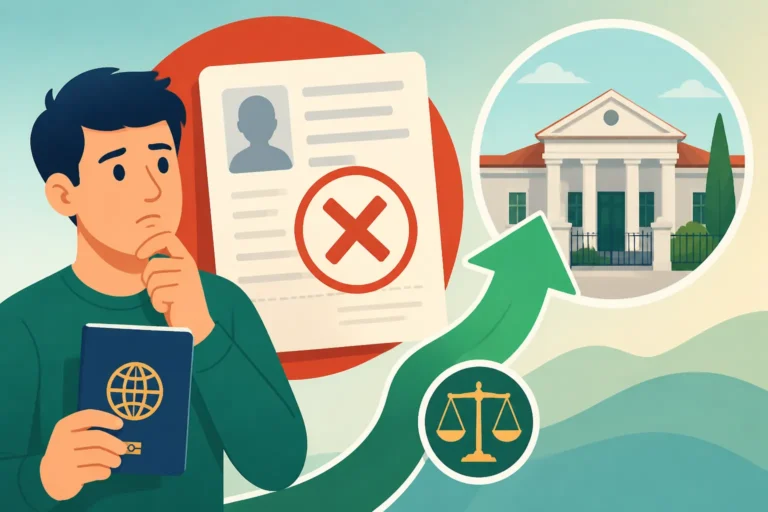
Traveling in the Schengen Area with a Portuguese Residence Permit
The confusion over where your Portuguese residence permit actually allows you to travel can turn a dream weekend in Paris into a bureaucratic nightmare at the boarding gate. I remember the first time I stood at Lisbon airport, clutching my new residence card and a printed copy of the Schengen Borders Code, terrified that a gate agent wouldn't recognize my rights. This guide settles the "can I travel?" debate once and for all by breaking down exactly how your residency interacts with the rest of Europe.
Understanding Your Rights as a Portuguese Resident in Schengen
When you finally hold that plastic card in your hand, you aren't just a resident of Portugal; you become a "third-country national with a valid residence permit" in the eyes of the European Union. This status is significantly more powerful than a standard tourist visa, but it comes with a specific set of rules that are often misunderstood by newcomers. Your permit essentially acts as a substitute for a Schengen visa, allowing you to move through the internal borders of the 29 Schengen member states without needing additional paperwork.
The 90/180 Rule for Residents
The most common mistake I see expats make is assuming that because they live in Portugal, the 90-day limit no longer applies to them anywhere in Europe. This is a dangerous assumption. Your Portuguese residence permit grants you the right to live and work only in Portugal. When you cross the border into Spain, France, or Germany, you are legally considered a visitor.
Under the current regulations, you are permitted to stay in other Schengen countries for a maximum of 90 days within any 180-day period. This is the same math that tourists have to do, but your "base" is Portugal. If you spend 85 days in Italy and then return to Lisbon, your clock for Portugal doesn't matter, but you only have five days left for the rest of the Schengen area until your 180-day window resets. For those managing complex travel schedules, using a Schengen 90/180 day rule calculator for digital nomads staying in Portugal is the best way to avoid accidental overstays that could jeopardize your future citizenship application.
What the Permit Actually Replaces and What it Does Not
Your residence card is a travel document, but it is not a passport. You must always carry your valid national passport alongside your residence permit. Travelers are sometimes turned away because they think the card was enough. The card proves your right to return to Portugal and your right to be in the Schengen zone, but your passport is still your primary identification.
Furthermore, your permit does not grant you the right to work in other EU countries. If you are a holder of a D8 Visa Income Requirements 2026: Proving €3,680 Monthly Active Income and you decide to work from a cafe in Berlin for two months, you are technically within your travel rights, but you cannot seek local employment in Germany. Your legal "anchor" remains the Portuguese system, and your tax obligations are tied to your NIF and the Portuguese Money and Finance in Portugal: The Ultimate 2026 Guide for Expats framework.
Essential Documents for Cross-Border Travel
Traveling within Europe as an expat requires a bit more preparation than it does for an EU citizen. While internal border checks are rare, they are not non-existent. France, Germany, and Austria frequently reinstate temporary border controls for "security reasons," and if you are caught on a bus or train without the right paperwork, the delays can be grueling.
Carrying More Than Just Your Residence Card
Beyond your passport and your residency card, it is wise to carry a digital or physical folder with "just in case" documents. This includes your NIF and NISS: How to Get Your Portuguese Tax and Social Security Numbers certificates and a copy of your current rental contract or an Atestado de Morada: How many witnesses do you need at the Junta? document. These prove that you have a "stable union" with Portugal and are not just a transient visitor trying to skirt the rules.
If you are traveling with children who have different last names, or if your residency is based on a recent marriage, carrying a certified translation of your marriage or birth certificates is vital. Services like RushTranslate are incredibly helpful here, as they provide the level of certification that border guards expect. Never rely on a basic photocopied document in a foreign language; it’s the quickest way to end up in a secondary screening room.
The Importance of Certified Translations
In my second year in Lisbon, I had a friend detained in Switzerland for three hours because the guard couldn't verify her relationship to her dependent child. The Portuguese documents were in, well, Portuguese, and the guard only spoke German and French. Since then, I’ve told everyone: get your vital documents translated into English or the language of your destination.
Using an agency like RushTranslate ensures that the formatting meets international standards. Whether you are proving your income for a D7 Passive Income Visa Portugal: 2026 Requirements and Step-by-Step Process or just showing a birth certificate at a border, having a document that a German or Dutch official can actually read is the difference between a minor speed bump and a ruined vacation.
| Document Type | Mandatory? | Recommended Format | Purpose |
|---|---|---|---|
| National Passport | Yes | Physical Original | Primary ID |
| Residence Permit (AR) | Yes | Physical Card | Proof of Schengen Access |
| Boarding Pass | Yes | Digital or Paper | Proof of Travel Path |
| NIF Document | No | Digital PDF | Proof of Tax Residency |
| Proof of Insurance | No | Digital/Physical | Emergency Medical Coverage |
| Translated Birth Cert | No | Certified Translation | Traveling with Minors |
Traveling with an Expired Permit or Renewal Receipt
This is the "stress zone" for almost every expat in Portugal right now. Because of the massive backlogs at AIMA, thousands of us are walking around with expired cards and a piece of paper that says we have a pending appointment.
The Reality of AIMA Backlogs and Legal Status
Portugal has passed several decree-laws stating that expired residence permits and visas are considered valid within Portuguese territory as long as you have proof of a scheduled renewal. However, and I cannot stress this enough, this decree-law carries almost zero weight once you leave Portugal.
I’ve spent countless hours in expat forums reading heart-wrenching stories of people being denied boarding in Madrid or being fined in Paris because their card showed an expiration date from three months ago. To a French border official, your "paper extension" from AIMA is just a piece of paper they can't verify. If you are stuck in this limbo, you should read up on AIMA Portugal: Navigating the New Immigration Agency and Residence Permits to understand the latest internal policies, but do not assume those policies will protect you in a Polish airport.
Direct Flights vs. Layovers in Other Schengen Countries
If you must travel with an expired card and a renewal receipt, the only "safe" way to do it is via direct, non-stop flights to and from Portugal. If you fly from Lisbon to London (outside Schengen) and back, you are dealing with Portuguese border police on both ends. They know the law; they will let you back in.
However, if you fly Lisbon to Frankfurt to New York, the German authorities in Frankfurt are the ones who will process your "exit" from the Schengen zone. If they see an expired card, they may treat you as an overstayer, issue a fine, or even an entry ban. The same applies to Traveling to Spain from Portugal by car while your visa is still processing. Driving across the land border is generally fine as there are no permanent checks, but if you are involved in a traffic accident or a random police stop in Seville, you are technically in Spain without a valid travel document.
Health and Safety While Exploring Europe
One thing we often forget while planning a trip to the Alps or the Mediterranean coast is how our healthcare coverage changes the moment we cross the border. Your Portuguese residency gives you access to the SNS, but that doesn't mean a doctor in Madrid will see you for free.
Why Your SNS Número de Utente Isn't Enough Abroad
Many expats believe that their Healthcare in Portugal: The Complete 2026 Medical Guide coverage travels with them automatically. It doesn't. While EU citizens have the EHIC (European Health Insurance Card), third-country nationals residing in Portugal can often struggle to get one, or find that it has limited utility. If you are a resident, you should check Using the European Health Insurance Card (EHIC) in Portugal to see if you qualify.
Even with an EHIC, you are only covered for necessary, state-provided healthcare under the same conditions as locals in that country. This doesn't include private clinics or medical repatriation. For this reason, I never leave Portugal without active private coverage. I personally use Cigna Global because their plans are designed for people who don't just stay in one country. If I'm hiking in the Dolomites and break an ankle, I don't want to worry about whether the local hospital recognizes my Portuguese SNS number.
Navigating Emergency Medical Care in Other EU States
If you do find yourself in an emergency abroad, the universal emergency number is 112, just like in Portugal. However, the billing process can be a nightmare for non-citizens. Having a policy from Cigna Global allows you to access private hospitals across Europe, which often have more English-speaking staff and shorter wait times than the public emergency rooms in high-traffic tourist areas.
When you are filling out your health checklist for your first 30 days living in Portugal, make sure "international travel insurance" is on the list. It’s a small monthly cost that prevents a €10,000 helicopter bill from a ski resort in Switzerland. You can find more details on choosing the right plan in our guide to Using Cigna Global or Allianz for international expat healthcare in Portugal.
Practical Scenarios: Crossing Borders by Land, Air, and Rail
The method of travel you choose significantly impacts the likelihood of your residence permit being scrutinized. In 2026, the "soft borders" of Europe are still mostly soft, but the "fortress Europe" mentality is creeping back into airport security.
Driving to Spain: Tolls, ID Checks, and Realities
For those of us living in the Algarve or near the northern border, Spain is a frequent destination. Generally, you can drive across the border without ever seeing a police officer. However, if you are driving a Portuguese-registered car, make sure you have your Navigating the Portuguese Toll System: Via Verde and Electronic Tolls setup sorted. Spanish authorities are increasingly cooperative with Portugal regarding cross-border traffic fines.
If you are stopped, the police will ask for your driving license, your car's "Documento Único Automóvel" (DUA), and your residence permit. If you are still waiting for your card and only have a visa, make sure you've followed the steps in How to convert a US driver's license to a Portuguese license (IMT process). Driving in Spain with a US or UK license and a Portuguese residence permit can be a grey area if you have lived in the EU for more than six months.
Flying to Non-Schengen EU Destinations
Don't confuse the EU with the Schengen Area. If you are flying to Ireland, Cyprus, or (obviously) the UK, your Portuguese residence permit does not grant you visa-free entry if your citizenship requires a visa for those countries. For example, a South African citizen living in Portugal still needs a visa to visit London.
When flying to these destinations, you will go through a full passport control exit in Lisbon. The SEF (now AIMA-controlled) officers will check your residence card to ensure you haven't overstayed in Portugal. They are usually very efficient, but if you have a complex situation, such as Changing your address on your Residence Card: The new online AIMA process that hasn't been finalized yet, arrive at the airport an hour earlier than usual.
Dealing with Bureaucratic Hurdles and Residency Updates
Your residence permit is a living document. Any change in your status in Portugal must be reflected in your travel documents, or you risk being flagged at the border.
Changing Your Address and its Impact on Travel
If you move from Lisbon to Porto, you are legally required to update your address with AIMA. Many expats ignore this because the appointment wait times are so long. However, your residence card is linked to your file in the SIS (Schengen Information System). If a border guard in Sweden runs your card and sees a discrepancy or a "flag" for an unconfirmed address, it can lead to uncomfortable questions.
Updating your details through the AIMA Residence Permit Processing Times and How to Check Your Status portal is essential before you plan any major European tours. I’ve found that keeping a copy of the "request for change" receipt in my passport helps explain any delays to officials who might be wondering why my ID doesn't match my current situation.
Getting Your NIF and Financial House in Order
While a border guard won't ask to see your bank balance, having your financial residency correctly established is part of being a "legal resident" in the eyes of the EU. If you are using services like Bordr to manage your NIF and fiscal representation, ensure your address is updated there too. When you apply for permanent residency after five years, AIMA will look at your history of travel and your tax records in Portugal.
Using a service like Bordr can help ensure that your paperwork is always "clean," which makes the renewal process for your permit much smoother. A smooth renewal means you always have a valid card in your wallet, which is the ultimate key to stress-free travel across the Schengen Area.
Disclaimer
The information provided in this guide is for informational purposes only and does not constitute legal or professional immigration advice. Immigration laws, AIMA procedures, and Schengen Area travel regulations are subject to frequent change. Always verify current requirements with the official Portuguese authorities or a qualified immigration lawyer before making travel plans, especially if traveling with an expired permit or pending application.