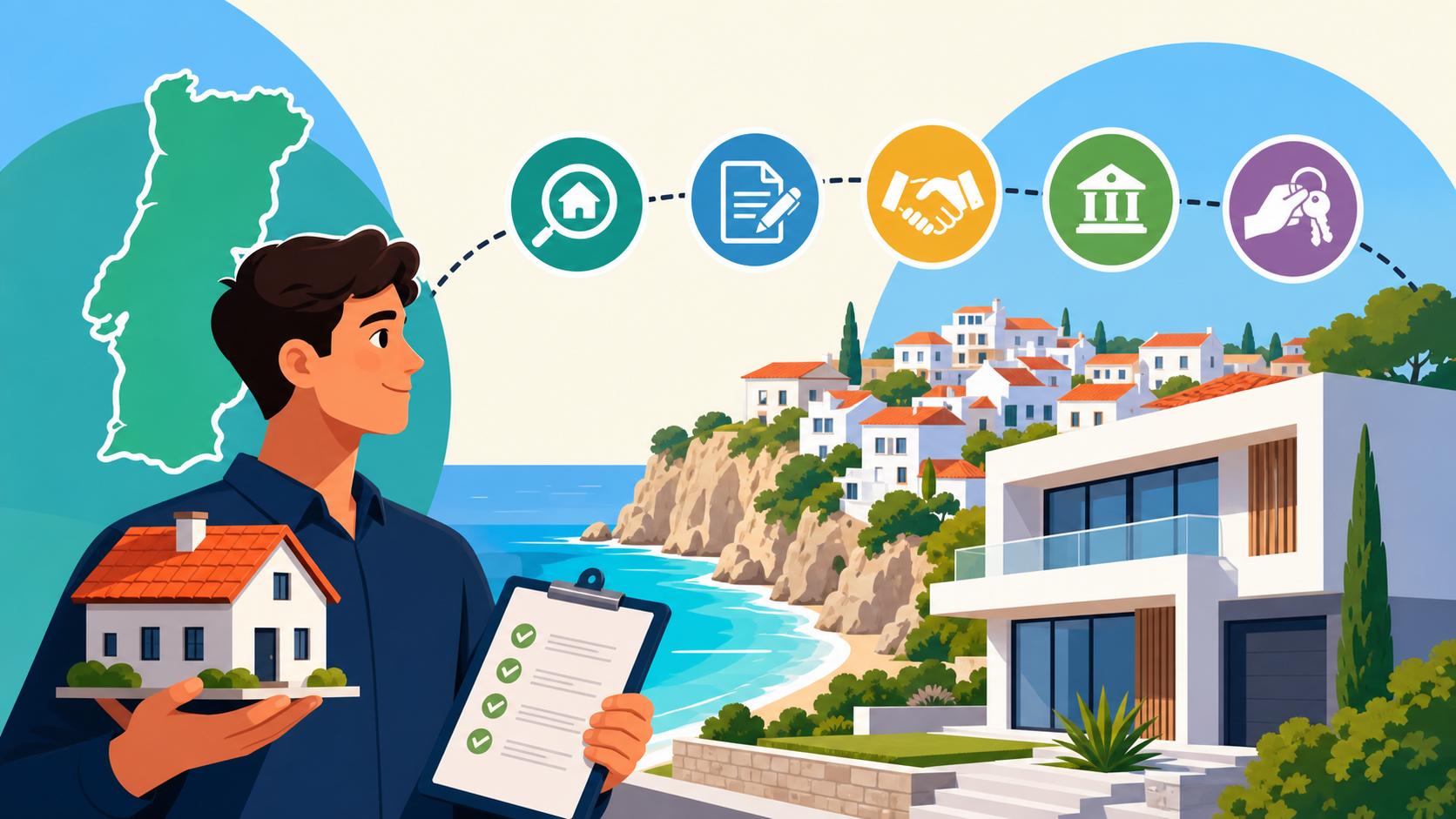
Buying Property in Portugal as a Foreigner: The Step-by-Step 2027 Guide
Disclosure: This article contains affiliate links. If you buy through them, we may earn a commission at no extra cost to you. Read our full disclosure.
Buying a house in Portugal can feel like trying to solve a Rubik's Cube while blindfolded and submerged in a pool of bureaucracy. I remember clearly the day I stood in a chilly notary’s office in Lisbon, clutching a stack of papers so thick it felt like I was holding a classic novel, wondering if I had missed one crucial signature that would ruin everything. This guide is designed to dismantle that confusion, walking you through every legal, financial, and cultural hurdle so you can secure your piece of Portuguese paradise with your sanity intact.
Understanding the Portuguese Real Estate Landscape
The Portuguese property market has undergone a significant transformation over the last few years. While the days of finding a "ruin with potential" for the price of a used car in the Algarve are largely gone, the market remains incredibly diverse. We are seeing a shift away from the saturated city centers of Lisbon and Porto toward more sustainable, spacious living in the interior and along the Silver Coast. As an expat, you need to realize that "value" here isn't just about the purchase price; it’s about the lifestyle, the proximity to services, and the long-term resilience of the local economy.
Market Trends: From Lisbon’s Peaks to the Silver Coast
Currently, the market is characterized by a "flight to quality." Buyers are no longer just looking for a holiday home; they are looking for primary residences with high-speed fiber internet and energy-efficient heating. In neighborhoods like Arroios in Lisbon or Cedofeita in Porto, prices have stabilized, but the demand for renovated T2 (two-bedroom) apartments remains sky-high. If you are just starting your search, I highly recommend checking out Where to Live in Portugal: Lisbon, Porto, Algarve, and Silver Coast Compared to get a feel for the different regional vibes and price points.
For those who find the major cities a bit too frantic, the Silver Coast (Costa de Prata) is the 2026 "it" destination. Towns like Caldas da Rainha and Nazaré offer a more authentic Portuguese experience with significantly more house for your Euro. While you’re scouting these locations, don’t make the mistake of relying on hotel Wi-Fi to keep your search going; grab an eSIM from Airalo as soon as you land to ensure you can pull up GPS and property listings while driving through the winding backroads of central Portugal. It saved me more than once when I was lost looking for a villa in the hills above Tomar.
Legal Realities: Why You Need a Solicitor, Not Just an Agent
In many countries, the real estate agent handles the bulk of the paperwork. In Portugal, the agent represents the seller, and while they can be helpful, they are not your legal safeguard. You absolutely must hire an independent lawyer (advogado) or a specialized solicitor (solicitador) who has no connection to the agent or the seller. Too many expats get burned by "illegal additions" to houses—lovely sunrooms or swimming pools that were never registered with the local Camara (town hall). If you buy a property with these issues, you inherit the fines and the legal headache of tearing them down or trying to legalize them retroactively.
Your legal representative will perform the "due diligence" that is the cornerstone of a safe purchase. They will check the Certidão de Teor (Property Registration Certificate) to ensure there are no hidden mortgages or liens against the house. They will also verify the Caderneta Predial (Tax Authority Document) to see if the property’s description matches what is actually on the ground. For a deeper look at finding the right professional, see my guide on Finding an English-Speaking Real Estate Lawyer for Property Closing in Portugal. Trust me, skipping this step to save a few thousand Euros is the fastest way to lose tens of thousands later.
The Essential Pre-Purchase Checklist for Foreigners
Before you even step foot inside a potential home, there are two pieces of paper that will determine whether you can actually buy anything: your NIF and your Portuguese bank account. I remember trying to do this in a rush during a one-week scouting trip; it was a disaster. You cannot sign a contract, pay a deposit, or even set up a utility bill without these. It’s the foundational "paperwork blizzard" that every expat must navigate.
Getting Your NIF: The Key to Everything
The Número de Identificação Fiscal (NIF) is your tax identification number. It is the most important nine-digit sequence you will ever own in Portugal. You need it for everything from buying a house to getting a SIM card. If you are a non-EU/EEA resident, you will technically need a fiscal representative to get your NIF, which is usually a lawyer or a professional service. You can learn the specifics of this process in NIF and NISS: How to Get Your Portuguese Tax and Social Security Numbers.
The beauty of the NIF is that once you have it, you are "in the system." When you’re out looking at houses and stop for a coffee, you’ll notice the locals always give their NIF at the till. This is for tax deductions, which I’ll explain later, but for the purpose of buying a home, your NIF must be linked to your current foreign address initially, and then updated to your Portuguese address once you move in. It sounds simple, but the queues at the Finanças (tax office) can be legendary, so aim to get this sorted remotely before you arrive if possible.
Opening a Portuguese Bank Account
While you might think you can just wire money from your home bank for the purchase, Portuguese sellers and notaries strongly prefer—and often require—the funds to come from a domestic account. Moreover, for your mortgage and future utility bills, a local IBAN is essential. Opening an account as a non-resident has become stricter in 2026 due to anti-money laundering regulations. You’ll need your passport, proof of address in your home country, a recent payslip or tax return, and, of course, your NIF.
I personally recommend looking into banks like Millennium BCP or ActivoBank, as they tend to have better English-language support and more intuitive apps. For a step-by-step on this, check out Opening a Bank Account in Portugal: Best Banks for Foreigners and Expats. Don't be surprised if the bank asks for a minimum initial deposit of €250 to €500 just to open the account. Also, keep in mind that "Portuguese time" applies to banking too—it can take a week or two for everything to be fully active, so don't leave this until the day before you need to sign a contract.
Establishing Your Team: Lawyer, Agent, and Surveyor
Once you have your NIF and bank account, you need to finalize your "buying team." We’ve discussed the lawyer, but the surveyor (perito) is equally vital. In Portugal, it is not customary for the seller to provide a structural survey. You are buying "as is." A beautiful stone farmhouse in the Alentejo can look perfect on the surface, yet a surveyor may find roof beams riddled with woodworm or "new" plumbing that is really a patchwork of DIY repairs.
A good real estate agent can be a massive asset if they know the local market intimately. They can help you negotiate the price and find listings that haven't hit the big portals like Idealista yet. While you are doing the hard work of scouting, you might want to stay in a mid-term rental to avoid the stress of hotels. Using a platform like Uniplaces is a great way to find a comfortable "base of operations" for a month or two while you visit different regions. It gives you the chance to see what a neighborhood feels like at 11 PM on a Tuesday, which is far more revealing than a 20-minute afternoon viewing.
Navigating the Buying Process: Step-by-Step
The actual process of buying a property in Portugal is split into two main legal stages: the Contrato de Promessa de Compra e Venda (CPCV) and the Escritura. This structure is designed to protect both parties, but it carries significant financial weight. If you don't understand the rules of the CPCV, you risk losing a lot of money very quickly.
The CPCV (Promissory Contract): Don't Skip This
The CPCV is the binding agreement where you and the seller agree on the price and the timeline for the final sale. At this stage, you will typically pay a deposit (sinal) of 10% to 20% of the purchase price. Here is the part that usually shocks foreigners: under Portuguese law, if you back out of the deal after signing the CPCV, you lose your entire deposit. However, if the seller backs out, they must pay you back double your deposit. This "double the deposit" rule makes the CPCV very powerful and keeps sellers from "gazumping" you for a higher offer.
Your lawyer must ensure that the CPCV includes "conditions precedent." For example, if you are relying on a mortgage, the contract should state that the deal is only valid if the bank approves your loan. Without this clause, if the bank says no, you still lose your 10% deposit. You can find a detailed breakdown of these clauses in CPCV (Promissory Contract): What you must know before signing to buy a house. This one clause can save people from financial ruin, so never sign a "standard" contract without your lawyer’s green light.
The Escritura: The Final Deed of Sale
The Escritura Pública de Compra e Venda is the final act. This takes place at a notary’s office or a Casa Pronta (one-stop shop for property). All parties—buyer, seller, bank representatives, and lawyers—gather in one room. The notary reads the entire deed aloud in Portuguese. If you aren't fluent, your lawyer will translate for you or you may be required to have a professional translator present to ensure you understand exactly what you are signing.
This is the moment when the remaining balance is paid, usually via a "certified bank check" (cheque bancário) issued by your Portuguese bank. Once the signatures are dry and the money has changed hands, the notary registers the sale with the Land Registry and the Tax Authority. You walk out of that office with the keys and a very tired hand from all the signing. For a broader look at how this fits into your overall move, see the Moving to Portugal Guide 2026: The Complete Relocation Manual for Expats.
Taxes and Hidden Costs: Budgeting Beyond the Sale Price
One of the biggest mistakes expats make is forgetting to budget for the "extras." In Portugal, you should expect to pay between 7% and 10% of the purchase price in taxes and fees on top of the house price. This isn't a small amount; on a €400,000 home, that’s another €40,000 you need to have ready in cash.
IMT and Stamp Duty (Imposto do Selo)
The biggest cost is the IMT (Imposto Municipal sobre as Transmissões Onerosas de Imóveis). This is a sliding scale tax based on the property price, the location (mainland vs. islands), and whether it’s your primary residence or a second home. In 2026, there are specific exemptions for young first-time buyers, but most expats will fall into the standard brackets. On top of IMT, there is a flat 0.8% Stamp Duty (Imposto do Selo) on the purchase price.
Calculating these taxes can be confusing because the brackets change slightly every year with the state budget. You should check Paying IMT Tax: How the 2026 tax changes affect foreign property buyers for the most current tables. I remember being surprised that the tax had to be paid before the Escritura. You have to show the proof of payment to the notary, or they won’t let you sign. It’s a very "pay-to-play" system.
Notary and Registration Fees
The notary fees and the cost of registering the property are relatively small compared to the IMT, usually totaling around €1,000 to €1,500. However, don't forget your lawyer's fees, which typically range from 1% to 1.5% of the purchase price. While it feels like you're being "nickeled and dimed" at every turn, these fees ensure that the property is legally yours and that the state recognizes you as the owner.
| Cost Item | Estimated Percentage/Amount | Who Pays? |
|---|---|---|
| IMT Tax | 0% to 8% (Sliding Scale) | Buyer |
| Stamp Duty | 0.8% | Buyer |
| Legal Fees | 1% to 1.5% (+VAT) | Buyer |
| Notary/Registry | €1,000 – €2,000 | Buyer |
| Agent Commission | 3% to 5% | Seller |
Mortgages and Financing for Non-Residents
If you aren't a cash buyer, getting a mortgage in Portugal is a viable but paperwork-heavy option. Portuguese banks are still quite conservative. They love stability and hate risk, which means if you are self-employed or a digital nomad, you’ll have to work twice as hard to prove your income.
Deposit Requirements and LTV Ratios
For non-residents (people who don't pay their main income tax in Portugal yet), banks usually offer a Loan-to-Value (LTV) ratio of 60% to 70%. This means you need a cash deposit of at least 30% to 40%. If you have already become a tax resident and have a Portuguese history, you might be able to get up to 80% or 90% LTV. Interest rates in Portugal can be variable (linked to Euribor) or fixed, though fixed rates have become much more popular recently as buyers seek certainty.
Before you start house hunting, get a "pre-approval" from a bank. This isn't a guarantee, but it gives you a "Ficha de Informação Normalizada" (FIN), which outlines what the bank is willing to lend you. This makes you a much more serious buyer in the eyes of the seller. For a deep dive into the lending landscape, check out Mortgages in Portugal for Non-Residents: Rates and Deposit Requirements.
The Required Documentation: Prepare for a Paperwork Blizzard
Prepare to provide every financial document you’ve ever touched. The bank will want your last three months of bank statements, your last tax return (IRS, P60, or 1040), payslips, and a letter from your employer confirming your position and salary. If you are using foreign income to pay a Portuguese mortgage, the bank will also look at your "debt-to-income" ratio. Usually, they won't allow your total debt payments (including your home country's mortgage) to exceed 30% to 35% of your net monthly income.
One thing that often catches people out is the mandatory life insurance and multi-risk home insurance. Portuguese banks almost always require you to take out these policies to secure the mortgage. Sometimes they insist you use their in-house insurance providers to get a better interest rate (spread). It’s often worth the slightly higher premium for the convenience, but always have your lawyer check the fine print.
Post-Purchase Realities: Managing Your New Portuguese Home
You’ve got the keys, the champagne has been popped, and you’re standing in your new living room. Now what? The first 30 days are a whirlwind of logistical setups. From my experience, this is the phase where you realize that "simple" tasks like getting a fridge delivered can take a week of coordinated phone calls.
Setting Up Utilities and Local Services
You need to transfer the electricity (EDP is the biggest provider), water, and gas into your name immediately. For the water, you’ll likely need to visit the local Serviços de Águas in person with your deed and your NIF. For electricity and internet, you can usually do it online or over the phone. fiber internet is excellent in Portuguese cities, with providers like MEO, Vodafone, and NOS offering competitive packages.
I highly recommend setting up "Direct Debits" (Débito Direto) via your bank app for all these bills. It ensures you never miss a payment, which is crucial because utilities in Portugal can be surprisingly quick to cut off service for non-payment. For a full breakdown of the providers and what to expect, read Setting Up Utilities in Portugal: Electricity, Gas, Water, and Internet. And once you have your address settled, you’ll find that Amazon Spain is your best friend for outfitting the house—shipping to Portugal is fast, and they have a much wider selection of electronics and household goods than most local shops.
Property Management for Second Home Owners
If your new home is a holiday property that will sit empty for months at a time, you must hire a local property manager or at least have a very friendly neighbor with a set of keys. Portuguese homes, especially older ones, are prone to humidity and mold during the rainy winters if they aren't aired out. A property manager can check on the house after a storm, collect your mail (which often includes important tax notices), and ensure the garden doesn't turn into a jungle.
Additionally, don't forget the annual property tax: IMI (Imposto Municipal sobre Imóveis). This is paid every year, usually in May (and August/November for larger amounts). It’s calculated based on the "VPT" (taxable value) of the house, which is usually much lower than the market price. Keeping on top of these small administrative tasks is the difference between a relaxing Portuguese life and a constant stream of bureaucratic "surprises" in your mailbox.
Common Pitfalls and How to Avoid Them
I’ve lived here long enough to see the same mistakes repeated by bright-eyed expats every single year. Most of these "traps" are completely avoidable if you check your ego at the door and listen to the locals (and your lawyer).
Illegal Additions and Planning Permissions
As I mentioned before, the "sunroom trap" is real. In rural areas, people often build extensions, garages, or even entire guest houses without telling the Camara. They might have been there for 20 years, but that doesn't make them legal. If you buy a house with an illegal structure, you might find it impossible to get a mortgage, as the bank's surveyor will flag the discrepancy between the plans and the reality. Always ensure your lawyer verifies the Licença de Utilização (Usage License), which confirms the property is legally fit for its intended purpose.
Winter Realities: Insulation and Moisture
Portugal is famous for its sun, but our winters are damp and chilly. Most older Portuguese houses were built to stay cool in the summer, which means they have zero insulation and no central heating. When you are viewing a house in July, it feels great. In January, you’ll be wearing a puffer jacket inside. Look for signs of "ascendant humidity" (damp rising from the floor) or black mold in the corners of the ceilings. If you’re buying an older home, budget immediately for double-glazed windows and a high-quality pellet burner or heat pump. It will be the best investment you make for your physical comfort.
Regional Spotlights: Where to Put Your Money
| Region | Vibe | Average Price (Mid-Range) | Best For |
|---|---|---|---|
| Lisbon (Center) | Cosmopolitan, Fast-Paced | €550,000+ | Investors, Urbanites |
| Porto | Industrial-Cool, Authentic | €400,000+ | Culture Seekers, Families |
| Algarve (Central) | Touristy, Sun-Drenched | €450,000+ | Retirees, Golfers |
| Silver Coast | Coastal, Traditional | €300,000+ | Remote Workers, Value |
| Alentejo | Rural, Slow-Paced | €250,000+ | Peace, Nature Lovers |
The Algarve vs. The Interior
The Algarve remains the gold standard for many, but it is increasingly "seasonal." In the winter, some coastal towns can feel like ghost towns. If you want year-round life, look at the larger hubs like Faro or Loulé. Conversely, the Interior (Central Portugal and the Alentejo) offers a dramatically lower cost of living and a much warmer welcome from the local community. However, be prepared for a slower pace of life—getting a plumber in a small village near Castelo Branco might take a bit more patience (and coffee) than in a city.
Emerging Hubs: Braga and the Alentejo
Braga, in the north, is consistently ranked as one of the best cities for quality of life. It’s a university city, so it’s vibrant, youthful, and significantly cheaper than Porto. Meanwhile, the Alentejo is seeing a surge in "eco-chic" retreats and boutique vineyards. If you are looking for a project or a piece of land to start a small farm (quinta), the Alentejo is your playground. Just remember that the summer heat there is no joke—it regularly hits 40°C (104°F).
Disclaimer
This guide is for informational purposes only and based on personal experience and general research. Real estate laws and tax brackets in Portugal are subject to change. Always consult with a qualified legal professional and a certified accountant before signing any binding contracts or making financial commitments in Portugal.