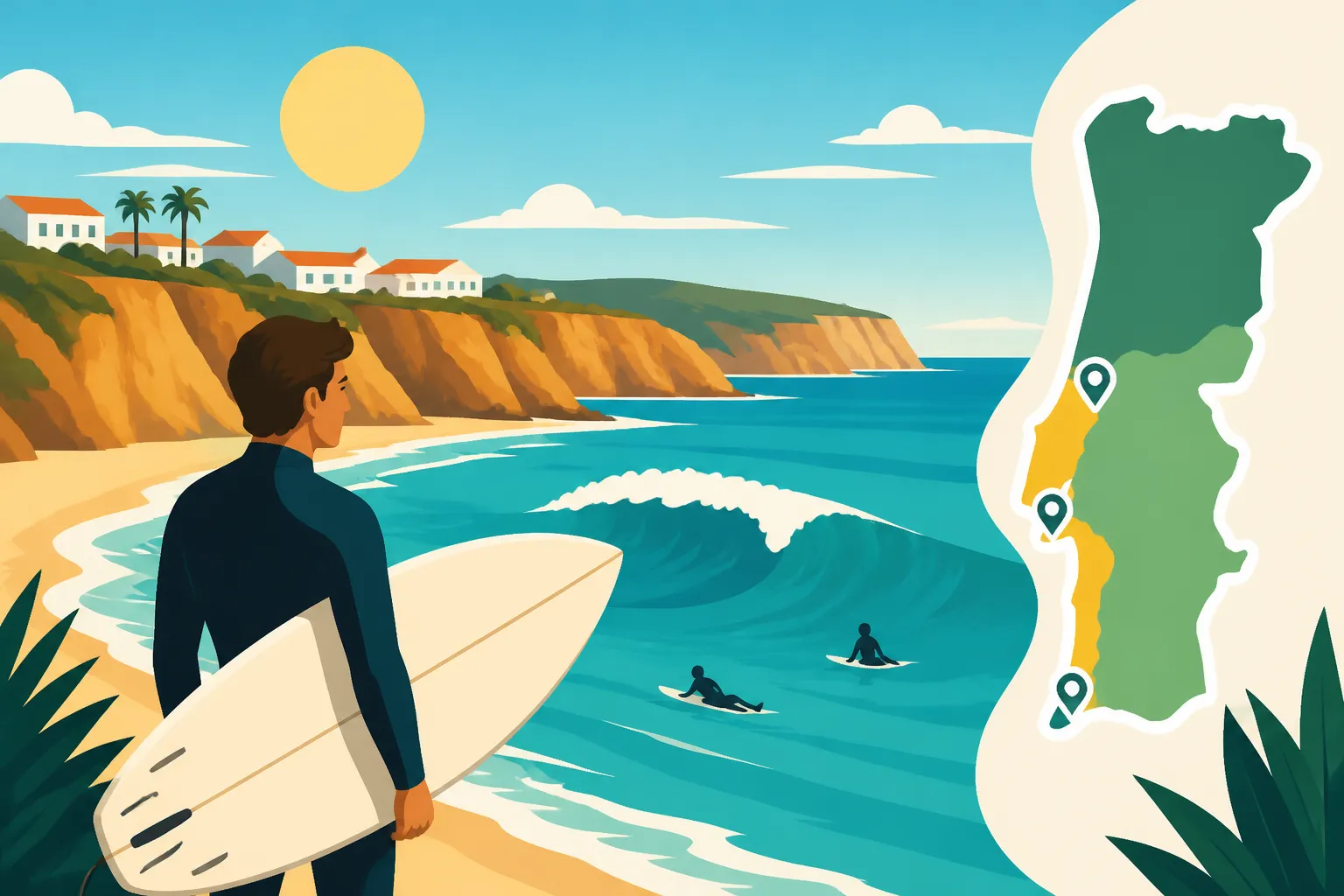
Where to Go Surfing in Portugal for the First Time
Disclosure: This article contains affiliate links. If you buy through them, we may earn a commission at no extra cost to you. Read our full disclosure.
So, you’ve landed in Portugal, the sun is shining, the coastline is calling, and you're thinking, "Hey, maybe I should try surfing!" It's a fantastic idea, but let's be real: the sheer number of incredible surf spots can feel a bit overwhelming when you're a complete beginner just looking to catch your first few waves without getting pummeled. This guide is here to break down the best, most beginner-friendly places in Portugal, offering practical advice so you can hit the water feeling confident, not confused.
Understanding Portugal's Surf Scene for First-Timers
Portugal truly is a surfer's paradise, famous for its incredible swells that draw pros from around the globe. But don't let the images of Nazaré's monster waves intimidate you; this country has an abundance of gentle, rolling breaks perfect for those just starting out. It's all about knowing where to go and when. The beauty of Portugal is that its extensive coastline offers such diverse conditions, meaning there's almost always a sheltered spot with smaller waves, even when other areas are pumping.
Why Portugal is a World-Class Surf Destination (Without Being Intimidating for Newbies)
Portugal boasts over 1,700 kilometers of coastline, exposed to the Atlantic Ocean's powerful currents and consistent swells. This geographical advantage means a reliable supply of waves year-round. From the northern reaches near Porto down to the sunny Algarve, you’ll find everything from mellow beach breaks to powerful point breaks. For someone just learning, the key is to gravitate towards those beach breaks. These sandy bottoms are far more forgiving than rocky reefs, reducing the risk of injury as you inevitably get tumbled by waves. Many of these beaches also have a gentler slope, which creates long, slow-breaking waves that are ideal for practicing standing up and riding straight.
What makes Portugal especially welcoming for new surfers is the robust surf school infrastructure. In nearly every major coastal town, you’ll find dedicated surf camps and schools that cater specifically to beginners. These aren't just for tourists; many locals start their surfing journey this way too. These schools provide all the necessary equipment, from soft-top boards that are more stable and less prone to injury, to wetsuits that keep you warm in the Atlantic's often chilly waters. The instructors are typically highly experienced, certified, and often multilingual, ready to guide you through the basics of paddling, popping up, and understanding ocean safety.
Key Considerations Before You Paddle Out
Before you even think about picking a beach, there are a few practicalities that every first-time surfer in Portugal should absolutely consider. Ignoring these could turn your dream surf session into a frustrating, or even dangerous, experience. Remember, the ocean, while beautiful, demands respect.
Firstly, safety is paramount. Never, ever go surfing alone as a beginner. Always opt for lessons with a qualified instructor. They will teach you about rip currents, how to read the waves, and essential etiquette in the water. Beyond that, personal fitness plays a role. While you don't need to be an Olympic athlete, a basic level of swimming proficiency and upper body strength will make paddling much easier and more enjoyable. If you’re not a strong swimmer, focus on sheltered spots with very small waves and always stay within your depth.
Secondly, lessons are non-negotiable for true beginners. You might think you can just rent a board and figure it out, but trust me, you'll spend more time flailing than surfing. A good two-hour lesson with an experienced coach will teach you more than a week of self-practice. They'll correct your posture, help you understand wave timing, and build a solid foundation. Many schools offer package deals for multiple lessons, which is a great way to progress quickly and consistently. Check out options on platforms like GetYourGuide for surf lessons that include equipment.
Finally, equipment choice matters immensely. As a beginner, you want a large, stable, soft-top board. These are often called "foamies" or "soft-tops" and are designed for stability and safety. Avoid trying to learn on a short, fiberglass board; it's a recipe for frustration. Wetsuits are also essential, especially outside of the peak summer months. Even in summer, the Atlantic can be cooler than you expect. Schools typically provide these as part of your lesson package, but if you're planning multiple sessions, consider renting or even buying a decent basic wetsuit.
Top Beginner-Friendly Surf Spots in Portugal
Now, let's talk about the fun part: where exactly should you go? Portugal offers several fantastic regions with waves suited for new surfers. Each has its own charm and atmosphere, so you can pick one that also fits your travel style.
Central Portugal: The Surf Coast Mecca
The central coast of Portugal is undeniably the country's surfing heartland, but it's not all big waves. Within this region, you'll find spots that are perfect for learners.
Ericeira is perhaps the most famous surf town in Portugal, recognized as a World Surfing Reserve. While it has some gnarly breaks for pros, it also boasts incredibly gentle spots. For beginners, the beach of Foz do Lizandro is a gem. It’s a river mouth beach, meaning the waves here are often much smaller and more forgiving, especially on the inside. There are several surf schools right on the beach, making it super convenient for lessons and rentals. The vibe here is laid-back, with beach bars and plenty of space. Another excellent option near Ericeira is Praia de São Julião, which offers consistent but mellow waves suitable for those finding their feet. Just be mindful of larger swells that might roll in during winter.
Further north, Peniche is another legendary surf town, home to the famous Supertubos. But don't worry, you won't be heading there. Instead, direct your attention to Baleal, a small peninsula just north of Peniche. Baleal is unique because its geography means that if one side is too windy or big, the other side will often be sheltered and calmer. Praia do Baleal Sul and Prainha are particularly good for beginners, offering soft, manageable waves. The area is absolutely saturated with surf camps and schools, many of which offer accommodation packages, making it an ideal choice for a dedicated surf trip.
Closer to Lisbon, Costa da Caparica is a vast stretch of sandy beach easily accessible from the capital. While it can get crowded, especially on weekends, its extensive coastline means you can always find a less busy spot. The waves here are typically gentle beach breaks, perfect for learning. The sheer length of the beach means the waves can vary, so surf schools often move along the coast to find the best conditions for their students. It's a great option if you're based in Lisbon and want to squeeze in a surf session or two without venturing too far. You can easily get here by public transport or a short car ride, making it a convenient day trip.
Southern Portugal: Sunny Algarve's Hidden Gems
When most people think of the Algarve, they picture golden beaches and calm waters. While much of the southern coast is indeed sheltered, the western tip of the Algarve faces the Atlantic and offers fantastic surf, including some beginner-friendly spots.
Lagos is a popular town in the Western Algarve, known for its stunning cliffs and vibrant nightlife. While the immediate beaches of Lagos aren't known for surf, it serves as an excellent base to explore nearby surf spots. Surf schools here often take groups to beaches like Praia da Luz or Porto de Mós when conditions are right for beginners. These spots offer smaller, more manageable waves, especially during the summer months. The advantage of learning here is the generally warmer water and abundant sunshine, making your first wipeouts a little less shocking!
Venturing further west to Sagres, you hit the very southwestern tip of Europe. This area is more rugged and wild but offers incredible natural beauty. For beginners, Praia do Amado (just north of Sagres, on the west coast) is a highly recommended spot. It's a wide beach with consistent, forgiving beach breaks, and several surf schools operate directly on the sand. The atmosphere is very surf-centric, and it's less developed than other parts of the Algarve, offering a more raw, authentic surfing experience. This is a fantastic place for a multi-day surf camp, where you can fully immerse yourself in the surf lifestyle.
Northern Portugal: Matosinhos
While not as renowned as the central coast for surfing, Northern Portugal still offers excellent options, particularly if you're based in Porto.
Matosinhos Beach, just a short metro ride from Porto city center, is arguably the most convenient beginner surf spot in Portugal. The beach is protected by a large breakwater, which significantly reduces the swell size and intensity, creating ideal small, rolling waves. It's a perfect spot for your very first lesson. There are multiple surf schools along the promenade, all offering lessons and rentals. The ease of access makes it an ideal choice for tourists staying in Porto who want a quick introduction to surfing. You can combine a city break with a beach day and even get a decent meal at one of the many seafood restaurants nearby.
| Surf Spot | Location | Best Season for Beginners | Wave Type (Beginner) | Pros | Cons |
|---|---|---|---|---|---|
| Foz do Lizandro | Ericeira (Central) | Summer, Early Autumn | Beach Break | Gentle waves, many schools, good vibe | Can get crowded, exposed to wind |
| Baleal | Peniche (Central) | Summer, Autumn | Beach Break | Sheltered options, surf camp hub | More advanced waves nearby can be distracting |
| Costa da Caparica | Lisbon Area (Central) | Summer, Early Autumn | Beach Break | Easy access from Lisbon, long beach | Very busy on weekends, less character |
| Praia do Amado | Sagres (Algarve) | Spring, Summer, Autumn | Beach Break | Consistent waves, surf-centric vibe | More remote, cooler water |
| Matosinhos Beach | Porto Area (North) | Year-round | Beach Break | Super accessible, very gentle waves | Can feel a bit urban, crowded |
Getting Started: Lessons, Gear, and Logistics
You've picked your spot, now what? The practicalities of getting set up with lessons, gear, and figuring out how to get around can sometimes be the trickiest part for newcomers. But with a bit of planning, it's smooth sailing.
Finding the Right Surf School and Instructor
Choosing a good surf school is critical for a positive first experience. Look for schools that are accredited by a national surf federation (like the Federação Portuguesa de Surf). This ensures instructors are properly certified in both surfing and water safety. Don't be shy about checking reviews online; Google Reviews, TripAdvisor, and even local expat forums often have great recommendations.
When you contact a school, ask about their group sizes. Smaller groups generally mean more personalized attention. Inquire about what's included in the price: wetsuit, board, insurance, and transport to the beach if necessary. Most reputable schools will include everything. For instance, in Ericeira, you'll find numerous schools like Ericeira Surf School or Boardriders Quiksilver offering comprehensive packages. In Baleal, surf camps like Baleal Surf Camp are popular choices that bundle lessons with accommodation. Don't forget to explicitly state you are a complete beginner – they'll ensure you get the right instructor and beach conditions.
Essential Gear: What to Rent vs. Buy
As a beginner, rent everything you can to start. Surf schools will provide the appropriate soft-top board and a wetsuit as part of your lesson. If you decide you love it and want to do more independent practice after a few lessons, you can rent a foamie from a local shop for around €15-€25 per day. Wetsuit rentals are usually an additional €5-€10.
When it comes to buying, the first thing I’d suggest is a good rash guard (a tight-fitting surf shirt) to prevent chafing, especially under your armpits. Sunscreen, specifically designed for watersports, is also a must for your face and any exposed skin, as the reflection off the water amplifies the sun's rays. Beyond that, a good pair of waterproof earplugs can be a worthwhile investment to prevent surfer's ear, especially if you plan to spend a lot of time in the water. Leave buying your own board or wetsuit until you're absolutely hooked and have a better understanding of what suits you. Trying to save a few euros by buying cheap, ill-fitting gear will only hinder your progress and comfort.
Transport and Accommodation Tips
Portugal's public transport system is generally good, but reaching some of the more secluded surf beaches might require a bit of planning. For spots like Matosinhos, a quick metro ride from Porto will get you right there. For Costa da Caparica, buses from Lisbon are frequent. However, to access beaches around Ericeira or Sagres more flexibly, having a car can be a huge advantage. You can compare car rental prices on platforms like Booking.com or even directly from local rental agencies. This allows you to chase the best conditions or explore different beaches more easily.
If you're planning a dedicated surf trip, especially to Ericeira or Peniche/Baleal, consider staying at a surf camp. These places often combine accommodation, lessons, and meals, creating a fantastic social atmosphere where you can meet other beginners and share experiences. If you prefer independent accommodation, websites like Booking.com are excellent for finding hotels, hostels, or apartments near your chosen surf spot. When looking at transport, remember that Portugal has a decent train network if you're traveling between major cities, and you can always check schedules and book tickets via Omio. But for the very last mile to the beach, local buses or a car are often necessary.
Remember that Portugal's appeal lies not just in its waves but also in its vibrant culture and delicious food. After your surf session, refuel with a hearty bica (espresso) and a pastel de nata, or enjoy some fresh seafood by the ocean. This whole experience is part of what makes surfing in Portugal so incredibly special for expats and tourists alike.
Disclaimer
The information provided in this article is for general guidance only and does not constitute professional advice. While we strive to keep the information up-to-date and accurate, regulations, services, and conditions in Portugal can change rapidly. Always verify current requirements and seek advice from qualified professionals for your specific situation. Surfing involves inherent risks; always prioritize safety and consider professional lessons, especially as a beginner.