How to Ask for Directions in Portuguese (Simple Phrases)
Disclosure: This article contains affiliate links. If you buy through them, we may earn a commission at no extra cost to you. Read our full disclosure.
Remember that heart-stopping moment when your phone died, or GPS signal vanished, and you found yourself utterly bewildered on a narrow, winding street in a foreign city? In Portugal, with its charmingly chaotic alleys and sometimes subtly marked buildings, that feeling can be all too real. But don't despair! This guide will equip you with essential Portuguese phrases and cultural insights to confidently ask for directions, turning potential fumbles into confident explorations.
Why Getting Lost in Portugal Isn't Just About the Language Barrier
Let's be honest, getting turned around is part of the adventure of exploring a new place, right? But in Portugal, it can feel like a whole different ballgame. It’s not just about not knowing the language; it’s about the very fabric of the cities and towns themselves, which weren't exactly designed for modern GPS or the straight-line logic we might be used to. Expats often navigate unexpected detours, and the challenge is real, but so is the reward when you finally figure it out – often with a little help from a kind local.
The Labyrinthine Streets and Unmarked Buildings
Picture this: you’re trying to find that quaint little restaurant tucked away in Alfama, Lisbon, or a specific bookstore in the Baixa. You look up, and the street names aren't immediately obvious. Many of Portugal's historic centers, especially in cities like Lisbon or Porto, grew organically over centuries. They weren't gridded out; they simply evolved. This means streets can abruptly change names, twist into unexpected alleys, or dead-end where you least expect them. It’s part of their undeniable charm, but it's also a navigational headache.
Compounding this is the fact that many buildings, even important ones, don't always have prominent, easy-to-read signs or numbers. You might be told to look for "the building next to the old pharmacy," but which one is the old pharmacy, and did it become a gelataria last year? It takes a keen eye and often, local knowledge to pinpoint places. Even when you’re looking for a specific address listed on Booking.com for your accommodation, the building itself might blend right in with its neighbors, offering no clear indication of its identity until you're right on top of it.
When Google Maps Fails You: Signal, Battery, and Quirky Addresses
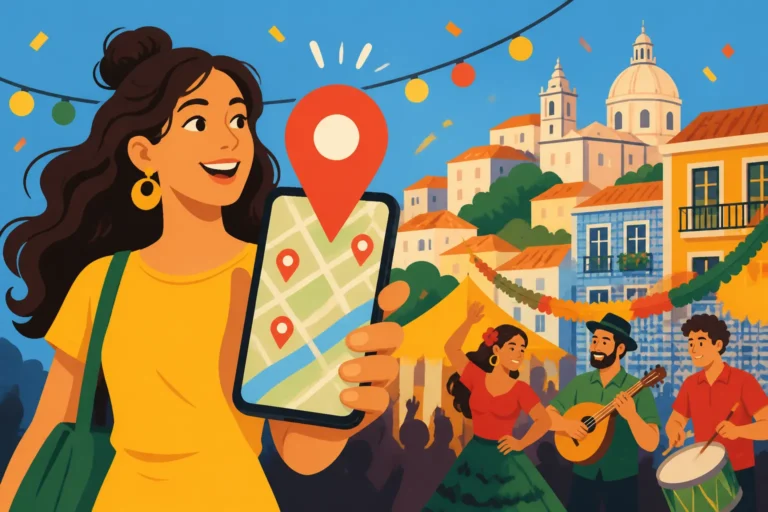
Ah, the modern traveler's trusty companion – Google Maps. It's often brilliant, but in Portugal, it occasionally decides to play hide-and-seek. Have you ever been deep in a historic district, surrounded by tall buildings, and suddenly your phone loses GPS signal? Or maybe the cobblestones have vibrated your phone battery down to 5% faster than you can say "onde é o caminho"? These scenarios are more common than you'd think. The old stone buildings and narrow passages can create signal dead zones, leaving you staring at a blue dot that refuses to move or update.
Then there's the address system itself. Sometimes, an address might be listed as a street name followed by a number, but then there's an "R/C" (ground floor) or a "1º Esq." (first floor, left) that isn't always accounted for in digital maps. Or, more confusingly, a single building might house several different businesses or residences, all sharing the same main street number. When you're trying to find a very specific door, these little nuances can make a big difference. This is precisely when reverting to the old-school method of asking a friendly face becomes not just helpful, but absolutely essential. It reminds us that sometimes, the best navigation system is still a human one.
Essential Survival Phrases for Asking for Directions
Okay, so you’ve accepted that sometimes technology just won't cut it. It’s time to dust off those language skills and engage with the locals. Portuguese people are generally very warm and willing to help, even if there's a language barrier. The key is to start politely and have a few core phrases ready. Don't worry about perfect grammar; effort goes a long way.
Starting the Conversation: Politeness is Key
Just like anywhere, a little politeness goes a long way. You wouldn't just blurt out "Where's the train station?" to a stranger, would you? In Portugal, showing respect by initiating the conversation correctly sets a positive tone.
Here are some go-to openers:
- "Com licença!" (kohm lee-SEN-sah) – "Excuse me!" This is the most common and polite way to get someone's attention.
- "Olá!" (oh-LAH) – "Hello!" Simple, friendly, and universally understood. You can follow this with "Com licença."
- "Desculpe, pode ajudar-me?" (desh-KUL-peh, POH-deh ah-zhoo-DAR-meh?) – "Excuse me, can you help me?" This is a direct but very polite way to ask for assistance. If you're addressing an older person or someone in a professional setting, you might use the more formal "Desculpe, pode ajudar-me, por favor?"
Remember to make eye contact and offer a small, friendly smile. This instantly makes you more approachable. People here appreciate the effort you make to speak their language, even if it's just a few words.
The Core Question: "How do I get to…?"
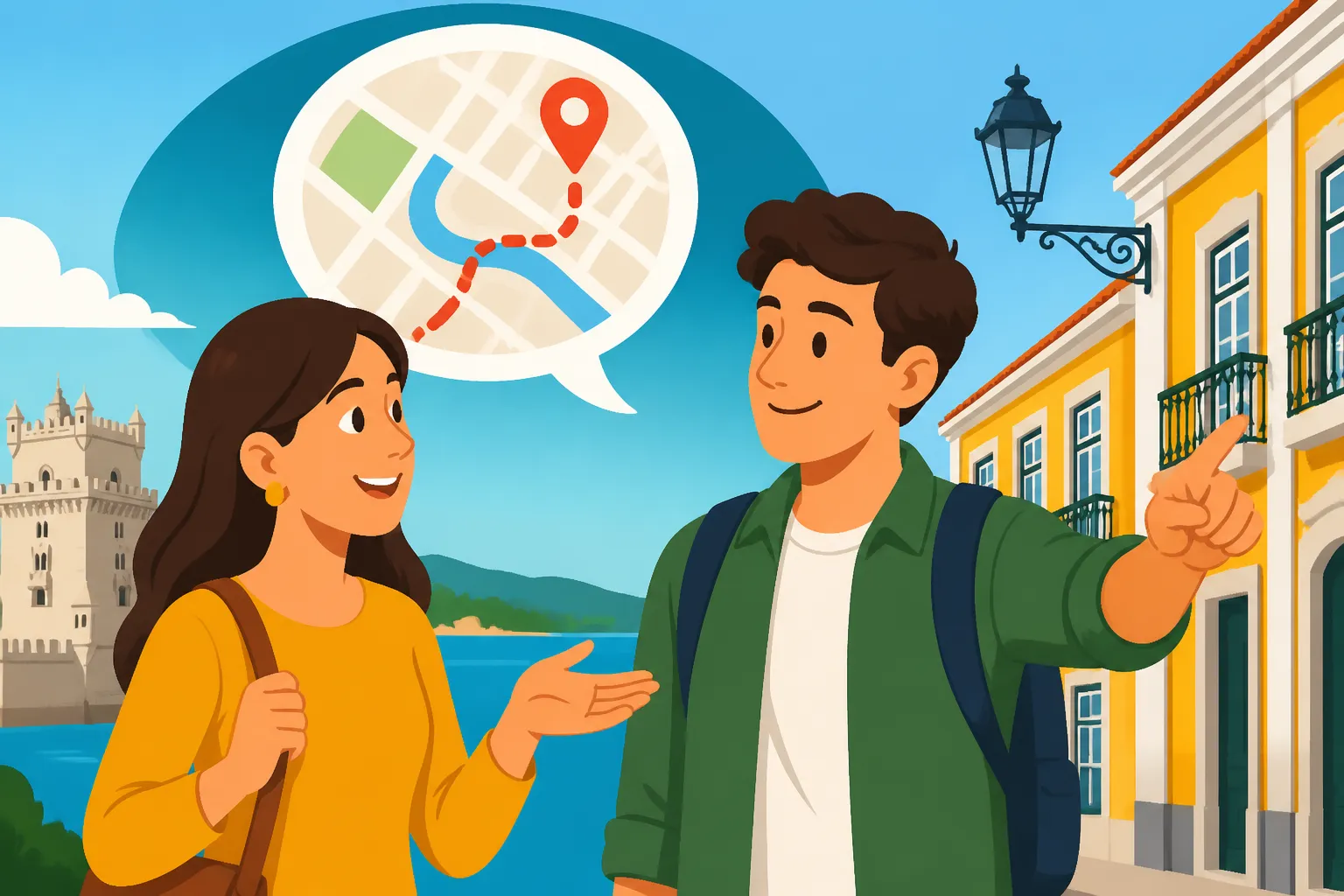
Once you've got their attention, it's time for the main event: asking how to get to your desired location. This phrase is your bread and butter.
- "Como chego a…?" (KOH-mo SHEH-zhoo ah…?) – "How do I get to…?" This is the most direct and common way to ask.
You'll then follow this with your destination. Here are some common places you might be looking for:
- "… a estação de comboios?" (… ah esh-tah-SOWN deh kohn-BOY-osh?) – "… the train station?"
- "… a paragem de autocarro?" (… ah pah-RAH-zhehm deh ow-toh-CAH-ho?) – "… the bus stop?" (If you're using public transport in Lisbon or Porto, this is invaluable! Check out our guide on Public Transport and Driving in Portugal: Trains, Tolls, and Licenses for more.)
- "… o centro histórico?" (… oo SEN-troh eesh-TOH-ree-koo?) – "… the historic center?"
- "… o meu hotel?" (… oo meo oh-TEL?) – "… my hotel?" (You can mention your specific hotel name, especially if it's a well-known one on Booking.com.)
- "… um multibanco?" (… oom mul-tee-BANG-koo?) – "… an ATM?" (Because sometimes you just need cash, right? These are everywhere, often near cafes.)
- "… a Praça do Comércio?" (… ah PRAH-sah doo koh-MER-syo?) – "… Commerce Square?" (Or any specific landmark.)
- "… a farmácia?" (… ah far-MAH-sya?) – "… the pharmacy?" (These are identifiable by a green cross, often flashing.)
- "… o supermercado?" (… oo soo-per-mer-CAH-do?) – "… the supermarket?" (You might be looking for a Continente or Pingo Doce.)
So, putting it all together, you might say: "Com licença, como chego à Praça do Comércio?"
Understanding the Answers: Basic Directional Words
This is where it gets tricky, because once you ask, they're going to answer! Don't panic if you don't catch every word. Focus on the key directional cues. Many people will also use gestures, which are incredibly helpful.
Here are the most important directional words you'll hear:
| Portuguese Phrase | Pronunciation (Approx.) | English Meaning | Notes |
|---|---|---|---|
| Direita | dee-RAY-tah | Right | |
| Esquerda | esh-KER-dah | Left | |
| Em frente | em FREN-teh | Straight ahead | Often accompanied by a pointing gesture. |
| Sempre em frente | SEM-preh em FREN-teh | Always straight ahead | "Keep going straight." |
| Ao pé de | ow PEH deh | Next to / Near | "It's next to the church." |
| Depois de | deh-POYSH deh | After | "After the café, turn right." |
| Virar | vee-RAR | To turn | "Vira à direita." (Turn right.) |
| Passar por | pah-SAR por | To pass by / through | "Passa por aquela rua." (Go through that street.) |
| Longe | LON-zheh | Far | "É um pouco longe." (It's a bit far.) |
| Perto | PER-too | Near | "É aqui perto." (It's nearby, around here.) |
| Aqui | ah-KEE | Here | "É mesmo aqui." (It's right here.) |
| Ali | ah-LEE | There (nearby) | "É ali, ao fundo da rua." (It's there, at the end of the street.) |
| Lá | LAH | There (further away) | "É lá em cima." (It's up there.) |
| Avenida | ah-veh-NEE-dah | Avenue | |
| Rua | ROO-ah | Street | |
| Calçada | cal-SAH-dah | Cobblestone street/calçada | Often very charming, sometimes steep! |
| Praça | PRAH-sah | Square |
Even if you only catch "direita," "esquerda," and "em frente," you're already 80% there! Don't be afraid to ask them to repeat ("Pode repetir, por favor?" – "Can you repeat, please?").
Decoding Portuguese Responses: Common Landmark and Direction Cues
So, you’ve asked the question, and now a lovely local is gesturing wildly and speaking a mile a minute. What do you do? The trick is to listen for keywords and observe their body language. Portuguese people are often very animated, which is a huge bonus when you’re lost!
Common Landmarks You'll Hear (Churches, Cafes, Banks)
Locals don't navigate by abstract street names alone; they use landmarks. These are the anchors of their mental maps, and they will be yours too. Pay attention to references to:
- Igreja (ee-GREH-zhah) – Church. Portugal has a church on almost every corner, often a very distinctive one. If someone says "depois da igreja," they mean "after the church."
- Café/Pastelaria (kah-FEH / pash-teh-lah-REE-ah) – Cafe/Pastry shop. These are ubiquitous. "Vire à esquerda no café" means "Turn left at the café."
- Banco (BANG-koo) – Bank. Banks, like Millennium bcp or Santander, are often prominent. A Multibanco ATM is usually attached.
- Correios (ko-REH-yosh) – Post office. These have distinctive red signs, often featuring a white horse.
- Sinal (see-NAL) – Traffic light. "No próximo sinal, vire à direita" means "At the next traffic light, turn right."
- Paragem (pah-RAH-zhehm) – Stop (bus, tram). Very useful if you're exploring Lisbon or Porto's neighborhoods. Our guide on Lisbon Neighborhood Guide: Best Areas for Expats and Digital Nomads might suggest places you'll need to use these.
- Rotunda (roh-TUN-dah) – Roundabout. These are everywhere and crucial for driving, or even just walking around, especially in newer parts of cities.
You’ll find that if you point to something specific, like "aquele café?" ("that cafe?"), they'll confirm or correct you with "sim" (yes) or "não" (no), and further directions.
Navigating Turns, Straights, and Crossings
The core of any direction will involve turns and straightaways. Listen for these phrases:
- "Vire à direita/esquerda": Turn right/left. This is the most common instruction for changing direction.
- "Siga em frente": Go straight ahead. They might also add "sempre" (always) to emphasize continuing straight.
- "Atravesse a rua": Cross the street.
- "Passe por aqui": Pass through here. This might be used for a small passage or a specific area.
- "No cruzamento": At the crossroads/intersection. This often precedes a turn instruction.
They might also give you an indication of distance or time:
- "São uns 5 minutos a pé": It's about 5 minutes on foot.
- "É um bocado longe": It's a bit far.
- "É aqui ao lado": It's right next door.
If you know you're looking for a tourist attraction, like something you've seen on GetYourGuide, you can try "onde é a Torre de Belém?" and expect a combination of these phrases.
Dealing with Rapid-Fire Portuguese: What to Do When You Don't Understand
Let's face it, even with the best intentions and your handy phrasebook, sometimes the Portuguese comes at you like a tidal wave. Don't feel bad – it happens to all of us! When a kind local launches into a detailed explanation faster than you can process it, here are your lifelines:
- "Não percebi. Pode repetir, por favor?" (NOWN per-seh-BEE. POH-deh reh-peh-TIR, por fah-VOR?) – "I didn't understand. Can you repeat, please?" This is polite and direct.
- "Pode falar mais devagar, por favor?" (POH-deh fah-LAR MYSH deh-vah-GAR, por fah-VOR?) – "Can you speak slower, please?" Again, perfectly acceptable.
- "Mais devagar?" (MYSH deh-vah-GAR?) – "Slower?" (If you're really desperate and they seem friendly.)
- "Desculpe, só falo um pouco de português." (desh-KUL-peh, soh FAH-loo oom POH-koo deh por-too-GAYSH.) – "Excuse me, I only speak a little Portuguese." This sets expectations.
- "Pode mostrar no mapa?" (POH-deh moh-STRAR no MAH-pah?) – "Can you show me on the map?" If you have a physical map or your phone (if it's working!), this can save the day.
Often, if they realize you're struggling, they'll switch to simpler words, or resort to even more emphatic gestures. Some might even try to walk you part of the way, which is a lovely, common gesture of Portuguese hospitality. Don't be shy about needing clarification; it’s far better than walking in the wrong direction for another 20 minutes! And hey, every interaction is a chance to practice your Learning European Portuguese: Top Apps, Tutors, and Free Government Classes skills.
Beyond Basic Phrases: Practical Tips for Navigating Like a Local
Asking for directions is more than just knowing words; it's about understanding the unspoken rules and leveraging all your senses. After years of living here, I've picked up a few tricks that make navigating Portugal much smoother.
The Power of Body Language and Hand Gestures
In Portugal, communication is often a full-body experience. When giving directions, people rarely just use words. They'll point, wave, and sometimes even mime actions. Your job is to mirror that.
- Point: When you ask "Como chego a…?" and they say "Siga em frente," they will almost certainly point. Follow their hand, even if the words don't quite click. When confirming, point yourself: "Aquele ali?" ("That one there?").
- Head Nods: A firm, clear nod ("sim") indicates understanding, while a slightly confused tilt of the head or a soft "Não percebi" ("I didn't understand") will prompt them to try again, perhaps with more gestures.
- Hand Signals for Directions: The classic "straight ahead" sweep of the hand, or a sharp "left" or "right" turn of the wrist are universally understood here. Pay close attention to these, as they are often more reliable than your grasp of spoken Portuguese.
Remember that these non-verbal cues bridge the language gap beautifully. It shows you're engaged and genuinely trying to understand, which locals appreciate.
When to Ask and Who to Ask: Choosing Your Moment and Person
Not all moments or people are created equal when it comes to asking for help. A little bit of observational psychology can make a big difference:
-
Who to Ask:
- Elderly people: Often have a deep knowledge of the area and a little more time and patience. They might even walk you part of the way!
- Shopkeepers/Café owners: Especially in smaller towns or less touristy areas, they are community hubs and usually very helpful. Pop into a pastelaria and ask while ordering a coffee.
- Families/Couples: Often seem less rushed than lone individuals.
- People who look like they're locals: This might sound obvious, but avoid asking tourists who look as lost as you do!
- Avoid: Anyone who looks genuinely stressed, busy on their phone, or in a hurry. You wouldn't want to be bothered then, right?
-
When to Ask:
- During quieter times: Mid-morning or mid-afternoon are generally better than peak rush hour or busy lunch times.
- Inside a business: If you're struggling, pop into a small shop or cafe. You can make a small purchase as a gesture of goodwill, then ask for help. This is often an easier approach than stopping someone on the street.
- Before you're completely disoriented: If you feel yourself getting lost, ask sooner rather than later. The further off track you are, the harder it is for someone to point you back.
- When you're near a landmark: If you can say "I'm looking for X, and I'm currently at Y (the church/cafe/etc.)," it helps them orient you.
Knowing Portuguese Coffee Culture and Restaurant Etiquette: Ordering Like a Local can also give you the confidence to duck into a café and get your bearings before you even ask for directions!
Technology as Your Ally (and When to Ditch It)
While this guide focuses on human interaction, let's not pretend technology is useless. It’s an ally, but one that needs to be understood.
- Offline Maps: Before you leave your accommodation, download offline maps of the area you’re exploring. Apps like Google Maps (and others) allow this, saving you from signal woes.
- Power Bank: A portable charger for your phone is a lifesaver. Keep it charged and with you.
- Screenshot Key Information: Screenshot your destination, address, and even a map snippet while you have Wi-Fi. If your phone dies or loses signal, you still have visual cues to show a local.
- Translation Apps (Use with Caution): While real-time translation apps are amazing, they can sometimes create more confusion than clarity, especially with nuanced directions. Use them for single words or short phrases, but don't rely on them for complex instructions. It’s often better to try your broken Portuguese with gestures.
- Knowing When to Call an Uber/Bolt: If you are utterly, completely lost, your phone is dying, and you've tried asking everyone, sometimes the best solution is to just call a Bolt or Uber. Our guide on Using Bolt vs Uber in Portugal: Which ride-hailing app is cheaper? can help you decide. It might cost a few euros, but it beats hours of frustration. Or, if you're traveling between cities, remember that services like Omio can help you pre-book train or bus tickets, minimizing the chances of getting lost in transit.
Ultimately, learning to ask for directions in Portuguese is about more than just getting from point A to point B. It's about engaging with the culture, practicing your language skills, and embracing the adventure of expat life. You'll make mistakes, you'll get lost, but you'll also meet incredibly kind people and discover hidden gems you never would have found otherwise. Boa sorte and happy exploring!
Disclaimer
The information provided in this guide is intended for general informational purposes only and does not constitute professional advice. While we strive to keep the information up-to-date and accurate, regulations and circumstances in Portugal can change rapidly. Always verify current details with official sources or local professionals, such as immigration lawyers, financial advisors, or government agencies, before making any decisions based on this content. Travel and living in a foreign country involve inherent risks, and personal experiences may vary.