How to Plan a Portugal Road Trip Itinerary
Disclosure: This article contains affiliate links. If you buy through them, we may earn a commission at no extra cost to you. Read our full disclosure.
Planning a Portugal road trip itinerary looks easy until you try it. Google Maps says Lisbon to Lagos is a short hop, then you hit toll rules your rental counter never explained, medieval streets too narrow for your mirrors, and three-hour lunches that wreck your timing. This guide shows you how to build a realistic, day-by-day route that matches how Portugal actually works.
The Decisions That Shape Your Entire Route
I’ve driven Portugal from the granite villages of the Minho down to the cliffs of Sagres more times than I can count. The trips that went wrong all had the same flaw. I planned the sights first and the logistics second. In Portugal, logistics decide everything. Make these decisions before you put a single town on your list.
Choosing a Route Shape: Loop, Linear, or Hub-and-Spoke
There are three basic shapes for a Portuguese road trip, and each has a different cost structure.
A loop starts and ends in the same city, usually Lisbon or Porto. It is the simplest option because you avoid one-way rental fees and can book a round-trip flight. The downside is that you sometimes drive back through areas you have already seen. A classic loop goes from Lisbon north to Porto through the Silver Coast, then returns through the interior via Coimbra or Tomar.
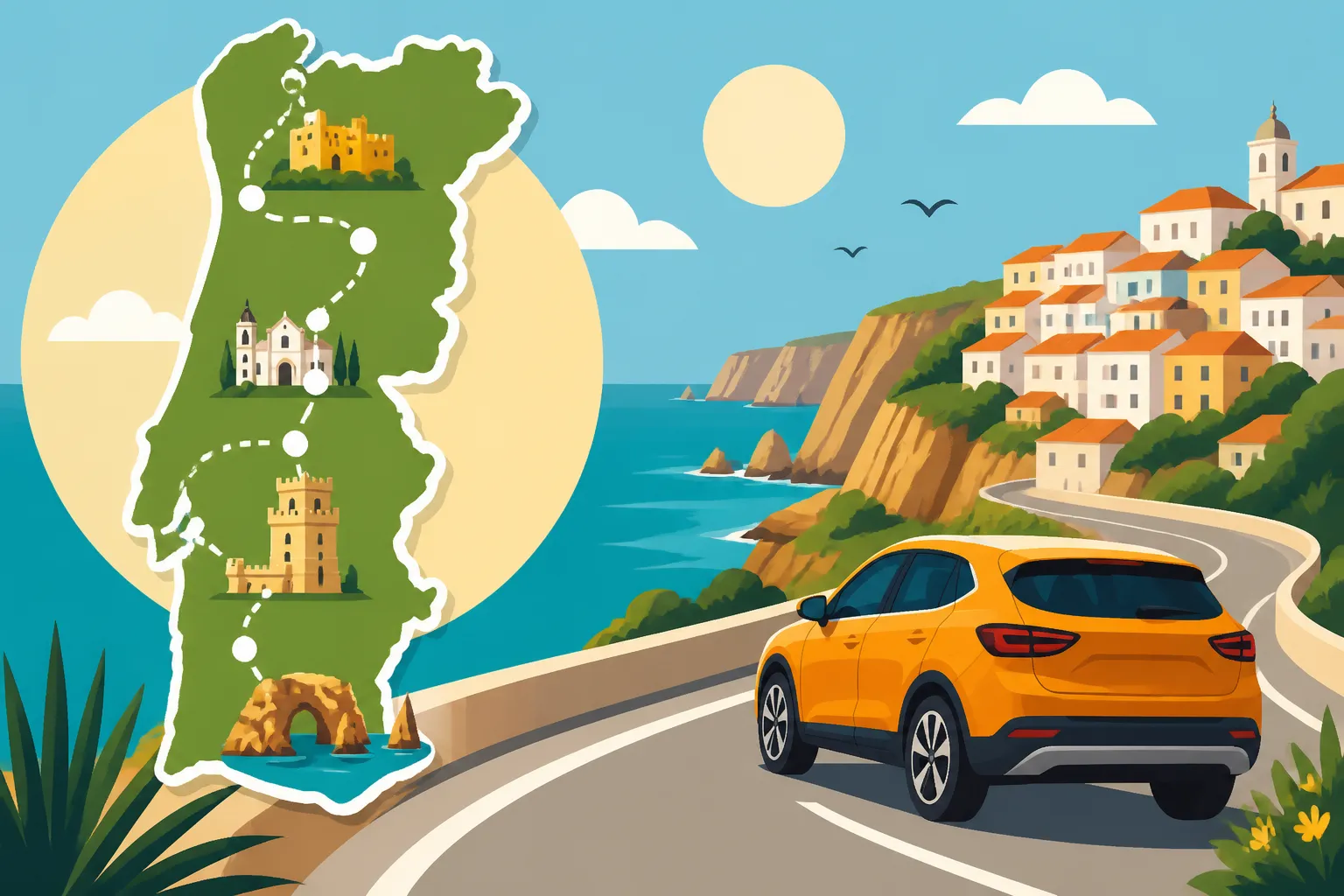
A linear route starts in one city and ends in another. Porto to Faro is the most popular version, and it makes perfect sense on a map. The catch is the one-way drop-off fee most rental companies charge when you return the car at a different location. Check that fee before you commit. Some travelers find the extra cost worth it to skip a long backtrack. Others drive one way and return by train.
Hub-and-spoke means staying in two or three bases and doing day trips from each. This is my favorite for anyone who hates packing every morning. You might base yourself in Évora for the Alentejo, Lagos for the western Algarve, and Pinhão or Peso da Régua for the Douro. You drive less on transfer days and more on relaxed out-and-back excursions.
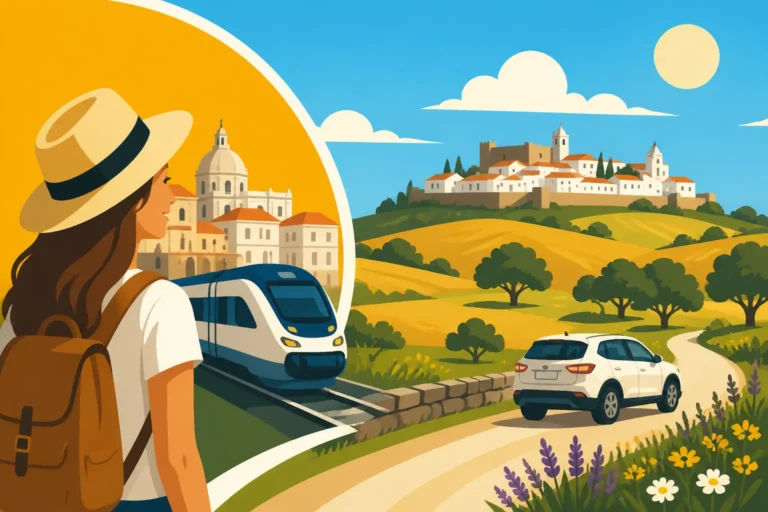
My honest advice for a first trip is a linear route with a train leg at one end. Drive the parts where a car really matters, such as the Douro, the Alentejo, and the Costa Vicentina. Skip driving in Lisbon and Porto completely. If you want to compare train and bus options for that car-free leg, Omio lets you see CP trains and long-distance coaches side by side, which helps when you are deciding whether to return the car in Faro and ride the rails back north.
How Many Days You Really Need
This is where most itineraries fall apart. Portugal is small, but the driving is slower than distances suggest, especially off the motorways. A route that looks like two hours on paper becomes four once you add a winding national road, a lunch stop that turns into a long lunch, and a wrong turn into a village street that narrows to the width of a donkey cart.
Here is a rule of thumb I give friends:
- 7 days: Pick one region pair. Lisbon plus the Alentejo, or Porto plus the Douro. Trying to cover north to south in one week means you spend the trip in the car.
- 10 days: You can do a proper north-to-south linear route if you accept some long transfer days and skip a few places.
- 14 days: This is the sweet spot for the full country, with time for detours, a beach day, and at least one day with no driving at all.
- 3 weeks or more: Now you can add the N2 road trip, the Serra da Estrela, or the remote villages of Trás-os-Montes.
If your trip lasts two weeks, see How to Plan a Two-Week Portugal Itinerary for a fuller breakdown of where the days go.
Build in one “buffer” day for every five days of travel. You will need it. Maybe a sudden Atlantic storm turns a beach day into a museum day. Maybe a town festival blocks the only road into the historic center. Maybe you just fall in love with a quinta in the Douro and refuse to leave.
Renting the Right Car for Portuguese Roads
Car choice matters more here than in most of Europe. Book small. A compact car is a blessing in Sintra, Óbidos, Monsaraz, and every hilltop town in the interior. Rental agents will offer you an upgrade to an SUV at the counter. Unless you are a family of five with big suitcases, say no politely.
Manual transmission is the default in Portugal. Automatics exist but cost more and sell out early in summer. If you cannot drive stick confidently, book an automatic as early as you can and confirm it in writing. Hill starts on cobbled streets in Porto’s Ribeira are no place to learn clutch control.
Tolls are the other big decision. Many Portuguese motorways use electronic-only gantries with no booths and no way to pay on the spot. The A22 across the Algarve, which used to catch most visitors, has been toll-free since 1 January 2025. Rental companies usually offer a Via Verde transponder for a daily fee, and I recommend taking it every time. It charges tolls automatically, and you never have to think about the post office payment process for unpaid electronic tolls. For the full picture, read How to Rent a Car in Portugal Without Toll Surprises before you book, and How Do Tolls Work in Portugal for Rental Cars? if you want the technical detail on gantries and payment windows.
Three Proven Portugal Road Trip Itineraries
Below are three routes I’ve driven and refined over the years. Use them as templates, not scripture. Swap stops, stretch days, and cut whatever does not excite you.
| Itinerary | Best Length | Start and End | Driving Intensity | Best For |
|---|---|---|---|---|
| Classic North to South | 12 to 14 days | Porto to Faro | Moderate, some long days | First-timers who want the highlights |
| Alentejo and Algarve Loop | 7 to 10 days | Lisbon to Lisbon | Low to moderate | Slow travel, beaches, wine, quiet villages |
| Douro and Minho Circuit | 6 to 8 days | Porto to Porto | Moderate, winding roads | Wine lovers, hikers, green landscapes |
The Classic North to South Route
This is the one everyone wants, and for good reason. It covers the country’s greatest variety in two weeks.
Days 1 to 2, Porto: Do not pick up the car yet. Explore Porto on foot and by metro. Cross the Dom Luís I Bridge, visit the port lodges in Vila Nova de Gaia, and eat a francesinha at least once. Collect the rental car on the morning of day three, ideally from an office outside the center or at the airport.
Days 3 to 4, Douro Valley: Drive east to Peso da Régua and Pinhão. The N222 between those towns is one of the most beautiful roads in Europe, a ribbon of tarmac hugging terraced vineyards above the river. Stay at a quinta if you can. Book a wine tasting that does not require you to drive afterward, or pick one person to stay sober. Portugal’s drink-driving limits are strict, and police checkpoints on rural roads are real. For more on the region, see The Douro Valley: Wine Country and River Cruises.
Day 5, Coimbra via Aveiro or Viseu: Head south to Coimbra, the old university city. If you prefer the coast, take the route via Aveiro’s canals and the striped houses of Costa Nova. If you prefer the interior, go via Viseu. Either way, park at the edge of Coimbra’s old town and walk up to the university.
Days 6 to 7, Silver Coast: Continue to Nazaré for the giant-wave cliffs, then Óbidos for its walled village, with a stop at the monasteries of Alcobaça and Batalha along the way. These two monasteries are close together and pair well on a single drive day.
Days 8 to 9, Lisbon and Sintra: Here is my strongest advice. Return the car or park it and leave it. Driving in central Lisbon is stressful, parking is scarce, and the city’s trams, metro, and ride-hailing apps work far better. Visit Sintra by train from Rossio station. If your rental contract allows, pick up a new car when you leave Lisbon instead of paying to park one for days.
Day 10, Évora: Drive east into the Alentejo. Évora’s Roman temple, Chapel of Bones, and quiet evening squares feel like a different country after Lisbon. If you only have time for the inland south, How to Visit the Alentejo From Lisbon covers the shorter version.
Days 11 to 12, Costa Vicentina: Head southwest to the wild Atlantic coast. Base yourself in Vila Nova de Milfontes, Zambujeira do Mar, or Aljezur. This stretch is rugged, windy, and far less developed than the Algarve. The coastline is protected parkland, so expect dirt tracks to beach car parks. The Costa Vicentina: Wild Beaches and Cliffs explains which beaches suit swimmers and which suit surfers.
Days 13 to 14, Algarve: Finish in the Algarve. Lagos for its cliff beaches and old town, a boat trip to the Benagil cave area, and Tavira or Faro for the quieter eastern side. Return the car in Faro and fly home, or take the train north.
The Alentejo and Algarve Loop
This is the route for people who want to slow down. It starts and ends in Lisbon, avoids one-way fees, and keeps most driving days short.
Leave Lisbon across the 25 de Abril Bridge or the Vasco da Gama Bridge and head to the Setúbal Peninsula. Spend a day around Arrábida’s turquoise coves and the fishing town of Sesimbra. Then cut inland to Évora and spend two nights there. From Évora, do a day trip to Monsaraz, a tiny walled village above the Alqueva reservoir. If you time it right, stay into the evening for the dark skies that make this area famous for stargazing.
Next, drive south through the cork oak plains to the Algarve. Choose either the eastern side around Tavira for calm water and salt flats, or the western side around Lagos for dramatic cliffs. Spend three nights here. Then return north up the Costa Vicentina, stopping in Odeceixe and Vila Nova de Milfontes, before closing the loop back to Lisbon.
What I love about this loop is the rhythm. The Alentejo forces you to slow down. Shops close for lunch, villages nap in the afternoon heat, and dinner rarely starts before eight. Fighting this rhythm leaves you frustrated. Leaning into it is the whole point of the trip.
The Douro and Minho Circuit
This northern loop suits travelers who prefer green hills to beaches. It starts and ends in Porto.
Head northeast to Guimarães, the cradle of Portugal, then on to Braga with its baroque stairway at Bom Jesus do Monte. Spend a night in either town. Continue north to Ponte de Lima, one of the oldest towns in the country, with a Roman bridge and riverside walks. From here, head into the Peneda-Gerês National Park for waterfalls, granite villages, and wild ponies grazing by the road.
Swing south and east into the Douro Valley for two or three nights. Drive the N222, visit a few quintas, and consider a river cruise for one afternoon so nobody has to drive. Then return west to Porto. If you’d rather do the Douro as a shorter add-on, see How to Visit the Douro Valley From Porto.
A word of warning about this route. Northern roads are steep, curvy, and often wet outside summer. Mountain roads in Gerês can be single-track with blind corners. Drive slowly, use your horn on tight bends where locals do, and never trust GPS estimates here.
Building Your Day-by-Day Plan Step by Step
Once you have picked a route shape and template, turn it into a working plan. This is the process I use for every trip.
- Fix your entry and exit points. Choose your arrival and departure airports first. Lisbon, Porto, and Faro all have international flights. This decision locks in whether you need a loop or a linear route.
- List your non-negotiables. Write down the three to five places you will regret missing. Everything else is optional.
- Map the driving legs honestly. Check each leg in a mapping app, then add generous extra time for anything off the motorway. Rural national roads, mountain passes, and village approaches are always slower than the estimate.
- Cap your driving time. I aim for no more than three to four hours of driving on any single day, and many days far less. Long transfer days should land you somewhere with an easy dinner and a walkable center.
- Decide where you need the car. Mark the days in Lisbon and Porto as car-free. Arrange your rental pickup and return around them.
- Assign overnight bases. Prefer staying two or more nights in a place rather than one. Every single-night stop costs you check-in, check-out, unloading, and parking hassle.
- Book the time-sensitive things. Popular monuments such as Pena Palace in Sintra, sunset boat tours in the Algarve, and Douro wine experiences sell out in high season. Book these first.
- Add your buffer days. Slot in at least one day with no plans and no driving.
- Check opening days. Many museums and monuments close on Mondays. Many family restaurants close one day a week, often Sunday evening or Monday. Adjust your sightseeing days so you don’t arrive in a town on its closed day.
- Download offline maps and set up data. Rural coverage can be patchy in the interior and the mountains.
For staying connected on the road, see Mobile Data and eSIMs for Travel in Portugal.
Booking Accommodation Along the Route
Where you sleep can make or break a road trip, and Portugal has some unusual options worth knowing.
Pousadas are historic buildings converted into hotels: castles, convents, monasteries, and palaces. Staying in the converted convent in Arraiolos or the castle in Óbidos is unforgettable. They are not cheap, but even one night can become the highlight of a trip. How to Choose Between a Hotel and a Pousada in Portugal compares the experience with standard hotels in detail.
Quintas and turismo rural are farm and estate stays, common in the Douro, the Alentejo, and the Minho. They often include breakfast made from estate produce, and owners give the best local advice you will find anywhere.
Guesthouses and small hotels in historic centers are charming but check one thing before booking: parking. A beautiful guesthouse inside Évora’s walls or Óbidos’s old town may have no parking at all, or may expect you to navigate a restricted zone. Always message the owner before arrival to ask where to leave the car.
I usually book through Booking.com for road trips because the free-cancellation filter gives me room to shift dates when a buffer day gets used early. Read the cancellation terms on each listing carefully, as they vary by property. For the stays you care about most, like a pousada or a quinta, you can also contact the property directly and ask about parking, check-in times, and dinner options.
Planning a Realistic Daily Driving Rhythm
Portuguese daily life follows a rhythm that will either help or sabotage your plans, depending on whether you account for it.
Lunch is serious. Many restaurants serve lunch roughly from midday to early afternoon and then close their kitchens until dinner. If you arrive in a rural town mid-afternoon, you might find nothing open but a café selling toasties and pastries. Plan to stop for lunch around the start of service, not at the end.
Dinner starts later than in northern Europe or North America. In small towns, the restaurant may be empty at seven and full by nine. Use the early evening for a walk instead of rushing to eat.
Morning departures are your friend. Get on the road early, especially in summer when the Alentejo and the Algarve interior become seriously hot by the afternoon. Arrive at your next base, check in, and use the hot hours for a pool, a siesta, or an indoor museum.
Here is a sample transfer day from Évora to the Costa Vicentina:
- Breakfast and check-out early
- Drive southwest through the cork plains, stopping at a village café for a bica and a pastel de nata
- Arrive at a coastal town before lunch service ends
- Check in, then spend the afternoon on the beach
- Sunset at a clifftop viewpoint, dinner late
That is a full, satisfying day with only a few hours behind the wheel.
On-the-Road Realities No Itinerary Warns You About
The plan on paper is one thing. The plan on the road is another. These are the practical details I wish someone had told me before my first trip.
Tolls, Fuel, Roundabouts, and Parking
Tolls. Portugal has two systems. Some motorways have traditional toll booths where you take a ticket and pay at the exit. Others are electronic only, with overhead gantries that read your plate or transponder, although tolls ended on 1 January 2025 on several former SCUT routes, including the A22, A23, A24 and A25. Without a transponder, paying for electronic tolls afterward is a fiddly process involving payment windows and post offices. The rental company transponder saves you this. You can also avoid motorways completely by setting your navigation to avoid tolls. The national roads, marked with an N, are slower but often far more scenic.
Fuel. Learn two words. Gasóleo is diesel. Gasolina is petrol. Many rental cars in Portugal are diesel, so check the fuel type on the cap or the key tag before your first fill. Putting petrol in a diesel engine is an expensive mistake. Fuel stations on motorways tend to cost more than those in towns, so top up before you get on the highway when you can.
Roundabouts. Portuguese roundabouts have rules many visitors find confusing. Traffic already in the roundabout has priority. If you are taking the first exit, stay in the outside lane. If you are going further around, you can use the inner lane, but move to the outside before your exit and signal clearly. Locals often move quickly and expect you to commit, so drive decisively.
Parking. In historic centers, look for signs marking restricted access zones, often enforced by cameras or retractable bollards. Do not follow GPS blindly into them. Use the municipal car parks at the edge of town and walk in. Blue-zone street parking usually requires a ticket from a nearby machine or a parking app. In villages, ask your host where locals park.
Speed cameras. Portugal uses fixed and mobile speed cameras, and fines sent to your rental company come back to you with an administrative fee on top. Respect the limits, especially through village approaches where they drop sharply.
Common Road Trip Mistakes and How to Avoid Them
Overpacking the itinerary. The single most common problem I see is trying to see everything. A trip with a new hotel every night leaves you exhausted and underwhelmed. Three bases in seven days is plenty.
Driving into Lisbon or Porto. Both cities have steep, narrow streets, aggressive traffic, trams sharing lanes, and scarce parking. Experience both on foot and by public transport, and keep the car for the regions.
Ignoring the season. August in the Algarve means crowded beaches, packed car parks, and slow coastal traffic. The north can be rainy and cold in winter, and some mountain roads become tricky. Spring and early autumn give you the best balance of weather and space. See When Is the Best Time of Year to Visit Portugal? for a month-by-month view, and How to Avoid the Crowds in Portugal’s Peak Season if summer is your only option.
Forgetting about guided experiences. Some things are better with a guide or a booked slot. The Benagil cave can only be reached by water, so a boat or kayak tour is the practical choice. A Douro tasting tour with a driver means nobody has to stay sober. I usually browse GetYourGuide to compare options for these, checking reviews, meeting points, and cancellation terms. It also helps fill a rainy buffer day when the beach plan falls through.
Skipping insurance details. Read your rental agreement carefully. Check the excess, what the basic cover excludes (tires, glass, and undercarriage often are), and whether driving on unpaved roads to remote beaches voids the cover. Many Costa Vicentina beaches are reached by dirt tracks, so this matters.
Not carrying cash. Most places accept cards, but small village cafés, rural fuel stations, and some parking machines still prefer cash or the local Multibanco network. Keep some euros in the glovebox.
If you want to combine the cities and the wine region without driving everywhere, How to Combine Lisbon, Porto, and the Douro in One Trip shows how to mix trains and a short rental.
A Portugal road trip rewards people who plan for the country as it is, not as the map pretends it is. Choose your route shape, keep the cars out of the big cities, give yourself fewer stops and longer stays, and leave room for the long lunches and wrong turns that become your best stories. The detour you didn’t plan, to a hilltop village or a quinta with a view, is usually the part you remember most.
Disclaimer
This article is for general informational purposes only and does not constitute professional advice. Laws, prices and regulations vary by location and change over time. Consult a qualified professional for guidance on your specific situation.