How Do Tolls Work in Portugal for Rental Cars?
Disclosure: This article contains affiliate links. If you buy through them, we may earn a commission at no extra cost to you. Read our full disclosure.
Ah, the infamous Portuguese tolls for rental cars! I hear you, friend. Many expats and tourists arrive in Portugal, excited to explore our beautiful country, only to be hit with a wave of confusion and anxiety when it comes to tolls. It feels like a secret club with unwritten rules, and the last thing you want is a hefty fine appearing on your credit card statement months after your trip. This guide is going to cut through the confusion and give you the real-world rundown on how to navigate Portugal's toll system in a rental car, saving you stress and unexpected costs.
The Labyrinth of Portuguese Tolls: What You Need to Know
Let's be honest, driving in a new country is already a lot to handle, and Portugal's toll system can feel like an extra layer of complexity designed specifically to trip up foreigners. It's not like back home where it's usually just a simple booth or a clearly marked electronic gate. Here, you've got a mix of systems, and knowing which is which is half the battle.
Different Types of Toll Systems
Portugal essentially operates two main types of toll roads, and understanding the distinction is absolutely crucial, especially when you're behind the wheel of a rental car. You'll encounter both traditional toll roads and the more perplexing electronic-only toll roads, often called SCUTs (a relic from the "no cost to the user" days, which is now very much not the case!).
Traditional toll roads are perhaps what you're more familiar with. You drive through a barrier, take a ticket, and then pay at another barrier when you exit, either with cash, card, or, if you have one, a Via Verde transponder. These are fairly straightforward. You'll see lanes marked clearly for manual payment (often with a person or a machine you can feed money into) and specific green lanes for Via Verde. If you don't have a Via Verde device, never go through the green lane unless you want a fine and a headache. You'll often find these on the busier A1 connecting Lisbon and Porto, for instance.
Then there are the electronic-only tolls. These are the ones that really baffle people. There are no booths, no barriers, and no human beings to take your money. You just drive under a gantry, and cameras read your license plate. These roads, often found around the Algarve (A22) or along various interior routes, are entirely cashless and electronic. It's incredibly convenient if you have the right setup, but a nightmare if you don't, because there's no way to pay on the spot. You simply pass under, and the payment is supposed to be registered later. This system is exactly where the complications with rental cars begin.
The Headache of Electronic Tolls for Rental Cars
The core problem for rental car drivers with electronic tolls boils down to two things: identification and payment. Since there's no physical interaction, your rental car's license plate is recorded, but the bill doesn't go to you directly; it goes to the car's registered owner – the rental company. This creates a time lag and a layer of bureaucracy that can be incredibly frustrating.
Imagine you're driving your rental from Faro along the A22 in the Algarve, admiring the stunning coastline. You zip under several gantries, thinking nothing of it because you haven't seen a single toll booth. You return the car, fly home, and months later, a mystery charge appears on your credit card statement, often accompanied by an administrative fee from the rental company that seems disproportionately high compared to the actual toll cost. This scenario is all too common and is precisely what we want to help you avoid.
For private Portuguese vehicles, the owner would have a few days to pay these electronic tolls at a CTT (post office) or Payshop after driving on them. However, for a tourist who's already left the country, this isn't a viable option. Plus, the rental car company is the owner, not you, so the responsibility technically falls to them first. They've paid the tolls, and now they're coming to you, with their added charges, for reimbursement. It’s enough to make you want to stick to Bolt or Uber for your travel, at least in the cities!
Navigating Rental Car Toll Solutions: Options and Pitfalls
When you pick up your rental car in Portugal, you'll inevitably be asked about tolls. It's a critical moment where a little knowledge can save you a lot of hassle and money. The main solution revolves around electronic devices, but even that comes with its own set of choices and caveats.
The Essential Toll Device: Via Verde
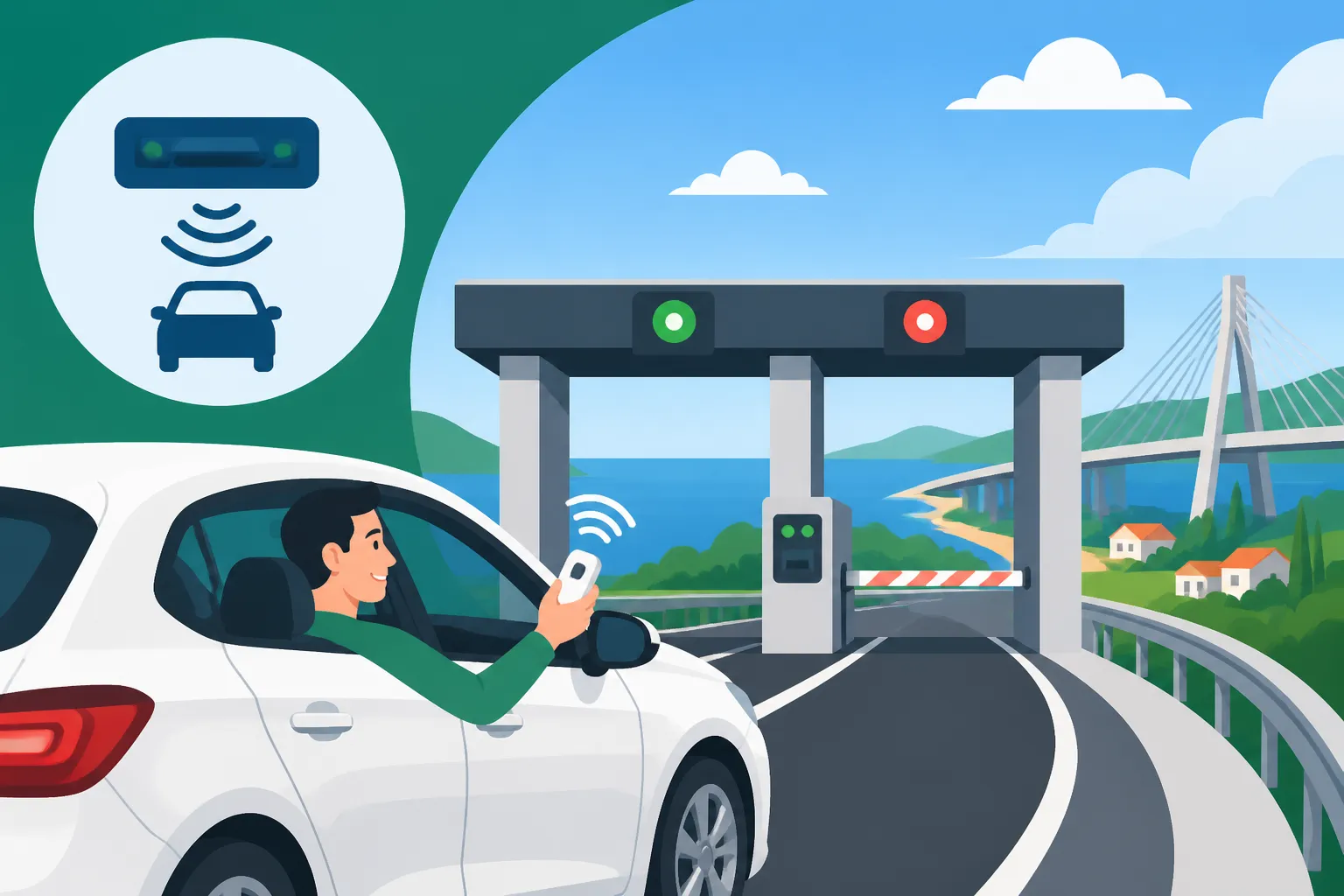
The undisputed champion of Portuguese toll payment is the Via Verde transponder. This small, electronic device attaches to your car's windshield and allows for seamless, automatic payment on all toll roads in Portugal – both traditional and electronic. When you pass through a toll gate or under an electronic gantry, the device emits a signal, your car is identified, and the toll is automatically processed. You'll recognize the Via Verde lanes by the green 'V' symbol. For traditional tolls, these are often dedicated lanes that let you whiz past queues. For electronic tolls, it’s the only truly hassle-free way to pay as you go.
For rental cars, most reputable rental companies offer this device, often pre-installed or as an optional add-on during pickup. They might call it an "electronic toll device," "toll transponder," or simply refer to the "Via Verde service." There are usually two common ways rental companies charge for this:
- A daily fee plus actual tolls: You pay a small daily fee (e.g., €1-2) for the use of the device, on top of the actual tolls you incur. This is generally the most common model and provides a clear breakdown.
- An all-inclusive package: Some companies offer a flat daily rate that is supposed to cover all tolls, or at least a significant portion, within your rental period. Be wary of these and clarify exactly what's included, as they can sometimes be more expensive than just paying the daily device fee and actual tolls.
The pros of opting for the Via Verde device from your rental company are immense: unparalleled convenience, no need to carry cash for tolls, faster travel through traditional toll gates, and most importantly, complete peace of mind that you won't receive unexpected fines months later. The downside, of course, is the administrative fee charged by the rental company on top of the actual toll costs. These fees can sometimes feel excessive, but when weighed against the alternative of chasing down unpaid electronic tolls from abroad or facing fines, many find it a worthwhile expense. Always ensure the device is working and properly activated before you drive away, especially if you've booked your car via platforms like Omio or directly from the rental car website.
Understanding Rental Company Policies
Every rental car company will have its own specific policy regarding tolls, and it's absolutely vital to clarify this when you pick up your vehicle. Don't assume anything. What worked with Hertz in Spain might be different from Sixt in Portugal, or from Avis in Lisbon.
Typical approaches you might encounter include:
- Mandatory Inclusion: Some companies, especially those catering heavily to tourists in popular regions like the Algarve, might include the Via Verde device and its associated fees as a mandatory part of your rental agreement. This simplifies things but can be slightly more expensive.
- Optional Add-on: This is the most common. You'll be asked at the counter if you want to add the "electronic toll service." They'll explain the daily fee and how the tolls will be billed. This gives you the choice, but as discussed, declining it for a trip involving motorways with electronic tolls is generally not advisable.
- Post-Billing with Admin Fees: If you decline the device and use electronic toll roads, the rental company will pay the tolls on your behalf and then charge your credit card, often adding a substantial "administrative fee" per toll event or per billing cycle. This can quickly accumulate and be far more expensive than the daily fee for the Via Verde device. It's a painful lesson learned by many, and something you definitely want to avoid!
Before you even book, check the rental company's terms and conditions on their website or the platform you're using like Booking.com or GetYourGuide. Upon arrival, explicitly ask the rental agent: "How do tolls work with this car? Does it have a Via Verde device? What are the associated costs and fees for tolls?" Get it in writing or make a note of what you're told. This proactive approach can prevent nasty surprises. Remember, once you sign that contract and drive off, you're agreeing to their terms, even if you didn't fully understand them.
Alternatives for Electronic Toll Payment (If Your Rental Doesn't Offer Via Verde or You Decline It)
This is where things get truly complicated and frankly, usually not recommended for rental cars. For a tourist in a rental car, the only practical and stress-free solution for electronic tolls is almost always the Via Verde device offered by the rental company. However, for the sake of completeness, let's look at the theoretical "alternatives" and why they typically fall short for renters.
The system for paying electronic tolls after you've driven on them (without a Via Verde device) is designed for private Portuguese vehicles, or for a very specific type of foreign-plated vehicle. This involves going to a CTT (Correios de Portugal) post office or a Payshop agent two days after you've used the toll road, providing the license plate number, and paying the accumulated tolls. You cannot pay immediately, as the system needs time to register your passage.
The major problems for rental car drivers with this method are:
- Timing: You have to wait two days for the tolls to register, and then you typically have a limited window (around 5 days from the toll passage) to pay. If you're on a short trip, or if your electronic toll use is spread out, this becomes a logistical nightmare of finding a CTT, figuring out the system, and ensuring all tolls are captured.
- Ownership: The rental car is registered to the rental company. Even if you try to pay at CTT, the payment is linked to the car's plate. The rental company might still charge you their administrative fees for "managing" the payment, or if you miss any, they will certainly bill you later.
- Tourist Practicality: As a tourist, do you really want to spend your precious vacation time hunting down a post office and trying to explain in possibly broken Portuguese that you need to pay electronic tolls for a car you don't own? It adds an unnecessary layer of stress and complexity.
There are also services like Easy Toll and Toll Card, which are explicitly designed for foreign-plated vehicles entering Portugal. These involve linking your foreign license plate to a payment method or purchasing pre-loaded cards. While these are great for visitors driving their own car into Portugal from Spain, they are not applicable to Portuguese-registered rental cars. Your rental car will have a Portuguese license plate, making these services irrelevant.
Therefore, the takeaway here is clear: for rental cars in Portugal, strongly consider the Via Verde device. It might seem like an extra charge upfront, but it’s an investment in a hassle-free journey and protection against much larger retrospective bills and fines.
| Toll Payment Option (Rental Cars) | Description | Pros | Cons |
|---|---|---|---|
| Rental Co. Via Verde Device | Electronic transponder provided by the rental company for automatic payment on all tolls. | Utmost convenience, prevents fines, faster travel. | Rental company daily fee + actual tolls, potentially higher overall cost. |
| Manual Payment (Traditional) | Pay cash or card at physical toll booths. (Only applies to traditional tolls, not electronic) | No extra device fee. | Slows down travel, requires cash/card ready, not valid for electronic-only tolls, easy to miss. |
| Pay at CTT/Payshop (Electronic) | Pay electronic tolls 2 days after passage at a post office or Payshop. (Not recommended for rentals) | Avoids rental company device fee. | High risk of fines if missed, logistical nightmare for tourists, rental company admin fees may still apply. |
| Easy Toll/Toll Card | Services for foreign-plated vehicles entering Portugal. | Designed for seamless foreign vehicle payment. | Not applicable for Portuguese-registered rental cars. |
Practical Tips for a Smooth, Toll-Free-ish Journey (Minimizing Stress)
Okay, so we've established that tolls can be a bit of a maze, but you're now armed with the knowledge to navigate it. Let's talk practical steps to ensure your road trip through Portugal is smooth sailing, not stressful toll-gate roulette.
Pre-Trip Planning and Rental Agreement Scrutiny
The best defense is a good offense, and that starts before you even land in Portugal. When you're browsing for your rental car on platforms like Omio or directly with companies, always dig into their toll policies. Look for sections on "electronic tolls," "Via Verde," or "additional services." If you can't find clear information, make a note to ask specific questions upon pickup.
Once you're at the rental counter, it's not the time to be shy. Treat it like you're reviewing a lease agreement for an apartment. Ask for a breakdown of all charges related to tolls. Confirm if the Via Verde device is included, if there’s a daily fee for it, and how the actual tolls will be processed. Don't just nod and sign; ensure you fully understand the implications. If anything seems off or unclear, ask them to explain it until it makes sense. It might feel awkward for a moment, but it's far less awkward than disputing a large charge later. This diligence, similar to understanding your rights with a Portuguese Lease Contracts Contrato de Arrendamento: What to Look For, will save you headaches.
Reading the Road Signs and Avoiding Fines
Even with a Via Verde device, it's good practice to understand the road signs. Keep an eye out for the green 'V' symbol. These are the dedicated Via Verde lanes at traditional toll plazas. If you have the device, use these lanes and sail through. If you don't (which, again, is generally not recommended for rental cars), look for lanes marked with symbols for cash or card payments.
For electronic tolls, the signs can be a bit more subtle. You'll often see overhead gantries with electronic screens, sometimes displaying "Portagem Eletrónica" (Electronic Toll) or just the green 'V' symbol without any physical booths. These are the points where your license plate is read, and if you have the Via Verde device, it registers automatically. If you've opted not to take the device, remember there's no way to pay at the moment. You’ll have to rely on the rental company’s billing system (and their fees) or the impractical CTT payment method. Missing payments can lead to substantial fines, often several times the original toll amount, so awareness is key. If you find yourself in a situation where you believe you've incurred an unpaid electronic toll, knowing How to pay an unpaid SCUT electronic toll online before getting fined for future reference, even if it's typically for private cars, might provide a tiny bit of comfort.
Budgeting for the Unexpected
Travel to Portugal is a fantastic experience, and you want to enjoy every moment without financial worries hanging over your head. When planning your trip budget, don't forget to factor in potential toll costs. While individual tolls aren't usually astronomical, they can add up quickly, especially on longer journeys or if you're frequently using motorways. A trip from Lisbon to Porto and back, for example, can easily run you €20-30+ in tolls, plus the daily rental car device fees.
A good rule of thumb is to overestimate slightly. If you expect to spend €10 on tolls, budget €15-20. This buffer provides peace of mind and covers those unexpected smaller tolls you might not have accounted for. Thinking about the overall Cost of Living in Portugal 2026: Detailed Budgets for Singles and Families for your trip, tolls are just one component. If you find the cost of driving (car rental + fuel + tolls) to be too high or too much of a hassle, remember that Portugal has a decent public transport network, and in major cities, ride-sharing apps like Bolt and Uber are readily available and affordable. You can learn more about Using Bolt vs Uber in Portugal: Which ride-hailing app is cheaper? if you decide to go car-free. Knowing your options, and having a plan for potential issues, even for things like needing Safety and Emergency Preparedness in Portugal for Foreign Residents, will make your trip far more enjoyable.
Disclaimer
Please remember that while I strive to provide accurate and up-to-date information based on my experience and available public data, rules and regulations in Portugal, especially concerning administrative processes and fees, can change. Always verify the latest information with official sources or your chosen rental car company before making decisions. This guide is for informational purposes only and does not constitute legal or financial advice.