The Algarve for Travelers: Beaches, Towns, and Cliffs
Disclosure: This article contains affiliate links. If you buy through them, we may earn a commission at no extra cost to you. Read our full disclosure.
You land at Faro, pick up a rental car, and suddenly face a coastline of more than a hundred beaches, a dozen towns that look alike online, and cliff paths with no railings. Many first-time visitors burn days driving between the wrong places. This guide explains how the Algarve is laid out, which towns suit which travelers, and how to explore beaches and cliffs safely.
Understanding the Algarve Before You Arrive
The Algarve is Portugal’s southernmost region. It is a strip of coast running from the Spanish border at the Guadiana River to the wild headland of Cabo de São Vicente in the far southwest. It looks compact on a map. In practice it holds several different landscapes, and the one you pick shapes your whole trip. The first time I drove it end to end, I wondered how a single region could have golden sea stacks, flat lagoon islands, and windswept surf cliffs within a couple of hours of each other.
The Western Barlavento and Its Famous Cliffs
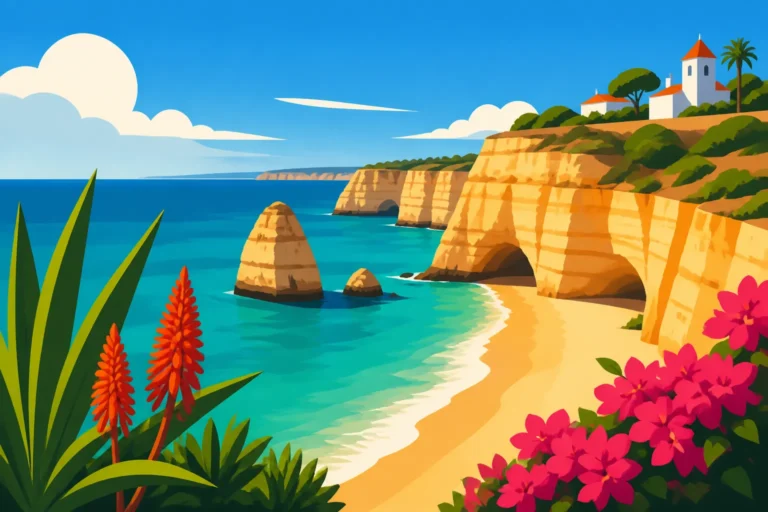
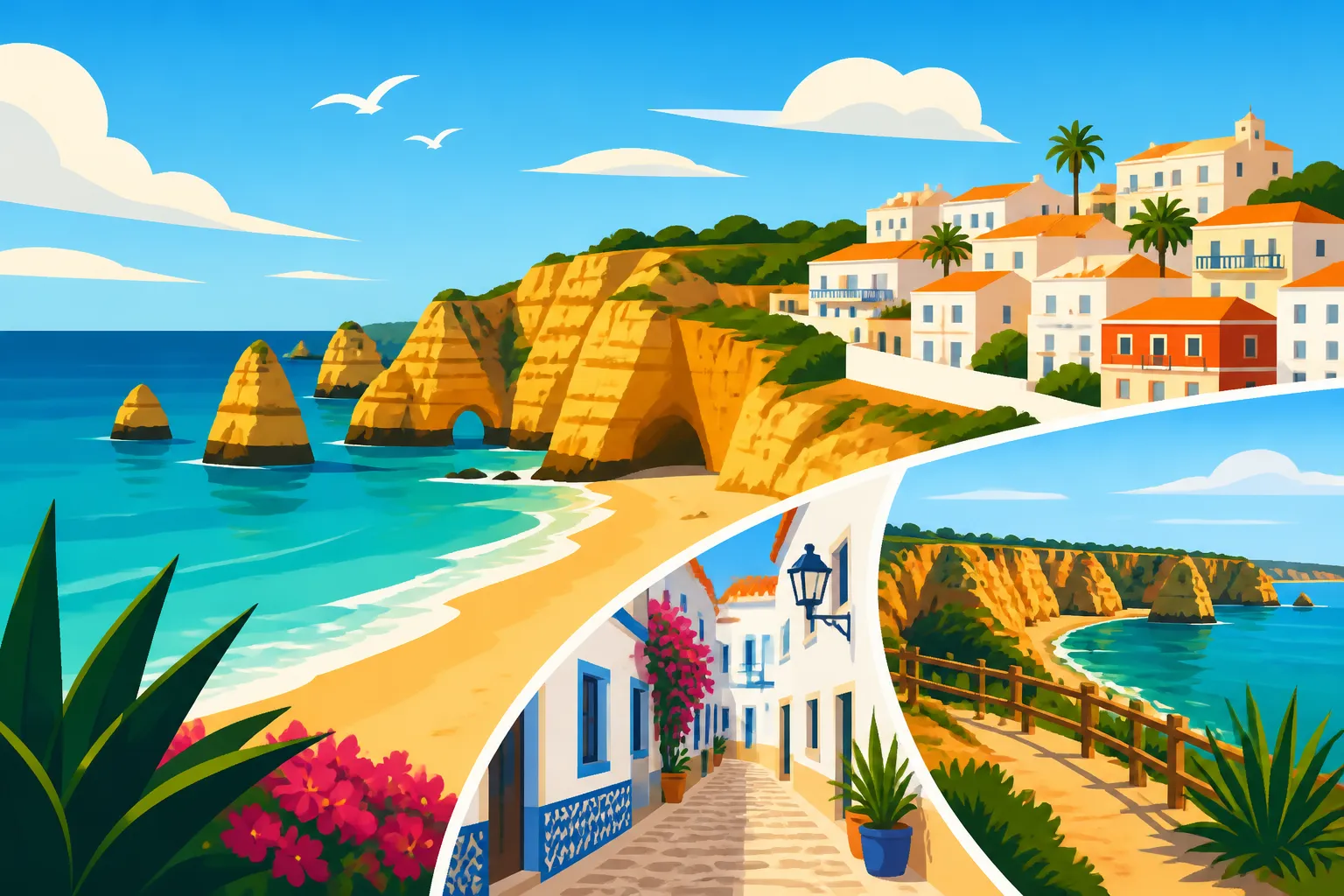
West of roughly Albufeira is the Barlavento, the “windward” side. This is the postcard Algarve. Honey-colored limestone cliffs drop into turquoise coves. Grottoes, arches and sea stacks have been carved out over thousands of years. Lagos, Carvoeiro, Ferragudo and the stretch around Praia da Marinha sit here. If you have seen a photo of a beach framed by orange rock pillars, it was almost certainly taken on this side.
The trade-off is that the beaches are often small and tucked below steep staircases or ramps. In high summer they fill early. A cove that looks empty and magical online can be towel-to-towel by late morning in August. The scenery is still worth it. You just need to plan your timing, which I cover further down.
Beyond Lagos, toward Sagres, the land flattens and the wind picks up. The coast becomes rawer and less developed, and it ends at Cabo de São Vicente, where the cliffs face the open Atlantic. The west-facing coast north of there belongs to a different world, covered in The Costa Vicentina: Wild Beaches and Cliffs.
The Eastern Sotavento and the Ria Formosa
East of Faro is the Sotavento, the “leeward” side, and it feels like another country. The cliffs give way to the Ria Formosa, a protected lagoon system of salt marshes, channels and sandy barrier islands. Towns like Olhão, Fuseta and Tavira face the lagoon, not the open sea. To reach the long ocean beaches you usually take a short ferry or water taxi across to an island.
Here the beaches are endless and flat, and the sea is generally calmer and a little warmer than on the western end. You will see flamingos in the salt pans, clam diggers working the mudflats at low tide, and far fewer high-rise hotels. If the crowds of the central Algarve put you off, this side often feels like a relief.
The Central Strip and the Inland Hills
Between the two sits the central Algarve: Albufeira, Vilamoura, Quarteira, Vale do Lobo and Quinta do Lago. This is the most developed zone, with big resorts, golf courses, marinas and a lively nightlife strip in Albufeira. It is convenient and well served. It is also the area where the Algarve looks most like a generic resort coast.
Few short-stay visitors see the inland Algarve, and that is a shame. The Serra de Monchique rises behind Portimão, with cork oaks, eucalyptus and the viewpoint at Fóia, the highest point in the region. Silves has a red sandstone castle that was once the Moorish capital of the area. Loulé has a covered market that locals actually use. A half-day inland is the best antidote to beach fatigue I know.
Choosing Your Base: Towns Compared
The question I get asked most by visiting friends is “Where should we stay?” There is no single right answer. It depends on whether you want nightlife, quiet, cliffs, lagoons or easy logistics. For a deeper dive, see Beach Towns of the Algarve Compared: Lagos to Tavira. The table below is the cheat sheet I wish I had on my first trip.
| Town | Coast Type | Atmosphere | Best For | Watch Out For |
|---|---|---|---|---|
| Lagos | Western cliffs and coves | Lively old town, young crowd, walkable | Cliff walks, boat trips, first-timers | Busy streets in peak summer |
| Sagres | Wild headlands, surf beaches | Laid-back, windy, outdoorsy | Surfers, sunset at Cabo de São Vicente | Strong wind, fewer restaurants off-season |
| Carvoeiro | Cliffs and boardwalk | Small, scenic, hilly | Couples, Seven Hanging Valleys trail | Steep streets, limited parking |
| Albufeira | Mix of cliffs and sand | Resort town, big nightlife | Groups, nightlife, family resorts | Crowds, tourist-trap restaurants on the Strip |
| Faro | Lagoon and islands | Real working city, historic center | Short stays, culture, airport access | Fewer beaches within walking distance |
| Olhão | Lagoon and islands | Fishing town, authentic markets | Island hopping, seafood lovers | Less polished than resort towns |
| Tavira | Lagoon and long island beaches | Elegant, calm, historic | Families, slower travelers | Island beaches need a ferry |
Lagos and the West for First-Time Visitors
If you only have a few days and want the classic Algarve, Lagos is hard to beat. The walled old town is full of cafes and small bars. The marina is the jumping-off point for boat trips into the grottoes. Ponta da Piedade, a headland of sea stacks and arches, is a short drive or a long walk from the center. You can walk to several beaches, including Praia do Camilo with its long wooden staircase and Praia Dona Ana.
Lagos also works well without a car, because the regional train line ends here and the station sits across the marina from the old town. From Lagos, Sagres and the cape make an easy outing, and day trips to Monchique are simple to arrange.
Tavira and the East for Slower Travel
Tavira is the town I send people to when they tell me they want “the real Portugal, but with a beach.” It straddles the Gilão River with a Roman-style bridge, whitewashed houses, tiled facades and dozens of churches. It has a calmer rhythm. Dinner here is less about bar crawls and more about grilled fish on a riverside terrace.
The beaches are on Ilha de Tavira, reached by ferry, or at Praia do Barril, where a small tourist train or a walk across the dunes brings you to a long strip of sand. The famous “anchor cemetery” there is a line of rusted tuna-fishing anchors left in the dunes. Families especially like this side because the water tends to be calmer and the beaches are wide enough to spread out.
Faro and Albufeira as Practical Hubs
Faro is underrated, partly because most visitors leave the airport and drive straight past it. The walled Cidade Velha has a cathedral whose tower gives sweeping views over the lagoon. The Capela dos Ossos behind the Igreja do Carmo, a chapel lined with human bones, is unforgettable. It is a good base for a short stay or for travelers who want ferries out to Ilha Deserta and Ilha da Culatra.
Albufeira divides opinion. The old town above the main beach is pretty, and the Strip in the newer area is loud, neon-lit and aimed at partygoers. If that is your scene, you will love it. If not, consider staying a little outside the center, near Praia da Falésia with its red and ochre cliffs, and dipping into town when you feel like it. For comparing accommodation across these towns, Booking.com is useful for filtering by location and reading recent guest reviews about noise and parking, which matter more here than glossy photos suggest.
Beaches of the Algarve: What to Expect
Every visitor has a list of beaches to tick off, and it is easy to feel you are “doing it wrong” if you do not see them all. You do not need to. Pick two or three styles of beach and enjoy them properly. For a ranked selection, see The Best Beaches in the Algarve.
Cove Beaches Under the Cliffs
The western cove beaches are the stars. Praia da Marinha, near Lagoa, is a staple of travel photography for good reason, with sea stacks and an arch visible from the clifftop. Praia do Camilo near Lagos, Praia da Rocha in Portimão and the beaches around Carvoeiro and Ferragudo all share that dramatic setting.
The practical reality is that many of these beaches shrink at high tide, so check the tide times before you go. A cove that looks spacious at low tide can almost disappear a few hours later, and some smaller beaches can cut you off from the exit if you wander around a headland. Rockfalls also happen. The cliffs are soft and erode constantly, and you will often see warning signs asking you not to sit directly beneath them. Take those seriously, even when everyone else is camped in the shade at the base.
Lagoon Island Beaches in the East
The Ria Formosa island beaches are a completely different experience. Ilha Deserta, also called Barreta, has almost no development and feels genuinely remote. Ilha da Culatra has a small fishing village with sandy lanes instead of roads. Armona, reached from Olhão, has a cluster of holiday cottages and a long ocean beach on its far side.
Getting there is half the fun. Here is the process I follow when taking visitors island hopping:
- Check the ferry timetable the day before, as departures from Olhão, Faro and Tavira change between seasons and can be limited outside summer.
- Arrive at the pier early in peak months, because the public ferries fill up and the queue for tickets can be long.
- Decide whether you want the cheaper scheduled ferry or a private water taxi, which is more flexible but costs more.
- Pack water, snacks, sun protection and shade, because facilities on some islands are minimal.
- Confirm the time of the last boat back and set a phone alarm, since missing it can leave you scrambling for a water taxi.
Quiet Beaches and Seasonal Timing
Yes, you can still find calm sand in the Algarve, even in summer. It takes a bit of effort: a longer walk, an early start or a willingness to skip the famous names. Beaches like Praia da Boneca near Carvoeiro, the far ends of the long eastern islands and the stretches between better-known spots are often quieter. See How to Find Quiet Beaches in the Algarve for specific strategies.
Timing matters as much as location. July and August are hot, crowded and lively. Late spring and early autumn are, in my opinion, the sweet spot. The sea is still swimmable for many people, the crowds thin out and parking stops being a contact sport. Winter is mild and sunny, wonderful for walking, but some beach restaurants close and the water is bracing. If you are weighing up when to go, When Is the Best Time for a Beach Holiday in Portugal? goes through the seasons in detail.
Whatever the month, the Atlantic here is cooler than the Mediterranean. The first plunge can take your breath away, even in midsummer. Lifeguarded beaches use a flag system: green means safe to swim, yellow means you can paddle but should not swim out, and red means stay out of the water. Respect the flags, especially on the western side, where currents can be strong.
Cliffs, Caves and Coastal Walks
For me, the Algarve’s cliffs are its real treasure. Seeing them from above on foot and from below by boat are two different experiences, and I would encourage you to do both.
The Seven Hanging Valleys Trail
The Percurso dos Sete Vales Suspensos, or Seven Hanging Valleys Trail, runs along the clifftops between Praia da Marinha and Praia de Vale Centeanes, near Carvoeiro. It passes Benagil and the viewpoint above its famous sea cave, plus a series of small valleys that end abruptly at the cliff edge. The trail is well marked and moderate. The views of arches, sinkholes and turquoise coves are spectacular.
Walk it early in the morning or late in the afternoon. There is very little shade, and the midday sun bouncing off the pale rock is relentless. Wear proper shoes, not flip-flops, because the path is uneven in places. Stay well back from the edges. There are sinkholes inland from the cliff line, and the rock can crumble without warning. Arrange your transport in advance. Many walkers go one way and taxi back, or walk out and back from a single parking area.
Benagil Cave and Boat Trips
The Benagil sea cave, with its round hole in the roof letting sunlight onto a hidden beach, is probably the most photographed spot in the Algarve. It is reached from the water, by boat, kayak or stand-up paddleboard, and access rules around landing and swimming have been tightened to protect the site and manage crowds. Read the latest guidance before you book, and see How to Visit the Benagil Cave in the Algarve for practical detail.
Boat trips leave from Benagil beach itself, from Portimão, Armação de Pêra, Carvoeiro and Lagos. Platforms like GetYourGuide make it easy to compare operators, read reviews and check what is included, such as whether the trip covers other grottoes along the coast. Sea conditions can cancel trips at short notice, so it is wise to book early in the stay. That way there is a backup day if the wind picks up.
Kayaking, Coasteering and Active Adventures
Kayaking gets you closer to the rock than a motorboat does. You can slip into narrow grottoes and pull up on tiny beaches that are unreachable on foot. Around Ponta da Piedade in Lagos, local fishermen also run small boat trips through the arches, which feels more personal than the bigger tour boats. Coasteering, a mix of rock scrambling, swimming and cliff jumping, is popular on the western coast for the adventurous.
If you want to try these, go with a licensed guide who knows the tides and swell. Conditions change quickly, and the rock is sharp. How to Go Kayaking and Coasteering in the Algarve covers what to look for in an operator and what to wear. If you prefer to stay on dry land, the eastern side is excellent for cycling along flat coastal routes, which How to Cycle the Ecovia do Litoral in the Algarve explains in detail.
Getting Around the Algarve
Logistics are where many Algarve trips quietly fall apart. Distances look short, but towns are spread out, and public transport covers some places far better than others.
Driving and the A22 Motorway
A car gives you the most freedom, especially for reaching cliff beaches, the west coast and inland villages. The A22 motorway, called the Via do Infante, runs the length of the region. Toll rules on the A22 and the other former SCUT motorways have changed in recent years, so check the current position on the official motorway operator pages before you drive. Elsewhere in Portugal, some motorways still use electronic tolls with no booths, and rental companies handle these in different ways, usually with a transponder device or a plate-registration system. Ask about it clearly at the desk. How to Rent a Car in Portugal Without Toll Surprises walks through the options so you are not caught out by charges after your trip.
The parallel N125 road is slower, busier and full of roundabouts. It is fine for short hops. For crossing the region, the motorway saves real time. Parking near popular beaches is the bigger headache in summer. Arrive early, look for official car parks above the beach and avoid leaving valuables in sight.
Trains, Buses and Car-Free Travel
The regional railway runs from Lagos in the west to Vila Real de Santo António on the Spanish border, stopping at Portimão, Silves, Albufeira, Loulé, Faro, Olhão and Tavira among others. It is cheap, scenic in places and relaxing, but some stations sit far from the towns they serve. Albufeira’s station, for example, is several kilometers inland from the old town, so you will need a bus or taxi to get there.
Regional buses, branded as Vamus Algarve, fill in many gaps and serve beaches and villages that the train skips. For getting to the Algarve from Lisbon or elsewhere, long-distance buses and trains connect well with Faro, Tavira and Lagos. Omio is handy for comparing train and bus options side by side when you are planning the journey in. A car-free trip works best if you base yourself in Lagos, Faro, Olhão or Tavira and use boats and short rides to fill the gaps.
How Long to Stay and Planning Your Days
People routinely try to see the whole coast in three days and go home exhausted. I would rather you see half of it well. A long weekend is enough for one side of the region. A week lets you split your time between west and east. Longer stays let you add inland villages and a day on the Costa Vicentina. See How Many Days Do You Need in the Algarve? for sample itineraries.
Here is a simple framework I use when helping friends plan:
- Choose one base for the cliffs and coves, ideally Lagos or Carvoeiro.
- Choose a second base for the lagoon side, ideally Tavira or Olhão, if your trip is a week or longer.
- Block one morning for a cliff walk and one for a boat or kayak trip, leaving a spare day for weather.
- Add one inland or culture day, such as Silves, Loulé market or Monchique.
- Keep at least one completely unplanned beach day, because that is often the day people remember most.
For excursions further afield, including across the border into Spain or up into the Alentejo, see Best Day Trips From the Algarve.
Food, Culture and Everyday Realities
The Algarve is not just sand and rock. Its food and small-town life are a big part of why I keep going back.
Eating Like a Local
Seafood is the obvious headline. Grilled sardines in summer, octopus, clams cooked with garlic and coriander, and the copper-pot stew called cataplana are all worth seeking out. Olhão’s market halls on the waterfront are a joy on a Saturday morning, and the restaurants nearby serve the catch with little fuss. For more on what to order, see Seafood in Portugal: Bacalhau, Sardines, and More.
Inland, the village of Guia near Albufeira is known for piri-piri chicken. Monchique is known for cured ham and medronho, a strong fruit brandy made from the strawberry tree. Algarve sweets often use almonds, figs and carob. Look for small marzipan fruits in pastry shops. When bread, olives and other starters appear on your table unasked, they are usually charged if you eat them. Simply ask the waiter to take them away if you do not want them.
Packing and Practical Comfort
The Algarve sun is strong, even when a breeze makes it feel mild. Bring high-protection sunscreen, a hat and sunglasses, and some kind of shade if you plan to spend hours on an open island beach. Water shoes help on rocky coves and on the shells that cover some lagoon shorelines. Evenings, especially in spring and autumn and on the western end, can be cooler and windier than you expect, so a light layer is useful. What to Pack for a Beach Trip in the Algarve has a fuller checklist.
Respecting the Coast and the Communities
Much of the Algarve’s coast is protected, especially the Ria Formosa and the southwest. Stay on marked paths in the dunes, take your rubbish with you and avoid disturbing nesting birds on the islands. Do not climb on fragile cliff edges for photos. A single selfie is not worth the risk, and erosion is a real problem.
It also helps to remember that people live here year-round. Outside the resort strips, a simple “bom dia” when you enter a shop or cafe goes a long way. In smaller towns, some businesses close in the middle of the afternoon or for part of the winter. Plan around that rather than being frustrated by it. The slower rhythm is part of the charm, and once you lean into it, the Algarve tends to reward you with long lunches, warm conversations and sunsets you will be talking about for years.
Disclaimer
This article is for general informational purposes only and does not constitute professional advice. Laws, prices and regulations vary by location and change over time. Consult a qualified professional for guidance on your specific situation.