Birth control pills and contraception: Prices and pharmacy access rules
One of the most stressful experiences as an expat is standing at a pharmacy counter, staring at a flickering green cross, and realizing your specific birth control brand isn’t available or requires a local prescription you haven’t secured yet. I remember my first month in Lisbon, frantically searching for my usual pill while navigating a system that felt completely opaque. This guide simplifies the rules, prices, and access points for contraception in Portugal.
Understanding the Portuguese Pharmacy System for Contraception
When you first arrive in Portugal, you’ll notice two types of stores that look like they sell health products. The first is the Farmácia, marked by a large, usually green, illuminated cross. These are full-service pharmacies. The second is the Parafarmácia, often found inside supermarkets like Continente or Pingo Doce, or as standalone shops like Wells. It is crucial to understand that you cannot buy birth control pills or any hormonal contraception at a Parafarmácia. They are restricted to non-prescription supplements, skincare, and basic first-aid items.
To get your contraception, you must visit a proper Farmácia. These establishments are the gatekeepers of medication in Portugal. The pharmacists here are highly trained—often holding master's degrees in pharmaceutical sciences—and they can be an incredible resource if you are struggling to find a Portuguese equivalent to a foreign brand. If you are using an international insurance plan like Cigna Global, you might find that your out-of-pocket costs at these pharmacies are reimbursable, depending on your specific policy.
Portuguese pharmacies operate on a ticketing system in larger cities. When you walk in, look for a small machine near the door and press the button for "Atendimento Geral" to get your number. While you wait, you can browse the aisles for wellness products, but the birth control itself will always be behind the counter. For those looking for supplemental health items like vitamins or folic acid that often accompany a contraceptive routine, many expats use iHerb to ship specific international brands that aren’t common on Portuguese shelves.
Buying Birth Control Pills in Portugal: Access and Pricing
The most common question expats ask is: "Do I need a prescription for birth control pills in Portugal?" The technical, legal answer is yes. However, the "I've-been-there" reality is a bit more nuanced. Historically, Portugal has been quite liberal with hormonal contraception. Many pharmacists will sell you a box of pills if you can prove you are already taking them. Bringing an empty box from your home country or showing a digital photo of your current prescription is often enough to convince a pharmacist to dispense a one-month or three-month supply.
However, relying on the kindness of a pharmacist isn't a long-term strategy. Since the pandemic, regulations have tightened slightly. To ensure you never run out, you should eventually get a Portuguese prescription. This can be done through a private appointment, which is much faster than the public system. You can read more about this in our guide on Finding a gynecologist (Ginecologista) for routine exams in Lisbon. A private consultation usually costs between €60 and €90, but it grants you a "Receita Sem Papel"—a paperless prescription linked to your phone number via SMS.
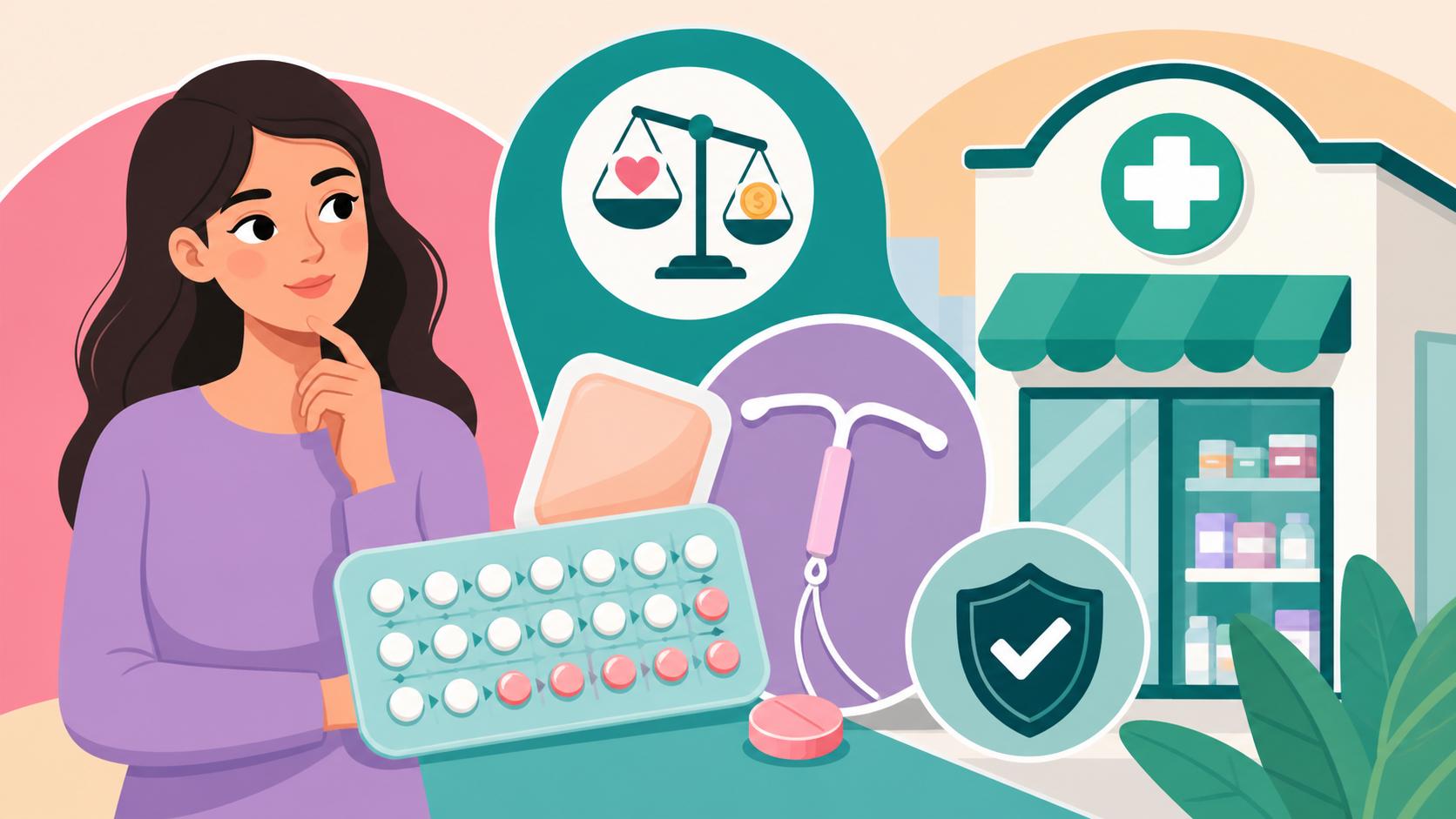
The price of birth control pills in Portugal is surprisingly affordable compared to North America or the UK. Most monthly packs range from €5 to €15. If you are registered with the SNS, the state often subsidizes these costs even further. Common brands available in Portugal include Yasmin, Diane 35, Mercilon, and various generics that use the same active ingredients. If your specific brand isn't available, the pharmacist will use the Infarmed database to find the exact chemical match. For more details on how medication works here, check out Pharmacies and Medication in Portugal: Prescriptions and OTC Drugs.
The Public Healthcare Route: Free Contraception via the SNS
One of the best-kept secrets for expats is that contraception is technically free for residents under the Portugal's National Health Service (SNS): How the Public System Works. Once you have your residency and have gone through the process of Registering with the Centro de Saúde: Getting Your SNS Número de Utente, you gain access to "Planeamento Familiar" (Family Planning) consultations.
These consultations are specifically designed to provide reproductive healthcare. You don't necessarily need to wait for a "Médico de Família" (Family Doctor) to be assigned to you—which we all know can take years. Instead, you can request a family planning appointment at your local health center. During this appointment, the doctor or nurse will discuss your contraceptive needs and can provide you with birth control pills, or even the contraceptive injection (Sayana Press), free of charge.
The catch, of course, is the bureaucracy. You will need to bring your residence permit and your NIF. If you are still waiting for your permanent health number, you might find the process frustrating. During these gaps in public coverage, many expats rely on Private Health Insurance in Portugal: Costs, Coverage, and Best Providers to bridge the wait. Plans like those from Cigna Global are particularly popular because they often cover the specialist visits needed to get a prescription without the long wait times of the local health center.
| Method | Access Rule | Estimated Private Cost | SNS Public Cost |
|---|---|---|---|
| Combined Oral Pill | Prescription (Technically) | €5 – €15 per month | Free (with Utente) |
| Mini-Pill (Progestogen) | Prescription (Technically) | €4 – €12 per month | Free (with Utente) |
| Morning After Pill | Over-the-Counter | €15 – €25 | Free (at Health Centers) |
| Contraceptive Implant | Doctor Procedure | €100 – €150 (Device) | Free (Long waitlist) |
| Hormonal IUD (Mirena) | Doctor Procedure | €150 – €200 (Device) | Free (via Specialist) |
| Copper IUD | Doctor Procedure | €40 – €80 (Device) | Free (via Specialist) |
Emergency Contraception and the "Morning After Pill"
If you find yourself in a situation where you need emergency contraception, the process in Portugal is straightforward and non-judgmental. The "Pílula do dia seguinte" is available at any Farmácia without a prescription. You do not need to see a doctor first, and you do not need to show ID in most cases, though being over 16 is the standard for independent purchase.
There are generally two types available: Levonorgestrel (effective up to 72 hours) and Ulipristal Acetate (effective up to 120 hours, often sold under the brand EllaOne). Prices typically hover between €15 and €25. When you ask for it, the pharmacist might take you to a slightly more private area of the counter to ask a few standard questions, such as when the unprotected encounter occurred, to ensure they give you the correct version.
If it is 2 AM on a Sunday, you will need to find a Pharmacies (Farmácias) in Portugal: Green Crosses and After-Hours Service. Every municipality has at least one pharmacy on duty 24/7. You can find the list posted on the door of any closed pharmacy or check the Farmácias de Serviço website. Note that during late-night hours, you will usually be served through a small window (the guichê) for safety reasons, and there may be a small after-hours service fee of a few euros. If you're feeling unwell or need advice before heading out, you can always call the SNS 24 Helpline (808 24 24 24): Triage, Advice, and Sick Notes for guidance.
Long-Acting Reversible Contraception: IUDs and Implants
For those looking for a "set it and forget it" method, Long-Acting Reversible Contraception (LARC) like the IUD (DIU in Portuguese) or the sub-dermal implant (Implante) are widely used. Accessing these as an expat usually requires a two-step process. First, you need a consultation with a gynecologist to determine the right fit and get a prescription. Second, you purchase the device at a pharmacy (unless the clinic provides it) and bring it back for the insertion.
If you go through a private hospital like CUF or Hospital da Luz, the process is very efficient. You can get the prescription, walk to the internal pharmacy, buy the device, and often have it inserted during a follow-up appointment within the same week. For those who prioritize a wider range of medical options and English-speaking doctors, Using Cigna Global or Allianz for international expat healthcare in Portugal can help cover these more expensive procedures and devices.
In the public system, the device and the procedure are free, but the wait times can be significant. You may be referred from your local health center to a hospital specialist, which can take months. Once inserted, these methods are tracked via your "Boletim de Saúde," and you'll be given a small card with the expiration date of the device. This is particularly important for the implant, which is usually placed in the upper arm and lasts for three years. For more on the medical journey for women in Portugal, see Women’s Health and Maternity Care in Portugal: Pregnancy and Birth.
Bringing Contraception from Abroad and Legal Limits
Many expats choose to bring a year's supply of birth control from their home country when they first move. This is generally fine for personal use, but you should always carry a copy of your original prescription and keep the medication in its original packaging to avoid issues with customs. Portugal is part of the EU, so if you are moving from another EU country, your prescription should technically be valid here, though some local pharmacists may still prefer to see a Portuguese one.
If you are shipping items to Portugal, be very careful. Ordering prescription medication—including birth control—online from outside the EU is illegal and will likely result in the package being seized by Alfândega (Customs). However, you can freely order non-prescription health items like ovulation kits, pregnancy tests, or vitamins from sites like iHerb without the same level of restriction, provided you stay within the tax limits.
Finally, always remember that while the pill is accessible, it does not protect against STIs. Condoms (Preservativos) are available everywhere—supermarkets, pharmacies, and even vending machines on the street in some cities. They are relatively inexpensive, but for specific high-quality international brands, iHerb remains a favorite for many in the expat community who want to buy in bulk.
Disclaimer
The information provided in this article is for informational purposes only and does not constitute professional medical or legal advice. Always consult with a qualified healthcare provider in Portugal before starting or changing any medication. Healthcare regulations and prices are subject to change, and while we strive to keep this guide updated for 2026, you should verify specific requirements with your local pharmacy or the SNS.