Telemedicine and Online Doctors in Portugal
Disclosure: This article contains affiliate links. If you buy through them, we may earn a commission at no extra cost to you. Read our full disclosure.
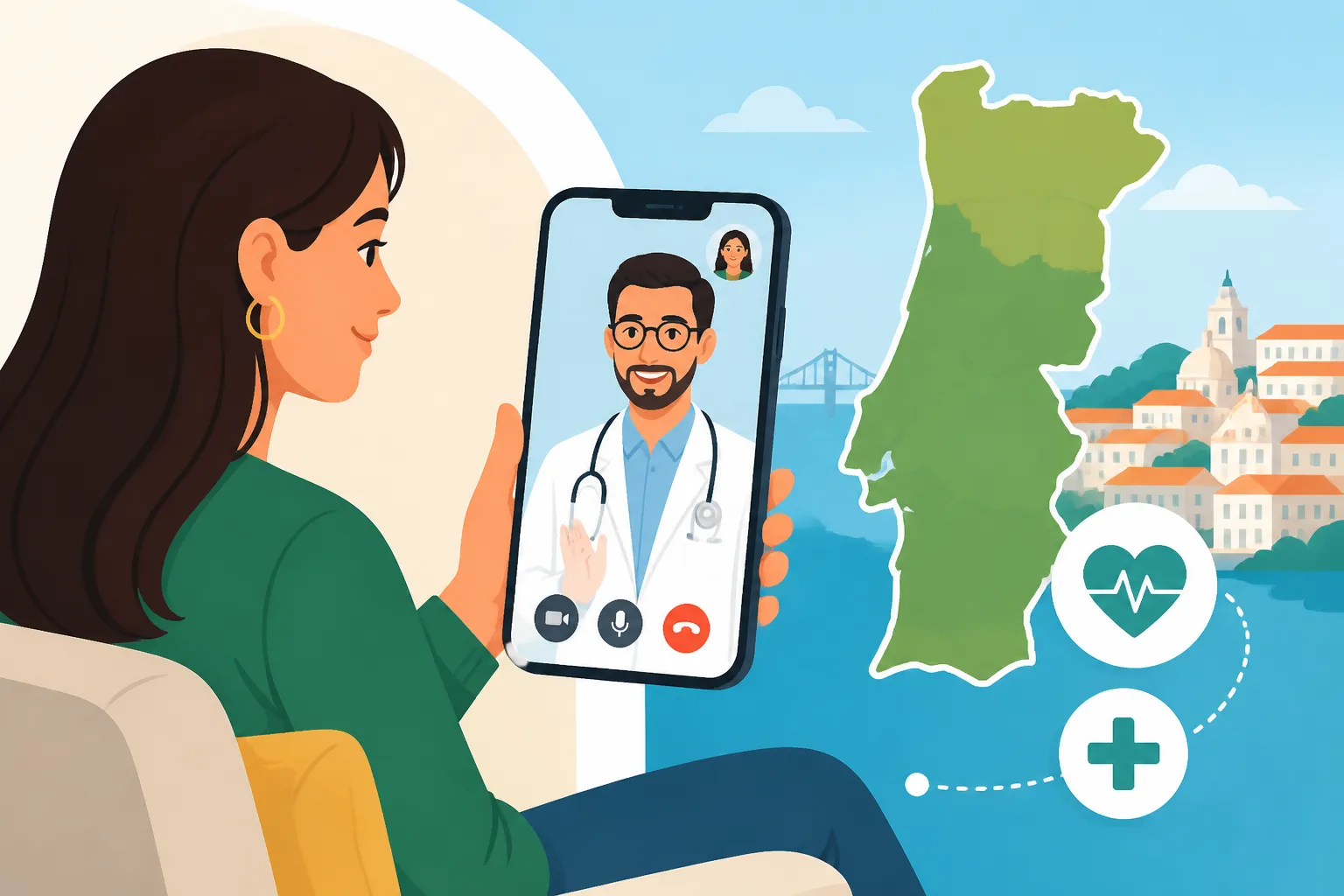
Trying to navigate the Portuguese healthcare system when you have a 39-degree fever and your Portuguese is limited to "obrigado" is an isolating, terrifying experience. Many expats spend countless hours sitting in cold plastic chairs at local health centers just to get a basic prescription renewed. This guide solves that frustration by detailing exactly how to use telemedicine to bypass the queues and see a doctor from your couch.
The Evolution of Digital Health for Portugal's Expats
The landscape of medical care in this country has shifted dramatically over the last few years. What used to be a system built entirely on physical presence—queuing at 7:00 AM outside a Centro de Saúde—has finally embraced the digital age. For us foreigners, this isn't just a convenience; it is a vital bridge over the language barrier and the administrative hurdles that often feel insurmountable. When you are living in a new country, the last thing you want is to play charades with a pharmacist or wait months for a specialist.
Why Telemedicine is a Life-Saver for Foreign Residents
The primary reason telemedicine has become the gold standard for expats is the immediate access to English-speaking professionals. While many doctors in major cities like Lisbon or Porto speak excellent English, the administrative staff and the triage nurses in the public system often do not. By using an online platform, you can filter for doctors who are fluent in your native language, ensuring that your symptoms aren't "lost in translation." This clarity is essential when discussing complex medical histories or specific drug interactions.
Furthermore, telemedicine addresses the geographic isolation many expats face. If you have chosen to live a quiet life in a rural village in the Alentejo or a remote part of the Algarve, you might be hours away from a private hospital. Digital consultations allow you to access the same high-level specialists found in Lisbon's top clinics without the four-hour round trip. It levels the playing field, providing urban-quality care to those of us who prefer the rustic side of Portugal.
The Transition from Public SNS to Digital Platforms
While Portugal's National Health Service (SNS): How the Public System Works is a point of pride for the country, its digital transition was born of necessity. The public system is often overstretched, and digital tools were introduced to alleviate the pressure on physical waiting rooms. For an expat, understanding how to navigate the public digital ecosystem versus the private one is the first step to medical independence.
The public system now offers a variety of "tele-consultas," but they are generally reserved for follow-ups or chronic disease management once you are already in the system. If you are a newcomer still waiting for your resident permit, the private sector's digital tools will be your primary resource. These private platforms are designed with user experience in mind, often offering slick interfaces that feel more like a modern tech app than a legacy medical portal. This shift has allowed many of us to manage our health with the same ease as ordering groceries on Glovo.
Navigating the SNS 24 Digital Ecosystem
Even if you primarily use private care, you must understand the SNS 24 system. It is the backbone of the Portuguese medical infrastructure. I remember being confused during my first year, thinking the SNS was only for physical hospitals. In reality, their digital and phone-based services are remarkably efficient if you know how to use them. They act as the "gatekeeper" to the public system, and in many cases, they can solve your problem without you ever leaving your bedroom.
SNS 24 Helpline (808 24 24 24): Triage and Advice
The SNS 24 Helpline (808 24 24 24): Triage, Advice, and Sick Notes is the first number every expat should save in their phone. This is a 24/7 service staffed by qualified nurses. When you call, you are put through a rigorous triage process. They will ask about your symptoms, your temperature, and your medical history. The best part? They have a dedicated English-speaking line. You simply ask for an English speaker at the start of the call, and while there might be a short wait, the peace of mind is worth it.
The nurses on this line have the power to do several things. They can give you immediate self-care advice, they can "prescribe" a visit to the local emergency room (which often lowers your co-payment), or they can even issue a "baixa médica" (sick note) for your employer for short-term illnesses. This prevents the "sick-day stress" where you feel forced to drag yourself to a clinic just to prove you have the flu. It is a highly civilized way to handle minor medical crises.
The SNS 24 App: More Than Just a Vaccine Record
The SNS 24 app is the digital wallet for your health in Portugal. Once you have your "Número de Utente," you can log in and see your entire medical history within the public system. This includes your vaccination records, your current prescriptions, and even your "Guia de Tratamento" for upcoming exams. For many expats, the most useful feature is SNS 24 App: Getting an English-speaking nurse for minor medical issues through the integrated chat and video functions.
The app also allows you to request a "Teleconsulta" directly with your family doctor, provided you have one assigned. In reality, many of us struggle with the fact that the Centro de Saúde say they have no Médico de Família available. However, the app still serves as a central hub for your data. If you go to a private doctor and they give you a prescription, it will often appear in your SNS app automatically because the systems are increasingly linked via your NIF and Utente number.
Private Telemedicine Solutions and Providers
When the public system feels too slow or too complex, the private sector steps in with incredibly robust digital offerings. Portugal has a world-class private healthcare infrastructure, and companies like CUF and Hospital da Luz have invested millions into their digital patient portals. For most expats, this is where you will do the bulk of your non-emergency medical work.
Hospital da Luz and CUF Apps: Booking Specialists
If you need a dermatologist, a cardiologist, or an ENT, you don't need to call a receptionist who may or may not speak English. You can use the Hospital da Luz app: How to book a specialist appointment on your phone or the "MyCUF" app. These platforms are incredibly intuitive. You can search by specialty, filter for "Video-Consulta," and see the doctor's CV and language proficiencies before you book.
These video consultations are usually priced lower than in-person visits. You log in at the scheduled time, wait in a virtual waiting room, and then have a high-definition video call with the specialist. They can view any uploaded files (like previous blood tests or X-rays) in real-time. I’ve used this for everything from skin checks to reviewing blood work, and it’s consistently more efficient than the traditional route. It’s particularly useful for those of us navigating Healthcare in Portugal for Expats: The Complete 2026 Medical Guide who value our time.
Telehealth and Online Doctors: Specialized Expat Platforms
Beyond the big hospital chains, there are platforms specifically designed for travelers and expats. Telehealth and Online Doctors: Using TravelDoctores and Doctorsa are two names you will hear frequently in expat circles. These services are often "on-demand," meaning you can sometimes see a doctor within 15 to 30 minutes. They are perfect for the "I think I have an ear infection" moments where you don't need a top-tier surgeon but you do need a prescription for antibiotics.
These platforms often operate on a flat-fee basis, which is helpful if you don't yet have Private Health Insurance in Portugal: Costs, Coverage, and Best Providers. They understand the international context—for instance, they are used to dealing with patients who might be traveling between the US, UK, and Portugal. They provide digital prescriptions that are valid at any "Farmácia" in the country. If you are a digital nomad, having a subscription to a service like SafetyWing can often complement these platforms, providing a safety net for more serious issues while you use these on-demand apps for daily health needs.
| Feature | SNS 24 (Public) | Private Hospital Apps (CUF/Luz) | Expat Platforms (Doctorsa/TravelDoctores) |
|---|---|---|---|
| Cost | Free or ~€5 (Taxa Moderadora) | €35 – €80 (without insurance) | €40 – €60 (Flat fee) |
| Language | English available on phone/app | High English proficiency | Primary language is English |
| Wait Time | Variable (can be long for app chat) | Scheduled (usually 1-3 days) | On-demand (minutes to hours) |
| Prescriptions | Electronic (sent to phone) | Electronic (sent to phone/app) | Electronic (standard EU format) |
| Best For | Triage, sick notes, public system entry | Specialists, chronic care, insurance | Urgent minor issues, travelers |
Insurance-Linked Telemedicine Services
One of the best "hacks" for living in Portugal is choosing an insurance provider that has a top-tier digital health platform. Most of the major Portuguese insurers have realized that providing free or low-cost telemedicine reduces their overall costs, so they make these services very easy for you to access.
Médis, Multicare, and AdvanceCare: Digital Comparisons
If you are looking at Médis, Multicare, and AdvanceCare: Comparing Top Private Insurers, you should pay close attention to their "Online Doctor" features. Médis, for example, has a service called "Médico Online" that is often available 24/7 with zero co-payment. You literally press a button in the app, and a doctor calls you back via video.
These insurers also offer symptomatic checkers—AI-driven tools that ask you a series of questions to determine if you need an actual doctor or just a rest. While AI isn't a substitute for a human, it can be a great way to calm your anxiety at 2:00 AM. For the veteran expat, the integration between the app and the insurance claim is the real winner. When you book a video consultation through the Multicare app, the billing is handled automatically. There are no receipts to upload and no waiting for reimbursements. It is "set and forget" healthcare.
International Options for the Global Citizen
For those who aren't ready to commit to a local Portuguese plan—perhaps because you spend six months in Lisbon and six months in London or New York—services like Cigna Global are invaluable. Cigna Global offers a "Global Telehealth" app that gives you access to a network of international doctors. This is particularly useful if you want a second opinion from a doctor trained in your home country's medical tradition.
International insurance plans often have higher premiums, but their digital tools are unparalleled. They often include mental health support and wellness coaching as part of their telemedicine package. If you are a digital nomad, a provider like SafetyWing offers a more "lite" version of this, focusing on emergency travel medical needs, but they are increasingly integrating virtual care options to keep up with the demands of the remote work community in Portugal.
Practical Logistics of Virtual Appointments
Once you have chosen your platform, there are some "boots-on-the-ground" logistics you need to know. Portugal has a very specific way of handling digital data, and if you don't follow the steps, you might find yourself at a pharmacy with a prescription that doesn't work.
Getting Prescriptions and Referrals Digitally
In Portugal, we use a system called "Receita Sem Papel" (Paperless Prescription). When your online doctor prescribes a medication, you won't get a signed piece of paper. Instead, you will receive an SMS and an email containing a PDF with several barcodes and a "Código de Acesso" and "Código de Dispensa."
When you go to the Pharmacies and Medication in Portugal: Prescriptions and OTC Drugs, you simply show the pharmacist the SMS or the PDF on your phone. They scan it, and the system tells them exactly what was prescribed and if the government or your insurance covers part of the cost. The same applies to referrals for blood tests or MRIs. The doctor will send you a "P1" (public) or a private referral code. You take this code to a lab like Joaquim Chaves or Germano de Sousa, and they pull up your digital file instantly.
Technical Requirements and "Expat Proofing" Your Call
I’ve had video calls drop right as the doctor was about to explain my dosage because my "rural" internet decided to take a nap. If you are using telemedicine, ensure you are on a stable fiber connection or at least have a strong 5G signal. Most Portuguese apps are quite data-heavy.
Also, have your NIF (Tax Number) and your SNS Number ready. Even private doctors will ask for these because they need to log the consultation in the national health database. If you don't have an SNS number yet, don't panic—private doctors can still treat you using just your passport number and NIF, but it makes the digital prescription process a little more manual (they might have to email you a different format).
When Telemedicine Isn't Enough
As much as I love the convenience of my phone, part of being a savvy expat is knowing when to close the laptop and head to the hospital. Telemedicine is excellent for diagnosis and routine care, but the Portuguese physical infrastructure is where the "heavy lifting" happens for serious trauma or acute illness.
Knowing When to Visit the Emergency Room
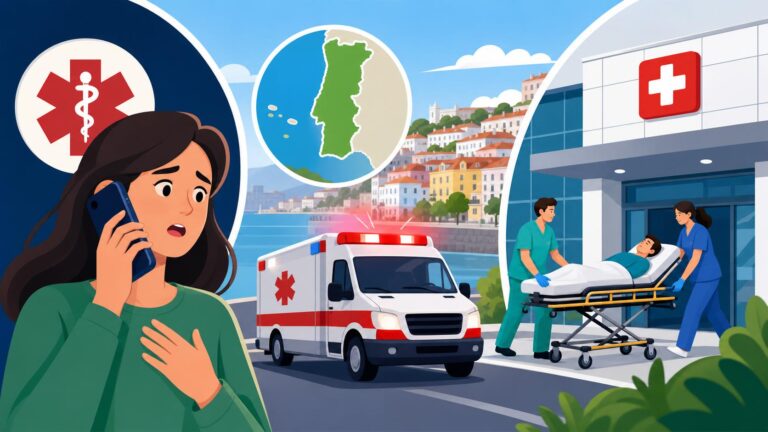
If you are experiencing chest pain, severe abdominal pain, or signs of a stroke, do not open an app. Call 112 immediately. However, for those "in-between" moments—like a deep cut that might need stitches or a high fever that won't break—use the SNS 24 line first. They will tell you which "Urgência" (Emergency Room) has the shortest wait time.
The Emergency Medical Care in Portugal: Calling 112 and Going to the Hospital system uses the Manchester Triage System. When you arrive at a hospital like Santa Maria in Lisbon or São João in Porto, you are assigned a color (Red, Orange, Yellow, Green, Blue). If you used the SNS 24 line first and they referred you, you often get a "higher" priority or at least a smoother administrative path than if you just walked in off the street.
Mental Health Support Online
One area where telemedicine truly shines in Portugal is mental health. Moving to a new country is stressful, and culture shock is a very real medical condition. Finding an English-speaking therapist locally can be tough, especially outside of the big cities. Using platforms to find Mental Health in Portugal: Finding Therapists and Psychiatrists for Expats allows you to connect with professionals who understand the specific psychological toll of relocation.
Many expats use online platforms like BetterHelp or specialized local services like "It's Complicated" to find therapists in Portugal. Whether you need a psychiatrist who can prescribe medication or a psychologist for talk therapy, the digital route is often the fastest way to get help. Most private insurance plans in Portugal are starting to cover these sessions, but you should always check the "Período de Carência" (waiting period) in your policy before you book.
Disclaimer
The information provided in this guide is for general informational purposes only and does not constitute professional medical advice, diagnosis, or treatment. Always seek the advice of your physician or another qualified health provider with any questions you may have regarding a medical condition. Never disregard professional medical advice or delay in seeking it because of something you have read in this article. The healthcare system in Portugal is subject to frequent administrative changes; always verify current procedures with official sources like the SNS or your insurance provider.