Can I use a US or UK medical prescription at a Portuguese pharmacy?
Standing at a pharmacy counter in Lisbon with a paper prescription from home, only to be met with a sympathetic head shake, is a rite of passage no expat wants. I remember my first week here, trying to refill my asthma inhaler with a crumpled US script; the confusion and stress were overwhelming. This guide solves exactly that by explaining how to navigate Portuguese pharmacies with foreign prescriptions.
The Reality of Using Non-EU Prescriptions at the Counter
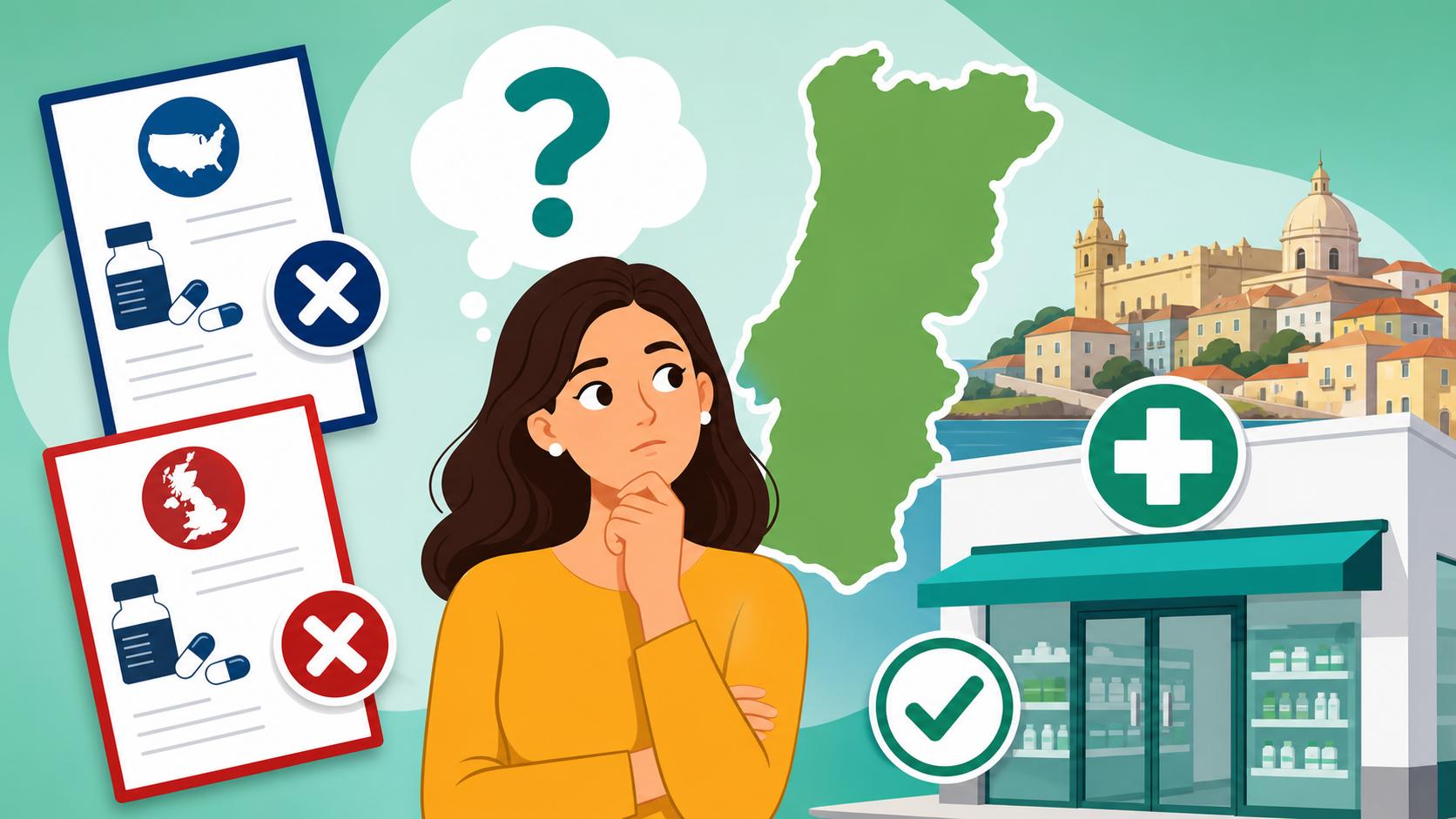
If you are arriving from the United States, Canada, or the United Kingdom, you need to understand that the legal framework for prescriptions in Portugal is quite rigid. While Portugal is part of the European Union, which has a cross-border prescription agreement, this primarily applies to scripts issued within the EU or EEA. A prescription from London or New York does not carry the same legal weight as one from Madrid or Berlin. Technically, a Portuguese pharmacist is not legally obligated to honor a non-EU prescription, and many will flat-out refuse to protect their professional license.
The EU vs. Non-EU Distinction
For those holding a prescription from an EU member state, the process is streamlined thanks to the "Cross-Border Healthcare" directive. These prescriptions must contain specific information, such as the patient’s full name, the date of issue, and the prescribing doctor’s contact details. However, once the UK left the European Union, British scripts moved into the "third-country" category, joining the US. This means they are no longer part of the digital exchange system. If you are moving here, you should review Pharmacies and Medication in Portugal: Prescriptions and OTC Drugs to understand how the local system operates differently from what you are used to back home.
The Pharmacist’s Discretionary Power
In Portugal, pharmacists (farmacêuticos) are highly trained medical professionals who often act as a first line of defense for minor ailments. Sometimes, if you have a physical prescription and can prove it is for a non-controlled substance (like a basic blood pressure medication or a standard birth control pill), a sympathetic pharmacist might help you. They may see it as a "continuation of care" issue. However, relying on luck is a poor strategy for managing your health. I’ve found that having a digital copy of your medical history alongside the paper script sometimes helps, but it is never a guarantee. If you are planning a move, check the rules on Bringing Prescription Drugs to Portugal: Customs and Import Rules to ensure you arrive with an adequate supply.
Why Digital Scripts from Home Fail
In the US and UK, digital prescriptions sent directly to a pharmacy are the norm. In Portugal, the "Receita Sem Papel" (Paperless Prescription) system is also standard, but it is a closed loop within the Portuguese National Health Service (SNS) and registered private providers. A digital script from a US-based portal cannot be "seen" by the Portuguese system. Even if you show the pharmacist the QR code or the email on your phone, they have no way to verify the doctor’s credentials or the authenticity of the document. This is a common point of frustration for new arrivals who are used to the seamless tech of their home countries.
Why Language and Generic Names Matter More Than You Think
One of the biggest hurdles you will face isn't just the legality of the paper, but the information written on it. Brand names for medications vary wildly between countries. What you call "Tylenol" in the US is "Paracetamol" here, and while that is an easy one, it gets much more complicated with specialized medications. Portuguese pharmacists are required to check the active ingredient (the "substância ativa") rather than the brand name.
The Importance of International Nonproprietary Names (INN)
When you ask your doctor back home for a "travel prescription," specifically request that they write it using the International Nonproprietary Name (INN). For example, instead of writing "Ventolin," they should write "Salbutamol." This allows the Portuguese pharmacist to look up the equivalent in their database. Without the INN, the pharmacist might be unable to identify the drug, leading to a rejection even if they were inclined to help you. This is particularly crucial for Antibiotics rules in Portugal: Why you absolutely need a doctor's prescription, as these are strictly regulated and never sold without a verified local script or an undeniable medical necessity verified by a local professional.
The Language Barrier at the Counter
While many pharmacists in major cities like Lisbon, Porto, and the Algarve speak excellent English, the technical language on a prescription can still cause issues. A prescription written in English with imperial measurements or confusing abbreviations might be misinterpreted. If you are struggling to communicate your needs, it may be worth Finding an English-Speaking General Practitioner (Médico de Família) who can translate your medical needs into the local system. Having a local doctor who understands your history is the single best way to ensure you never run out of essential meds.
Comparing Medication Availability
Not every drug approved by the FDA or the NHS is available in Portugal. The Infarmed (the Portuguese Authority of Medicines and Health Products) has its own list of approved medications. If your specific medication isn't on the list, a pharmacist cannot give it to you, even with a valid Portuguese script. In these cases, you might need to find an alternative that is available locally. For non-prescription items like vitamins or specific supplements that you can't find in a local "Celeiro" (health food store), many expats use services like iHerb to ship familiar brands from abroad, though you must be mindful of customs duties.
The Faster Route: Converting Your Foreign Prescription Locally
The most reliable way to get your medication in Portugal is to take your home-country prescription to a local doctor and ask them to "convert" it into a Portuguese "Receita." This process involves the doctor reviewing your home script, verifying your need for the medication, and then issuing a new prescription through the Portuguese digital system. This gives you a valid QR code that any pharmacy in the country can scan.
Using Private Clinics for Speed
If you are in a rush, do not go to the public health center (Centro de Saúde). The wait times can be weeks or months. Instead, use a private hospital like CUF or Hospital da Luz. You can usually book an appointment within a day or two. If you have Private Health Insurance in Portugal: Costs, Coverage, and Best Providers, a consultation might only cost you a small co-payment (typically €15–€30). Without insurance, a private GP visit usually costs between €40 and €70. This is a small price to pay for the peace of mind that comes with a legal, local prescription.
Leveraging Telehealth Services
For simple refills of non-controlled substances, telehealth is becoming a lifesaver for expats. There are several apps and services where you can speak to an English-speaking doctor via video call. They can often issue a digital prescription that is sent directly to your phone. If you have international coverage, Using Cigna Global or Allianz for international expat healthcare in Portugal often includes access to these "online doctor" services, which saves you a trip to the clinic entirely. Just keep in mind that they rarely prescribe "heavy" medications or controlled substances via a first-time video call.
Registering for Your SNS Number
Even if you primarily use private care, you should still go through the process of Registering with the Centro de Saúde: Getting Your SNS Número de Utente. Having this number allows you to access the public system in emergencies and, more importantly, allows you to benefit from "comparticipação"—the government subsidy on many medications. With an SNS number, the cost of your prescription drugs can drop by 30% to 90%, depending on the type of medication and your age or health status.
Navigating Pharmacies and Medication Types in Portugal
Portuguese pharmacies are easily identified by a large green cross (which blinks when they are open). Unlike the US, you won't find pharmacies inside large supermarkets like Pingo Doce or Continente. They are almost always standalone shops.
Understanding the "Farmácia de Serviço"
If you have an urgent need for a prescription refill in the middle of the night or on a Sunday, you need to find a "Farmácia de Serviço." Every neighborhood has a rotating schedule of pharmacies that stay open 24/7. You can find the list posted on the door of any closed pharmacy or check online. For a detailed look at how to find one, see What is a Farmácia de Serviço and how to find one open at 2 AM. Be prepared to ring a doorbell at the night window; you usually don't go inside the shop after hours for safety reasons.
Over-the-Counter vs. Prescription
Many things that require a prescription in other countries are available over the counter (OTC) in Portugal, and vice-versa. For example, some higher-dose Ibuprofen or specific allergy meds might be behind the counter but don't strictly require a script—you just have to ask the pharmacist. Conversely, things like certain cold medicines that are OTC in the US might be more regulated here. If you are looking for general wellness products, iHerb is a great alternative for brand-name supplements, but for anything therapeutic, the local "Farmácia" is your best bet.
| Medication Type | Likely to Accept US/UK Script? | Recommended Action |
|---|---|---|
| Life-Saving (Insulin, etc.) | Possible (Emergency basis) | Go to Private ER or use SNS 24 |
| Routine (Blood Pressure) | Unlikely | Convert via Private GP or Telehealth |
| Controlled (ADHD, Opioids) | Never | Must see a local Specialist |
| Antibiotics | Never | Requires local consultation |
| Birth Control | Sometimes | Ask nicely or use Telehealth |
Special Considerations for Chronic Conditions and Controlled Substances
If you are on "Psicotrópicos" (psychotropic drugs) or "Estupefacientes" (narcotics/opioids), your US or UK prescription is effectively useless at a Portuguese pharmacy. These medications are tracked with extreme scrutiny.
The Specialist Requirement
For medications like Adderall, Ritalin, or strong pain management drugs, a general practitioner (GP) in Portugal may not even be allowed to write the initial prescription. You will likely need to find a specialist (a psychiatrist or a neurologist). This can take time. I highly recommend Finding doctors and specialists in Portugal: English-Speaking Medical Care as soon as you arrive to establish these relationships. You will need to provide your full medical records from home, translated into Portuguese, to convince a local specialist to continue a high-level treatment plan.
Using the SNS 24 Helpline
If you are in a situation where you have run out of medicine and cannot get a doctor's appointment, call the SNS 24 Helpline (808 24 24 24): Triage, Advice, and Sick Notes. They have English-speaking operators who can advise you on the nearest open pharmacy or, in some specific cases, help facilitate an emergency consultation. While they cannot issue a prescription over the phone for a foreign expat without a local history, they can guide you through the "urgência" (emergency) process at a hospital if your condition is life-threatening without the medication.
Planning Your Move with Cigna Global
When you are transitioning, having a robust insurance plan like Cigna Global ensures that you can afford the private specialists needed to transition your prescriptions. Because the public system is often backlogged, the ability to walk into a private clinic and get your meds sorted in 24 hours is worth the premium. This is especially true for those with chronic illnesses who cannot afford a "gap" in their medication schedule while waiting for an AIMA appointment or a health center registration.
Summary of Success Rates for Foreign Prescriptions
To wrap this up, your experience will vary based on where you are and what you need. In a sleepy village in the Alentejo, a pharmacist might be more hesitant to help with a foreign script than a pharmacist in a high-traffic area of Cascais where they see tourists every day. However, "legal" and "likely" are two different things.
While a pharmacist might help you with a pack of asthma inhalers if you look desperate, they will never give you Xanax or Amoxicillin on a foreign script. The stress of being rejected at the counter is not worth it. Take your home prescription, book a €50 private appointment, and get the official Portuguese QR code. It will save you hours of wandering the streets looking for a blinking green cross and a sympathetic ear.
Disclaimer
This guide is for informational purposes only and does not constitute medical or legal advice. Healthcare regulations in Portugal can change rapidly, and you should always consult with a licensed medical professional or the official Infarmed website for the most current rules regarding medication and prescriptions. Always carry a copy of your medical history when seeking care in a foreign country.