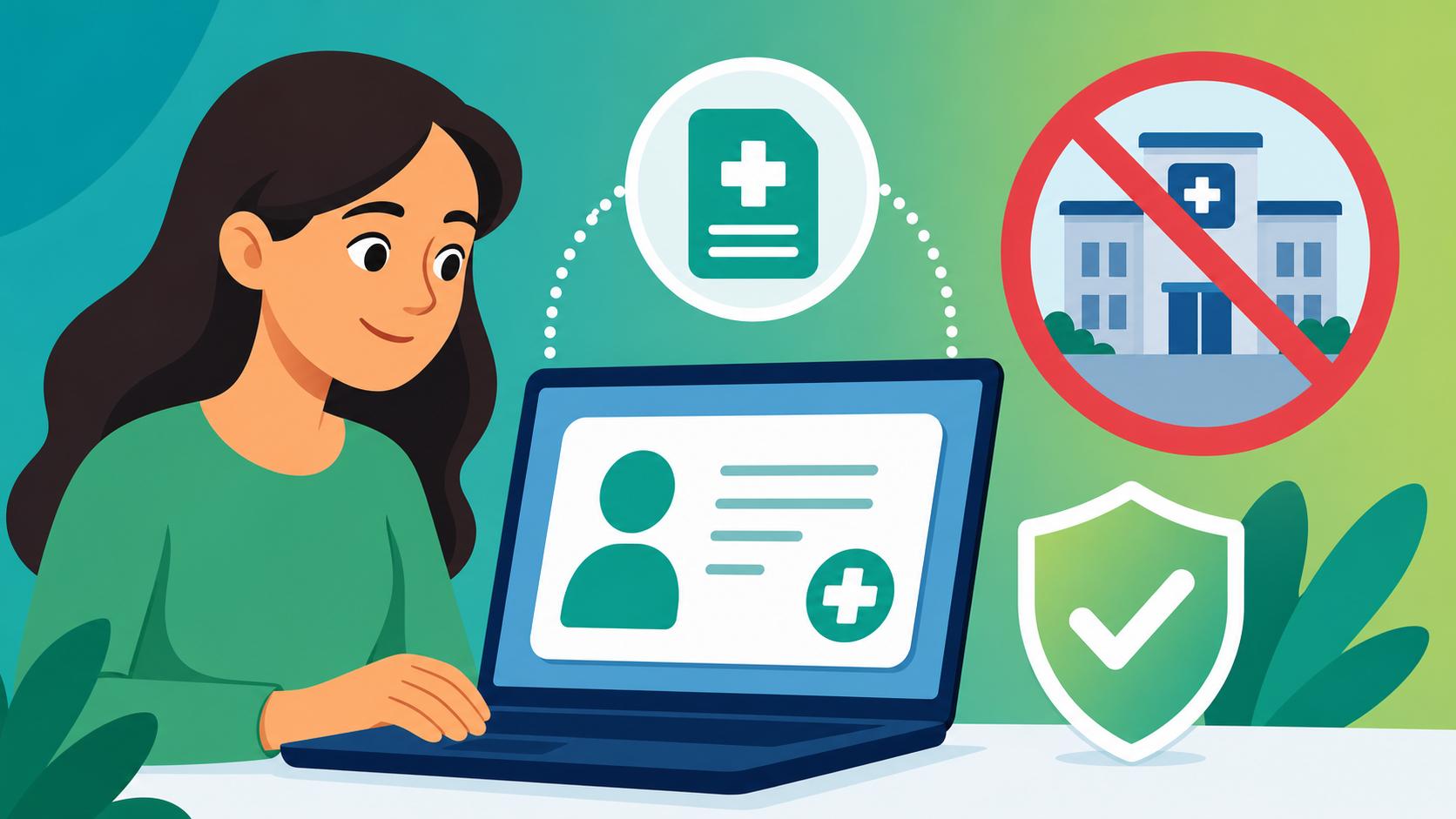
How to get your Número de Utente online without visiting the health center
Getting a health number in Portugal often feels like a rite of passage involving long lines at dawn and confusing paperwork. I remember standing outside a shuttered health center at 7:00 AM in the rain, only to be told they were out of "senhas" for the day. This guide explains how to bypass that frustration and secure your Número de Utente online.
The Importance of the SNS Number for New Residents
The Número de Utente is your unique identification number for the Serviço Nacional de Saúde (SNS), Portugal's public healthcare system. Without this nine-digit code, you are essentially a ghost in the system. You cannot easily access subsidized prescriptions, book appointments at your local health center, or benefit from the state-funded medical infrastructure that your taxes help support. While many expats initially rely on private coverage, having an SNS number is a critical safety net, especially for long-term chronic care or emergency situations where public hospitals often excel.
Even if you prefer private clinics, the Número de Utente is frequently required for administrative tasks, such as registering for vaccinations or obtaining a Healthcare in Portugal for Expats: The Complete 2026 Medical Guide. In my early days here, I ignored the public system because I had a shiny private policy, but I quickly realized that many specialized medications are significantly cheaper—sometimes even free—when processed through the public system via this number.
Furthermore, having this number is a prerequisite for using the SNS 24 portal and app, which are invaluable tools for managing your health. Once you are in the database, you can see your medical history, vaccination records, and even request repeat prescriptions without leaving your house. However, getting that number assigned in the first place has traditionally been a manual, face-to-face struggle at the Centro de Saúde. Fortunately, the "online" path, while not a single-click website button, is a functional reality through a structured email process.
Step-by-Step Guide to Applying via Email
While there isn't a "universal" online form that works for every person in every district, the most effective way to get your Número de Utente without visiting a health center is by contacting the Agrupamento de Centros de Saúde (ACeS) for your specific region via email. This method became popular during the pandemic and has remained a valid, albeit sometimes slow, alternative to waiting in line.
Finding the Right ACeS Email Address
Your first task is to identify which ACeS handles your neighborhood. Portugal is divided into health clusters. For example, if you live in Lisbon, you might fall under ACeS Lisboa Central or ACeS Lisboa Ocidental. You can find these lists on the official SNS website or by searching for your parish (freguesia) followed by "Centro de Saúde email." It is crucial to email the administrative hub of the cluster rather than a tiny satellite clinic, as the central hubs are better equipped to handle digital registrations.
If you are struggling to find the specific email, you can often find clues in Registering with the Centro de Saúde: Getting Your SNS Número de Utente resources or local expat community boards. Once you have the address, you are ready to prepare your digital dossier. I found that sending a polite, well-organized email in Portuguese (use a translator if you have to) drastically increases your chances of a prompt reply.
Drafting the Perfect Request Email
When you send your email, the subject line should be clear: "Pedido de Atribuição de Número de Utente – [Your Full Name]." In the body of the email, state clearly that you are a new resident in the area and wish to register with the SNS. Mention that you are attaching all necessary legal documents to facilitate the process.
Be prepared for a wait. Unlike private insurers like Cigna Global, which process applications with corporate speed, the public system is often backlogged. You might not hear back for two weeks, or you might get a reply in two hours. If you need immediate care while this is processing, you might find yourself Finding an English-Speaking General Practitioner (Médico de Família) through private channels to bridge the gap. In the meantime, you can manage minor health needs by ordering vitamins or basic wellness supplies from iHerb to avoid the stress of navigating a pharmacy without your number.
| Document Required | Purpose | Online Tip |
|---|---|---|
| Passport or National ID | Proof of Identity | Scan in high resolution; avoid blurry photos. |
| NIF (Número de Identificação Fiscal) | Tax Identification | Must be the final version with your current address. |
| Residency Permit or Visa | Legal Status | Include the front and back of your card. |
| Atestado de Morada | Proof of Address | Get this from your local Junta de Freguesia first. |
| Employment Contract (Optional) | Proof of Social Security | Helps if you are already paying into the system. |
Documentation Requirements and Common Pitfalls
The bureaucratic "wall" is usually built from missing or incorrect documents. Even when applying online, if one scan is missing or your NIF address doesn't match your residency address, the administrative assistant will likely move your email to the bottom of the pile. This is where most expats get stuck.
The NIF and Residency Status
Your NIF is the backbone of your life in Portugal. To get your health number, your NIF must be updated to reflect your Portuguese address. If your NIF still shows a foreign address or the address of a fiscal representative, the health center may reject your application. You should ensure your NIF and NISS: How to Get Your Portuguese Tax and Social Security Numbers are fully updated before you even think about emailing the health center.
For those on a D7 or D8 visa, your initial residency permit is the key. If you are still waiting for your physical card from AIMA, you can sometimes use the "Manifestação de Interesse" or the digital receipt of your appointment, but this is at the discretion of the specific ACeS. Some centers are very flexible and others are incredibly strict. If you find yourself in a bureaucratic loop, having a robust private policy from a provider like Cigna Global ensures you aren't left without medical options while the public system grinds its gears.
Proving Your Address Correctly
In Portugal, a utility bill isn't always enough to prove where you live for the health system. Most Centros de Saúde demand an "Atestado de Morada." This is a document issued by your local Junta de Freguesia (Parish Council). To get this, you might need two witnesses who are registered to vote in your parish to sign for you. If you are wondering Atestado de Morada: How many witnesses do you need at the Junta?, the answer is typically two, though some Juntas accept a rental contract instead.
Once you have this paper, scan it and include it in your email. This document is the "gold standard" for the SNS. It proves you belong to that specific health center's catchment area. Without it, they will simply tell you to contact the center in your "correct" area, which can lead to a frustrating game of administrative tennis.
What to Do While Waiting for Your Number
The transition period between arriving in Portugal and having a functional Número de Utente can be stressful. It’s a bit like being in a medical "no man's land." You are legally here, but the system doesn't quite recognize you yet. During this time, it is vital to have a strategy for both minor ailments and major emergencies.
Utilizing Private Healthcare and Telehealth
Because the public registration can take time, it is advisable for new arrivals maintain or start a private insurance plan. Comparing Private Health Insurance in Portugal: Costs, Coverage, and Best Providers will show you that even basic plans offer peace of mind. Many private hospitals, such as CUF or Hospital da Luz, allow you to book appointments online with just your passport and NIF while you wait for your public number.
Private care is significantly faster for specialist consultations. If you need a dermatologist or a cardiologist, you might wait months in the public system, assuming you even get a family doctor assigned. This is a common complaint: Why does my Centro de Saúde say they have no Médico de Família available? is a question you'll hear often in expat circles. Having coverage from a company like Cigna Global allows you to bypass these wait times and see specialists in modern facilities with English-speaking staff.
Managing Wellness and Prescriptions
If you have a chronic condition, make sure you bring a three to six-month supply of medication from your home country. While you wait for your number, you can use private doctors to write "white prescriptions," but these will not be subsidized. You will pay the full market price at the Pharmacies and Medication in Portugal: Prescriptions and OTC Drugs.
To keep your health in check without constantly visiting a doctor, many expats use iHerb for their regular supplements, proteins, and specialty health foods that might be expensive or hard to find in local Portuguese supermarkets. Since iHerb ships to Portugal quite efficiently now, it’s a great way to maintain your routine while you are still figuring out the local healthcare landscape. I personally used them for my vitamin D and magnesium while I was stuck in the "waiting for my number" phase, as it was one less thing to explain to a pharmacist in broken Portuguese.
When considering your long-term health strategy, you should weigh the benefits of Public vs Private Healthcare in Portugal: Which One Should Expats Choose?. Most veteran expats settle on a hybrid approach: using the public system for emergencies and low-cost prescriptions, and using private insurance for everything else. This is where Using Cigna Global or Allianz for international expat healthcare in Portugal becomes a strategic move, as these providers are well-versed in the needs of the mobile expat community.
Troubleshooting Common Online Registration Issues
Even with all the right documents, the "online" path can hit a snag. Sometimes emails go into a black hole. If you haven't received a response after 15 business days, it is time for a follow-up. Keep your follow-up email professional and attach the same documents again, referencing the date of your original request.
If the email method fails entirely, check if your local health center has a specific online portal or a digital "balcão" (desk). Some municipalities are more tech-forward than others. For those who are tech-savvy, you can occasionally use the "Chave Móvel Digital" to log into government portals, though this usually requires you to have your residency card and a Portuguese phone number linked to your ID.
Lastly, if you are in a rush because you need a specific treatment, you can sometimes "nudge" the process by booking a private appointment with a doctor who also works in the public system. They can't magically give you a number, but they can sometimes provide the necessary medical justifications that might prioritize your registration in the eyes of the administrative staff. It's a very "Portuguese" way of solving a problem—relying on a personal connection and professional expertise to navigate a rigid system.
Disclaimer
This guide is for informational purposes only and does not constitute legal or professional medical advice. Healthcare regulations and immigration procedures in Portugal are subject to frequent change. Always consult with official government sources, such as the SNS or AIMA, or seek advice from a qualified legal professional before making decisions regarding your residency or healthcare coverage.