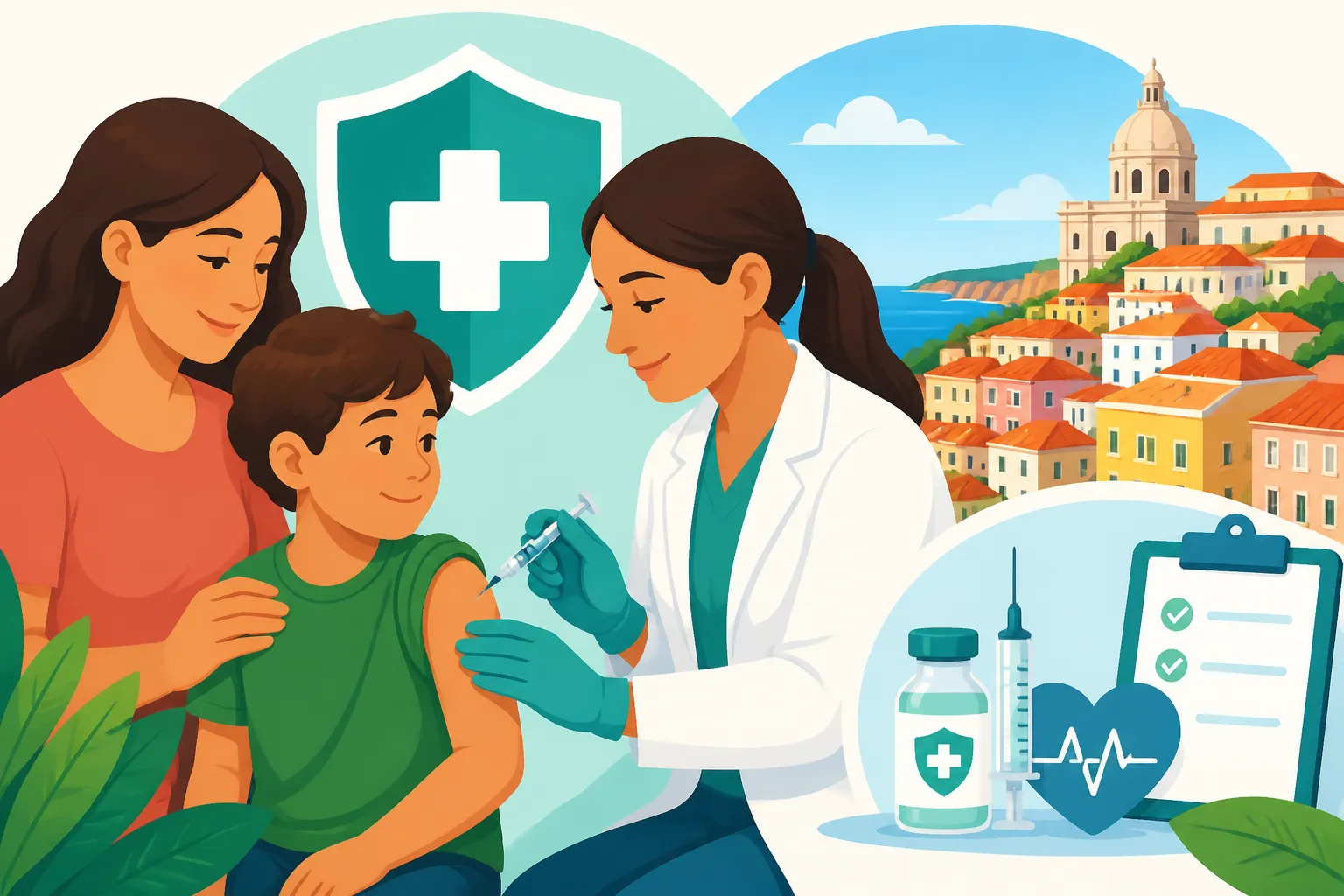
Vaccinations and Preventive Care in Portugal
Disclosure: This article contains affiliate links. If you buy through them, we may earn a commission at no extra cost to you. Read our full disclosure.
Navigating the healthcare landscape in a new country often feels like trying to solve a puzzle where the pieces are labeled in a language you haven't quite mastered yet. I remember standing in a pharmacy in Lisbon, trying to explain my need for a tetanus booster using nothing but hand gestures and a very dusty high school biology vocabulary. This guide solves the confusion surrounding vaccinations and preventive care, ensuring you know exactly how to protect your health while living in Portugal.
The Portuguese National Vaccination Plan (PNV)
The Programa Nacional de Vacinação (PNV) is the backbone of public health in Portugal. It is a comprehensive, state-funded program that provides essential vaccines free of charge to all residents, regardless of nationality, provided they are registered with the National Health Service. The system is exceptionally well-organized, but for an expat, the first step is always Registering with the Centro de Saúde: Getting Your SNS Número de Utente to ensure your records are integrated into the national database.
Childhood Vaccination Schedules
Portugal takes pediatric health very seriously, and the PNV schedule for children is rigorous. From birth, children receive the BCG vaccine (for tuberculosis), which is still standard here, unlike in many English-speaking countries. As the child grows, the schedule includes the "hexavalent" vaccine, covering diphtheria, tetanus, pertussis, poliomyelitis, haemophilus influenzae type b, and hepatitis B. Most of these are administered at two, four, and six months of age.
When I moved here with my youngest, I was surprised by how proactive the nurses at the local health center were. They don't just wait for you to call; often, they will send a SMS notification reminding you of an upcoming appointment. For more details on managing your child's health, you should consult our guide on Pediatric Care in Portugal: Vaccinations and Child Health Checks to understand the specific milestones.
It is important to note that the Meningococcal B vaccine (Bexsero) is now part of the free national plan for specific age groups, though for a long time, parents had to pay for it out-of-pocket. If you are arriving with a child who started a vaccination schedule elsewhere, bring a certified translation of their records. The "Boletim de Vacinas" (the little yellow or blue vaccination book) will become one of your most important documents in Portugal.
Adult Boosters and Routine Coverage
Preventive care doesn't stop once you hit eighteen. For adults, the most common vaccine administered through the SNS is the Tetanus-Diphtheria (Td) booster. In Portugal, it is standard to receive this every ten years. If you step on a rusty nail or have a garden accident, the first question the doctor in the emergency room will ask is, "When was your last tetanus shot?" If you can't prove it was within the last decade, they will likely administer one on the spot.
The PNV also includes the HPV vaccine for both girls and boys, typically administered around age ten. For older adults, particularly those over 65, the SNS offers the pneumococcal vaccine to prevent pneumonia. Accessing these as an adult is usually a matter of booking a routine appointment with your Médico de Família (family doctor). However, as we explore in Healthcare in Portugal for Expats: The Complete 2026 Medical Guide, getting a family doctor assigned can take time, so you may need to visit the "permanent care" section of your health center for these needs.
Transferring Foreign Vaccination Records
One of the biggest administrative hurdles I faced was getting my foreign records recognized. You cannot simply hand a photocopy of your US or UK records to a pharmacist. You must take your original records (and ideally a translation) to your assigned Centro de Saúde. A nurse will then manually enter these records into the Portuguese system. This is a crucial step because, without this digital record, the system will mark you as "missing" certain doses, which can complicate matters if you need medical certificates for work or school.
The process has become slightly more digitized, but a physical visit to the nurse (enfermeira) is still usually required. Be patient. The nurses are often the gatekeepers of the vaccination system and are incredibly knowledgeable, even if their English is limited. If you are still in the process of moving, using a service like SafetyWing for initial coverage can give you peace of mind while you wait for your local registration to finalize.
Preventive Screenings and Annual Checkups
Portugal has a dual-track healthcare system, and your experience with preventive screenings will vary significantly depending on whether you use the public SNS or private clinics. Understanding Public vs Private Healthcare in Portugal: Which One Should Expats Choose? is vital for planning your long-term wellness strategy. While the public system is excellent for major issues, the private system is often preferred for routine, proactive screenings due to shorter wait times and easier access to specialists.
National Screening Programs for Cancer
The Portuguese state runs several "rastreios" (screenings) for early cancer detection. These are generally well-managed and target specific age groups. For instance, women between 50 and 69 are invited for breast cancer screenings (mammograms) every two years. Similarly, cervical cancer screenings (Pap smears) are offered to women starting at age 25. There is also an active colorectal cancer screening program for men and women over 50, usually involving a simple kit provided by the health center.
The challenge for expats is that these invitations are often sent by physical mail to the address registered with your NIF (tax number). If you haven't updated your address or don't check your mail regularly, you might miss your window. I’ve found that being proactive and asking the administrative staff at the health center when my next "rastreio" is due is far more effective than waiting for a letter that might get lost in the CTT (postal service) shuffle.
Annual Blood Tests and Heart Health
In Portugal, the "Análises Clínicas" (blood tests) are a way of life. It is very common for a doctor to prescribe a full panel of blood work once a year. This typically includes cholesterol, glucose, kidney function, and liver enzymes. In the public system, you will need a prescription from your family doctor, and the tests are done at a "Posto de Colheita"—a dedicated lab collection point.
If you have Private Health Insurance in Portugal: Costs, Coverage, and Best Providers, such as a policy with Cigna Global, you can often skip the GP visit and book these tests directly at a private hospital like CUF or Hospital da Luz. This is a significant "quality of life" upgrade for many expats, as it allows you to maintain your health schedule on your own terms. For more specific information on how to arrange these, see our section on Preventive Care: Annual Checkups, Blood Tests, and Cancer Screenings.
Women’s and Men’s Health Specialists
For gender-specific preventive care, most expats opt for the private system. In the public SNS, you generally cannot see a gynecologist or urologist for a "routine checkup" without a specific problem and a referral from your GP. In the private sector, however, you can book an appointment with an "Oftalmologista" for your eyes or a "Ginecologista" for an annual exam whenever you like.
When I first arrived, I spent months waiting for a simple gynecological exam in the public system before realizing that for €30–€50 (with insurance), I could see a specialist in a private clinic the following Tuesday. This accessibility makes it much easier to stay on top of issues like prostate health or bone density scans. If you're looking for English-speaking specialists, check out our guide on Finding Doctors and Specialists in Portugal: English-Speaking Medical Care.
| Screening Type | Public System (SNS) | Private System |
|---|---|---|
| Annual Blood Work | Free/Low cost; requires GP referral | Paid/Insurance; bookable directly |
| Mammogram | Invitation-based for ages 50-69 | Available any time with prescription |
| Cervical Screen | Every 3 years; invitation-based | Annual or as recommended by specialist |
| Colonoscopy | Usually only if symptomatic or 50+ | Available via specialist booking |
| Skin Cancer Check | Requires referral for "suspicious" spots | Direct booking with Dermatologist |
Seasonal Vaccines and Specialized Care
Portugal experiences a significant "flu season" during the damp, chilly winter months. Because many older Portuguese homes lack central heating, respiratory illnesses can spread quickly and hit hard. The government responds with a robust seasonal vaccination campaign every autumn.
The Flu and COVID-19 Boosters
Starting around October, the "Campanha de Vacinação Sazonal" kicks off. This focuses on the flu vaccine and, in recent years, COVID-19 boosters. These are free for those over 60, pregnant women, healthcare workers, and those with chronic illnesses. For everyone else, the flu vaccine is available at local pharmacies for a small fee (usually around €10–€15).
A great tip I learned early on is that you don't necessarily need to go to the doctor for your flu shot. Most Pharmacies and Medication in Portugal: Prescriptions and OTC Drugs have a small, private room where a trained pharmacist can administer the vaccine. You may need to book a time slot online or via the SNS 24 App: Getting an English-speaking nurse for minor medical issues, but it is infinitely faster than waiting at the health center.
Travel Vaccinations and the Consulta de Viajante
If you plan on using Portugal as a base to explore Africa, South America, or Southeast Asia, you will need to visit a "Consulta de Viajante" (Traveler's Consultation). These are specialized appointments where a doctor reviews your destination and prescribes specific vaccines like Yellow Fever, Typhoid, or Japanese Encephalitis.
These consultations are available in some public hospitals, but they are notoriously difficult to book. Most expats use private travel clinics or major private hospitals. Keep in mind that some vaccines, like Yellow Fever, must be recorded in the International Certificate of Vaccination or Prophylaxis (ICVP). Always mention if you have international coverage through someone like Cigna Global, as travel-related preventive care is sometimes handled under different modules of your policy.
Preventive Care for Seniors and Chronic Conditions
For those retiring in Portugal, preventive care shifts toward managing chronic conditions like hypertension and diabetes. The SNS has dedicated programs for these, often involving quarterly checkups and subsidized medication. If you are a retiree, the system is quite generous, but it requires diligent "paperwork maintenance."
Regular monitoring of blood pressure can be done for free at almost any pharmacy. Just walk in and ask, "Pode medir a minha tensão, por favor?" (Can you measure my pressure, please?). It’s a small, community-based way of staying healthy that I’ve come to appreciate. If you are managing more complex issues, having a reliable way to reach medical advice is key. The SNS 24 Helpline (808 24 24 24): Triage, Advice, and Sick Notes is an invaluable resource for non-emergency guidance.
Costs, Logistics, and Booking
Understanding the financial and digital side of Portuguese healthcare is essential for avoiding "bill shock" and long queues. While the public system is nominally free, there are small fees involved, and the private system has its own set of rules regarding co-pays and deductibles.
Understanding Taxas Moderadoras
In the public system, you may encounter "Taxas Moderadoras" (moderating fees). These are small co-payments for consultations, emergency room visits, or diagnostic tests. For example, a consultation with your family doctor might cost around €4.50, and a visit to the emergency room might be €14–€18.
However, in 2026, many of these fees have been waived for routine preventive care and for specific groups, such as low-income residents, pregnant women, and children. Even if you do have to pay, the costs are negligible compared to healthcare costs in the US. You usually pay these at the "Secretaria" (reception) of the health center or hospital, often via a Multibanco card.
The Role of Private Insurance in Prevention
If you are using private insurance, your preventive care costs will depend on your "copagamento" (co-pay). With a standard Portuguese plan from providers like Médis or Multicare, a specialist visit for a preventive checkup usually costs between €15 and €30 out-of-pocket.
Some premium plans, and international options like Cigna Global, may include a "wellness" benefit that covers an annual physical exam in full. It is always worth checking your policy’s "Tabela de Copagamentos" to see which clinics offer the best rates. For more on navigating these costs, see our comparison in Private Health Insurance in Portugal: Costs, Coverage, and Best Providers.
Using Digital Portals (SNS 24 and Apps)
Portugal has made massive strides in digital health. The "Portal do Utente" (User Portal) is where you can see your vaccination history, download your "Boletim de Vacinas" PDF, and even book appointments at your Centro de Saúde. To access this, you will need your Número de Utente and a password, or better yet, a "Chave Móvel Digital" (Digital Mobile Key).
The SNS 24 app is also excellent for checking your "Receitas" (prescriptions). When a doctor prescribes a preventive test or vaccine, it appears in the app as a QR code. You simply show this at the lab or pharmacy. It’s a sleek system that minimizes the need for paper records—something I wish I had known about before I spent my first year carrying a literal folder of paper to every appointment.
Preventive Care Beyond the Doctor's Office
In Portugal, preventive care is deeply integrated into the community, particularly through the local "Farmácia" and a culture that values the "slow life."
Pharmacy Services and Minor Wellness
The "Farmácia" is often the first point of contact for health advice in Portugal. Beyond just dispensing medicine, they offer a range of preventive services, including glucose testing, cholesterol checks, and even weight management advice. Many pharmacists speak excellent English and are happy to help you figure out which over-the-counter vitamins or supplements are right for the local climate.
One thing to watch out for is the "Farmácia de Serviço"—the pharmacy on duty for late-night or holiday needs. You can find out which one is open in your neighborhood by checking the sign on the door of any pharmacy or using the SNS 24 app. Staying proactive about minor issues like allergies or skin irritations through your local pharmacist can prevent larger medical problems down the road.
Dental and Vision Prevention
Dental care is almost entirely private in Portugal. The public system only provides "Cheques-Dentista" (dental vouchers) for specific vulnerable groups like children, pregnant women, and the elderly with certain conditions. For the rest of us, preventive cleanings and checkups are an out-of-pocket expense.
Fortunately, dental care is high quality and relatively affordable. A routine cleaning usually costs between €40 and €60. Many expats opt for a dental add-on to their health insurance to cover these costs. You can read more about this in our guide to Dental Care in Portugal: Costs, Clinics, and Private Insurance Add-ons. Similarly, vision health is managed through private "Oftalmologistas." If you need an eye exam for a new prescription, our guide on Getting Glasses and Contact Lenses: Eye Care (Oftalmologia) in Portugal walks you through the process.
Lifestyle and Environmental Factors
Finally, part of preventive care in Portugal is adapting to the environment. The sun here is incredibly strong, especially in the Alentejo and the Algarve. Skin cancer prevention is a major topic, and dermatologists recommend annual mole checks. I learned the hard way that "SPF 30" in London is not the same as "SPF 30" in Cascais; the sun here demands respect.
Additionally, while the water is safe to drink, the mineral content varies by region. Some people find that installing a filter helps prevent kidney stones if they live in an area with particularly "hard" water. Staying active is easy with the "Passadiços" (boardwalks) and outdoor gyms found in most parks, which are a cornerstone of the Portuguese approach to long-term health.
Specialized Preventive Support
As you settle into your life in Portugal, you might find you need more specialized forms of prevention, from mental health support to occupational health requirements.
Mental Health and Wellness
Preventive care isn't just physical. The stress of relocating, "Burocracia" (bureaucracy), and language barriers can take a toll. Finding a therapist who understands the expat experience is a vital preventive measure against burnout and depression. While the public system is stretched thin in this area, the private sector has many English-speaking psychologists. Staying ahead of your mental well-being is just as important as keeping your vaccines up to date.
Workplace Health (Medicina do Trabalho)
If you are employed by a Portuguese company, you will encounter "Medicina do Trabalho" (Occupational Medicine). By law, employers must provide periodic health checkups for their staff. These are usually conducted at a specialized clinic and include basic screenings, hearing tests, and vision checks.
While these aren't a replacement for a full annual physical, they are a good baseline. If the occupational health doctor finds anything concerning, they will advise you to see your GP or a specialist. It’s a quirk of the Portuguese labor law that actually works in favor of the employee’s long-term health, ensuring that even the busiest workers get at least a basic screening once every year or two.
Disclaimer
This guide is for informational purposes only and does not constitute professional medical advice, diagnosis, or treatment. Always seek the advice of your physician or other qualified health provider with any questions you may have regarding a medical condition or the Portuguese National Vaccination Plan. Healthcare regulations and schedules in Portugal are subject to change.