How long do you have to hold Bitcoin to avoid the 28% tax in Portugal?
Disclosure: This article contains affiliate links. If you buy through them, we may earn a commission at no extra cost to you. Read our full disclosure.
The massive influx of crypto enthusiasts to Lisbon and the Algarve often starts with a single, misunderstood headline: "Portugal is a tax haven for Bitcoin." When I first moved here, I spent weeks untangling contradictory advice from Facebook groups and local "experts" who still thought the old 2016 tax circular was the final word. This guide clarifies exactly how the 365-day holding rule works in 2026 so you can manage your portfolio without fearing the taxman.
The 365-Day Rule: How Portugal Taxes Your Crypto Gains in 2026
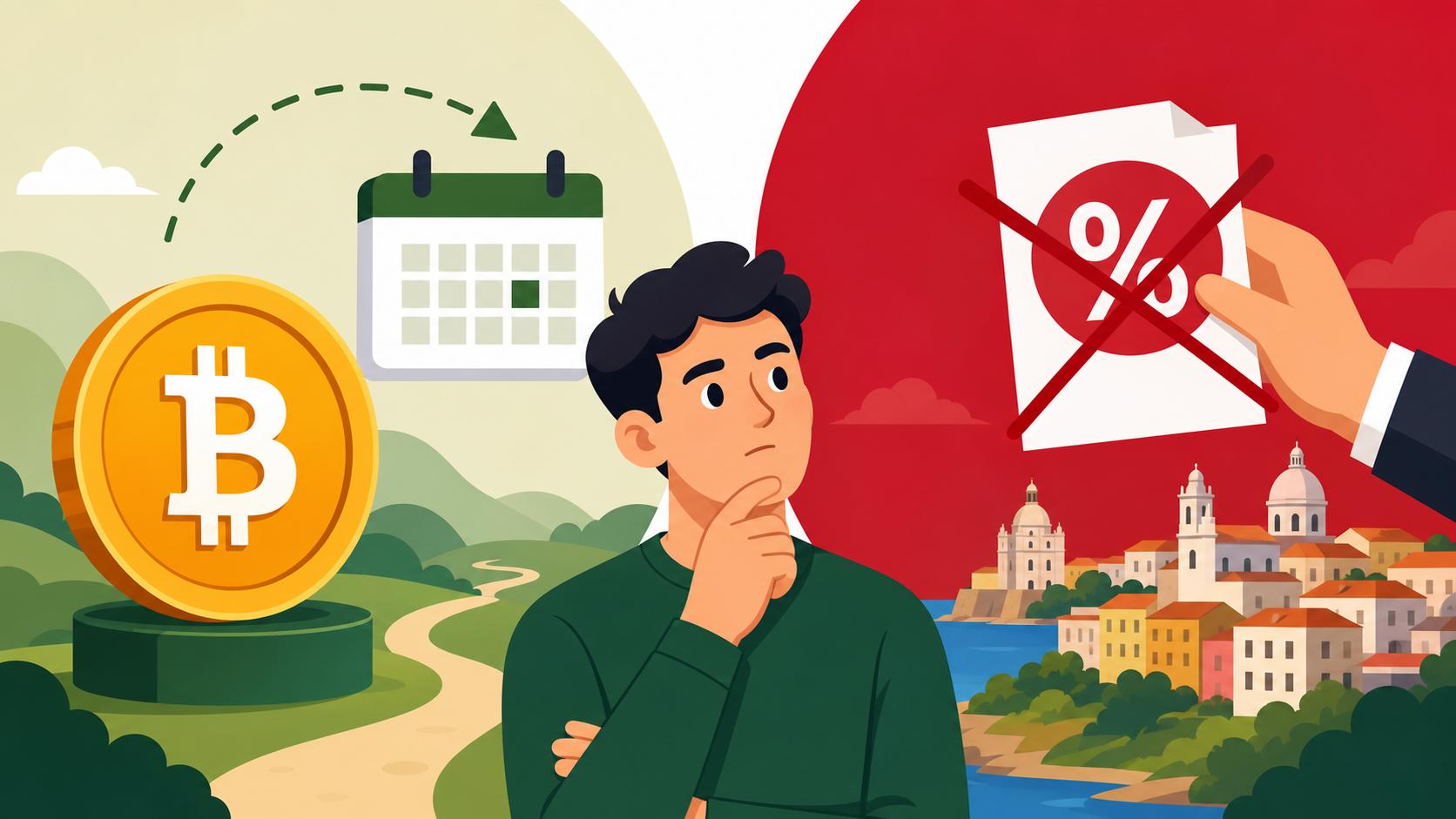
The Portuguese Tax Authority (Autoridade Tributária or AT) fundamentally shifted the landscape with the 2023 State Budget, and those rules have matured into a strict, well-enforced framework for 2026. The most critical number for any Bitcoin holder in Portugal is 365. This is the threshold that separates a "short-term" speculative gain from a "long-term" investment.
If you hold your Bitcoin, Ethereum, or any other fungible crypto-asset for 365 days or more, the capital gains (mais-valias) from the sale of those assets are generally exempt from personal income tax (IRS). However, this rule only applies to individuals who are not acting in a professional capacity. If you sell your Bitcoin before the 365-day mark, you are hit with a flat tax rate of 28%. This is consistent with how other financial investments, such as stocks and bonds, are taxed in Portugal.
It is vital to understand that the 365-day clock is not reset when you move your Bitcoin from an exchange like Binance to a cold wallet. The holding period is based on the date of acquisition, regardless of where the asset is stored. You should keep meticulous records of your purchase dates, as the burden of proof lies with you if the AT decides to audit your filings. For many expats, Becoming a Tax Resident in Portugal: The 183-Day Rule Explained is the first step in determining when their global crypto portfolio becomes subject to these local laws.
Calculating the Holding Period for Multiple Purchases
The AT uses the FIFO method—First-In, First-Out. This can be a nightmare for frequent buyers. Imagine you bought 0.1 BTC in January, 0.1 BTC in June, and another 0.1 BTC in December. If you sell 0.15 BTC in the following February, the first 0.1 BTC you sold is considered to be the batch from January (which you held for over a year and is exempt). The remaining 0.05 BTC is considered part of the June purchase (held for less than a year and taxed at 28%).
To manage this, many savvy investors use platforms like Trade Republic to maintain clear records of their cost basis and holding durations. Without a clear ledger, you might find yourself accidentally triggering a tax event on a portion of your sale that you thought was exempt. This is where Filing the Annual IRS Tax Return (Modelo 3): Deadlines and Process becomes your most important annual task.
Crypto-to-Crypto Exchanges and Tax Triggers
One of the most common questions I get from fellow expats is whether swapping Bitcoin for Solana or a stablecoin like USDC counts as a taxable event. Under the current 2026 regulations, a crypto-to-crypto exchange does not trigger a capital gains tax liability, provided you do not "exit" into fiat currency (like Euros or Dollars) or use the crypto to purchase goods and services.
The 365-day holding period continues to run across these swaps. For example, if you hold Bitcoin for six months, swap it for Ethereum, and hold that Ethereum for another seven months before selling for Euros, the total holding period is considered thirteen months. Because the cumulative time held was over 365 days, the final sale is exempt. This makes Binance a powerful tool for rebalancing your portfolio without constantly resettting your tax clock, as long as you stay within the "crypto-to-crypto" bubble.
Reporting Crypto to the Finanças: Don't Get Caught Unaware
Even if your Bitcoin sale is entirely exempt because you held it for three years, you still have a legal obligation to report the transaction. This is the biggest trap for newcomers. "Exempt" does not mean "invisible." In Portugal, transparency is the name of the game, especially as the government integrates more automated data-sharing tools with European exchanges.
When you file your IRS return in the spring, you must disclose your sales. For most crypto investors, this means filling out Annex G (for taxable gains) or Annex G1 (for exempt gains). If the assets were held on a foreign exchange, you might also need to look at Annex J. I remember the panic of my first filing season, staring at these forms and realizing that a single missed checkbox could lead to a fine or an audit.
The Portuguese government has become increasingly sophisticated in tracking large fiat inflows. If you use Wise to transfer a significant amount of Euros from a crypto exchange to a local Portuguese bank account like ActivoBank or Millennium BCP, the bank is legally required to flag large or suspicious transactions. If your bank account shows a €50,000 deposit from an exchange but your tax return shows zero crypto activity, you are inviting a very uncomfortable letter from the AT. To avoid these issues, always ensure you are Filing IRS Anexo J for foreign income: Common mistakes expats make correctly.
The Importance of Documenting Your Cost Basis
The AT requires you to prove not just when you bought your Bitcoin, but for how much. If you cannot prove your cost basis, the tax authorities may assume a cost basis of zero, meaning they will tax 28% of the entire sale price, not just the profit.
I highly recommend downloading your trade history from your exchanges every quarter. Don't rely on the exchange to keep these records forever; platforms disappear, and accounts can be frozen. Having a CSV file or a PDF statement showing the exact date, time, and price of your Bitcoin purchase is your only shield during an audit. Many expats find that Finding a reliable English-speaking Contabilista for your complex IRS return is well worth the cost just to have a professional verify these records.
Tax Comparison Table for Crypto Assets in 2026
| Transaction Type | Holding Period | Tax Rate | Reporting Category |
|---|---|---|---|
| Sale of BTC for EUR | < 365 Days | 28% | Annex G (Capital Gains) |
| Sale of BTC for EUR | > 365 Days | 0% (Exempt) | Annex G1 (Exempt Gains) |
| BTC to ETH Swap | N/A | 0% | No immediate reporting |
| Mining / Staking Rewards | N/A | Progressing (up to 48%) | Annex B (Category B Income) |
| NFT Sale (Non-Fungible) | Any Duration | 28% | Annex G |
When Crypto Trading Becomes a Business Activity
There is a gray area that many "day traders" fall into without realizing it. If the AT determines that your crypto activity is not a "private investment" but a "professional activity," the 365-day rule no longer applies. In this scenario, all your gains could be taxed as Category B income (business income), which is subject to progressive tax rates that can climb as high as 48%, plus social security contributions.
How does the AT decide? They look at the "habits" of the taxpayer. If you are making dozens of trades a day, using professional trading tools, and this is your primary source of income, you are likely a professional trader in their eyes. For most people who buy and hold Bitcoin as a retirement hedge, this isn't an issue. But if you're trying to live off short-term scalping, you should look into Opening a Sole Proprietorship (Trabalhador Independente) in Portugal to ensure you are paying into the social security system correctly.
Staking, Mining, and DeFi Rewards
Unlike the capital gains from selling Bitcoin, the income generated from staking rewards or mining is generally treated as investment income (Category E) or business income (Category B). In 2026, the AT views these rewards similarly to interest from a bank account or dividends from a stock.
If you receive 0.01 BTC as a staking reward on Binance, that specific amount is often taxed at the moment of receipt or as income for that year. You don't get to apply the 365-day rule to the "income" portion, only to the "capital gain" portion if the value of that BTC increases before you sell it. This distinction is subtle but expensive if you get it wrong. Dealing with these nuances is a key part of Cryptocurrency Tax Laws in Portugal 2026: 28% Rule vs 1-Year Exemption.
NFTs and Unique Assets
It is worth noting that the 365-day exemption specifically excludes "non-fungible" tokens (NFTs). If you are selling digital art or unique collectibles, the Portuguese tax code currently treats these as taxable regardless of how long you hold them. This is because the law was designed to provide a "safe harbor" for currency-like assets (Bitcoin/stablecoins) but not for speculative art markets.
If your portfolio is a mix of Bitcoin and NFTs, you need to keep them strictly separated in your ledger. Mixing the two can lead to a messy tax return. If you're using crypto gains to fund a lifestyle change, such as buying a home, you should also consider how Building Credit in Portugal: Do Credit Scores Matter for Mortgages? might be affected by your reported income levels.
Practical Tools for the Portuguese Crypto Expat
Living as a crypto-native in Portugal is much easier than it was a few years ago. The infrastructure has caught up. However, the "last mile" of crypto—moving your gains into your Portuguese life—still requires some strategy. Most local banks are still "crypto-wary." If you send €100,000 directly from an exchange to a traditional bank, they might freeze the account and ask for a mountain of paperwork, including proof of the source of funds (KYC/AML).
To bridge this gap, many expats use Wise. You can sell your Bitcoin on Binance, withdraw the fiat to your Wise Euro account, and then send smaller, manageable amounts to your local Portuguese bank for rent and daily expenses. This provides a layer of documentation that traditional banks find more acceptable.
Choosing the Right Exchange for Residency
While you can use almost any global exchange, using those with strong European compliance, like Trade Republic, can make your life easier. These platforms often provide tax-ready statements that align with European standards, which your Portuguese accountant will thank you for.
Remember, as a resident, you must also consider Do I have to declare my foreign bank accounts to the Portuguese IRS? This includes neo-banks and, in some interpretations, custodial exchange accounts that have an IBAN associated with them. The fines for non-disclosure of foreign accounts start at €500 and can escalate quickly, so when in doubt, disclose.
Managing Your Cash Flow and Tax Reserves
If you are selling Bitcoin within the 365-day window, you need to set aside 28% of your profit immediately. Too many people spend their full "gains" in the summer, only to realize in April of the following year that they owe the government five figures.
Keep your tax reserve in a high-yield savings account or a stablecoin (if you’re comfortable with the risk) so that you aren't forced to sell more Bitcoin during a market downturn just to pay the tax on your previous year's wins. Portugal's lifestyle is incredibly rewarding, but the administrative overhead of being an expat investor requires discipline.
Disclaimer
I am a veteran expat blogger, not a certified financial advisor or a tax attorney. Tax laws in Portugal, especially regarding cryptocurrency, are subject to frequent changes and individual interpretation by the Tax Authority. This guide is for informational purposes only and does not constitute professional legal or financial advice. Always consult with a qualified Portuguese "Contabilista Certificado" before making significant financial decisions or filing your taxes.