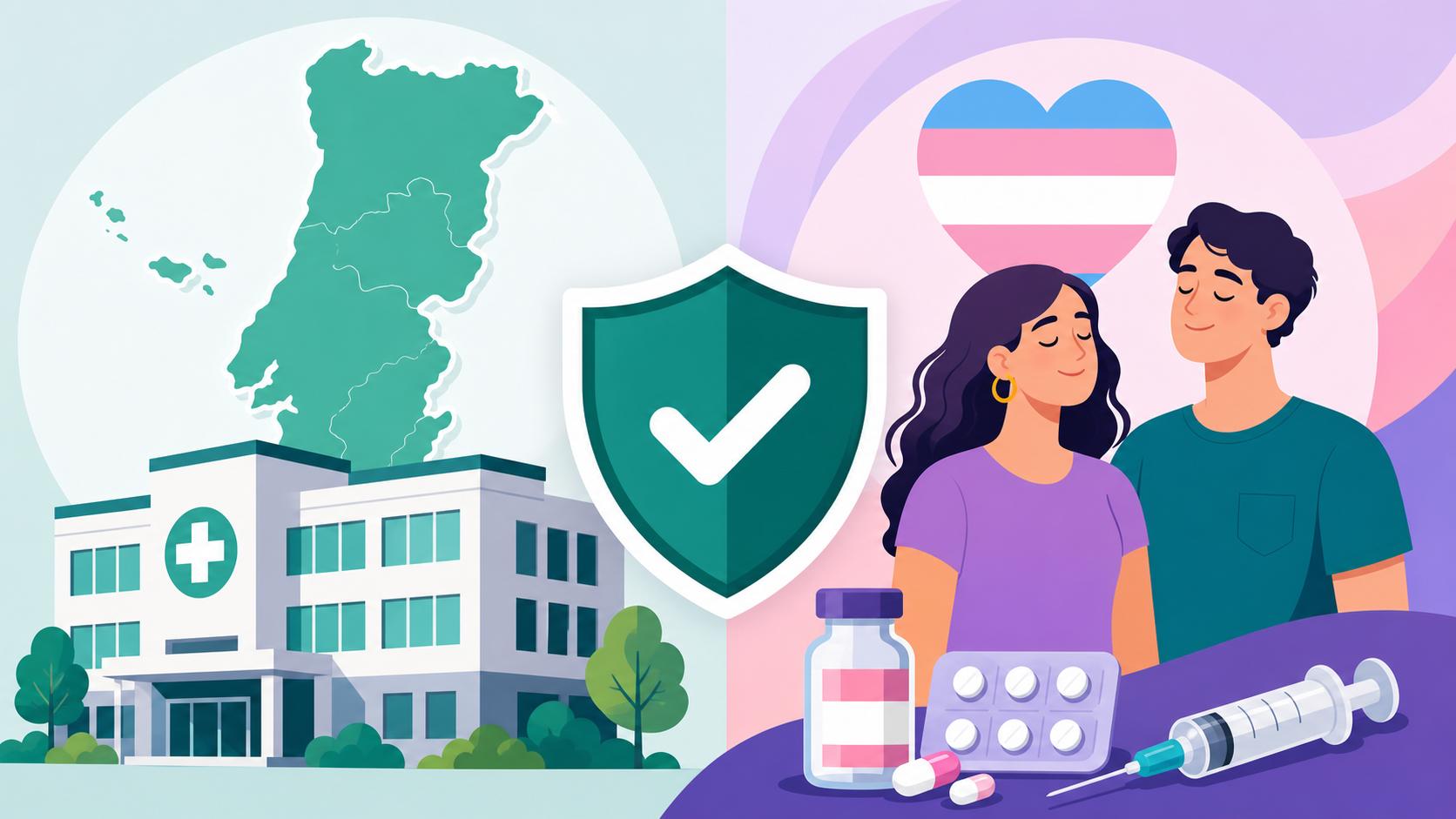
Does public healthcare cover gender-affirming care or HRT in Portugal?
Navigating a foreign medical system while transitioning or maintaining gender-affirming care can feel like trying to solve a Rubik's Cube in the dark. I remember the sheer anxiety of my first visit to a Portuguese health center, clutching a folder of translated medical records and wondering if I would be met with empathy or a bureaucratic wall. This guide explains exactly how Portugal's public health system covers gender-affirming care and HRT, ensuring you can access the support you need without the guesswork.
The Legal Landscape of Gender Identity in Portugal
Portugal is often cited as one of the most progressive countries in Europe regarding LGBTQ+ rights, but as any expat knows, the law on paper and the reality at the administrative desk can differ. Since 2018, Law No. 38/2018 has established the right to gender self-determination. This was a landmark moment because it moved the country away from a "pathologized" model—meaning you no longer need a formal psychiatric diagnosis of "gender dysphoria" to legally change your name or gender marker.
However, when it comes to the medical side—surgeries and Hormone Replacement Therapy (HRT)—the public system still follows a clinical pathway. The good news is that gender-affirming care is fully integrated into the SNS (Serviço Nacional de Saúde). The challenge is that the SNS is currently under significant strain. While the "right" to care exists, the "wait" for care can be grueling. For many of us living here, understanding Portugal's National Health Service (SNS): How the Public System Works is the first step in managing expectations.
The law ensures that no one can be discriminated against in the healthcare system based on gender identity. In theory, this means your local health center should treat your transition-related needs with the same priority as any other endocrine or surgical requirement. In practice, you may encounter doctors who are unfamiliar with the specific protocols, which is why being your own advocate is essential.
Accessing Gender-Affirming Care Through the SNS
The journey always begins at your local Centro de Saúde. You cannot simply walk into a major hospital and ask for an endocrinologist. You must first be registered with the public system. If you haven't done this yet, you'll need to focus on Registering with the Centro de Saúde: Getting Your SNS Número de Utente before you can even request a consultation.
Once you have your number, you must book an appointment with your médico de família (family doctor). This is the gatekeeper of the Portuguese system. You will need to explain your situation and request a referral to a specialized gender identity unit. I’ve found that bringing a written summary of your medical history—ideally translated into Portuguese—can bypass a lot of "lost in translation" moments.
Specialized Gender Identity Units (GRS)
In Portugal, gender-affirming care is centralized in a few major hubs. You won't find these services in every small-town hospital. The primary specialized units are:
- Hospital de Santa Maria (Lisbon): Often considered the lead center for gender identity.
- Hospital de Santo António (Porto): A major hub for those living in the north.
- Centro Hospitalar e Universitário de Coimbra (CHUC): Serves the central region.
When your family doctor puts the referral into the system (via a platform called Alert), you enter a centralized waiting list. It is no secret that these lists are long. It is not uncommon for expats to wait 12 to 18 months for an initial consultation at a specialized unit. This is often the point where people consider Public vs Private Healthcare in Portugal: Which One Should Expats Choose? to bridge the gap.
The Role of the Multidisciplinary Team
Once you are "in" at a specialized unit, you aren't just seeing one doctor. The SNS model uses a multidisciplinary team consisting of endocrinologists, psychologists, psychiatrists, and plastic surgeons. While the 2018 law reduced the "gatekeeping" aspect of psychiatry for legal changes, the medical system still prefers a psychological evaluation period before starting HRT or approving surgeries within the public system. This is intended to be supportive, though many in the community find it an unnecessary hurdle.
Hormone Replacement Therapy (HRT) and the SNS
If you are already on HRT when you move to Portugal, your path is slightly smoother but still requires some legwork. You should bring a letter from your previous prescribing doctor and your most recent blood test results.
Getting Your Prescription
Even if you have a foreign prescription, Portuguese pharmacies usually require a local one. A family doctor can sometimes "renew" an existing HRT prescription if you provide sufficient documentation, but many will insist on a referral to an endocrinologist first to ensure the dosage is correct under Portuguese clinical guidelines. If you find your health center is slow, you might look into Finding an English-Speaking General Practitioner (Médico de Família) who has experience with trans patients.
Cost and Subsidies
One of the greatest benefits of the SNS is the cost. Most gender-affirming medications, including various forms of testosterone and estrogen, are subsidized by the state. This means you only pay a percentage of the retail price.
- Comparticipação: This is the Portuguese word for the state's share of the cost. Depending on the specific medication, the state may cover 37%, 69%, or even 90% of the cost.
- Taxas Moderadoras: These are small co-payments for the consultations themselves, though many people are exempt based on income or chronic condition status. For more on this, see Taxas Moderadoras: Co-payments and Costs in the Public Health System.
Pharmacy Availability
Most HRT medications are readily available at local pharmacies. However, specific brands you may be used to in the US or UK might have different names here. For instance, Testogel is common, but certain injectable esters might require a special order. It’s a good idea to read up on Pharmacies and Medication in Portugal: Prescriptions and OTC Drugs to understand how the ordering process works. While you are waiting for your system to level out, many expats use iHerb for high-quality vitamins and supplements like Vitamin D or Biotin, which are often recommended alongside HRT but aren't always covered by the SNS.
Surgical Procedures in the Public System
The SNS does cover gender-affirming surgeries, including mastectomies (top surgery), hysterectomies, and genital reconstruction (GRS). However, this is the area with the longest waiting times.
The surgical teams at Hospital de Santo António and Hospital de Santa Maria are highly skilled, but because they serve the entire country's public demand, the backlog can span several years. For many expats, this lead time is a dealbreaker. If you have the means, you might look into private options at facilities like Hospital da Luz and CUF: Navigating Portugal's Biggest Private Hospitals.
Be aware that most local private insurance plans in Portugal (like Médis or Multicare) have strict "pre-existing condition" clauses. If you are already transitioning, they may exclude gender-affirming surgeries from your coverage. This is why many expats opt for international providers like Cigna Global, which often provides more robust coverage for specialized care and shorter waiting periods, provided you disclose your history correctly during the application.
Mental Health Support and Community Resources
Transitioning in a new country adds a layer of "expat culture shock" to an already intense personal journey. The SNS does provide mental health support, but finding a therapist who speaks fluent English and specializes in gender identity within the public system is like finding a needle in a haystack.
I highly recommend looking for English-Speaking Therapy: Online Counseling and Local Psychologists to ensure you have a space to process your move and your transition. Portugal has several excellent NGOs that can help you navigate the system:
- REDE EX AEQUO: Focuses on youth but has great resources.
- ILGA Portugal: The oldest and largest LGBTQ+ organization in the country.
- AMPELOS: An association for parents and families of LGBTQ+ individuals.
These organizations can often recommend specific doctors within the SNS who are "trans-friendly," which can save you months of frustration dealing with less-informed practitioners.
Comparing Public vs. Private Care for Gender Transition
| Service | Public SNS | Private Sector |
|---|---|---|
| Initial Consultation | 12-18 month wait | 1-2 week wait |
| HRT Cost | Heavily subsidized (low cost) | Full price (unless insured) |
| Surgery Wait Times | 2-5+ years | 3-6 months |
| Endocrinology | Specialist referral required | Direct booking possible |
| Language | Primarily Portuguese | English widely spoken |
| Continuity of Care | Team-based, but inconsistent | High (same doctor) |
If you are managing a budget, the SNS is unbeatable for long-term HRT. However, for the diagnostic and surgical phases, the private route is often the only way to maintain your mental well-being and timeline. If you choose the private route, you'll still need to understand Private Health Insurance in Portugal: Costs, Coverage, and Best Providers to see what might be reimbursed.
Navigating the Administrative "Gray Areas"
One thing I learned the hard way: the Portuguese system loves paper. If you are an expat, you must ensure your residency status is clear. If you are here on a D7 or D8 visa, your access to the SNS is guaranteed once you have your residence permit, but the "transition period" between arriving and getting your card can be tricky. During this time, having an international policy like Cigna Global is a lifesaver, as it allows you to access private specialists immediately.
If you ever feel you are being treated unfairly at a health center, don't be afraid to ask for the Livro de Reclamações. This is the official complaint book, and every medical facility is legally required to provide it. For more on how to handle these situations, see Understanding the 'Livro Amarelo' (Yellow Book) for Medical Complaints.
Ultimately, the Portuguese public health system is a compassionate one, but it is slow. It will cover your HRT, it will cover your blood tests, and it will eventually cover your surgeries. The "cost" of the free care is time and patience. By combining the public system for your monthly prescriptions and perhaps using private care for initial specialist appointments, you can create a hybrid model that works for your transition and your life in Portugal.
Disclaimer
This guide is for informational purposes only and does not constitute medical or legal advice. Healthcare policies in Portugal, particularly regarding the SNS and AIMA (formerly SEF) requirements, can change frequently. Always consult with a qualified medical professional or a legal expert specializing in Portuguese immigration and healthcare law to verify current protocols and your specific eligibility. Prices and waiting times mentioned are based on 2026 estimates and may vary by region.