Finding Doctors and Specialists in Portugal: English-Speaking Medical Care
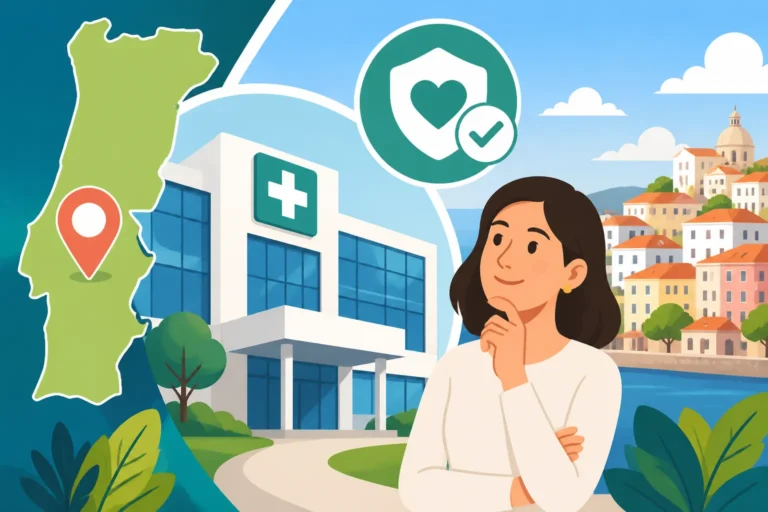
Standing in line at 7 AM at a local health center only to be told the "family doctor" list is full is a rite of passage for many expats in Portugal. I spent my first six months here bouncing between confused pharmacy visits and expensive emergency room trips before I understood how the system actually breathes. This guide provides the roadmap to finding reliable English-speaking doctors and specialists without the usual administrative headache.
Understanding the Dual Healthcare Landscape in Portugal
The first thing you need to grasp is that Portugal operates on a hybrid model. There is the public system, known as the Serviço Nacional de Saúde (SNS), and a robust private sector. For many of us moving from countries with strictly one or the other, this can feel like a riddle. The public system is remarkably affordable—often free or costing just a few euros for a "taxa moderadora"—but it is currently under immense strain. Long wait times for non-urgent surgeries and a shortage of assigned family doctors are the primary frustrations you will hear about at expat meetups.
The private sector, on the other hand, is where most expats find their English-speaking comfort zone. Private hospitals in Portugal feel more like high-end hotels than medical facilities. While they are significantly more expensive than the public system, they are still quite affordable compared to US or UK private care. Many foreigners choose to maintain a premium international policy, like those offered by Cigna Global, to ensure they can bypass public waitlists and access top-tier specialists immediately. Having this kind of coverage essentially buys you time and peace of mind, two things that are in short supply when you are navigating a new country’s medical bureaucracy.
Choosing between the two isn't an "either/or" situation; most of us use both. You might use the SNS for routine vaccinations or chronic medication because the subsidies are excellent, but you’ll head to a private clinic for a specialized dermatology consultation or an urgent orthopedic issue. Understanding how to bridge these two worlds is the key to a stress-free life in Lisbon, Porto, or the Algarve.
The Public System SNS and Its Nuances
The SNS is the backbone of Portuguese healthcare. To access it, you first need to focus on Registering with the Centro de Saúde: Getting Your SNS Número de Utente. This number is your golden ticket. Without it, you are essentially a ghost in the system, paying full price even at public hospitals. The reality of the public system is that it is high-quality but slow. The doctors are excellently trained—often the same doctors you see in private clinics in the afternoon—but they are overworked.
One hurdle you will face in the public system is the lack of a "choice" of doctor. You are typically assigned to a health center based on your residential address. If you live in a popular neighborhood in Lisbon like Arroios or Estrela, your local center might be oversubscribed. This leads to the common frustration of being a "utente sem médico de família" (a patient without a family doctor). In this case, you can still get consultations, but you have to show up early and hope for a walk-in slot, which is never a fun way to spend a Tuesday morning.
Despite the wait times, the SNS is world-class for emergency care. If you have a major accident or a life-threatening illness, the public hospitals are where you want to be. They have the most advanced equipment and the most specialized teams. The private sector is great for "planned" health, but the public sector remains the king of "unplanned" crises.
The Private Sector and English Proficiency
If your Portuguese is still at the "uma cerveja, por favor" level, the private sector will be your sanctuary. In places like Hospital da Luz or CUF, almost every doctor and a significant portion of the nursing staff speak excellent English. This eliminates the terrifying possibility of a medical misunderstanding. Private care in Portugal is dominated by a few large groups, and their facilities are spread across the country.
When you use the private system, you are paying for speed and convenience. You can usually book an appointment online or through an app for the following week, rather than waiting months in the public system. For those with international insurance like Cigna Global, the process is even smoother, as these hospitals are well-versed in handling direct billing with major global providers. This prevents you from having to pay thousands of euros upfront and chasing reimbursements later.
However, do not assume that "private" means "perfect." Even in private hospitals, you might face delays or administrative hurdles. It is always wise to keep your own medical records. I have learned to keep a digital folder of every scan, blood test, and prescription I’ve ever received in Portugal. This makes switching between the public and private systems much easier, as you can simply show the doctor your previous results on your phone.
How to Choose Between Public and Private
For a newcomer, the decision usually comes down to budget and urgency. If you are on a tight budget and have a non-urgent issue, the public system is the way to go. If you are a digital nomad or a professional with a busy schedule, the private system is almost mandatory. Many expats find that having a private insurance plan is the most "realistic" way to live here, as it allows you to see a specialist without a GP referral, which is a major time-saver.
It is also worth noting that some specialized treatments are better handled in one system over the other. For example, maternity care is excellent in both, but many expat moms prefer the private experience for the added comfort and the guarantee of an English-speaking obstetrician. Conversely, for serious long-term illnesses like cancer, the SNS often provides more comprehensive integrated care that private insurers might cap after a certain expenditure.
Finding an English-Speaking General Practitioner
The General Practitioner (GP), or Médico de Família, is the gatekeeper of your health. In Portugal, this role is vital because they are the ones who coordinate your care and provide referrals. If you are looking for Finding an English-Speaking General Practitioner (Médico de Família), you have two main routes: the public health center (Centro de Saúde) or a private clinic (Consultório).
In the public system, you don't really "find" a doctor; they are assigned to you. When you register at your local center, you can ask if any of the available doctors speak English. In my experience, younger doctors almost always do, but the administrative staff at the front desk might not. This is the "Portuguese Paradox"—the person you need to talk to most may not speak your language, even if the person treating you does. It is advisable to bring a Portuguese-speaking friend or use a translation app for that initial registration.
In the private sector, you have total freedom. You can search hospital websites, filter by language, and even read doctor bios. This level of transparency is a breath of fresh air. You can find GPs who have studied in the UK or the US, making the cultural and linguistic transition seamless.
Navigating the Centro de Saúde Registration
The registration process at the Centro de Saúde is notoriously bureaucratic. You will need your NIF, your residence permit (or proof that you’ve applied for one), and your Atestado de Morada from the Junta de Freguesia. Sometimes, they will ask for a Social Security number (NISS) as well. It feels like a paper chase, but once you are in the system, you are in for life.
Once registered, you might be put on a waiting list for a permanent family doctor. This wait can last years in some regions. While you wait, you are still entitled to "consultas de recurso" (recourse appointments). You usually have to call the center early in the morning or show up when they open to snag one of these daily slots. It’s not ideal, but it’s a functional safety net for when you just need a quick prescription or a basic check-up.
For those who find this too cumbersome, digital health services have become a lifesaver. You can often get initial advice or prescriptions through the SNS 24 helpline, which has English speakers available. However, for a face-to-face relationship, nothing beats having a designated doctor who knows your history.
Finding Private GPs in Major Cities
In Lisbon, Porto, and the Algarve, private clinics are everywhere. You will see signs for Clínica Médica on almost every major street. These range from small, one-doctor practices to massive multi-specialty centers. To find the best ones, I recommend looking at expat forums but also checking the official apps of the major hospital groups.
The beauty of a private GP is that they often have more time to talk to you. In the public system, appointments are often rushed (sometimes only 15 minutes). A private GP will often give you a full 30 to 45 minutes to discuss your lifestyle, stressors, and long-term health goals. If you're into supplements or specific wellness brands, you can even find doctors who are open to discussing the latest items you've found on iHerb to supplement your diet.
One thing to watch out for is the "fragmentation" of care. In the private system, it’s easy to see five different specialists who don't talk to each other. A good private GP acts as the "conductor" of your medical orchestra, ensuring that your cardiologist knows what your endocrinologist is doing.
Navigating Communication Barriers
Even if your doctor speaks English, medical terminology is a different beast. It is advisable to write down your symptoms in both English and Portuguese before your appointment. Use a simple tool like Google Translate or DeepL. Not only does this show respect for the local language, but it also ensures that if the doctor struggles with a specific English word, you have the Portuguese equivalent ready.
Don't be afraid to ask the doctor to write things down. Portuguese handwriting is famously difficult to read, and when it’s in a foreign language, it’s impossible. Ask for digital prescriptions (which are standard now) and digital copies of your clinical notes. Most private hospitals will upload these directly to their patient portal, which is a massive help for your records.
Lastly, remember that "English-speaking" doesn't always mean "fluent." Be patient, speak clearly, and avoid using slang or complex idioms. "I have a splitting headache" might be less clear than "I have very strong pain in my head."
Accessing Specialists: The Referral Pathway
Getting to see a specialist—whether it’s a cardiologist, a neurologist, or an endocrinologist—works differently depending on which system you are in. If you are in the public system, you absolutely must follow the Specialist Referrals: The Process in Public SNS vs Private Clinics pathway. You cannot just walk into a public hospital and ask to see a heart specialist. Your family doctor must "prescribe" the specialist visit.
This referral is sent through an electronic system, and you then wait for a letter or a text message with your appointment date. This wait can be anything from three weeks to eighteen months, depending on the urgency and the specialty. This is the primary reason why many expats maintain private insurance. In the private sector, the referral system is much more relaxed.
In most private hospitals, you can book a specialist appointment directly. If you know you have a thyroid issue, you can simply book an endocrinologist. You don't need a GP to give you permission. This "direct access" is a game-changer for those of us used to more restrictive systems. However, be aware that some insurance companies still require a GP referral to cover the cost, so check your policy before you skip the GP.
Top Specialist Networks: CUF and Luz
When it comes to specialized care, two names dominate the conversation: Hospital da Luz and CUF: Navigating Portugal's Biggest Private Hospitals. These are the "Big Two." Hospital da Luz (owned by Luz Saúde) has a massive flagship hospital near the Colombo mall in Lisbon that is arguably the most advanced in the country. Their technology is incredible, and they attract top-tier talent.
CUF is the oldest private healthcare group in Portugal and has a very extensive network, especially in the north and in central Lisbon (CUF Descobertas and CUF Tejo). Both networks have excellent apps that allow you to manage your appointments, see waiting times for the ER, and view your exam results. They are the gold standard for English-speaking specialist care.
A pro-tip: if you find a specialist you love at one of these hospitals, ask if they also have a private practice. Many top doctors work two days at a big hospital and two days at their own smaller clinic. Sometimes, the wait time for their private clinic is shorter than at the big hospital, even though the price is the same.
Direct Access in Private Hospitals
The convenience of direct access cannot be overstated. In the public system, I would have waited weeks for a GP, then months for a dermatologist. In the private system, I opened the Hospital da Luz app at 10 PM, found a dermatology slot for 9 AM the next morning at a clinic near my house, and was diagnosed and treated before lunch.
This speed is what you are paying for. However, remember that "direct access" means you are responsible for your own medical history. The specialist won't have your GP's notes unless you bring them. This is where your digital folder of records becomes essential.
For those using international plans like Cigna Global, these private networks are usually "in-network," meaning the hospital can communicate directly with the insurer. This is much better than the "pay and claim" model used by many local Portuguese insurers, where you have to pay the full €90-€150 fee and wait weeks for a 50% reimbursement.
The Role of "Clínicas" vs "Hospitais"
In Portugal, you will see many "Clínicas" that offer specialist consultations but don't have emergency rooms or surgical theaters. These are often quieter and more personal. If you just need a routine consultation, a clinic is often a more pleasant experience than a busy hospital.
However, if you need diagnostic tests like an MRI or a CT scan, you will likely be sent to the larger "Hospital." The big groups usually have a "hub and spoke" model where smaller clinics handle the consultations and the main hospital handles the heavy lifting. Knowing which facility has which equipment can save you from driving across the city for a blood test that could have been done at the clinic next door.
Pediatric and Women’s Health Care
For families and women, finding the right doctor is often more than just about language; it’s about trust and philosophy. If you are a new parent, Finding an English-Speaking Pediatrician (Pediatra) for Your Baby should be at the top of your to-do list. Portuguese pediatricians are generally very proactive and follow a strict schedule of "check-ups" (consultas de rotina) during the first two years.
Women’s health is equally well-catered for, but the approach can be more clinical than some might be used to in the UK or Scandinavia. For routine screenings, you’ll want to look into Finding a gynecologist (Ginecologista) for routine exams in Lisbon or your local city. Most private gynecologists speak perfect English and are very accustomed to treating expat patients.
One thing to note is that in Portugal, it is very common to have your baby in a private hospital if you have insurance. The private maternity wards are excellent, offering private rooms and more flexibility for partners to stay overnight. However, the public maternity hospitals (like Alfredo da Costa in Lisbon) are the ones equipped for high-risk pregnancies and extreme emergencies.
Pediatric Care and Vaccinations
The Portuguese vaccination schedule is comprehensive and free through the SNS. Even if you see a private pediatrician, you will likely go to the public Centro de Saúde for the actual shots. This is because the public system tracks all vaccinations through a national database called the Boletim de Vacinas.
Private pediatricians in Portugal are often very accessible via WhatsApp—something that shocks many American or British expats. It is not uncommon for a pediatrician to give you their mobile number for "emergencies." This level of personal care is one of the best parts of the Portuguese medical culture.
When choosing a pediatrician, ask about their stance on antibiotics. Traditionally, Portuguese doctors have been quick to prescribe them, but the younger generation of English-speaking doctors is much more aligned with modern international standards of "watchful waiting."
Gynecological Care and Routine Exams
For women, the private sector is generally preferred for gynecological care due to the ease of booking and the comfort of the facilities. Most routine exams—like Pap smears and ultrasounds—are done right there in the doctor’s office. You won't be sent to three different locations.
If you are planning a pregnancy, the "private route" is very popular. You will see the same obstetrician throughout your entire pregnancy, and they will often be the one to deliver your baby at the private hospital. This continuity of care is something many expats value highly.
If you find that local pharmacies are out of specific prenatal vitamins or if you prefer certain organic health products, iHerb is a great resource for expats in Portugal. They ship quickly from within the EU (usually from the Netherlands), so you don't have to worry about customs delays for your essential supplements.
Maternity and Prenatal Support
The "doula" and "midwife" culture is growing in Portugal, but it is still more niche than in other countries. Most births are led by obstetricians. However, in the private sector, you can find more "humanized" birth options if you search for them specifically.
Prenatal classes are available in English in the major cities. Groups like "Lisbon Birth Training" or "Porto Parents" are great places to find recommendations. These communities are vital for navigating the cultural differences in how birth and postpartum care are handled here.
One quirky detail: in Portugal, you are often expected to bring your own "kit" for the baby to the hospital (diapers, clothes, etc.), even in some private clinics. Always ask for a "lista de maternidade" a few months before your due date so you aren't caught off guard.
Digital Tools and Telehealth for Expats
Portugal has made massive strides in digital health over the last five years. You no longer have to carry around a paper book for your prescriptions. Everything is linked to your Número de Utente or your private patient ID. Using Telehealth and Online Doctors: Using TravelDoctores and Doctorsa has become a standard way to handle minor issues like sinus infections or skin rashes without leaving your house.
The SNS 24 app and the private hospital apps are actually quite good. They allow you to book appointments, check your position in the ER queue, and even have video consultations. For an expat living in a more rural area, these digital tools are the difference between a 2-hour drive and a 10-minute video call.
However, digital tools are only as good as the data you put into them. I highly recommend making sure your mobile number and email are correctly registered at both your health center and your private hospital. If they have an old number, you will miss the SMS notifications for your appointments and prescriptions.
Hospital Apps and Online Portals
Both the CUF and Luz apps are indispensable. You can download your "faturas" (invoices) for tax purposes—remember, medical expenses can be deducted from your IRS in Portugal! You can also see your lab results often within 24 hours. No more waiting for a phone call from the doctor's office.
The SNS also has a portal called the "Portal do Utente." Here, you can see your entire public health history, including your vaccination record and your current prescriptions. It’s worth the effort to set up your "Chave Móvel Digital" (Digital Mobile Key) to access this portal securely.
One tip: the private apps often have a "Search by Symptom" feature. While I don't recommend self-diagnosing, it can help you figure out which specialist you should be booking. If you have "back pain," the app might suggest an Ortopedista or a Fisiatra.
Telehealth and English-Speaking Support
If you wake up with a fever and don't want to navigate a physical waiting room, services like Doctorsa or TravelDoctores offer 24/7 access to English-speaking doctors. These are particularly useful if your local GP is booked up and you just need a professional opinion or a prescription refill.
These services are usually "pay-per-use," but some international insurance policies include a free telehealth component. It’s a great way to get a "second opinion" as well. I’ve used telehealth to talk to a doctor about blood test results that I didn't quite understand, and having someone explain them in plain English was worth every penny.
Telehealth is also excellent for mental health support, which we will cover in the next section. Many therapists in Portugal now offer a hybrid model, but having that first session online can lower the barrier to entry for those feeling overwhelmed.
Managing Records via the Portal do Utente
The "Portal do Utente" is where you can see your "guia de prestação" (referrals) and your "receitas" (prescriptions). In Portugal, prescriptions are sent to your phone as a code. You just show this code at the pharmacy. It’s incredibly efficient.
You can also use the portal to request a "médico de família" if you don't have one, or to change your primary health center if you move house. It’s the digital heart of the SNS, and while the interface can be a bit clunky, it’s a powerful tool once you get the hang of it.
Mental Health and Wellness Services
Moving to a new country is stressful. The "honeymoon phase" eventually ends, and you might find yourself dealing with bureaucracy-induced anxiety or the isolation of being away from your support network. Finding English-Speaking Therapy: Online Counseling and Local Psychologists is vital. Portugal has a growing number of international therapists who specialize in the expat experience.
It is particularly helpful to look for Finding a therapist in Portugal who understands expat culture shock. A local therapist might not understand why you are so frustrated by a 4-month wait for a residence permit, but an expat-focused therapist will "get it" immediately.
Mental health care is primarily a private affair in Portugal. While the SNS has psychologists, the wait times are extremely long. Most expats pay out-of-pocket or use international insurance. Some local Portuguese insurance plans have very limited mental health coverage (e.g., only 10 sessions a year with a high co-pay), so this is where a plan like Cigna Global really shines.
Psychological Support vs. Psychiatry
In Portugal, there is a clear distinction between a Psicólogo (who provides talk therapy) and a Psiquiatra (who is a medical doctor and can prescribe medication). If you are already on medication for ADHD, depression, or anxiety, you will need to see a psychiatrist to get your prescriptions transferred to the Portuguese system.
Be aware that some medications—especially stimulants for ADHD—are more strictly regulated here than in the US. You will need a formal report from your previous doctor and will likely need to see a specialist here before a local pharmacy will dispense them.
Many expats find that a combination of local talk therapy and supplemental wellness products helps them adjust. If you are looking for specific herbs, magnesium glycinate, or other wellness boosters that are hard to find in a standard Portuguese Farmácia, iHerb is again your best bet for keeping your mental health routine consistent.
Finding the Right Therapist
To find a therapist, check directories like "Psychology Today Portugal" or "It’s Complicated." You can filter by language, specialty, and even whether they offer in-person or online sessions. In Lisbon, neighborhoods like Principe Real and Saldanha have many international clinics with English-speaking staff.
Don't be afraid to "shop around." Most therapists offer a free 15-minute intro call. Use this to see if their style matches yours. Cultural nuance matters—a therapist who understands both your home culture and the Portuguese context can help you navigate the "clash" between the two.
Therapy rates in Portugal for English speakers usually range from €60 to €100 per session. This is cheaper than in the US or Northern Europe, making regular support more accessible for many.
Psychiatric Care and Prescription Rules
If you need a psychiatrist, I recommend going through one of the big private hospitals like CUF or Luz. They have dedicated psychiatry departments with English-speaking doctors. This ensures that your mental health records are integrated with the rest of your medical history.
For prescriptions, ensure you have the "receita digital." This allows you to pick up your medication at any pharmacy in the country. Note that "controlled substances" often require a paper prescription with a specific stamp, so don't be surprised if the process feels a bit "old school" for certain meds.
Practical Tips for Your Medical Appointments
Portuguese medical culture has its own set of unwritten rules. For instance, Portuguese Hospital Etiquette: Visiting Hours and Patient Rights is something to be aware of. In public hospitals, visiting hours are strictly enforced. In private hospitals, things are more relaxed, but there is still a high level of formality.
When you arrive at a hospital, the first thing you usually do is take a ticket (a "senha") from a machine. You then wait for your number to appear on a screen. This applies to everything from checking in for an appointment to getting a blood test. It can feel a bit impersonal, but it’s actually quite efficient.
Another practical tip: always ask for the "Preço Tabelado" (the price list). If you don't have insurance, private hospitals have a standard price for every consultation and exam. It is always better to know the cost upfront so you don't get a surprise at the checkout desk.
Hospital Etiquette and Patient Rights
In Portugal, doctors are highly respected and often addressed as "Doutor" or "Doutora." While you don't have to be overly formal, a certain level of politeness goes a long way. However, you also have the right to be informed. If you don't understand a procedure, keep asking questions until you do.
You also have the right to access your medical records. If a doctor seems reluctant to share them, remind them of your rights as a patient. Most big hospitals have a "Gabinete do Utente" (Patient Office) where you can go to file a complaint or request help if you feel your rights aren't being respected.
If you ever have a truly bad experience, every medical facility is required by law to have a "Livro de Reclamações" (Yellow Complaint Book). Filing a complaint here is a serious matter and must be followed up by the regulatory authorities. It is your ultimate "nuclear option" for consumer disputes.
Medical Billing and Insurance Reimbursements
If you are using insurance, make sure you understand whether it is "Direct Billing" or "Reimbursement." With direct billing, the hospital handles everything. With reimbursement, you pay, get a "Fatura-Recibo" (Tax Invoice), and send it to your insurer.
Crucially, ensure your NIF is on every invoice. This allows the expense to automatically show up in your "e-fatura" portal for your annual tax return. Even if your insurance covers 80%, you can often deduct the remaining 20% from your Portuguese taxes.
For those with international coverage like Cigna Global, make sure you have your digital insurance card saved on your phone. Most hospital receptionists will need to see the "Policy Number" and the "BIN" to process your claim.
Pharmacies and Medication Management
Pharmacies in Portugal (Farmácias) are excellent. The pharmacists are highly trained and can often give better medical advice for minor ailments than a GP. If you have a minor burn, a cough, or a skin irritation, go to the pharmacy first.
Look for the green cross. If it's after hours, every neighborhood has a "Farmácia de Serviço" that stays open all night. You can find out which one is open by looking at the sign on the door of any closed pharmacy—it will list the nearest open one.
Be aware that many things that are "Over The Counter" in the US or UK are "behind the counter" here. You don't necessarily need a prescription for them, but you have to ask the pharmacist for them. This includes basic things like high-dose Ibuprofen or certain allergy meds.
| Feature | Public Healthcare (SNS) | Private Healthcare (CUF/Luz) |
|---|---|---|
| Cost | Free or very low (taxas moderadoras) | €40 – €150 per consultation |
| Wait Times | Can be long (weeks to months) | Short (usually within a week) |
| English Proficiency | Variable (Lower at admin level) | High (Standard for doctors) |
| Access to Specialists | Requires GP referral | Direct booking allowed |
| Facility Quality | Basic but functional | Modern and luxurious |
| Emergency Care | Best for major trauma/surgery | Good for minor/moderate issues |
| Booking | Often via phone or in-person | Via mobile app or website |
Medical Disclaimer
This guide is intended for informational purposes only and is based on the personal experiences of expats and general knowledge of the Portuguese healthcare system. It does not constitute professional medical or legal advice. Healthcare laws, insurance policies, and hospital procedures in Portugal can change frequently. Always consult with a qualified medical professional for health concerns and verify insurance coverage and residency requirements with official government sources or your insurance provider before making medical decisions.