Private Health Insurance in Portugal: Costs, Coverage, and Best Providers
One of the most jarring realizations for many newcomers is that while Portugal’s public system is technically accessible, waiting six months for a routine specialist scan can feel like an eternity when you are in pain. I remember sitting in a drafty waiting room for four hours just to get a referral, realizing then that a private plan wasn't a luxury, but a necessity for peace of mind. This guide solves the confusion around choosing, paying for, and actually using private health insurance in Portugal to ensure you never face the bureaucracy alone.
Why You Might Need Private Insurance Despite the SNS
The Portuguese National Health Service, or Serviço Nacional de Saúde (SNS), is a point of pride for the country, providing universal coverage to residents. However, as any veteran expat will tell you, the system is under immense pressure. While it is excellent for emergency care and long-term chronic illness management, the day-to-day reality of getting a "médico de família" (family doctor) can be a multi-year saga. If you are currently Registering with the Centro de Saúde: Getting Your SNS Número de Utente, you likely already know that being in the system doesn't guarantee immediate care.
Private health insurance acts as a critical bypass. It allows you to skip the months-long queues for non-emergency surgeries, diagnostic tests, and specialist consultations. For many of us, the ability to book an appointment with an English-speaking dermatologist or gynecologist for next Tuesday, rather than next year, is worth every cent of the monthly premium. This is especially true if you are still weighing the pros and cons in the debate of Public vs Private Healthcare in Portugal: Which One Should Expats Choose?.
Furthermore, the comfort of private facilities is a significant factor. Private hospitals in Portugal often resemble high-end hotels more than clinical institutions. You get private rooms, better food, and generally more flexible visiting hours. For a foreigner navigating a new culture, these small comforts can significantly reduce the stress of a medical event.
Long Wait Times and the Public System Reality
The wait times in the public sector are often the primary driver for expats seeking private coverage. For elective procedures like hip replacements or even basic physical therapy, the SNS can have backlogs that span years in certain regions, particularly in high-density areas like Lisbon or the Algarve. Many retirees who moved here expecting seamless public care, only to find that their local "Centro de Saúde" was no longer accepting new patients for their family doctor list.
When you don't have a family doctor in the public system, every minor illness requires a trip to the "Urgências" (Emergency Room), where you might wait eight to twelve hours among hundreds of other people. Private insurance allows you to access private urgent care centers, like those at CUF or Hospital da Luz, where the wait time is rarely more than an hour or two. This efficiency is the cornerstone of why we choose to pay for a secondary layer of protection.
Choice of Doctors and Specialized Facilities
In the public system, you are generally assigned a doctor based on your place of residence. You have very little say in who treats you. Private insurance flips this script, giving you access to a vast "Rede" (network) of specialists across the country. If you have a specific health concern, you can research the best specialist in Porto or Lisbon and book them directly without needing a gatekeeper's referral.
This freedom is invaluable when looking for specific care, such as Finding an English-speaking pediatrician (Pediatra) for your baby. Most private insurers provide an online portal where you can filter doctors by language, specialty, and location. This level of autonomy helps expats feel more in control of their health in a country where they might still be struggling with the language.
Understanding How Private Health Insurance Works in Portugal
Private insurance in Portugal operates differently than it does in the US or the UK. It is primarily a "co-payment" system. This means that even with a premium policy, you will usually pay a small fee out of pocket at the time of service—typically between €15 and €30 for a specialist consultation. Understanding these mechanics is vital to avoid "bill shock" when you first visit a clinic.
Most policies are tied to a specific network. If you stay within the network, the process is "direct billing," where the hospital bills the insurer and you just pay your co-pay at the reception desk. If you go out of network, you will likely have to pay the full price upfront and then submit a claim for reimbursement, which usually covers about 35% to 50% of the cost. It is almost always more economical to stay within your provider's "Rede."
Co-payment Models vs Direct Billing
The co-payment model is the most common structure you will encounter. When you sign up for a plan, you will see a table of benefits that lists exactly what you pay for various services. For example, a basic blood test might cost you €5, while an MRI might cost €40. These fees are paid directly to the provider. It’s a transparent system, but it does mean you need to carry your insurance card (or the digital version on your phone) everywhere.
Direct billing is the "gold standard" for convenience. When you visit major private groups like Hospital da Luz and CUF: Navigating Portugal's Biggest Private Hospitals, they have dedicated insurance desks. You show your ID, they verify your coverage in seconds, and you’re good to go. This seamless integration is one of the reasons the Portuguese private health sector is so highly rated by international residents.
Network Providers vs Out-of-Network Care
Before you sign any contract, you must check if your local hospitals and preferred doctors are in the insurer's network. In Portugal, the "Big Three" networks are Médis, Multicare, and AdvanceCare. Most private doctors will accept at least one of these, but not necessarily all.
Out-of-network care is possible, but it requires a lot of paperwork. You have to keep every "fatura" (invoice), ensure your NIF (Tax Number) is on it, and upload it to your insurer's app. The reimbursement can take anywhere from two weeks to two months. Unless you are seeing a world-renowned specialist who refuses all insurance, it is rarely worth the hassle to go out of network.
Comparing the Top Private Providers in Portugal
The landscape is dominated by a few major players, each with its own strengths and quirks. Choosing between them often comes down to which bank you use (as many are affiliated with banks) or which hospital group you live near. It is worth reading a deep dive like Médis, Multicare, and AdvanceCare: Comparing Top Private Insurers to see a side-by-side breakdown.
When looking at these providers, also consider your long-term needs. If you plan on traveling frequently or moving between countries, a local Portuguese policy might not be enough. This is where international providers like Cigna Global come into play. They offer higher coverage limits and the ability to be treated outside of Portugal, which is a major plus for digital nomads or those who spend summers back in their home country.
Médis: Features and Reputation
Médis is perhaps the most well-known name in Portuguese private health. They are affiliated with Millennium bcp bank and are famous for their excellent mobile app and "Médis Prime" service. They have a massive network and are generally very quick at authorizing surgeries and complex exams. I have found their customer service to be quite efficient, though English support can sometimes be a bit of a "hit or miss" depending on who answers the phone.
One of Médis’s unique features is their "Doctor at Home" service. For a small co-pay, you can have a doctor come to your house for non-emergency issues, which is a lifesaver when you have a high fever or a sick child and don't want to navigate the traffic in downtown Lisbon. They also have a strong focus on preventive medicine, often offering "check-up" packages at discounted rates.
Multicare: The Fidelidade Connection
Multicare is owned by Fidelidade, the largest insurance company in Portugal. Because of this, their network is arguably the most comprehensive. If a doctor accepts private insurance at all, they almost certainly accept Multicare. They offer a wide range of plans, from very basic "discount cards" to high-end "Platinium" policies that include international coverage.
Many expats find Multicare attractive because they have specific partnerships with the CUF hospital network. If you live in an area where CUF is the dominant healthcare provider, a Multicare plan might offer smoother administrative hurdles. They also have a very robust loyalty program that gives you discounts on other types of insurance, like car or home insurance, which can be helpful if you’re trying to consolidate your Portuguese life.
International Options with Cigna Global
For those who want a "no-compromises" approach, Cigna Global is a top-tier choice. Unlike local plans that might have a €50,000 annual limit for hospitalizations, Cigna Global offers limits in the millions. This is crucial if you are concerned about a major health event that might require medical evacuation or specialized treatment in a different EU country.
Cigna Global is a sensible option for those moving on the D7 or D8 visa who want to ensure their coverage meets the strictest SEF/AIMA requirements without any "fine print" surprises. While the premiums are higher than Médis or Multicare, you are paying for the flexibility of being covered worldwide, excluding or including the USA. It removes the stress of having to "switch" insurance every time you cross a border.
Costs and Premiums: What to Budget in 2026
Healthcare in Portugal remains remarkably affordable compared to North America or Northern Europe. For a healthy 40-year-old, a very good private insurance plan will typically cost between €40 and €80 per month. If you are over 65, those prices can jump significantly, often reaching €150 to €250 per month, as risk factors increase.
It is important to remember that these are just the premiums. You also need to budget for your co-payments and any medications. While Pharmacies and Medication in Portugal: Prescriptions and OTC Drugs are subsidized for those in the SNS, your private insurance may also offer a "Medication" add-on that covers a portion of the cost of prescription drugs bought at the local farmácia. For high-quality vitamins or niche supplements that are hard to find in local shops, many expats, including myself, rely on iHerb for international shipping to Portugal, as the local selection can be limited.
Factors Influencing Your Monthly Rate
Your age is the single biggest factor. In Portugal, insurance companies are allowed to increase premiums based on "age brackets." You might notice a jump in price every five years. Your medical history also matters; unlike the public system, private insurers can—and will—exclude pre-existing conditions. If you have a chronic back issue, they might offer you a policy but state clearly that anything related to your spine is not covered.
Location can also play a subtle role. Some plans are "regional," though this is becoming less common. Most importantly, the "level" of coverage determines the price. A plan that only covers "Hospitalization" (emergencies and surgeries) will be much cheaper than a "Full" plan that includes dental, vision, and outpatient consultations.
| Plan Type | Typical Monthly Cost (Age 30-50) | Key Features |
|---|---|---|
| Basic / Hospitalization | €20 – €35 | Emergency surgery, hospital stays, no outpatient care. |
| Standard / Balanced | €40 – €65 | Consultations, exams, physiotherapy, small co-pays. |
| Premium / Platinium | €80 – €130 | Higher limits, dental included, some international coverage. |
| International (e.g., Cigna) | €150 – €300+ | Worldwide coverage, very high limits, no co-pays in some cases. |
Understanding Períodos de Carência (Waiting Periods)
This is the "trap" that catches many new expats. A "Período de Carência" is a waiting period during which you pay your premiums but cannot yet use certain benefits. For a basic consultation, the waiting period might be 60 days. For major surgery, it is often 6 months. For maternity care, it can be a staggering 12 to 18 months.
You cannot move to Portugal, sign up for insurance on Monday, and schedule a subsidized surgery on Friday. If you have an urgent need, you will have to pay the "private rate" out of pocket, which for a surgery can be several thousand euros. This is why it is wise to get insurance sorted the moment you have your NIF and a Portuguese address. Don't wait until something hurts. You can find more detail on this in the guide on Waiting periods (Períodos de Carência) in Portuguese health insurance policies.
The Application Process and Essential Documentation
Applying for health insurance in Portugal has become significantly easier in 2026, with most companies allowing for a 100% digital signup. However, the bureaucracy still requires specific pieces of information. You cannot generally get insurance without a NIF (Número de Identificação Fiscal) and a Portuguese bank account (IBAN) for the direct debit.
If you are coming from outside the EU, you might be asked for a copy of your residence permit or visa. While some companies will allow you to sign up with just a passport, they often require a Portuguese address for the policy documents. If you are still in the early stages of your move, you should check out Healthcare in Portugal for Expats: The Complete 2026 Medical Guide for a timeline of when to apply.
Required Documents for Non-EU Residents
To start your application, have your NIF document ready. You will also need to provide your "Atestado de Morada" or a rental contract to prove you live here. The insurance company needs to know which "tax zone" you fall into. For those on a D7 or D8 visa, your insurance policy is often a mandatory document for your initial AIMA appointment, so you must ensure the policy starts before you arrive in the country.
If you are choosing an international plan like Cigna Global, the documentation is often more flexible. They are used to dealing with people in transition and can usually issue a certificate of insurance in English, which is highly appreciated by consulate officers. This certificate is a lifesaver when you’re trying to prove "sufficient means and protection" for your residency.
Navigating the Health Questionnaire
Almost every private insurer will ask you to fill out a "Questionário de Saúde." Be honest. If you hide a condition and they find out later (which they will, through your medical records), they can cancel your policy and refuse to pay for any related claims. The questionnaire will ask about surgeries in the last five years, chronic medications, and your height/weight.
Some insurers might require a medical exam if you are over a certain age (usually 55 or 60) or if you have a complex history. Don't let this intimidate you; it's usually a simple blood test and a quick chat with a GP. Once you pass this stage and the "waiting periods" are over, you have a level of security that the public system simply can't provide as quickly.
Maximizing Your Private Coverage
Once you have your card, the best way to use it is through the major private hospital groups. In Portugal, names like CUF, Hospital da Luz, and Lusíadas are synonymous with high-quality care. These are not just small clinics; they are massive, multi-specialty hospitals with their own emergency rooms, surgical theaters, and diagnostic labs.
Using these facilities is incredibly straightforward with a private plan. Most of them have their own apps where you can book appointments, see your test results, and even check the current wait time at the ER. If you have a high-end policy, you might even find that your insurance covers things you didn't expect, like specialized screenings or alternative therapies. For daily wellness and recovery, I often supplement my care with products from iHerb, especially when looking for specific organic brands that aren't stocked in the local Pingo Doce or Continente.
Using Private Hospitals like CUF and Hospital da Luz
The experience at a hospital like CUF Descobertas in Lisbon or Hospital da Luz in Arrábida is a world away from the crowded halls of a public hospital. You will find that most of the staff, especially the younger doctors, speak excellent English. You can usually book a specialist—be it a cardiologist or an orthopedic surgeon—within a week.
When you arrive, you check in at a kiosk with your insurance card or citizen card. You'll get a ticket and wait in a comfortable lounge with Wi-Fi. The efficiency is impressive. For those who need frequent care, these hospitals offer "packages" or integrated care plans that work seamlessly with your insurance provider. If you're curious about the specific costs of a visit without a referral, check CUF price list 2026: How much is a private consultation without insurance?.
Dental and Vision Add-ons
Most standard health insurance in Portugal does not include comprehensive dental or vision care by default. These are usually "add-ons" that cost an extra €5 to €15 per month. In my experience, the dental add-on is absolutely worth it. It usually covers two free cleanings a year and significantly reduces the cost of fillings, crowns, and extractions.
Vision care add-ons are a bit more of a gamble. They often provide a fixed "allowance" for glasses or contacts (e.g., €100 every two years). Given the high cost of frames in Portugal, this doesn't go very far. However, it does usually cover your annual eye exam with an "Oftalmologista." If you are a contact lens wearer, you might find it cheaper to get your exam at the hospital and then buy your lenses online or via iHerb if they carry your specific brand's eye health supplements.
Practical Tips for Using Your Policy
The secret to a smooth healthcare experience in Portugal is "the app." Every major insurer has one, and it is your lifeline. You can use it to find doctors, show your digital insurance card, and—most importantly—request authorizations. If your doctor prescribes an expensive exam like a CT scan, you usually need to "pre-authorize" it with your insurance company through the app before the hospital will perform it at the co-pay rate.
Another tip: always keep a digital copy of your "Prescrição" (prescription). Even in the private system, doctors issue digital prescriptions that are linked to your NIF. When you go to the pharmacy, you just show your ID, and the system pulls up your meds. This integration is fantastic, and it’s one of the things Portugal has done better than many other European countries.
The App Experience and Digital Services
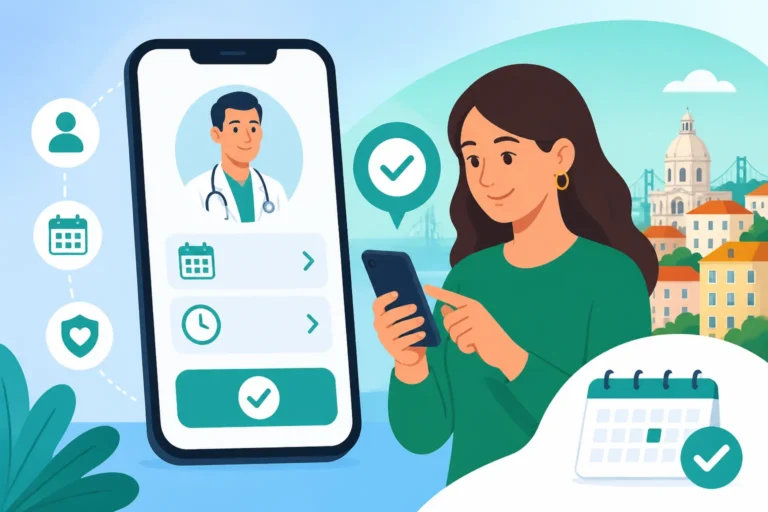
The Médis or Multicare app is surprisingly advanced. You can have a "Video Consultation" (Teleconsulta) for minor issues like a skin rash or a prescription renewal. This often has a €0 co-pay and can save you a trip to the clinic. I’ve used it several times for my kids when they had a mild fever, and the doctor was able to send a digital prescription directly to my phone within ten minutes.
The apps also track your spending. You can see exactly how much of your annual "outpatient" limit you have used. If you are approaching your limit, you might want to postpone a non-essential check-up until the policy renews. This transparency helps you manage your household budget without any nasty surprises at the end of the year.
Reclaiming Costs and Navigating the Billing System
If you ever have to pay for a service upfront, make sure the invoice (fatura) has your NIF and is marked as "Recibo" (paid). You then take a photo of this document and upload it to your insurer's app. Within the app, there will be a "Reembolso" (reimbursement) section. You’ll enter the amount, the date, and the type of service.
The money is usually deposited back into your bank account via IBAN. Just be aware that most insurers have a "minimum" amount for reimbursement—they won't process a claim for €2. Keep your small receipts and submit them all at once at the end of the month. Navigating this system is a rite of passage for any expat, and once you’ve done it once, it becomes second nature. If you find yourself needing specialized supplies that insurance doesn't cover, remember that iHerb often has the best prices for international shipping on wellness products that help bridge the gap between medical care and daily health.
Disclaimer
This guide is for informational purposes only and does not constitute professional financial or medical advice. Healthcare laws, insurance premiums, and provider networks in Portugal can change frequently. Always consult with a certified insurance broker or the specific insurance provider to verify current terms, coverage limits, and eligibility requirements before signing any contract. Individual health needs vary, and what works for one person may not be suitable for another.