Portugal’s National Health Service (SNS): How the Public System Works
Standing in a cold queue outside a health center at dawn just to get a number is a rite of passage no one tells you about when you move here. I spent three months chasing a piece of paper before I finally understood the rhythm of the SNS. This guide simplifies the chaos and helps you navigate the public health system like a local.
The Philosophy of the Serviço Nacional de Saúde
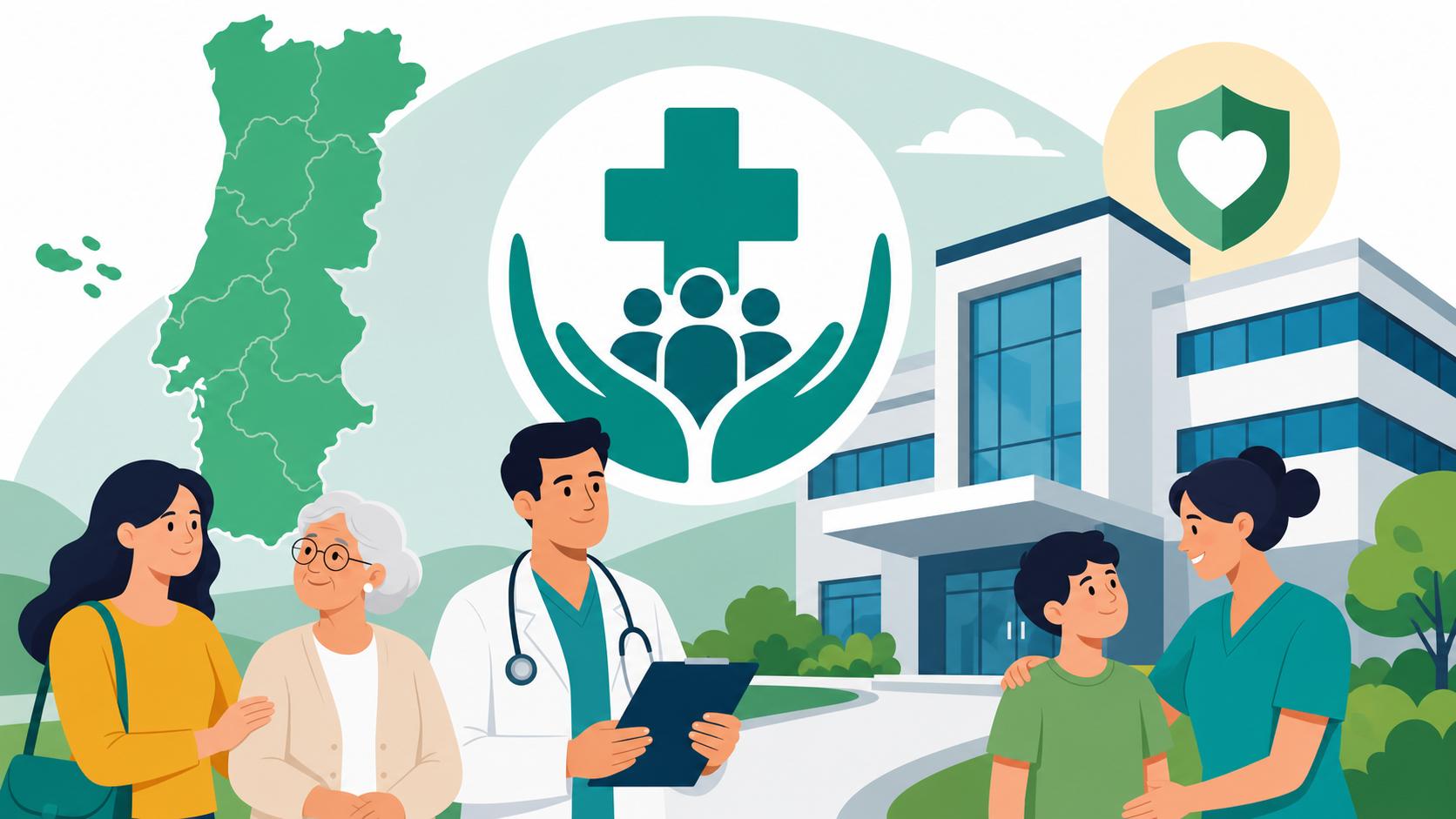
The Portuguese public health system, known as the Serviço Nacional de Saúde (SNS), is built on a foundation of universal access. Established in 1979, it was designed to ensure that every resident, regardless of their economic status, has a right to health protection. For an expat coming from a system like the United States, the idea of "universal" can be hard to grasp until you see it in action. It is a tax-funded system, which means it is not technically "free," but it is heavily subsidized to the point where a specialist consultation might cost you less than a fancy lunch in Lisbon.
Understanding the SNS requires you to look past the occasional peeling paint in older hospitals and see the high standard of medical training. Portuguese doctors are some of the most rigorously educated in Europe. When you enter the public system, you are tapping into a network that handles the most complex surgeries, chronic disease management, and emergency traumas in the country. While private clinics are great for convenience, most high-risk medical procedures in Portugal are still funneled back into the major public hospitals because they have the specialized equipment and staff that private facilities often lack.
However, the system is under strain. You will hear locals and veterans alike complaining about the "listas de espera" (waiting lists). This is the primary trade-off. In the SNS, medical priority is determined by clinical need, not by who has the deepest pockets. If you have a life-threatening condition, the system moves with incredible speed. If you need a non-essential knee surgery, you might be waiting for many months. It is this duality that makes the Healthcare in Portugal for Expats: The Complete 2026 Medical Guide such an essential read for anyone trying to balance their expectations with reality.
The Legislative Framework and Resident Rights
The Portuguese Constitution is quite clear about health being a fundamental right. This means that if you are a legal resident, you are entitled to the same care as a Portuguese citizen. This applies whether you are here on a D7 visa, a digital nomad D8 visa, or through the CPLP pathways. The law ensures that no one is turned away in an emergency, but the level of subsidy you receive depends entirely on your registration status.
For many of us, the first few months are a confusing dance of terminology. You’ll hear about the "Estatuto de Igualdade" or the "Lei de Bases da Saúde." You don't need to be a lawyer to live here, but knowing that your right to care is enshrined in law gives you a certain level of confidence when a clerk at a desk tells you "no" simply because they don't recognize your specific visa type.
Funding and Sustainability
The SNS is primarily funded through general taxation. This is why you will see a significant portion of your salary or your business income going toward Social Security and IRS. In recent years, the government has injected more capital into the system to address the post-pandemic backlog, but the results are mixed. Some regions, like the North, have highly efficient hubs, while the Algarve and parts of the Alentejo struggle with staff shortages.
When you contribute to the system, you are essentially paying forward for a safety net. Even if you choose to maintain a policy with Cigna Global for faster access to private specialists, you are still supporting a public system that keeps the entire population healthy. This social contract is a point of pride for many Portuguese, and as an expat, respecting this balance is part of integrating into the culture.
Securing Your Entrance: The Número de Utente Process
The single most important document you will ever hold in Portugal—yes, even more important than your residence card in daily life—is your Número de Utente. This is your unique national health identity number. Without it, you are a ghost in the system. You can still get treated, but you will be charged the "foreigner rate," which can be ten times higher than the subsidized rate. Registering with the Centro de Saúde: Getting Your SNS Número de Utente is the first hurdle every expat must clear.
I remember my first attempt. I showed up with just my passport and was sent away. The second time, I had my NIF but no proof of address. The third time, I had a lease but it wasn't "registered" with the tax authority. The key is preparation. You need your passport, your NIF (tax number), your residence permit (or proof that you have applied for one), and a very specific document called the Atestado de Morada.
Navigating the Junta de Freguesia
Before you even step foot in a health center, you usually need to visit your local Junta de Freguesia (parish council). They are the ones who certify where you actually live. If you have a registered rental contract, this is easy. If you are staying with a friend or in a mid-term rental that isn't fully "official," you might need two witnesses who are registered voters in that parish to sign a paper saying they’ve seen you around. This process of Registering Your Address with Junta de Freguesia (Atestado de Morada) is a quirky bit of Portuguese bureaucracy that still catches people off guard.
Once you have that certificate from the Junta, the health center (Centro de Saúde) has much less room to argue. They need to see that you are part of their "catchment area." Each health center serves a specific geographic zone, and they are often very protective of their capacity. If you try to register at a center near your office instead of your home, you will likely be redirected.
The Registration Interview and Digital Hurdles
When you finally get to the window at the Centro de Saúde, be polite. A "Bom dia" and a little bit of patience go a long way. The administrative staff are often overworked. They will input your data into the national database, and usually, you will receive a printout with your number immediately.
In some cases, especially in high-demand areas like Lisbon or Cascais, they might tell you the "system is down" or that they need to send your file to a central office for approval. Do not panic. Just ask for a "comprovativo" (proof) that you requested the number. This piece of paper can sometimes be used to access care while you wait for the official number to be generated. If the process feels overwhelming, some expats use relocation services to handle this, but it is entirely possible to do it yourself if you have the documents in order.
What to Do If You Are Denied
It happens. Sometimes a clerk insists you need a permanent residence card when you only have a temporary one. If this happens, do not get angry. Calmly ask for the reason and perhaps mention that as a legal resident and taxpayer, you are entitled to an SNS number under the current health laws. If things get truly stuck, you can ask for the "Livro de Reclamações" (the yellow complaint book). This is a formal way to register a dispute that the authorities are legally required to review. Often, just the mention of the book can suddenly make "impossible" things possible.
The Family Doctor Shortage and Strategic Alternatives
Once you have your number, the next golden ticket is getting assigned a "Médico de Família" (Family Doctor). In the Portuguese system, this doctor is your primary point of contact. They manage your prescriptions, order your blood tests, and—most importantly—refer you to specialists within the hospital system. However, there is a significant shortage, and many expats (and locals) find themselves "sem médico atribuído" (without an assigned doctor).
If you are in this situation, you are still part of the SNS, but you are in a sort of medical limbo. You won't have a specific person who knows your history. Instead, when you need a consultation, you have to go to the health center and ask for a "consulta aberta" (open consultation) or an "atendimento complementar." This usually means showing up very early in the morning to snag one of the few daily slots available for those without an assigned doctor.
Finding an English-Speaking General Practitioner
Finding a doctor who speaks English within the public system is a bit of a lottery. Most younger doctors speak excellent English, but the administrative staff and older nurses might not. If you are worried about the language barrier, Finding an English-Speaking General Practitioner (Médico de Família) becomes a priority. While you cannot technically "choose" your doctor in the public system—you are assigned whoever is available in your area—you can certainly research which centers in your city tend to have more international-friendly staff.
In cities like Porto and Lisbon, your chances are high. In rural villages in the Alentejo, you might need a translation app or a friendly neighbor to come with you. Remember, the quality of care is the same, but the communication can be a hurdle. I’ve often found that writing down my symptoms in Portuguese using a translator before I go helps immensely.
The Role of Private Insurance as a Supplement
Because of the family doctor shortage, many expats choose to use Private Health Insurance in Portugal: Costs, Coverage, and Best Providers as a "Plan B." You use the SNS for big things—emergencies, major surgeries, and expensive long-term medications—but you use your private insurance for routine checkups and quick access to specialists.
For example, a policy with Cigna Global can allow you to see a private dermatologist or cardiologist next week, rather than waiting six months for an SNS referral. This hybrid approach is common among the expat community. You stay registered in the public system to ensure you have a safety net, but you pay a monthly premium to avoid the early-morning queues at the Centro de Saúde.
Utilizing Telehealth and SNS 24
If you can't get a family doctor and don't want to wait at the health center for a minor issue like a cold or a prescription renewal, the digital options are surprisingly good. The SNS 24 system has become a robust pillar of Portuguese healthcare. You can call them, and often they can issue "autobaixas" (self-certified sick notes) or give you medical advice that saves you a trip to the clinic. It is one of the most efficient parts of the modern Portuguese state.
Understanding the Tiers of Care: Health Centers vs. Hospitals
The SNS is organized into a hierarchy. Understanding where to go for what problem will save you hours of frustration and will also help the system function better. The Portuguese are very sensitive about people "clogging up" the emergency rooms with minor issues that should be handled at a health center.
| Facility Type | Best For | Access Method |
|---|---|---|
| Centro de Saúde | Vaccinations, routine checkups, blood test referrals, minor illnesses. | Appointment or "Consulta Aberta." |
| Hospital (Ambulatory) | Specialist consultations (Eye, Heart, Bone), planned surgeries. | Referral from Family Doctor ONLY. |
| Urgências (ER) | Acute trauma, chest pain, severe difficulty breathing, high fever. | Walk-in or Ambulance (112). |
| Farmácia | Minor ailments, OTC meds, basic health advice, injections. | Walk-in. |
The Health Center (Centro de Saúde)
The Centro de Saúde is your neighborhood hub. This is where you go for your flu shot, your cervical cancer screening, or if your child has a persistent cough. They are generally open from 8:00 AM to 8:00 PM on weekdays, though some have extended hours. The vibe is very "community-oriented." You will see everyone from newborns to the elderly waiting in the same plastic chairs.
When you need blood tests (análises), your doctor at the health center will print out a "credencial." You then take this paper to a private lab (like Joaquim Chaves or Germano de Sousa), and the government pays for most of it. You might only pay a few Euros. It’s a very efficient sub-contracting system that keeps the health centers from needing their own labs.
The Hospital Network
If your condition requires more than a GP can provide, you move up to the hospital tier. You cannot simply walk into a public hospital and ask to see a neurologist. You must be referred by the SNS. This is where the "waiting lists" happen. For non-urgent issues, the wait can be significant. However, once you are "in" the hospital system for a specific condition, the care is comprehensive.
Major hospitals like Hospital de Santa Maria in Lisbon or Hospital de São João in Porto are academic powerhouses. If you are dealing with a serious diagnosis like cancer, you want to be in these institutions. They have access to clinical trials and multidisciplinary teams that are world-class. The challenge for expats is often the "customer service" aspect; it won't feel like a five-star hotel, but the medicine is top-tier. For a deeper dive into the differences, see Public vs Private Healthcare in Portugal: Which One Should Expats Choose?.
Specialist Referrals: The Great Wait
The referral process is digital. Your family doctor enters your data into a national system called the "Consulta a Tempo e Horas." The system then assigns you a priority level. If the public hospital in your area cannot see you within a legally mandated timeframe, the SNS is supposed to issue you a "Vale Saúde" (Health Voucher), which allows you to see a specialist in a private hospital at the government's expense. It doesn't always work perfectly, but it is a mechanism designed to prevent people from falling through the cracks.
Emergency Protocols and the SNS 24 Infrastructure
In an emergency, the rules change. You don't need a family doctor, and you don't need a referral. But you do need to know the numbers and the triage system. The European emergency number 112 works in Portugal, and they generally have English-speaking dispatchers available.
However, for anything that isn't a "lights and sirens" emergency, your first call should always be to SNS 24 (808 24 24 24). This is a 24/7 triage line staffed by nurses. They are incredible. They can assess your symptoms over the phone and tell you whether you should stay home, go to your health center, or head straight to the ER.
The Manchester Triage System
When you arrive at a Portuguese "Urgências" (Emergency Room), you won't be seen in the order you arrived. Portugal uses the Manchester Triage System. A nurse will see you briefly and assign you a colored wristband based on your urgency:
- Red: Emergent (Immediate care)
- Orange: Very Urgent (10-minute target)
- Yellow: Urgent (60-minute target)
- Green: Standard (120-minute target)
- Blue: Non-urgent (240-minute target)
If you get a green or blue bracelet, be prepared to wait. People can wait 8 or 10 hours in the Lisbon ERs on a busy Monday night. This is why SNS 24 Helpline (808 24 24 24): Triage, Advice, and Sick Notes is so vital; if the nurse on the phone sends you to the hospital, they send a digital file ahead of you, which can sometimes speed up your intake.
Calling 112 vs. Driving Yourself
If you are in a major city, the INEM (the ambulance service) is very fast. They are essentially mobile ER units. If you are in a rural area, it might be faster for a neighbor to drive you. One thing to note: in Portugal, the ambulance doesn't always take you to the closest hospital, but rather the one that is "on duty" for your specific trauma or condition. This can be confusing, but trust the paramedics; they know which hospital has the neurosurgeon or the cardiac unit open that night.
Hospital Etiquette and Patient Rights
When you are in a public hospital, things move at a different pace. There is less "hand-holding" than in the US or UK. You are expected to be your own advocate or have a family member with you. Visiting hours are strictly enforced, and you might find that the "amenities" (like towels or pillows) are basic.
However, you have the right to an interpreter if you don't speak Portuguese, though in practice, this often means a staff member who happens to speak English. If you feel your rights are being ignored, the "Gabinete do Utente" (User Office) in every hospital is where you can go to file a formal complaint or seek assistance.
Costs, Fees, and the Economics of Public Health
One of the most pleasant surprises for expats is the cost. For years, Portugal had a system of "Taxas Moderadoras" (moderating fees). You would pay €5 for a GP visit or €15 for an ER visit. However, as of 2022 and moving into 2026, most of these fees have been abolished for the vast majority of services.
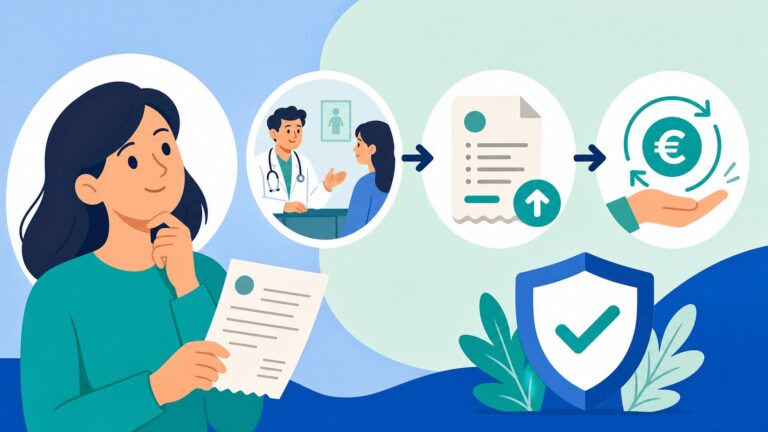
Nowadays, primary care visits, exams ordered by your GP, and most hospital treatments are free at the point of service for residents. This is a massive relief for those on a fixed income or those managing chronic conditions. But there are still some costs you need to be aware of, particularly regarding Taxas Moderadoras: Co-payments and Costs in the Public Health System.
Prescription Medication and Subsidies
Medication in Portugal is categorized by "escalões" (tiers). The government subsidizes medicine based on how essential it is. For example, life-saving insulin might be 100% subsidized, while a basic antibiotic might be 50% subsidized. When you go to the pharmacy with your "receita" (prescription), the discount is applied automatically because your NIF is linked to the system.
If you are looking for vitamins, supplements, or specific health foods that aren't covered by the SNS, many of us use iHerb to bridge the gap. While the Portuguese pharmacies are great for medicine, their selection of international supplement brands can be limited and pricey. Ordering online is often the way to go for wellness products. Just make sure you are aware of the customs rules if ordering from outside the EU, though iHerb generally handles the VAT prepayments quite well for Portugal.
Exemptions from Fees
Even for the few remaining fees (like certain non-referred emergency visits), many people are exempt. This includes:
- Pregnant women and "puerperal" women (up to 60 days after birth).
- Children up to 18 years old.
- People with a degree of disability over 60%.
- Those in a situation of proven economic insufficiency.
If you fall into any of these categories, make sure your status is updated in the SNS system. This usually involves bringing a certificate to the administrative desk at your health center.
Dental and Vision Care: The Missing Pieces
Here is the catch: the SNS is notoriously weak when it comes to dental (medicina dentária) and vision care. While there are some "Cheques-Dentista" for children, pregnant women, and the elderly, most adults are on their own. You will find very few dentists in the public hospitals. This is one area where Private Health Insurance in Portugal: Costs, Coverage, and Best Providers is almost mandatory. Without a private plan, a single dental implant could cost you more than a year's worth of insurance premiums.
SNS 24 and Digital Health Tools for the Modern Expat
The digital transformation of the Portuguese health system is one of its quietest success stories. The "Portal do Utente" and the "SNS 24" app are tools you should download the moment you get your residence permit. They allow you to bypass much of the face-to-face bureaucracy that used to define the system.
Through the app, you can see your medication history, view your upcoming appointments, and even see your position on a surgery waiting list. It brings a level of transparency to the system that didn't exist a decade ago. For those of us who struggle with the language, being able to book an appointment via a website rather than a phone call is a lifesaver.
Managing Your Digital Health Record
Every time you have a blood test or an X-ray in the public system, the results are uploaded to your "Boletim de Saúde Digital." You can access these and show them to a private doctor if you decide to seek a second opinion. This interoperability is fantastic. It means you don't have to carry a physical folder of papers every time you visit a specialist.
I’ve also found the "Guia de Tratamento" feature very useful. When a doctor prescribes you medication, the digital prescription shows up in your app with a barcode. You just show your phone to the pharmacist. No more losing paper slips or trying to decipher a doctor's handwriting. For expats used to high-tech systems, this part of the Portuguese experience feels very familiar.
The "Autobaixa" and Minor Ailments
If you wake up with a flu and can't work, you can request an "autobaixa" through the SNS 24 portal. This is a self-declared medical leave for up to three days. It’s limited to twice a year, but it’s a brilliant way to handle minor illnesses without wasting a doctor's time just to get a note for your boss.
If you're managing your health at home, keeping a well-stocked first-aid kit with items from iHerb—like quality Vitamin C, zinc, and herbal teas—can help you manage those three days without needing further intervention. The system is designed to encourage this kind of self-care for minor issues.
Language Settings and Accessibility
While the SNS 24 app is primarily in Portuguese, many of the features are intuitive. The "Ligue-nos" (Call us) button connects you directly to the triage line. If you are using the web portal, your browser's auto-translate feature works surprisingly well on the Portal do Utente. It is worth taking an hour to click through all the menus and familiarize yourself with where everything is before you actually get sick.
Bridging the Gap: When the SNS Isn’t Enough
As much as I advocate for the public system, I have to be realistic: it isn't perfect. There are times when the bureaucracy feels like an immovable wall, or the waiting times for a specific surgery are simply too long to bear. This is when the expat community shifts its focus to the private sector.
The private health network in Portugal is excellent. Groups like CUF, Hospital da Luz, and HPA in the Algarve offer facilities that look more like boutique hotels than clinics. You can usually see a specialist within days, and almost all the doctors speak perfect English. But this convenience comes at a price.
Why Many Expats Choose a Dual System
The most common strategy is to use the SNS for:
- Catastrophic emergencies (heart attacks, major accidents).
- Chronic illness management (Diabetes, Cancer treatments).
- Standard vaccinations and screenings.
- Subsidized long-term prescriptions.
And to use private care for:
- Dermatology, Gynecology, and Orthopedics.
- Dental work and Vision.
- Psychotherapy and Mental Health.
- Diagnostic imaging when you want results "now."
To make this affordable, a high-quality insurance plan is key. It is worth looking at Cigna Global because they understand the unique needs of expats who might spend time in multiple countries. They provide a level of coverage that often exceeds what local Portuguese insurers offer, especially regarding international medical evacuation or high-limit specialist access. For more on this, check out Using Cigna Global or Allianz for international expat healthcare in Portugal.
Finding English-Speaking Specialists
If you decide to go private, you have much more control. You can use apps like the "MyLUZ" or "MyCUF" to browse doctor profiles, see their photos, and—most importantly—see which languages they speak. Many of these doctors also work in the public hospitals, so you are often seeing the same top-tier talent, just in a different setting with shorter queues. This is discussed in detail in Finding Doctors and Specialists in Portugal: English-Speaking Medical Care.
Final Thoughts on Integration
The Portuguese health system is a reflection of the culture: it is traditional, a bit bureaucratic, but deeply human and ultimately very capable. Integrating into it is a sign that you are no longer just a tourist; you are a resident. It takes patience to get that Número de Utente and even more patience to wait for a family doctor. But once you are in, you are part of a system that will catch you if you fall.
Take the time to learn the system, respect the triage rules, and don't be afraid to supplement with private options to maintain your peace of mind. Portugal is a beautiful place to live, and having the security of the SNS behind you makes it even better.
Disclaimer
This guide is for informational purposes only and does not constitute professional medical or legal advice. Healthcare regulations and SNS procedures in Portugal are subject to change. Always consult with the official SNS 24 website or a qualified legal professional regarding your specific residency and health coverage status.