Where to See the Best Azulejos in Lisbon and Porto
Disclosure: This article contains affiliate links. If you buy through them, we may earn a commission at no extra cost to you. Read our full disclosure.
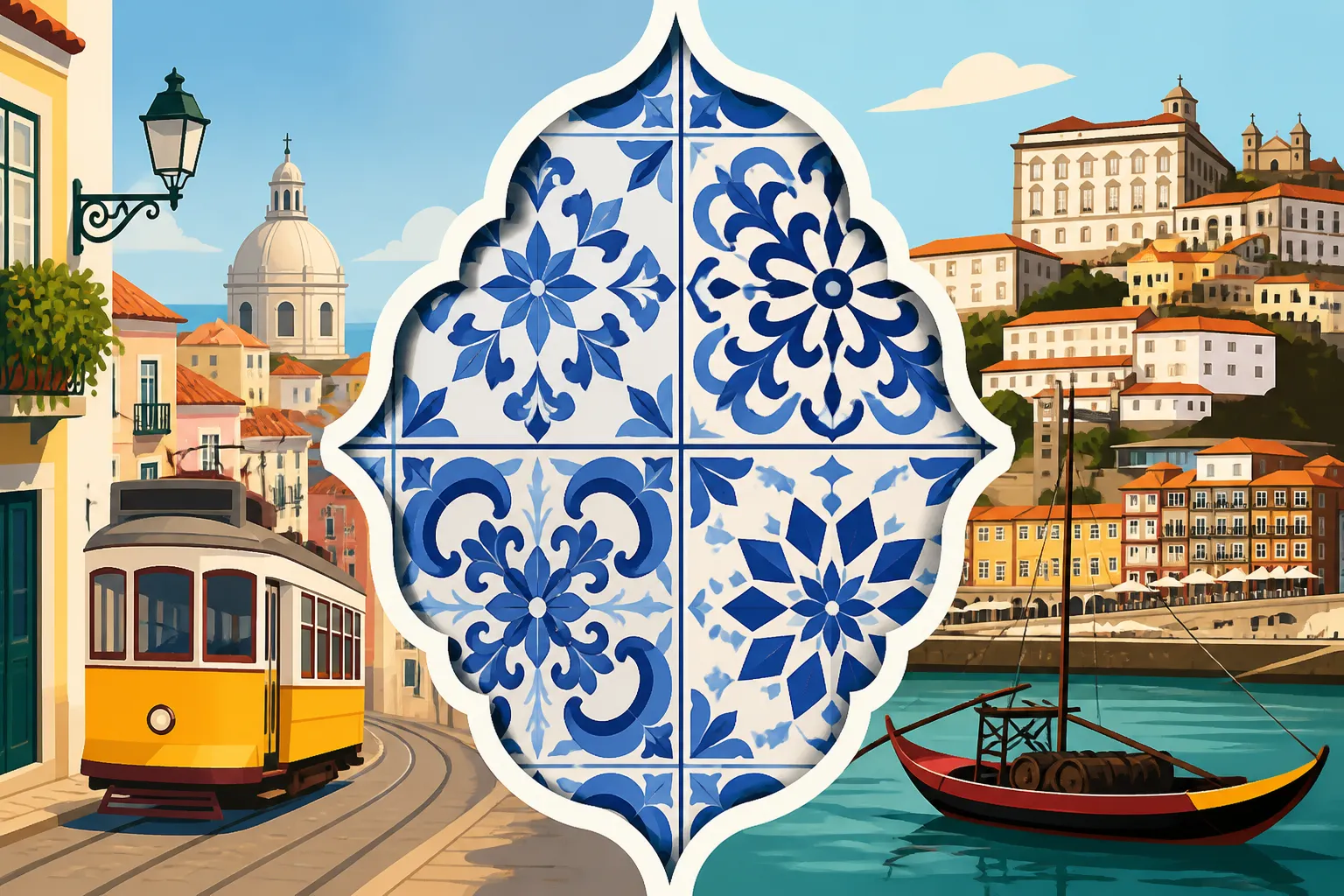
Oh, my dears, there's nothing quite like the first time you wander through a Portuguese city and catch sight of those incredible azulejos. You might think you've seen tiles before, but these aren't just any tiles; they're stories etched in ceramic, splashes of history on every wall. The problem is, Portugal is full of them, and it can feel overwhelming to know where to find the truly breathtaking examples, the ones that make your jaw drop and your camera click non-stop. This guide is here to cut through the noise, taking you by the hand to the absolute best spots in Lisbon and Porto to soak in the beauty and history of these iconic Portuguese masterpieces.
Understanding Azulejos: More Than Just Tiles
Before we dive into the specific locations, let's take a moment to truly appreciate what we're looking at. Azulejos are so deeply woven into the fabric of Portuguese identity that they are more than just decorative elements; they are historical records, artistic expressions, and a vibrant part of daily life. From grand public buildings to humble private homes, they adorn Portugal with an unparalleled beauty that sets it apart.
A Brief History of Portuguese Tiles
The word "azulejo" itself comes from Arabic, meaning "polished stone," and it hints at their origins. The Moors introduced the art of ceramic tiling to the Iberian Peninsula in the 13th century. Initially, these tiles were geometric patterns, reflecting Islamic art, and were used to decorate palaces and mosques, particularly in Seville, Spain. It wasn't until the late 15th century, with King Manuel I's visit to Seville, that azulejos made their grand entrance into Portugal. He was so captivated by the vibrant tilework of the Alhambra that he ordered them for his palace in Sintra, and the rest, as they say, is history.
Portuguese artisans quickly adopted and adapted the technique, developing their own distinct styles. The initial imported tiles gave way to local production, often influenced by Dutch designs, which introduced figurative scenes and blue-and-white motifs. Over the centuries, azulejos became a hallmark of Portuguese art, evolving through various styles from the intricate Mudejar designs to the grand Baroque panels and the charming Art Nouveau facades we see today. They’ve survived earthquakes, revolutions, and changing tastes, always finding a way to reinvent themselves while staying true to their ceramic soul.
The Different Styles and Eras
As you wander the streets, you'll notice that not all azulejos look the same – and that's part of their magic!
- Mudejar (15th-16th Century): These are the earliest, often featuring geometric interlocking patterns, stars, and crosses. You'll find these in historical palaces like the Pena Palace in Sintra, though they are less common on public buildings in Lisbon and Porto.
- Renaissance and Manueline (16th Century): With the introduction of Italian influences, tiles began incorporating grotesques, mythological creatures, and naturalistic elements. The Manueline style, unique to Portugal, often combines maritime motifs with naturalistic ornamentation.
- Baroque (17th-18th Century): This is arguably the most recognizable style, especially the iconic blue-and-white panels. These grand narrative scenes, often depicting historical events, religious stories, or landscapes, were used to cover entire church interiors and palace facades. The strong influence came from Dutch delftware, but Portuguese artists quickly made it their own, creating sweeping, dramatic murals.
- Rococo (mid-18th Century): Lighter, more playful, and often asymmetrical, Rococo azulejos feature delicate floral patterns, shells, and putti. The famous Pombaline tiles of Lisbon, used for reconstruction after the 1755 earthquake, are a more utilitarian version, often featuring repetitive patterns in blue and white or polychrome.
- Art Nouveau and Art Deco (late 19th-early 20th Century): This era brought vibrant colors, organic lines, and depictions of daily life, flora, and fauna. Many commercial buildings, particularly in central Lisbon and Porto, boast these elaborate and colorful facades.
- Contemporary (20th Century to present): Modern artists continue the tradition, experimenting with abstract designs, bold colors, and new techniques, often reflecting modern Portuguese society and urban landscapes. You'll find these integrated into new metro stations, public art installations, and even private commissions.
Why Azulejos Matter to the Portuguese Soul
For the Portuguese, azulejos are much more than just decoration; they are a profound expression of identity and culture. They tell stories—of saints and kings, battles and voyages, daily routines and ancient myths. They absorb the sunlight and reflect it back, adding a unique luminosity to the cities. On a practical level, they also help insulate buildings, keeping them cooler in summer and, in theory, warmer in winter, though Portuguese homes still famously struggle with insulation!
But beyond the practical, there's a deep aesthetic and emotional connection. These tiles are a constant reminder of Portugal's rich past, its craftsmanship, and its enduring artistic spirit. When you see a faded, chipped azulejo on an old building, it's not just decay; it's character, a testament to time and resilience. It's why locals get so upset when precious old panels are illegally removed and sold abroad – these aren't just tiles; they're pieces of their heritage.
Lisbon's Azulejo Hotspots: From Grandeur to Hidden Gems
Lisbon, with its seven hills and golden light, is a living museum of azulejos. You'll stumble upon them around every corner, but some spots truly stand out.
Iconic Public Displays and Metro Stations
Let's start with some of the most accessible and impressive public displays. The Lisbon Metro, for instance, is an underground art gallery, with many stations featuring incredible azulejo art by renowned Portuguese artists.
- Parque Station: One of the most famous, this station celebrates Portuguese maritime discoveries with stunning blue and white panels that feel like navigating through a fantastical underwater world.
- Oriente Station: Designed by Santiago Calatrava, this station is a modern marvel, and its platforms are adorned with contemporary azulejos by various international artists, including a piece by Hundertwasser, making it a unique blend of global and local art.
- São Sebastião (Linha Azul/Rede Expressos): This station features striking works that depict scenes from Portuguese history and mythology, with vibrant colors and intricate details.
- Restauradores Station: Here, you'll find tiles illustrating scenes from the Portuguese Restoration War.
Beyond the metro, simply walking through neighborhoods like Alfama and Graça will reveal countless residential buildings adorned with colorful and diverse azulejo facades. Many of these feature repetitive geometric or floral patterns from the 19th and early 20th centuries. Take your time, look up, and let your eyes wander. Don't forget to grab your Navegante Pass Lisbon for easy transit between these spots!
Churches, Palaces, and Museums
For the truly grand and historically significant azulejos, you need to step inside some of Lisbon's magnificent buildings.
- National Azulejo Museum (Museu Nacional do Azulejo): This is, without a doubt, the ultimate pilgrimage for any azulejo enthusiast. Housed in the former Madre de Deus Convent, the museum traces the history of tile-making in Portugal from its Mudejar origins to contemporary works. You'll see breathtaking large-scale panels, including the famous panoramic view of Lisbon before the 1755 earthquake. It’s an immersive experience that will deepen your appreciation for this art form. Give yourself at least two to three hours here.
- São Roque Church (Igreja de São Roque): While often praised for its glittering gilded chapels, especially the Chapel of St. John the Baptist, the church also features exquisite Baroque azulejos. Adjacent to the church, the Museum of Sacred Art of São Roque displays more religious tilework.
- Palácio dos Marqueses de Fronteira: Located a bit outside the city center, this 17th-century palace is a hidden gem with arguably the most impressive collection of Baroque azulejos in Portugal. The "Gallery of the Kings" and the stunning formal gardens, adorned with mythological and battle scenes in blue and white, are simply breathtaking. You'll need to check their opening hours, as access is sometimes limited as it's still a private residence. It's worth the journey, trust me.
- Casa-Museu Dr. Anastácio Gonçalves: This charming house museum, once the home of a renowned collector, features beautiful tile panels integrated into its architecture and collection, offering a glimpse into domestic azulejo use.
- Convento do Carmo (Carmo Convent): While mostly in ruins from the 1755 earthquake, parts of the convent's archaeological museum display surviving azulejos panels, offering a poignant contrast between grandeur and devastation.
Street Art and Modern Interpretations
Lisbon is also a hub for modern urban art, and azulejos have found a new life in this contemporary context.
- LX Factory: This trendy industrial area under the 25 de Abril bridge is known for its creative businesses, restaurants, and street art. While not traditional, you'll find modern interpretations and artistic uses of tile in various installations and shop fronts.
- Along the Tram 28 Route: As you trundle along the famous Tram 28 route, particularly in Graça and Estrela, keep an eye out for contemporary tiled murals that often pop up on otherwise plain walls, sometimes incorporating traditional techniques with modern designs and social commentary.
- Parque das Nações: The newer, eastern part of Lisbon, built for Expo '98, features a mix of modern architecture and public art. While you won't find historical azulejos here, you'll see contemporary artistic applications of ceramic, reflecting the evolution of the art form into the 21st century.
Remember to bring a good pair of walking shoes, because exploring Lisbon's azulejos means navigating its many hills! For intercity travel, a train from Lisbon to Porto with Omio is a great way to link up these two incredible cities.
Porto's Ceramic Canvas: Northern Charm and Artistic Flourish
Porto, Lisbon's northern rival, offers its own distinct azulejo experience, often characterized by darker, more dramatic blue and white panels that stand out against the granite facades.
São Bento Station and Beyond
You absolutely cannot talk about azulejos in Porto without starting at the São Bento Railway Station.
- São Bento Railway Station: This isn't just a train station; it's a monumental art piece. The main hall is entirely covered in approximately 20,000 azulejos depicting historical scenes, battles, and the history of transport. It's a truly breathtaking sight, painted by Jorge Colaço over 14 years in the early 20th century. Even if you're not catching a train, you have to pop in. I promise it will stop you in your tracks, literally.
- Igreja do Carmo and Igreja dos Carmelitas Descalços: These two churches, seemingly joined at the hip, feature one of Porto's most iconic azulejo facades. The side wall of Igreja do Carmo, facing the street, is a massive blue and white panel depicting scenes from the Carmelite Order, completed in 1912 by Silvestre Silvestri. It's one of the most photographed spots in the city, and for good reason.
- Capela das Almas (Chapel of Souls): On Rua de Santa Catarina, Porto's bustling shopping street, this chapel is impossible to miss. Its entire exterior is clad in vibrant blue and white azulejos depicting scenes from the lives of saints, particularly Saint Catherine and Saint Francis of Assisi. It’s a riot of color and detail, creating a stunning visual impact.
While walking between these central landmarks, keep an eye out for smaller, less famous tiled buildings. Porto's historic center, a UNESCO World Heritage site, is brimming with surprises. A city walk, perhaps with a guide booked through GetYourGuide, could reveal some truly unique spots.
Religious Sites and Traditional Facades
Porto has a deep religious heritage, and many of its churches boast incredible azulejo work both inside and out.
- Porto Cathedral (Sé do Porto): While the exterior is mostly granite, the cloisters of the Sé feature some beautiful 18th-century azulejo panels by António Vital. They depict scenes from the Song of Songs, and their serene blue and white patterns provide a calm contrast to the grand scale of the cathedral itself.
- Igreja de Santo Ildefonso: Standing proudly atop a flight of stairs near Batalha Square, this church's facade is almost completely covered in blue and white azulejos depicting the life of Saint Ildefonso and scenes from the Eucharist. They were added in 1932 by Eduardo Leite, creating a striking landmark.
- Palácio da Bolsa (Stock Exchange Palace): Though primarily known for its stunning Arab Room, the inner courtyard also features some elegant tiled elements. While not the main draw for azulejos, it’s a good example of their integration into grand secular architecture.
Beyond the major sites, simply strolling through the streets of Ribeira and Miragaia will showcase countless traditional residential and commercial buildings adorned with azulejos from various periods, often in geometric patterns or floral motifs. These often feature the worn beauty of age, adding to their charm. If you're staying in the area, Booking.com can help you find a charming guesthouse or apartment right amidst this beauty. Don't forget to consider using the Andante card in Porto to hop between all these fantastic locations.
Contemporary Azulejo Art
Porto, much like Lisbon, isn't stuck in the past when it comes to azulejos.
- Faculdade de Belas Artes (Faculty of Fine Arts) da Universidade do Porto: As an art institution, it's no surprise that you might find some contemporary tile installations or student works in and around the campus, showcasing the ongoing evolution of the medium.
- Street Art and Galleries: Keep an eye out for contemporary artists who are revitalizing the azulejo tradition in new and exciting ways. Sometimes you'll find modern murals that incorporate ceramic tiles alongside graffiti or other street art forms. Pop into local art galleries in the Cedofeita or Miguel Bombarda districts; you might discover artists selling modern azulejo pieces or even offering workshops.
Tips for Azulejo Hunting and Ethical Appreciation
Okay, now you've got a roadmap. Here are a few seasoned tips for making the most of your azulejo adventure!
Best Ways to Explore and Get Around
- Walk, Walk, Walk: This is truly the best way to discover the unexpected. Both Lisbon and Porto are wonderfully walkable cities, though prepare for hills! Many of the most charming tiled facades are found simply by wandering down a narrow street or turning a corner.
- Public Transport is Your Friend: For covering longer distances, use the excellent public transport systems. In Lisbon, the metro is an azulejo gallery in itself, and the historic trams offer unique perspectives. In Porto, buses and the metro will get you almost anywhere. Using your Navegante Pass or Andante card will make travel seamless.
- Consider a Guided Tour: If you want deeper insights, consider a specialized azulejo walking tour. Many local guides offer these, and they can point out details and share stories you might otherwise miss. Check out options on GetYourGuide, where you can often find niche tours.
- Look Up! This is perhaps the most important tip. Often, the most beautiful azulejos are on the upper floors of buildings, so remember to tilt your head back and admire the architectural details.
To help you plan your journey, here's a quick comparison of some of the top spots:
| Location | City | Style/Era | What Makes it Special |
|---|---|---|---|
| National Azulejo Museum | Lisbon | All periods | Comprehensive history, pre-earthquake Lisbon panoramic |
| Palácio dos Marqueses de Fronteira | Lisbon | Baroque | Stunning gardens, mythological scenes, private residence |
| São Bento Railway Station | Porto | Early 20th Century | Massive, dramatic historical narrative panels |
| Capela das Almas | Porto | Early 20th Century | Entirely tiled exterior, vibrant colors on a shopping street |
| Parque Metro Station | Lisbon | Contemporary | Nautical themes, abstract designs in an underground setting |
| Igreja do Carmo | Porto | Early 20th Century | Iconic side facade, grand blue and white religious scenes |
Supporting Local Artisans and Avoiding Pitfalls
As much as we love looking at these beautiful tiles, it's also important to be responsible tourists.
- Buy from Reputable Sources: If you're tempted to bring a piece of azulejo art home, please buy from reputable shops or directly from artisans. There are many workshops in both Lisbon and Porto where you can see artists at work and purchase authentic, ethically sourced pieces. Avoid vendors selling old, chipped azulejos on the street; these are often illegally removed from historic buildings, contributing to the destruction of cultural heritage.
- Workshops and Classes: Many ateliers offer workshops where you can try your hand at painting your own azulejo. This is a fantastic way to engage with the art form, create a personalized souvenir, and support local craftspeople.
- Respect Private Property: Many azulejos are on residential buildings. Admire, photograph, but respect people's homes and privacy. Don't touch or try to pry off tiles.
Photographing Azulejos Responsibly
We all want that perfect shot, don't we? But let's do it right.
- Lighting is Key: The best light for azulejo photography is often in the morning or late afternoon when the sun is softer and casts beautiful shadows, highlighting the texture of the tiles. Midday sun can be too harsh.
- Experiment with Angles: Don't just shoot straight on. Try different angles, zoom in on intricate details, or capture the broader context of the building or street scene.
- Be Patient and Mindful: Famous spots like São Bento Station can get crowded. Be patient, wait for a gap, and be mindful of other visitors. Don't block pathways or cause disruption for that perfect photo.
- No Flash: When photographing azulejos indoors, especially in churches or museums, avoid using flash. It can damage delicate surfaces over time and is often prohibited. Embrace natural light!
Exploring the azulejos of Portugal is more than just sightseeing; it's a journey through time, art, and the very soul of the country. Each tile has a story, and with a little effort, you can uncover these ceramic narratives one beautiful panel at a time. Enjoy your hunt, and embrace the magic of these Portuguese treasures!
Disclaimer
Please note that while this guide provides comprehensive information based on current knowledge and common practices, regulations and accessibility can change. Always check the latest opening hours, entry requirements, and local guidelines for specific attractions before planning your visit. Travel safe and enjoy Portugal!