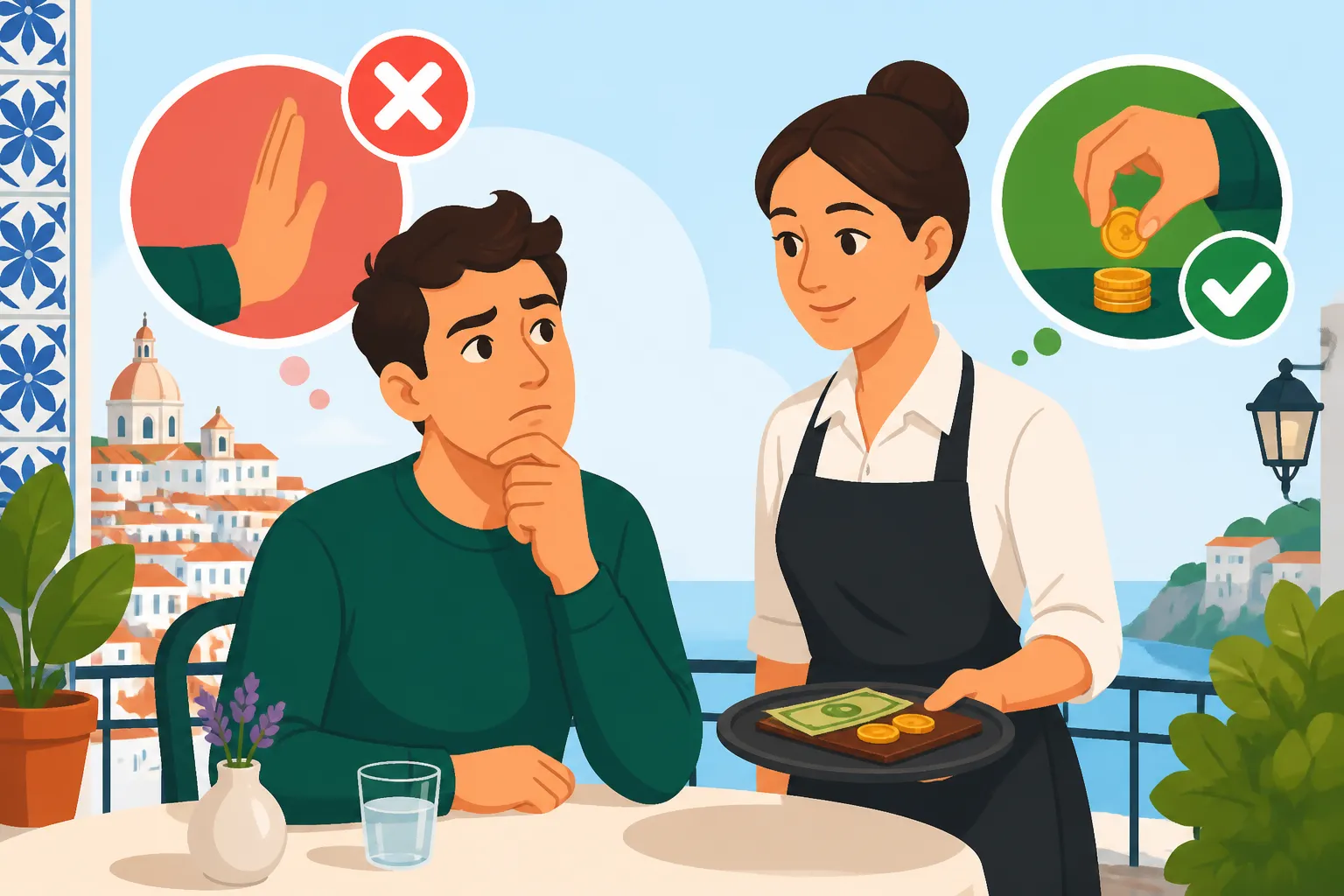
Is It Rude Not to Tip in Portugal?
Disclosure: This article contains affiliate links. If you buy through them, we may earn a commission at no extra cost to you. Read our full disclosure.
One of the most perplexing things about moving to a new country like Portugal is navigating the unwritten rules of social etiquette, especially when it comes to money. Many expats, particularly those from North America, arrive here utterly baffled by whether to tip, how much, and when. Rest assured, you're not alone in feeling this confusion. This guide is here to shed some light on the local customs so you can confidently (or discreetly!) handle tipping situations without feeling rude or overspending.
Understanding the Nuances of Tipping Culture in Portugal
Let's get one thing straight right off the bat: Portugal's tipping culture is vastly different from places like the United States or Canada. Here, a tip, or gorjeta as it's called in Portuguese, is genuinely an act of appreciation for good service, not a mandatory component of someone's wage. This distinction is crucial to grasp because it shapes the entire dynamic around tipping. You won't find servers here relying on tips to make a living wage, as minimum wage laws provide a baseline. That doesn't mean tips aren't valued – far from it – but the expectation is simply not the same.
Many expats initially struggle with this because their ingrained habits tell them to tip 15-20% for almost everything. In Portugal, doing that consistently for every single service, from a quick coffee to a full meal, would likely be seen as unusual, perhaps even ostentatious, rather than simply polite. It’s about finding that sweet spot where you show gratitude without overdoing it or inadvertently causing discomfort.
Is Tipping Expected? Breaking Down the Myth
No, tipping is generally not expected in Portugal in the same way it might be in other parts of the world. For many everyday services, especially quick transactions at a pastelaria or a small cafe, rounding up the bill or leaving a few loose coins is the norm, and often only done if you’ve had particularly friendly service or spent a while there. If you grab a quick bica (espresso) and a pastel de nata at the counter for €2.50, you are absolutely not expected to leave anything beyond that. The person serving you likely gets paid a standard hourly wage, and while a €0.50 coin might be a nice bonus, its absence isn't going to cause offense.
The core idea is that the price you see on the menu or for a service is the actual price. There isn't an unspoken additional percentage for service that you're meant to calculate. This can be a huge relief for newcomers, as it takes away a lot of the pressure associated with dining out or using services. However, this doesn't mean you should never tip. For certain services and levels of quality, a tip is definitely a welcome gesture that shows you appreciated the effort.
Who to Tip and How Much: Navigating the Grey Areas
Okay, so it’s not always expected, but when should you consider leaving something? And what's a reasonable amount? This is where it gets a little more nuanced, depending on the type of service. Generally, a small token is appreciated, but large percentages are rarely necessary.
For example, in a more formal sit-down restaurant, a tip of 5-10% for genuinely good service is considered generous. If the service was exceptional, you might push it to 10-15%, but that's really at the higher end. For a casual meal or a coffee, rounding up to the nearest euro or leaving a couple of euros is usually plenty. For services like taxi drivers or hotel porters, a few euros is a good standard. Let's break it down further in a handy table:
| Service Category | Typical Scenario | Recommended Tip |
|---|---|---|
| Restaurants (Formal) | Full meal, attentive service, good experience | 5-10% of the bill, up to 15% for exceptional service. |
| Restaurants (Casual) | Pizzeria, local tasca, basic lunch | Round up to the nearest euro or leave €1-€3. |
| Cafes & Bars | Coffee, pastry, a few drinks, quick service | Round up to the nearest euro, or leave €0.50-€1 for longer stays/multiple items. |
| Taxi/Rideshare (Bolt/Uber) | Standard journey, driver helpful with luggage | Round up to the nearest euro, or €1-€2 for longer rides or extra help. |
| Hotel Staff | Porter (per bag), Housekeeping (per night), Concierge (for special requests) | Porter: €1 per bag. Housekeeping: €2-€5 per night upon departure. Concierge: €5-€10. |
| Tour Guides | Half-day or full-day tours (walking, bus, private) | €5-€10 per person for group tours, 10-15% for private tours. |
| Hairdressers/Beauty | Cut, color, massage | Round up or 5-10% of the service cost. |
| Delivery Services | Food delivery (e.g., Uber Eats, Glovo) | €1-€3, especially if weather is bad or order is large. |
This table gives you a general idea, but remember, these are guidelines, not rigid rules. Your personal discretion based on the quality of service is always the ultimate factor.
Tipping in Restaurants and Cafes: What Locals Do
Eating out is a huge part of the Portuguese experience, from quick espressos at the counter to long, leisurely dinners. This is where most of your tipping decisions will come into play, and it’s often where the biggest cultural misunderstandings arise for expats. The Portuguese approach is generally understated and focused on functionality over lavish gestures.
When you're dining, observe the locals. You’ll notice that few people are pulling out calculators to tally a perfect percentage. Instead, it's often a pragmatic decision based on the overall experience. Did the server make a special effort? Was the food excellent? Was the ambiance particularly pleasant? These are the factors that might prompt a small gorjeta.
The "Gorjeta" vs. "Serviço Incluído"
In Portugal, when you see "serviço" on a bill, it almost universally refers to the actual service provided (the food, the drinks, the cooking, the serving), and not an additional charge that goes directly to the waitstaff as a tip. It's simply the cost of the items. Unlike some other European countries or North America, an explicit "service charge included" line item for gratuity is incredibly rare on Portuguese restaurant bills. So, if you're looking at your bill and wondering if a tip has already been added, the answer is almost certainly no. Any gorjeta you choose to leave will be on top of the listed prices.
This means the decision to tip, and how much, truly rests with you. It’s a reflection of your satisfaction, not a pre-determined calculation built into the system. This gives you freedom, but for some, it also adds to the anxiety of "doing it right." My advice? Don't overthink it. If you had a pleasant experience, a little extra is appreciated. If it was just okay, there's no social faux pas in simply paying the bill and moving on.
Leaving a Small Token of Appreciation
For a typical meal in a restaurant, leaving 5-10% is a good rule of thumb if you received good service. For instance, if your bill is €45, leaving a €3 or €4 tip would be perfectly acceptable and generous. If the bill comes to €18 and you hand over a €20 note and say "fique com o troco" (keep the change), that's also a common and appreciated gesture. The key is that it should feel natural and unforced.
At cafes, if you’ve had table service, lingered for a while, or had multiple items, leaving €0.50 to €1 is a nice gesture. If you just pop in for a quick stand-up espresso, there’s really no need to tip. The person behind the counter is moving at lightning speed, serving dozens of customers an hour, and a few cents won’t make a significant impact on their day, nor will its absence be noticed. Think of it as a bonus for extra effort or extended service.
Paying with Card vs. Cash: The Practicalities
This is probably the biggest practical challenge when it comes to tipping in Portugal. The vast majority of transactions are done by card, using the ubiquitous Multibanco system or contactless payments. However, most card machines are not set up to allow you to add a tip to the total. You pay the exact amount of the bill, and that’s it.
This means if you want to leave a tip, you generally need to do so in cash. This is why it's always a good idea to carry some small euro notes (€2, €5, €10) or coins (€0.50, €1, €2) with you, especially if you plan on dining out. If you only have a large note, the server might not have enough change to give you back your desired tip amount, or you might end up leaving more than intended. Many expats learn this the hard way: after a lovely meal, they want to tip, only to realize they have no cash and the card machine won't allow it. Don't be that expat! A little preparation goes a long way.
Tipping Beyond Food Service: Other Scenarios
While food and drink establishments are the most common places for tipping, there are other services where a gorjeta might be appropriate or expected, albeit in different amounts and contexts. It's about recognizing when someone has gone above and beyond to make your experience better, not just performing their basic job function.
Whether you're exploring the historic streets of Lisbon, planning a getaway with Booking.com, or heading out on a unique cultural experience booked through GetYourGuide, you'll encounter various service providers. Knowing the local customs here can save you awkward moments.
Tour Guides and Drivers
This is one area where the expectation of a tip slightly increases, particularly for tour guides. If you've enjoyed a half-day or full-day tour, especially one where the guide was knowledgeable, engaging, and went out of their way to enhance your experience, a tip is definitely a kind gesture. For group tours, €5-€10 per person is a common amount, depending on the tour's length and quality. For private tours, which are often more personalized and expensive, a tip of 10-15% of the tour cost is more appropriate. These individuals are often freelancers or work for small companies, and a good tip directly reflects your satisfaction with their dedicated service.
When it comes to drivers, whether it's a taxi, an Uber/Bolt, or a private transfer you've arranged, rounding up the fare is customary for good service. If a taxi driver helps with your luggage, navigates traffic expertly, or provides interesting local insights, adding €1-€2 to the fare or simply letting them keep the change from a small note is a nice touch. For longer journeys, or if you've booked a private transfer for a specific route (perhaps organized through Omio if you're also booking other travel), a tip of €5-€10 for excellent service would be generous.
Hotel Staff and Other Service Providers
In hotels, especially higher-end establishments, tipping is more common but still not obligatory. For bellhops who help with your luggage, €1-€2 per bag is standard. For housekeeping, leaving €2-€5 per night on your departure day (perhaps in an envelope or clearly marked) is a thoughtful way to acknowledge their hard work in keeping your room tidy. Concierge staff who go out of their way to secure difficult reservations or provide exceptional recommendations might be tipped €5-€10 for their efforts.
Beyond hotels, think about other personal services. If you get your hair cut or styled, a tip of 5-10% or rounding up the bill is customary if you're happy with the result. The same applies to spa treatments or other beauty services. Again, it’s about showing appreciation for a job well done, not fulfilling a required percentage.
Delivery Services and Taxi/Rideshares
With the rise of apps like Uber Eats, Glovo, and Bolt, these services have become incredibly popular. For food delivery, a tip of €1-€3 is typically appreciated, especially if the weather is poor, the order is large, or the delivery person had to navigate a tricky building. It’s a small amount that can make a big difference for someone working hard on the streets.
For Bolt or Uber drivers, similar to taxis, rounding up the fare or adding €1-€2 for a smooth, pleasant ride is a common practice. If you booked your intercity train tickets via Omio and then need a Bolt to the station, think about the total journey. A little extra for a prompt and friendly driver who gets you there on time is always a good idea.
When Not Tipping Is NOT Rude (and When It Might Be)
This is the heart of your question, and it's where many expats feel the most angst. Let me reiterate: in Portugal, not tipping is rarely considered rude in the way it might be in cultures with a strong tip-based economy. The Portuguese understand that tipping is discretionary. They appreciate it, but they don’t rely on it to the extent that its absence would be seen as an insult.
Think of it this way: if you're used to paying an extra 20% on every service, you're conditioned to believe that anything less is somehow a moral failing. Here, that simply isn't the case. The concept of "minimum tip" doesn't really exist.
It's Your Discretion, Not an Obligation
The most important takeaway is that tipping in Portugal is fundamentally a matter of your discretion. If the service was average, or perhaps even a bit subpar, you are absolutely within your rights to pay the exact amount on the bill and nothing more. No one will chase you down, give you a dirty look, or question your generosity. It's simply understood that you weren't moved to leave an extra gorjeta.
This applies to most situations, from your morning padaria stop to a standard sit-down lunch. If you're new to the country and still figuring things out, or if you're on a tight budget, don't feel pressured to tip for every single transaction. Focus on getting comfortable with the local currency and the pricing structures first. Over time, you'll develop a natural rhythm and understanding of when a small tip feels appropriate and deserved. It's a journey, not a test.
The "Bare Minimum" vs. "Excellent Service"
Here’s where a small distinction comes in. While not tipping for average service is completely fine, consistently not tipping for excellent service might be seen as a missed opportunity to show appreciation. It wouldn't necessarily be considered "rude," but more like a slight oversight or a lack of understanding of local nuances by a foreigner.
Imagine a situation where your waiter in a popular Lisbon restaurant, perhaps one you found recommendations for on Booking.com, went out of their way to explain the menu in English, recommended a perfect wine pairing, and generally made your evening truly memorable. In such a scenario, leaving a tip of 10% or even 15% would be a wonderful gesture that truly shows your gratitude. The server would likely be genuinely delighted and appreciate that you recognized their effort. Conversely, if you receive truly stellar service and leave nothing, it might just leave them thinking, "Ah, another tourist who doesn't understand." Not rude, just perhaps a little disappointing for them.
So, in summary, don't stress about tipping. Carry some small change for convenience. If service is good, a few euros or rounding up is a lovely way to say obrigado. If it's just okay, or you're getting a quick coffee, you can confidently just pay the bill and walk away without a second thought. Portugal is a wonderfully welcoming country, and they understand that expats are still learning the ropes of daily life in Portugal.
Disclaimer
Please note that while this guide aims to provide accurate and current information based on common expat experiences and local customs in Portugal, cultural norms can evolve, and individual experiences may vary. Always use your best judgment. This information is for general guidance only and should not be taken as legal or financial advice.