How to Cancel Utilities When Leaving a Portuguese Rental
Disclosure: This article contains affiliate links. If you buy through them, we may earn a commission at no extra cost to you. Read our full disclosure.
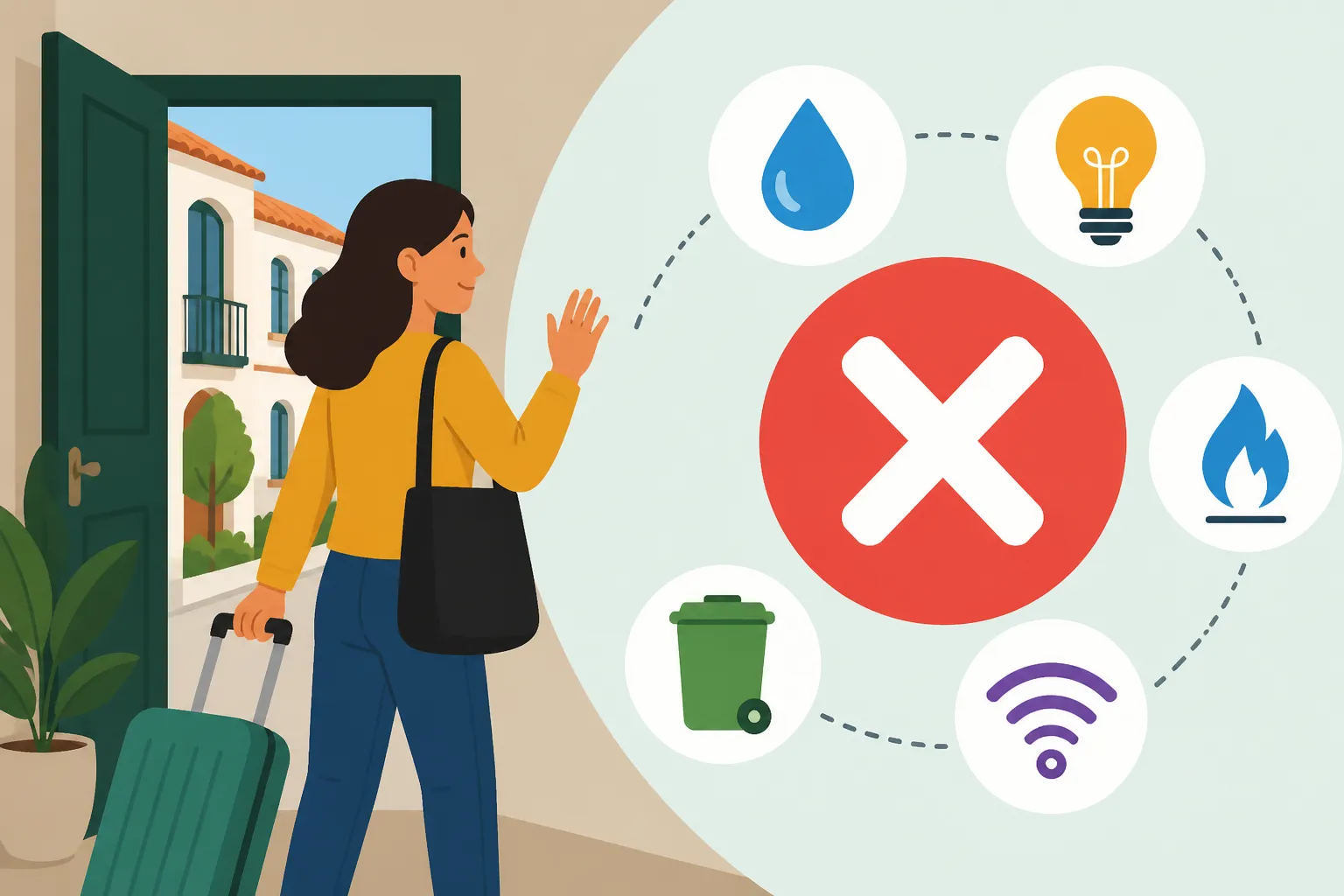
Ah, the bittersweet moment of leaving your Portuguese rental. You’ve packed your boxes, said your goodbyes to the local café owner, and are ready for the next adventure. But then, a cold wave of dread washes over you: the utilities. Cancelling electricity, water, gas, and internet in Portugal can feel less like a straightforward task and more like a final boss battle in a bureaucratic video game. This guide is here to help you navigate this often frustrating, but entirely conquerable, process so you can leave Portugal with peace of mind, not a lingering utility bill.
The Initial Dread: Why Cancelling Utilities in Portugal Feels Like a Quest
Let's be real, moving out of a rental in any country has its challenges. But in Portugal, especially for expats, closing utility accounts can be a particularly vexing experience. It’s not just about turning off the lights; it’s about navigating systems that aren't always designed with English speakers in mind, dealing with paperwork that sometimes feels like it changes daily, and understanding nuances that only a local would inherently know.
The Bureaucratic Maze: What Makes it Tricky for Expats
Portugal's utility infrastructure, while generally reliable, is deeply rooted in traditional administrative practices. This means that while some progress has been made towards online services, a significant portion of the process often still requires phone calls, specific forms, or even an in-person visit. For someone who might not be fluent in Portuguese, this instantly adds a layer of complexity. You might find yourself stuck in an automated phone menu that only speaks Portuguese, or trying to decipher an email filled with legal jargon. It’s a stark contrast to some countries where a simple online form or app can handle everything. The sheer volume of companies involved – often separate ones for electricity, gas, water, and internet – means multiple points of contact, each with their own unique procedures and customer service quirks. It's like having to assemble a puzzle where each piece comes from a different box, and none of them quite fit perfectly the first time.
The Language Barrier and Unwritten Rules
One of the biggest hurdles, of course, is the language. While many customer service agents, especially with major providers like EDP or Vodafone, might speak some English, it's never guaranteed, particularly if you're calling a smaller municipal water company or trying to resolve a complex issue. Imagine trying to explain a discrepancy on your final bill when you only know basic Portuguese greetings! Then there are the "unwritten rules" – those subtle expectations or common practices that aren't explicitly stated but are understood by locals. For example, knowing that some smaller offices close for a long lunch, or that a polite, persistent follow-up email in Portuguese might yield better results than repeated phone calls. It’s these small cultural differences that can turn a simple task into an hours-long ordeal. Having a Portuguese-speaking friend or a dedicated relocation service assist you can make a world of difference here.
Your Essential Checklist Before You Start
Before you even think about picking up the phone or sending an email, preparation is absolutely key. Trust me, I’ve learned this the hard way more times than I care to admit. Having everything organized will save you immense stress and countless hours down the line.
Gathering Key Documents and Information
The first step is to compile all the documents and information related to your utility accounts. Think of this as your "expat survival kit" for the cancellation process. You’ll need:
- Your NIF (Número de Identificação Fiscal): This is your Portuguese tax identification number and it's essential for all official transactions, including utility cancellations. You can't do anything without it.
- Utility Account Numbers: Each utility provider will have a specific account number (Número de Cliente, Código de Ponto de Entrega (CPE) for electricity, Código Universal de Instalação (CUI) for gas, etc.) tied to your service address. These are usually found on your bills.
- Copies of Recent Bills: These contain crucial information like your NIF, account numbers, and the name on the account. They also serve as proof of your previous payments and usage.
- Your Rental Contract (Contrato de Arrendamento): You might need this to prove your tenancy period, especially if you're trying to close an account prematurely or dealing with disputes.
- Proof of New Address (Optional, but Recommended): Sometimes, a provider might ask for a new address for correspondence or to send your final bill. This can be a foreign address, so don't worry if you're leaving the country entirely.
- Bank Account Details: If you have any deposits to be returned or need a refund for an overpayment, they’ll need your bank details. An IBAN for a Portuguese or European bank account is usually best. If you're using a service like Wise for international transfers, make sure you have those details handy.
- Identification (Passport/Residence Card): Always have your ID ready, whether for online verification or in-person visits.
The Importance of Meter Readings
This is perhaps the most critical step. Neglecting to take final meter readings can lead to estimated bills that are far too high, or worse, you being charged for the next tenant's usage. Portugal's system for meter readings can be a bit old-school, with technicians coming around or you needing to submit them yourself.
- Electricity (Eletricidade): For electricity, you’ll typically find your meter either inside your apartment, in a common area in the building (like a hallway or basement), or sometimes even outside the building. Note down all the numbers you see. If you have a digital meter, it might cycle through different readings (daily, night, reactive energy) – try to get all of them, noting which one is which.
- Gas (Gás): Gas meters are usually found in common areas, often near the building's main entrance or in a utility closet. Again, record the exact numbers. If you have bottled gas (gás de garrafa), there’s no meter to read, but you'll need to settle any outstanding bottles.
- Water (Água): Water meters can be trickier. They are often in a dedicated closet outside the building, in the basement, or sometimes even buried under a small hatch near the street. They are often less precise than electricity or gas meters, but still essential to record.
How to Submit Your Readings:
When you call your provider to cancel, they will ask for these final readings. Make sure you have them ready. It's highly recommended to take photos of the meters with a timestamp (many phone cameras do this automatically) on the day you move out. This provides irrefutable proof of your final consumption. If a technician is scheduled to take a reading, try to be there or have someone present to confirm the numbers.
Deactivating Electricity and Gas (The Big Ones)
Electricity and gas are often bundled or handled by the same major providers, so it makes sense to tackle them together. In Portugal, EDP Comercial is the dominant electricity provider, and companies like Galp Energia and Endesa are big players for gas.
EDP and Other Providers: Navigating the Process
Most expat experiences with electricity in Portugal involve EDP. While they are the largest, smaller providers also exist. For gas, you might have Galp Energia, Endesa, or sometimes it's through the municipal council, especially if you have piped natural gas.
Steps for Cancellation:
- Gather Information: Have your NIF, account number, CPE (for electricity) or CUI (for gas), and the exact final meter readings (with photos!) ready.
- Contact Your Provider: The easiest way for many expats is often to call their customer service line. Be prepared for a wait, and politely ask for an English-speaking agent. If you’re not comfortable with phone calls, some providers offer online portals where you can initiate cancellation, or you might need to send a registered letter (carta registada com aviso de receção).
- EDP Customer Service: Their main lines are usually well-staffed, and you can generally find an English speaker.
- Galp Energia/Endesa: Similar to EDP, phone support is usually the most direct route.
- Specify the Date: Clearly state the exact date you wish for the service to be disconnected. This should ideally be your last day in the property.
- Provide Final Readings: They will ask for these. Emphasize that these are your final readings.
- Provide Forwarding Address and Bank Details: Give them an address where they can send the final bill and any refund, and your IBAN for deposit returns.
- Confirm Cancellation: Ask for a confirmation number or an email confirming the cancellation. This is your proof! Don't let them tell you the next tenant has to change it – that's not your responsibility, and you want your name off the account.
- Consider a Fiscal Representative: If you used a fiscal representative to get your NIF while living abroad, remember that they are still linked to your tax obligations. When you're ready to Step-by-step: Closing your NIF and legally leaving the Portuguese tax system, you may need to officially inform Finanças of your departure and remove your fiscal representative.
Final Bill and Reimbursement Expectations
Once you cancel, you'll receive a final bill, typically within a few weeks. This bill will account for your usage up to the final meter reading date.
- Security Deposits (Caução): Many utility providers, especially for electricity and gas, require a security deposit when you open the account. This deposit should be refunded to your specified bank account after the final bill is settled. Keep an eye on your bank statements. If you don't receive it within a reasonable timeframe (e.g., 30-45 days), be prepared to follow up persistently.
- Overpayments: If you had a direct debit set up and your final usage was less than your last payment, you might be due a small reimbursement. This will also be processed to your bank account.
- Outstanding Payments: Conversely, if your final bill is higher than anticipated, you'll need to pay it. Payments can usually be made via Multibanco reference, bank transfer, or sometimes online with a credit card.
It’s not uncommon for expats to face a slight delay in getting their security deposits back. A friendly but firm email (perhaps with Google Translate’s help, if needed) referencing your account number and the date of cancellation can often expedite the process.
Winding Down Water Services
Water services are typically managed by the local câmara municipal (city council) or a specific municipal water company (e.g., EPAL in Lisbon, Águas do Porto in Porto). This means the process can vary slightly depending on where you live.
Municipal Water Companies: Who to Contact
Unlike electricity and gas which often have nationwide providers, water is very localized. You’ll need to find out the specific water company for your area. Your previous water bills will clearly state the company name and contact details.
Steps for Cancellation:
- Identify Your Provider: Check your water bills for the company name and their customer service contact information.
- Contact Them: Again, a phone call is often the most direct method. Be prepared for less English support than with the national electricity or telecom companies. If you're struggling, an email might be an option, or consider visiting their local office in person (check opening hours first!).
- Provide Details: Have your NIF, account number, and final meter reading ready.
- Confirm Disconnection Date: State your desired date for service termination.
- Forwarding Address & Bank Details: Provide these for the final bill and any potential refunds.
Last Readings and Account Closure
Just like electricity and gas, taking a final meter reading for water is crucial. Water meters can be notoriously tricky to locate and read, especially in older buildings. Don't be shy about asking your landlord or a neighbor for help in locating it if you can't find it.
Tips for Water Meter Readings:
- Location: As mentioned, check communal areas, basements, or outside the building under a metal or concrete lid.
- Photo Proof: Snap a photo with a timestamp.
- Persistence: If you can't get a reading, inform the water company. They might send a technician, but you want to ensure it's logged that you tried to provide one.
After cancellation, you'll receive a final bill. Ensure it reflects your final reading. Any outstanding deposit or credit should be returned to your nominated bank account. It's worth noting that if your rental included utilities, your landlord might have been managing the water account directly, and you may not have an account in your name. If this is the case, your responsibility is to settle your portion of the final bill with your landlord, as per your rental agreement.
Cutting the Cord: Internet and Mobile Phone Contracts
Leaving Portugal means saying goodbye to your beloved internet and mobile phone contracts. This can sometimes be the trickiest part, especially with long-term contracts and equipment.
Breaking Free from Vodafone, MEO, and NOS
Portugal's major telecom players are Vodafone, MEO, and NOS. They often offer bundled services (internet, TV, mobile) which can complicate cancellation if you only want to end one part of a package.
Steps for Cancellation:
- Review Your Contract: This is non-negotiable. Find your contract and carefully read the terms and conditions regarding cancellation, especially the notice period (prazo de aviso) and any early termination fees (taxas de rescisão antecipada). Most contracts have a 24-month loyalty period, and cancelling early can result in hefty fines.
- Contact Customer Service: Call your provider. Again, ask for an English speaker.
- Vodafone: Generally good English support.
- MEO/NOS: Can be a bit more challenging, but persistence pays off.
- State Your Intent: Clearly state you wish to cancel your services and why (e.g., "I am leaving Portugal permanently").
- Give Notice: Adhere to the notice period specified in your contract (usually 30 days, sometimes more). Don't wait until your last day to call!
- Confirm Early Termination Fees: If you are within your loyalty period, ask for a clear breakdown of any early termination fees. Sometimes, if you can prove you are leaving the country (e.g., with a flight ticket or new rental contract abroad), they might waive or reduce these fees, but this is not guaranteed and often requires negotiation.
- Arrange Equipment Return: This is crucial.
Handling Equipment Returns and Early Termination Fees
This is where many expats hit snags. Most internet and TV packages involve equipment (routers, TV boxes) that belong to the provider.
- Equipment Return: The provider will instruct you on how to return the equipment. This usually involves taking it to a specific store (loja) or a CTT (post office) with a pre-paid label or code. Do not just throw it away or leave it in the apartment. You will be charged for unreturned equipment, and it can be a significant amount. Get a receipt or proof of return! This is your golden ticket.
- Early Termination Fees: If you're within your contract's loyalty period (often 24 months), expect to pay a fee. This fee is usually calculated based on the remaining months of your contract, sometimes discounted. It’s important to clarify the exact amount before you proceed. This is where those original contract terms come in handy.
- Mobile Phone Contracts: If your mobile phone is part of a bundled package, its cancellation will follow the same rules. If you have a standalone mobile contract, similar notice periods and potential early termination fees apply. If you have a pre-paid SIM card, you simply stop topping it up. If you've been using a tourist eSIM like Airalo, there's nothing to cancel, you simply let it expire.
- Final Bill: Expect a final bill that includes any early termination fees or outstanding charges.
Pro-Tip: If you’re really struggling with the language or bureaucratic issues, consider taking your contract and NIF to a large store of your provider (like a flagship Vodafone store in a major city). In-person service can sometimes be more effective than phone calls, especially if you need to negotiate or return equipment.
What to Do with Your Address and NIF
Leaving Portugal isn't just about utility companies; it's also about ensuring your official records reflect your departure.
Updating Your Fiscal Address with Finanças
Your NIF is tied to an address in Portugal (or a fiscal representative's address if you were living abroad initially). When you leave, it's vital to update this.
Why it matters:
- Official Correspondence: Finanças (the tax authority) sends important mail to your registered address. You don't want crucial tax documents going to an old rental or getting lost.
- Tax Residency: Updating your address helps confirm you are no longer a tax resident in Portugal, which is critical for future tax declarations, especially if you qualified for NHR 2.0 (IFICI) Tax Regime: Eligibility, Flat 20% Tax, and Rules in 2026 or other tax benefits.
How to Update:
- Online (If you have access to Portal das Finanças): If you have your password for the Portal das Finanças, you might be able to update your address online to your new foreign address. This is usually the cleanest way.
- In-Person: Visit a Finanças office (serviço de finanças). Bring your NIF card, passport, and proof of your new address (e.g., a utility bill from your new country). Explain that you are leaving Portugal and wish to change your fiscal address to your new foreign address.
- Via Fiscal Representative: If you have a fiscal representative, they can assist you with this process. They will also need to submit a form (Modelo 30-IRPF) to update your tax status.
It's a small but significant step to ensure a clean break with Portuguese bureaucracy. For more details, you might want to look into Step-by-step: Closing your NIF and legally leaving the Portuguese tax system.
Cancelling Your Fiscal Representative (If Applicable)
If you arrived in Portugal and initially obtained your NIF while still living abroad, you were required to appoint a fiscal representative (representante fiscal). This person or entity was legally responsible for receiving your tax correspondence in Portugal. Once you become a tax resident in Portugal (by living there for more than 183 days or establishing habitual residence), you can remove your fiscal representative. However, if you are now leaving Portugal and will no longer be a tax resident, you might not strictly need to cancel them as much as simply ensure your new foreign address is registered with Finanças. They are only mandatory for non-residents of the EU/EEA. If you are becoming a non-resident, and your new country is outside the EU/EEA, you may still technically need one, but this often isn't enforced if you've registered a foreign address for correspondence.
Key Action: Communicate clearly with your fiscal representative about your departure and ensure they help you update your address with Finanças. They can also assist with any final tax filings or notifications regarding your non-resident status.
Essential Tips for a Smooth Exit
Leaving a country, especially one you’ve grown to love like Portugal, is emotional enough without administrative headaches. These tips can help smooth out the utility cancellation process significantly.
Document Everything: Your Paper Trail is Your Best Friend
This cannot be stressed enough. In Portugal, bureaucracy loves paper (or digital paper).
- Keep Copies: Every email, every confirmation number, every receipt for equipment return – print it, save it as a PDF, store it in the cloud. Create a dedicated folder for "Portugal Exit Docs."
- Photos: As mentioned, photos of meter readings are invaluable. Also, consider photos of the property condition on your last day.
- Correspondence Log: Keep a simple log: Date, Time, Who you spoke to (name/department), What was discussed, What action was taken/promised. This is your leverage if disputes arise.
- Recorded Calls: While not always legal or practical to record without consent, if you're making a crucial call, try to get the information in writing afterward if possible (e.g., "As per our call today, please confirm…").
If you run into issues, having a solid paper trail means you can confidently challenge incorrect charges or delays.
The Final Walk-Through and Landlord Communication
Your relationship with your landlord can significantly impact the ease of your exit, especially concerning utilities.
- Notify Early: Inform your landlord well in advance of your departure date. This gives them time to find a new tenant and coordinate any necessary transfers.
- Joint Walk-Through: Arrange a final walk-through with your landlord on your last day. This is the ideal time to:
- Take final meter readings together.
- Confirm the condition of the property.
- Discuss the return of your security deposit.
- Utility Transfer vs. Cancellation: In some cases, if a new tenant is moving in immediately, your landlord might prefer to transfer the utility contracts directly to the new tenant's name rather than canceling entirely. This can sometimes be a smoother process, but ensure your name is completely removed from the account. Do not agree to simply leave it in your name. Get a confirmation from the utility provider that the account holder has changed. If you use an online platform like Spotahome to find your next rental, confirm these details with your new landlord and ensure all transfers are clearly documented.
- Handover: Leave clear instructions for the landlord on how to deal with any final bills or mail that might arrive after you've left.
By being proactive and keeping good records, you can transform the daunting task of utility cancellation into a manageable checklist item, allowing you to focus on the excitement of your next chapter.
Quick Reference: Portugal Utility Cancellation Checklist
Here's a handy table summarizing the key steps and documents for cancelling your utilities in Portugal:
| Utility Service | Key Information Needed | Recommended Action | Important Notes |
|---|---|---|---|
| Electricity | NIF, Account No., CPE, Final Meter Reading, Bank IBAN, New Address | Call EDP (or your provider), provide NIF/account, state cancellation date, give final readings, request confirmation email, confirm refund process for deposit. | Take timestamped photos of meters. Expect final bill and deposit refund within weeks. |
| Gas | NIF, Account No., CUI, Final Meter Reading, Bank IBAN, New Address | Call Galp Energia/Endesa (or your provider), provide NIF/account, state cancellation date, give final readings, request confirmation, confirm deposit refund. | Similar to electricity; bottled gas needs no meter reading, just account closure. |
| Water | NIF, Account No., Final Meter Reading, Bank IBAN, New Address | Identify local municipal water company (check bills), call their service, provide details, state cancellation date, give final reading, request confirmation. | Meter location can be tricky; get landlord's help. Photos are key. |
| Internet/Mobile | NIF, Contract No., Account No., Bank IBAN, New Address | Review contract for notice period & early termination fees. Call Vodafone/MEO/NOS, give notice, clarify fees, arrange equipment return. Get proof of return. | Crucial: Return all equipment. Early termination fees are common for contracts under 24 months. |
| Fiscal Address (Finanças) | NIF, Passport, New Foreign Address | Update your fiscal address on Portal das Finanças (if you have access) or visit a Finanças office in person to register your new foreign address. | Essential for tax purposes and receiving official correspondence. |
| Fiscal Representative | NIF, Representative's details | Inform your fiscal representative of your departure and coordinate with them to ensure your address is updated with Finanças and their role is updated/removed as appropriate for your new non-resident status (especially if outside EU/EEA). | Only relevant if you had one. |
Navigating life in Portugal, from finding a place to live to managing your finances, can be a wild ride. Remember, even once you've moved, there are still things to keep in mind, like understanding Portuguese Taxes for Expats: IRS, Tax Residency, and Filing Deadlines or how to manage Money and Finance in Portugal: The Ultimate 2026 Guide for Expats. And if you're ever thinking about Transferring Money to Portugal: Saving on Exchange Rates and Fees for future visits or property, services like Wise can be a lifesaver.
Leaving Portugal, even if it's just for a while, marks the end of a chapter. While cancelling utilities might seem like a final bureaucratic hurdle, consider it your last big Portuguese adventure. Embrace the process, stay organized, and don't hesitate to ask for help when needed. Whether you're moving to another country or simply relocating within Portugal, like checking out Renting an Apartment in Portugal: Contracts, Fees, and Tenant Rights for your next place, having these processes handled cleanly makes all the difference. And who knows, maybe someday you'll be back, ready to start the whole process again!
Disclaimer
The information provided in this guide is for general informational purposes only and does not constitute legal, financial, or professional advice. While we strive to keep the information up-to-date and correct, processes and regulations in Portugal can change rapidly. Expats should always verify current requirements with the relevant authorities or seek professional advice tailored to their specific situation. We are not responsible for any actions taken based on the information provided herein.