How to Get an Optician Appointment and Glasses in Portugal
Disclosure: This article contains affiliate links. If you buy through them, we may earn a commission at no extra cost to you. Read our full disclosure.
Moving to a new country involves a steep learning curve, but few things are more disorienting than realizing your vision is failing just as you’re trying to navigate the cobblestone streets of Lisbon or Porto. I remember the panic of losing a contact lens down a drain in my first week in Chiado and having no idea where to turn for a replacement. This guide will walk you through the entire process of getting an eye exam, choosing frames, and navigating the insurance side of eye care in Portugal.
Understanding the Medical vs. Commercial Route in Portugal
One of the first hurdles you will face is deciding whether you need a clinical medical exam or a commercial vision check. In Portugal, these are two very different paths with different price points and wait times. If you have an underlying medical condition like glaucoma or severe allergies, you should seek out an Oftalmologista (Ophthalmologist). These are medical doctors who work in hospitals or specialized clinics. If you simply need a new prescription for your glasses because the text on the back of the wine bottle is looking a bit fuzzy, an Optometrista (Optometrist) at a local retail shop is usually sufficient.
For those who are just starting their journey here, it is worth checking a Health checklist for your first 30 days living in Portugal as an expat to ensure you have your priorities straight. If you decide on the medical route, you will likely find yourself at a private hospital like CUF or Hospital da Luz. These facilities are top-tier and often have English-speaking staff, but they will require an appointment and a consultation fee. This is where having a plan from Cigna Global or a similar provider can save you a significant amount of money on specialist fees.
On the other hand, the commercial route is incredibly accessible. You’ll see the word Óptica everywhere. These shops are a mix of fashion boutiques and medical service centers. Most of them have a resident optometrist who can perform a routine eye exam right then and there. This is often the most efficient path for expats who don't have a complex medical history. You can learn more about these distinctions in our guide on Eye exams: Should you go to an Oftalmologista or directly to MultiOpticas?.
Where to Go: Top Optical Chains and Independent Shops
Portugal has a high density of optical shops, ranging from massive international chains to small, family-owned "boutique" optics that have been on the same corner for forty years. If you are in a major city, you will likely run into the "big three" almost every time you visit a shopping mall like Centro Colombo or NorteShopping.
MultiOpticas and GrandOptical
MultiOpticas is arguably the most recognizable brand in the country. They are ubiquitous and often have very aggressive sales, such as "Buy one, get one free" or "Your age is your discount." GrandOptical tends to be slightly more upscale, carrying luxury brands like Chanel or Persol. Both are reliable because they have standardized equipment and a streamlined process for foreigners. They are accustomed to dealing with people who might not have a Portuguese Número de Utente yet.
Wells
You might know Wells as the health and beauty section inside Continente supermarkets, but they have expanded into "Wells Óptica" in recent years. They are frequently the most budget-friendly option. If you are a digital nomad or a frequent traveler covered by SafetyWing, you might appreciate the speed and no-nonsense approach of a Wells appointment, especially if you need a quick repair or a cheap back-up pair of glasses.
Independent Boutiques
Don't overlook the smaller shops. While they might look more expensive, they often provide a level of personalized service that the chains cannot match. In neighborhoods like Alvalade in Lisbon or Foz in Porto, independent opticians take great pride in their craft. They are more likely to spend an hour helping you find the perfect frame for your face shape rather than rushing you through the process. For more general advice on medical services, refer to Healthcare in Portugal for Expats: The Complete 2026 Medical Guide.
Step-by-Step Guide to Your Eye Appointment
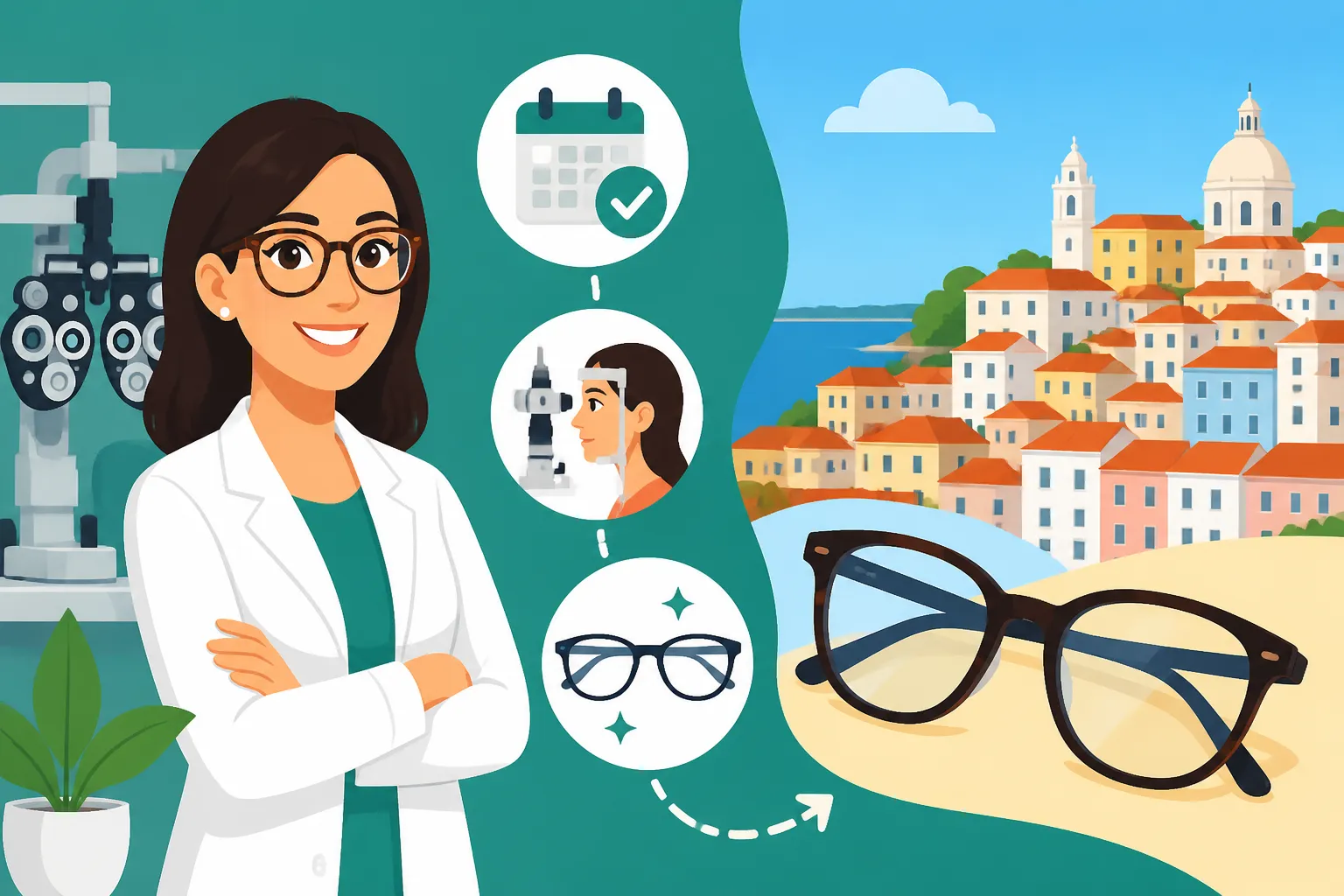
The process of getting an eye exam is relatively straightforward, but there are a few cultural nuances to be aware of. First, while walk-ins are sometimes accepted, it is always better to call ahead or book online. Most major websites have a "Marcar Consulta" button.
The Exam Experience
When you arrive, you will be asked for your ID (Passport or Residency Card). If you are using the public system, you'll need to know how Portugal's National Health Service (SNS): How the Public System Works to understand how to get a referral, though honestly, for vision care, most expats go private to avoid the long waiting lists. The exam itself usually involves the standard "Which is clearer, 1 or 2?" routine, along with a pressure test and a digital scan of your retina in more modern shops.
Language and Communication
Don't be afraid if your Portuguese is still at the "Olá" level. Many optometrists in urban centers speak excellent English. However, if you are in a more rural area, you might want to review Navigating the public health system if you only speak English (Translation tips) to prepare yourself for the technical vocabulary. Knowing words like Lentes (Lenses), Armações (Frames), and Graduação (Prescription) will go a long way.
| Feature | Private Optician (Retail) | Private Hospital/Clinic | Public SNS |
|---|---|---|---|
| Wait Time | 1-3 Days | 1-2 Weeks | 3-6 Months+ |
| Typical Cost | €0 – €30 (Often free with purchase) | €70 – €120 | €7 (Taxa Moderadora) |
| Equipment | Modern/Retail focused | Advanced Medical | Basic to Advanced |
| English Spoken | Very Likely | Almost Certain | Hit or Miss |
Buying Glasses: Costs, Insurance, and Delivery Times
Once your prescription is set, the real fun (or stress) begins: choosing the frames. Portugal loves fashion, and eyewear is no exception. You will find a massive range of prices.
Breaking Down the Costs
A basic pair of frames at a place like Wells might start as low as €40, while designer frames can easily top €400. The lenses themselves are where the cost can sneak up on you. High-index lenses (for those of us with "coke-bottle" prescriptions) and blue-light filters or transition coatings can add another €100 to €200 to the bill. If you have Private Health Insurance in Portugal: Costs, Coverage, and Best Providers, you may be eligible for a reimbursement or a direct discount if the shop is in your insurer's network (like Médis or Multicare).
Delivery and Fitting
Typically, it takes about 5 to 10 working days for your glasses to be ready. The shop will call or SMS you when they arrive. When you pick them up, the technician will adjust the "arms" of the glasses and the nose pads to ensure they don't slide off your face. This fitting service is free and included in the price. For a deeper dive into the specifics of eye hardware, see our article on Getting Glasses and Contact Lenses: Eye Care (Oftalmologia) in Portugal.
If you are a US expat, it's worth noting that your Cigna Global plan might cover a portion of the hardware cost, depending on your vision rider. Always ask for a "Fatura com NIF" (Invoice with your tax number) so you can submit it to your insurance or even deduct a small portion of it on your annual IRS return.
Managing Contact Lenses as an Expat
If you prefer contacts over glasses, the system in Portugal is surprisingly liberal. Unlike in some countries where you need a fresh prescription every year to buy a single box of lenses, Portuguese pharmacies and optical shops are often happy to sell them to you if you know your parameters.
Where to Buy
You can buy contact lenses at any Óptica, but you can also find them at Pharmacies (Farmácias) in Portugal: Green Crosses and After-Hours Service. However, for the best prices, many expats use online retailers that ship from Spain or Germany. If you have an emergency and lose a lens, walking into a MultiOpticas and asking for a trial pair (Lentes de contacto de teste) can sometimes save your day, though they may charge a small fee if you aren't a regular customer.
Solutions and Eye Drops
Maintenance is easy to find. Saline solutions and multi-purpose cleaners are available in supermarkets (in the health aisle), pharmacies, and optical shops. If you have sensitive eyes and need specific brands, you might find Buying contact lens solution and eye drops at a Portuguese pharmacy helpful for identifying the local equivalents of what you used back home.
For those who travel frequently within Europe, keeping a copy of your prescription on your phone is vital. If you are covered by SafetyWing for your travels outside of Portugal, remember that they generally cover emergency eye issues (like an infection) rather than routine prescription updates. It is always best to handle your "maintenance" eye care while you are stationary in your home base.
Finally, if you are looking for specialized medical care beyond just a basic vision check, check out our guide on Finding Doctors and Specialists in Portugal: English-Speaking Medical Care. Navigating the Portuguese healthcare landscape gets much easier once you understand that "slow and steady" is the name of the game, and a little bit of patience goes a long way when you're waiting for those new frames to arrive.
Disclaimer
The information provided in this article is for general informational purposes only and does not constitute professional medical or legal advice. Healthcare regulations, insurance policies, and service availability in Portugal can change. Always consult with a qualified medical professional or insurance provider regarding your specific health needs and coverage.