What to Do in a Medical Emergency in Portugal (112)
Disclosure: This article contains affiliate links. If you buy through them, we may earn a commission at no extra cost to you. Read our full disclosure.
Staring at a sick child at 3 AM while trying to remember the Portuguese word for "ambulance" is a special kind of terror. I remember the first time I had to call for help in Lisbon; my mind went totally blank despite months of Duolingo. This guide breaks down exactly how to navigate a medical emergency in Portugal, from the 112 system to hospital triage.
Understanding the Emergency Response System in Portugal
When you are in the heat of a crisis, the last thing you want to do is navigate a complex bureaucratic web. Portugal’s emergency medical system is primarily managed by INEM (Instituto Nacional de Emergência Médica). These are the folks who operate the high-tech yellow ambulances, motorcycles, and helicopters you see zipping through the cobblestone streets. They are highly trained and efficient, but the system works differently than what many of us from North America or the UK might be used to.
In Portugal, the goal is often "stabilization on-site." Unlike some systems where the ambulance is just a high-speed taxi to the hospital, INEM crews often include doctors or highly specialized nurses who begin treatment right in your living room or on the sidewalk. This is vital to understand because it can feel like they are "wasting time" if you aren't expecting it, but they are actually bringing the emergency room to you. If you find yourself in a situation where every second counts, knowing that the Emergency Medical Care in Portugal: Calling 112 and Going to the Hospital system is designed this way can help lower your heart rate just a fraction.
One of the biggest hurdles for us expats is knowing when a situation is an "emergency" versus an "urgency." If your life is in immediate danger—think chest pains, severe difficulty breathing, or heavy bleeding—you call 112. If you have a high fever, a nasty cut that might need stitches, or a sudden flu that has laid you out, you should instead look toward the SNS 24 Helpline (808 24 24 24): Triage, Advice, and Sick Notes. This line is staffed by nurses who can tell you exactly which hospital has the shortest wait time or even book an appointment for you at a local health center.
Calling 112 and What to Expect During the Call
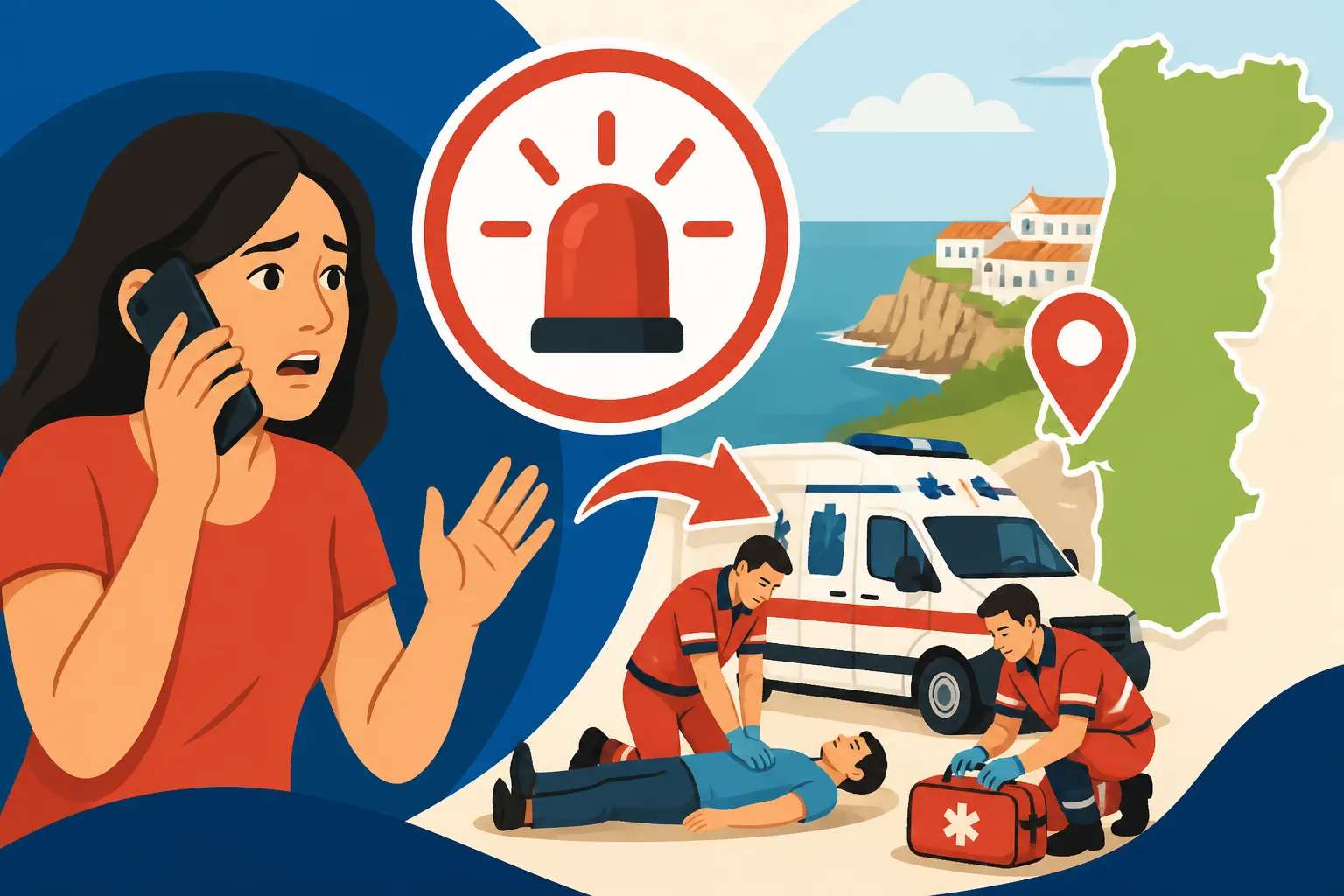
The number 112 is the European universal emergency number. It is free to call from any phone, even one without a SIM card or one that is locked. When you dial 112 in Portugal, your call is first answered by the police (PSP), who will ask "Qual é a sua emergência?" (What is your emergency?). Do not panic if they speak Portuguese initially. Simply state "English, please" or "Fala Inglês?" and they will usually transfer you to a dispatcher who can communicate with you.
A common concern for many of us is the language barrier. You might wonder, Calling 112: Do Portuguese emergency dispatchers speak fluent English? and the answer is generally yes, especially in major hubs like Lisbon, Porto, and the Algarve. However, in more remote areas, the level of fluency might vary. Speak slowly, clearly, and give your location first. If you are in an apartment, have your address written down near the door—including the floor number and which side (e.g., 3º Direito). This saves precious seconds when you are too stressed to remember your own street name.
The dispatcher will ask a series of questions. They aren't being nosy; they are triaging. They will want to know if the person is conscious, breathing, and what the specific symptoms are. Based on this, they might send a CODU (Centro de Orientação de Doentes Urgentes) unit. Sometimes, for expats with international coverage like Cigna Global, you might consider if your private plan offers a dedicated concierge, but in a true life-or-death moment, 112 is the only authority that can dispatch the public INEM teams who have priority on the roads.
Navigating the Hospital Emergency Room and Triage Colors
If you arrive at a hospital—whether by ambulance or by driving yourself—you will enter the "Urgências" (Emergency Department). This is where the "Manchester Triage System" comes into play. It is a color-coded system that determines the order in which patients are seen, and it has nothing to do with who arrived first. When you check in, a nurse will take your vitals and assign you a colored wristband.
The wait times can be significant, especially in the public system during the winter months. Understanding the Emergency Rooms (Urgências) in Portugal: Triage Colors and Wait Times is essential for managing your expectations. If you are assigned a green or blue band, you could be waiting for many hours because the doctors are busy with the red and orange cases. It is frustrating, but it is a sign that the system is prioritizing those who are closest to death.
| Triage Color | Meaning | Target Wait Time |
|---|---|---|
| Red | Emergency / Immediate | 0 Minutes |
| Orange | Very Urgent | 10 Minutes |
| Yellow | Urgent | 60 Minutes |
| Green | Standard / Less Urgent | 120 Minutes |
| Blue | Non-Urgent | 240 Minutes |
For many foreigners, Understanding the Manchester Triage System colors in Portuguese emergency rooms helps avoid the "why is everyone ignoring me" feeling. If you are in a major city, you often have a choice between a public hospital and a private one like CUF or Hospital da Luz. While private hospitals are much more comfortable and often have faster service for green/yellow cases, they may not be equipped for major trauma or complex neurosurgery, which are almost always handled by the public sector. If you have a plan through SafetyWing or Cigna Global, you should check which private hospitals are in-network to avoid massive out-of-pocket bills.
Costs and Insurance Logistics for Expats
The cost of emergency care in Portugal is one of the most pleasant surprises for those of us moving from the United States. If you are registered with the SNS (Serviço Nacional de Saúde) and have a Número de Utente, the costs are minimal. You will pay what is called Taxas Moderadoras: Co-payments and Costs in the Public Health System, which usually amounts to less than €20 for an emergency visit. If you are taken by an INEM ambulance, that cost is often waived or significantly subsidized.
However, if you are not yet a resident or don't have your health number, you might be asking, How much does an emergency room visit cost without private insurance? The "unsubsidized" price in a public hospital can range from €100 to €250, which is still remarkably affordable compared to many other Western nations. In the private sector, Hospital da Luz and CUF: Navigating Portugal's Biggest Private Hospitals will charge significantly more—often starting at €120 just for the consultation, plus tests, scans, and treatments. This is where having Private Health Insurance in Portugal: Costs, Coverage, and Best Providers becomes a lifesaver.
If you are a digital nomad or a new arrival, you might be Using Cigna Global or Allianz for international expat healthcare in Portugal or perhaps a travel-specific plan like SafetyWing. These providers generally expect you to pay upfront at private clinics and then file for reimbursement. Always keep every single piece of paper the hospital gives you—the triage report, the doctor's notes, and the itemized invoice (fatura). Without that fatura with your NIF (Tax Number) on it, getting a refund from your insurance can be a nightmare.
Practical Steps to Prepare for a Medical Crisis
Being a veteran expat has taught me that preparation is the only cure for panic. You should have a "Medical Go-Bag" or at least a folder by your front door. This should include a copy of your passport, your residency card, your NIF, your private insurance card (like Cigna Global or SafetyWing), and a list of any medications you are currently taking. If you have a chronic condition, having a one-page summary of your history translated into Portuguese is a godsend for the ER doctor.
Another thing to consider is your location. Living in rural Portugal: How far is the nearest hospital usually? is a question you should answer before you move into that charming stone cottage in the Alentejo. In some areas, the nearest "Urgência" might be 45 minutes away. Knowing the fastest route and which local "Centro de Saúde" has extended hours (Serviço de Atendimento Permanente) can save your life.
Lastly, if your emergency results in you needing time off work, you’ll need to know How to get a sick note (Baixa Médica) from a doctor for your employer. In Portugal, a simple email to your boss usually isn't enough; the social security system requires a formal "Baixa" issued by a doctor, often through the SNS system. Even if you go to a private hospital, you may still need to have that private note "converted" or recognized by your local public health center to receive state sick pay. It’s an extra step of "Portuguese paperwork" that is much easier to handle if you know it's coming.
Emergency Medical Care Disclaimer
The information provided in this guide is for informational purposes only and does not constitute professional medical or legal advice. In the event of a real-life medical emergency, always dial 112 immediately. While we strive to keep this data accurate for the landscape in Portugal, healthcare regulations and emergency procedures are subject to change by the Ministry of Health and INEM. Always verify local emergency protocols and consult with your insurance provider regarding specific coverage details.