How to Find a Good Private Hospital in Portugal
Disclosure: This article contains affiliate links. If you buy through them, we may earn a commission at no extra cost to you. Read our full disclosure.
Navigating a foreign medical system when you are feeling vulnerable is one of the most taxing parts of the expat journey. I remember sitting in a crowded public waiting room in Lisbon during my first winter, clutching a number and realizing I had no idea if the doctor would understand my symptoms or if I was even in the right building. This guide solves that uncertainty by walking you through how to find, evaluate, and access the best private hospitals in Portugal so you can skip the queues and get the care you deserve.
Understanding the Private Healthcare Landscape in Portugal
When you first arrive, the distinction between the public system (SNS) and the private sector can feel blurry. In many countries, the "private" option is a luxury reserved for the ultra-wealthy, but in Portugal, private healthcare is a standard middle-class expectation and a lifeline for expats who want faster access to specialists. While the SNS is fantastic for long-term chronic care and major trauma, the private sector is where you go for efficiency, modern amenities, and a much higher likelihood of finding English-speaking staff.
The private hospital market is dominated by three or four major groups that have facilities scattered across the country. These aren't just small clinics; they are massive, state-of-the-art medical centers with their own emergency rooms, surgical suites, and specialized maternity wards. Most expats find that having Healthcare in Portugal for Expats: The Complete 2026 Medical Guide is the first step, but the second is choosing which hospital brand will become your "home base."
Choosing a hospital often depends on where you live, as the big players have carved out specific territories. In Lisbon, you are spoiled for choice, but if you move to the Silver Coast or the interior, your options become more focused. It is essential to understand that private hospitals in Portugal operate very much like a business—customer service is a priority, and the facilities often feel more like high-end hotels than sterile medical environments. However, this comes with a cost structure that differs significantly from the public system, where you might only pay small Taxas Moderadoras: Co-payments and Costs in the Public Health System.
The Big Three: CUF, Hospital da Luz, and Lusíadas
If you are looking for a private hospital, you will inevitably end up at one of these three. They are the titans of Portuguese private medicine. Each of the three has its own "vibe" and set of strengths, and different users tend to choose them for different reasons. Understanding their differences is key to Finding Doctors and Specialists in Portugal: English-Speaking Medical Care who meet your specific needs.
CUF: The Historic Powerhouse
CUF is the oldest and largest private healthcare provider in Portugal. They have been around for over 75 years, and their network is incredibly deep. If you are in Lisbon, CUF Descobertas in Parque das Nações is often the "gold standard" for pediatrics and maternity. More recently, they opened CUF Tejo in the Alcântara district, which is arguably the most modern hospital in the country, focusing heavily on oncology and complex surgeries. CUF tends to have a more traditional, highly professional atmosphere. Their doctors are often the same ones teaching at the top medical universities, providing a high level of clinical confidence.
Hospital da Luz: The Tech-Forward Choice
Hospital da Luz is part of the Luz Saúde group and is known for its heavy investment in technology. Their flagship hospital near the Colombo shopping mall in Lisbon is a sprawling complex where you can find almost any sub-specialty imaginable. What sets them apart for most expats is their digital integration. Using the Hospital da Luz app: How to book a specialist appointment on your phone is a seamless experience that allows you to see doctor bios, check waiting times for the ER in real-time, and manage your billing without ever picking up a phone. For those who value digital efficiency and sleek, modern facilities, Luz is usually the top contender.
Lusíadas: Patient-Centric and Accessible
Lusíadas is the third major player, often praised for its "human touch." While CUF and Luz can sometimes feel a bit like massive machines, Lusíadas (particularly the ones in Lisbon and Porto) often receives high marks for patient experience and nursing care. They were the first in Portugal to be accredited by the Joint Commission International, which is a big deal if you are coming from the US and looking for familiar safety and quality standards. They have a strong presence in the Algarve as well, making them a favorite for the southern expat community.
Regional Excellence: Finding Care Outside Lisbon and Porto
While the "Big Three" dominate the major cities, your strategy for finding a good hospital changes if you are living in the Algarve or the islands. You cannot always rely on the same brands, and local reputation becomes much more important. Across the country, it is clear how much regional hospital groups matter to the local community.
In the Algarve, the HPA Health Group (Hospital Particular do Algarve) is the undisputed leader. They have major hospitals in Alvor (near Portimão) and Gambelas (Faro). For many expats living in the south, HPA is the primary reason they feel safe retiring there. They have built their entire business model around the international community, meaning their English-language support is often superior to hospitals in the north. They even have dedicated "International Patient" desks to help you navigate your foreign insurance, such as Cigna Global, which is a popular choice for comprehensive expat coverage in the region.
In the North, specifically around Porto, the CUF Porto Hospital and the Hospital da Luz Arrábida are the main hubs. However, you also have unique players like the Hospital da Ordem do Terço, which offers a different, more localized experience. When you are outside the major hubs, the best way to find a good hospital is to look for the "Urgência" (Emergency) sign. Even small private hospitals will have a private ER, but the level of specialist availability at 3:00 AM can vary. It is always wise to know where your nearest major private ER is before an actual emergency happens, as Emergency Medical Care in Portugal: Calling 112 and Going to the Hospital might route you to a public facility by default.
| Hospital Group | Flagship Location | Best For | Digital Experience |
|---|---|---|---|
| CUF | CUF Tejo (Lisbon) | Specialized Surgery & Oncology | Excellent (MYCUF App) |
| Hospital da Luz | Luz Lisboa | High-tech & Specialist Variety | Best in Class (Luz App) |
| Lusíadas | Lusíadas Lisboa | Patient Experience & Maternity | Very Good |
| HPA Health | Alvor (Algarve) | Expat/Tourist Support in South | Good |
| Trofa Saúde | Gaia/Porto | Accessibility in Northern Portugal | Moderate |
How to Evaluate a Private Hospital Before You Visit
Don't wait until you are sick to "shop" for a hospital. New arrivals are well advised to do a "dry run." Go to the hospital's website, look at the list of specialties, and see if they have a dedicated international wing. A "good" private hospital in Portugal should meet several criteria that are specific to the expat experience.
First, check their insurance partnerships. Not all private hospitals accept all insurance plans. If you are using a local provider like Médis or Multicare, you need to ensure the hospital is "in-network" to avoid massive out-of-pocket expenses. If you are a digital nomad using SafetyWing, you might be looking for a hospital that is used to providing detailed medical reports in English so you can file for reimbursement later. Navigating Public vs Private Healthcare in Portugal: Which One Should Expats Choose? often comes down to this very logistical question of who pays the bill at the moment of discharge.
Second, look at the "Corpo Clínico" (Clinical Body). Most private hospitals in Portugal allow you to browse their doctors online. Look for doctors who have studied or worked abroad; they will not only speak better English but will also understand the cultural expectations of healthcare from your home country. This is particularly important when Finding an English-Speaking General Practitioner (Médico de Família) who will act as your gatekeeper to other specialists.
Navigating Costs and Insurance at Private Hospitals
The most common fear I hear from expats is: "Is this going to bankrupt me?" The answer is usually no, but only if you are prepared. Private healthcare in Portugal is surprisingly affordable compared to the US, but it is not "cheap" compared to the public system. A standard specialist consultation might cost between €80 and €120 out-of-pocket, but with the right Private Health Insurance in Portugal: Costs, Coverage, and Best Providers, that co-pay can drop to €15 or €30.
When you walk into a private hospital like Hospital da Luz or CUF, the first thing they will ask for is your ID and your insurance card. If you have a local plan, they swipe the card, and you pay the co-pay on the spot. If you are using an international plan like Cigna Global, you may need to pay upfront and claim it back, or for larger procedures, the hospital will coordinate a "Letter of Guarantee" with the insurer. Always clarify this at the reception desk before your appointment.
It is also worth noting that private hospitals have different tiers of emergency room prices. A visit to the "Urgência" at 11:00 PM on a Sunday will cost more than a scheduled Tuesday morning appointment. In the private system, you are paying for the convenience of skipping the Emergency Rooms (Urgências) in Portugal: Triage Colors and Wait Times that define the public experience. For many of us, the €100 spent to be seen in 20 minutes instead of 8 hours is the best money we ever spend in Portugal.
The Importance of Hospital Apps and Patient Portals
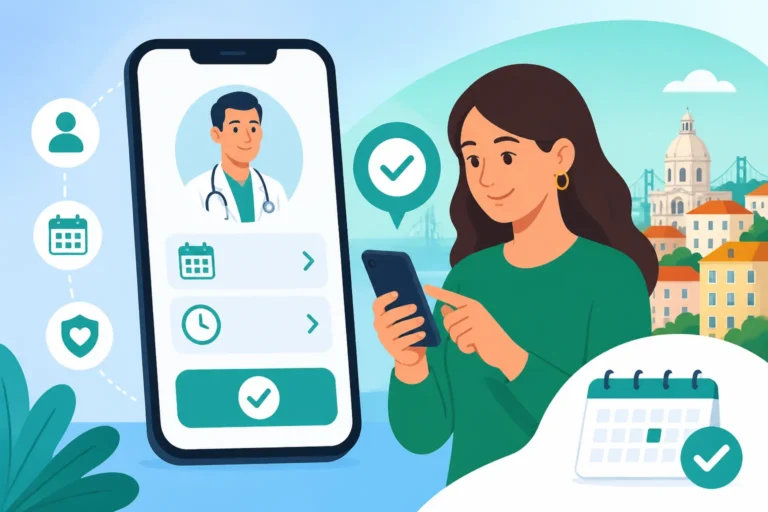
If you want to feel like a local, you need to download the hospital apps. I cannot stress this enough. Portugal’s private healthcare sector is surprisingly digital-forward. Both the "MyCUF" and "MY LUZ" apps allow you to do things that would take hours over the phone.
Through these portals, you can:
- Book appointments with specific doctors.
- View your lab results and imaging reports (MRIs, X-rays) as soon as they are ready.
- Check the current wait time for the Emergency Room.
- Download your invoices for tax purposes.
- Request a video consultation if you don't want to leave your house.
I opened my app, found a doctor in the CUF Porto branch with an opening at 2:00 PM, booked it, and had my prescription by 2:30 PM. This level of autonomy is what makes Hospital da Luz and CUF: Navigating Portugal's Biggest Private Hospitals so appealing to expats who are used to efficient systems. It removes the language barrier of trying to explain a complex medical need over a crackly phone line to a receptionist who might be rushing.
Cultural Nuances: What to Expect Inside
Even in a high-end private hospital, you are still in Portugal, and there are cultural nuances to keep in mind. First, "appointment times" are often more like "suggestions." Even in private hospitals, a 10:00 AM appointment might start at 10:30 AM if the doctor is spending extra time with a previous patient. Don't be offended; it just means when it's your turn, they will likely give you that same undivided attention.
Second, the role of the nurse in Portuguese private hospitals is quite different from the UK or US. Nurses handle much of the technical work, but the doctor remains the absolute authority on your care. You will also find that Portuguese doctors are generally very direct. They will give you the facts clearly and concisely. If you have questions, you must be proactive and ask them.
Lastly, keep your "NIF" (Tax Number) handy. Every time you pay for a medical service, they will ask if you want your NIF on the receipt. Always say yes. These medical expenses are tax-deductible in Portugal, and they will automatically appear in your "e-Fatura" portal, potentially saving you hundreds of euros when you file your annual tax return. It’s a small administrative step that makes a huge difference in the long run.
Disclaimer
The information provided in this article is for general informational purposes only and does not constitute professional medical advice, diagnosis, or treatment. Always seek the advice of your physician or another qualified health provider with any questions you may have regarding a medical condition. Healthcare laws, insurance coverage, and hospital reputations in Portugal can change rapidly; always verify current details with the respective medical facilities or your insurance provider.